Toyota Sequoia vs Porsche Cayenne
Overview | |
MSRP$62,425 | MSRP$84,700 |
Listings244 | Listings546 |
Ratings & Reviews | |
User Reviews | User Reviews |
Expert reviews5.5 out of 10 | Expert reviews8.0 out of 10 |
Pros
Cons
| Pros
Cons
|
Reviews SummaryThe 2025 Sequoia is Toyota’s full-size SUV, based on the same platform as the Tundra pickup truck and using the same i-Force Max hybrid powertrain. It seats up to eight people, holds up to 86.9 cubic feet of cargo, carries up to 1,730 pounds of payload, and tows up to 9,520 pounds of trailer. The new Sequoia 1794 Edition slots into the lineup as a Texas-themed luxury model, and it certainly is nice. But it cannot mask this SUV’s fundamental flaws. Verdict: People buy full-size SUVs to carry lots of people, haul lots of cargo, and tow lots of weight. However, due to its packaging requirements, the Sequoia is a rock star only if you’re attaching a trailer to it, and even then, it’s not class-leading in capability. | |
Reviews SummaryVerdict: Even the base model Cayenne delivers an agile driving experience, but those willing to dig deep into their bank account for one of Porsche’s more expensive Cayenne models are rewarded with a spirited drive like no other. The competition here is stiff, in the form of other German SUVs like the Audi Q8, BMW X5, and Mercedes-Benz GLE, and their performance variants. However, the Cayenne is not here to lose. | |
No video found | No video found |
Popular Features & Specs | |
Engine3.4L 437 hp V6 Hybrid | Engine3.0L 348 hp V6 |
Drive Train4X2 | Drive TrainAWD |
Seating Capacity8 | Seating Capacity5 |
Horsepower437 hp @ 5200 rpm | Horsepower348 hp @ 5400 rpm |
EV Battery Capacity1.9 kWh | EV Battery Capacity |
MPG City21 | MPG City17 |
MPG Highway24 | MPG Highway23 |
Engine | |
Engine Name3.4L 437 hp V6 Hybrid | Engine Name3.0L 348 hp V6 |
Torque583 lb-ft @ 2400 rpm | Torque368 lb-ft @ 1450 rpm |
Horsepower437 hp @ 5200 rpm | Horsepower348 hp @ 5400 rpm |
Drivetrain4X2 | DrivetrainAWD |
Fuel Economy | |
EV Battery Capacity1.9 kWh | EV Battery Capacity |
MPG City21 | MPG City17 |
MPG Highway24 | MPG Highway23 |
Interior | |
Seating Capacity8 | Seating Capacity5 |
Key Features | |
Navigation System | Navigation SystemStandard |
Sunroof/MoonroofStandard | Sunroof/Moonroof |
Dimensions & Capacity | |
Cargo Space22.3 cu ft | Cargo Space27.2 cu ft |
Curb Weight5620 lbs | Curb Weight4678 lbs |
Height74.5 in | Height66.9 in |
Length208.1 in | Length194.1 in |
Width79.8 in | Width86.4 in |
Wheelbase122.0 in | Wheelbase114.0 in |
Maximum Payload1730 lbs | Maximum Payload1572 lbs |
Number of doors4 | Number of doors4 |
Maximum Towing Capacity9520 lbs | Maximum Towing Capacity7716 lbs |
Standard Towing Capacity9520 lbs | Standard Towing Capacity |
Overview | ||
MSRP | $62,425 | $84,700 |
Listings | ||
Ratings & Reviews | ||
User reviews | ||
Expert reviews | 5.5 out of 10Read full review | 8.0 out of 10Read full review |
Pros & cons | Pros
Cons
| Pros
Cons
|
Summary | The 2025 Sequoia is Toyota’s full-size SUV, based on the same platform as the Tundra pickup truck and using the same i-Force Max hybrid powertrain. It seats up to eight people, holds up to 86.9 cubic feet of cargo, carries up to 1,730 pounds of payload, and tows up to 9,520 pounds of trailer. The new Sequoia 1794 Edition slots into the lineup as a Texas-themed luxury model, and it certainly is nice. But it cannot mask this SUV’s fundamental flaws. Verdict: People buy full-size SUVs to carry lots of people, haul lots of cargo, and tow lots of weight. However, due to its packaging requirements, the Sequoia is a rock star only if you’re attaching a trailer to it, and even then, it’s not class-leading in capability. | Verdict: Even the base model Cayenne delivers an agile driving experience, but those willing to dig deep into their bank account for one of Porsche’s more expensive Cayenne models are rewarded with a spirited drive like no other. The competition here is stiff, in the form of other German SUVs like the Audi Q8, BMW X5, and Mercedes-Benz GLE, and their performance variants. However, the Cayenne is not here to lose. |
Video | No video found | No video found |
Popular Features & Specs | ||
Engine | 3.4L 437 hp V6 Hybrid | 3.0L 348 hp V6 |
Drive Train | 4X2 | AWD |
Seating Capacity | 8 | 5 |
Horsepower | 437 hp @ 5200 rpm | 348 hp @ 5400 rpm |
EV Battery Capacity | 1.9 kWh | |
MPG City | 21 | 17 |
MPG Highway | 24 | 23 |
Engine | ||
Engine Name | 3.4L 437 hp V6 Hybrid | 3.0L 348 hp V6 |
Torque | 583 lb-ft @ 2400 rpm | 368 lb-ft @ 1450 rpm |
Horsepower | 437 hp @ 5200 rpm | 348 hp @ 5400 rpm |
Drivetrain | 4X2 | AWD |
Fuel Economy | ||
EV Battery Capacity | 1.9 kWh | |
MPG City | 21 | 17 |
MPG Highway | 24 | 23 |
Interior | ||
Seating Capacity | 8 | 5 |
Key Features | ||
Navigation System | Standard | |
Sunroof/Moonroof | Standard | |
Dimensions & Capacity | ||
Cargo Space | 22.3 cu ft | 27.2 cu ft |
Curb Weight | 5620 lbs | 4678 lbs |
Height | 74.5 in | 66.9 in |
Length | 208.1 in | 194.1 in |
Width | 79.8 in | 86.4 in |
Wheelbase | 122.0 in | 114.0 in |
Maximum Payload | 1730 lbs | 1572 lbs |
Number of doors | 4 | 4 |
Maximum Towing Capacity | 9520 lbs | 7716 lbs |
Standard Towing Capacity | 9520 lbs | |
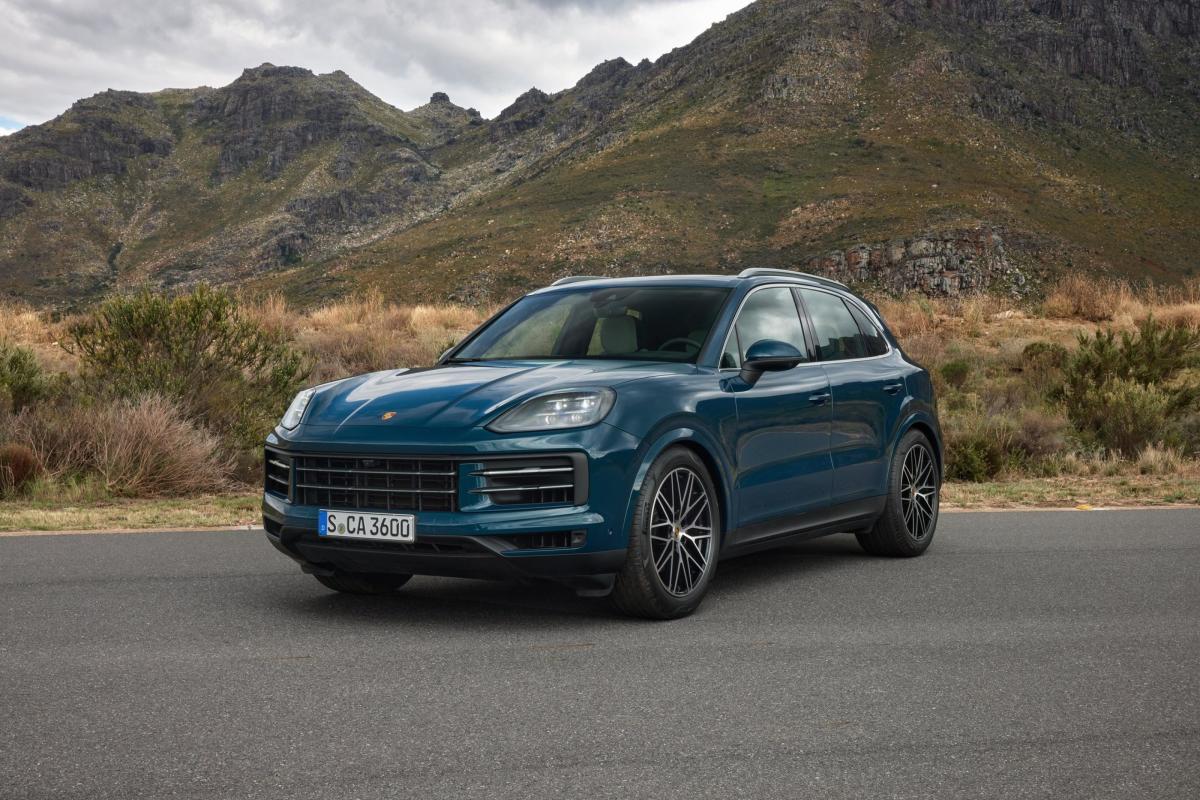
The 2025 Porsche Cayenne was available in two distinct styles: the standard SUV with a squared-off rear end and the sporty Cayenne Coupe. The lineup ranged from the base Cayenne to the high-performance Cayenne Turbo GT, each with unique exterior features. The GTS trim, which was the focus of our review, boasted high gloss black trim, bronze exhaust tips, and a distinctive front fascia with larger air intakes. The GTS also featured tinted headlights and red brake calipers visible through 21-inch anthracite gray wheels. Inside, the Cayenne offered extensive customization options, from color choices like Carmine Red to various trim and seat belt options. While the pricing could escalate with customizations, the Cayenne promised a unique and personalized driving experience. The cabin was well-organized, with mechanical controls for essential features and a dashboard-mounted shifter toggle that freed up storage space.
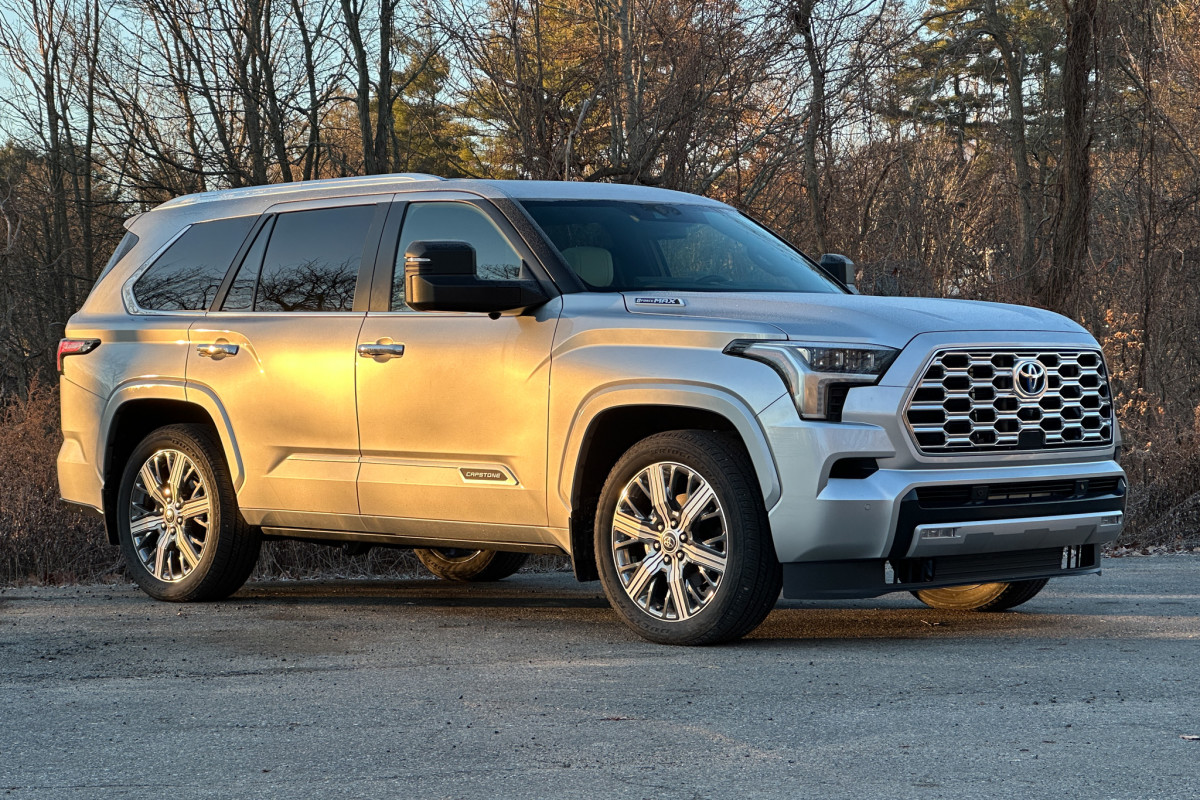
The 2025 Toyota Sequoia 1794 Edition was a new addition, named after the year the ranch was established where the assembly plant stood. It built upon the Sequoia Platinum with machined-finish 20-inch wheels, chrome accents, Saddle Tan leather upholstery, and American walnut wood trim. The Sequoia lineup included several trims, with prices ranging from $62,425 to $83,915. Our test vehicle featured the TRD Off-Road Package, adding a TRD front skid plate, a 10-inch head-up display, and additional connectivity services. The Sequoia's exterior, painted in Lunar Rock with black TRD off-road wheels, garnered attention despite its rarity on the road. Inside, the Saddle Tan leather and walnut wood trim contrasted with the black interior, but the overall cabin quality was marred by Toyota-grade plastic. The TRD Off-Road Package's red accents felt out of place, though the aluminum pedals were a nice touch.
The 2025 Porsche Cayenne offered a range of engines, all capable of delivering impressive performance. The base model featured a 3.0-liter V6 engine producing 348 horsepower and 368 pound-feet of torque. For those seeking more power, the Cayenne S offered a V8 with 468 hp, while the Turbo GT boasted 650 hp, though it was only available as a coupe. Plug-in hybrid options were also available, with up to 729 hp. Our GTS-trim tester featured a twin-turbo 4.0-liter V8 engine producing 493 hp and 486 lb-ft of torque, paired with an eight-speed transmission and all-wheel drive. The GTS could accelerate to 60 mph in 4.2 seconds and reach a top speed of 171 mph. The GTS trim struck a balance between sporty and comfortable, with precise steering and a low center of gravity. The optional carbon ceramic brakes provided ample stopping power, though they required some adjustment. The Cayenne GTS excelled in both sporty and everyday driving scenarios, offering a versatile driving experience.
The 2025 Toyota Sequoia came standard with the i-Force Max hybrid powertrain, featuring a twin-turbocharged 3.4-liter V6 engine, an electric motor, and a 10-speed automatic transmission. This setup delivered 437 horsepower and 583 pound-feet of torque. The 1794 Edition included a part-time four-wheel-drive system with multiple settings and driving modes. Despite its 6,150-pound weight, the Sequoia offered quick acceleration and a robust engine note. However, its fuel economy fell short of expectations, averaging only 16.2 mpg in testing. The Sequoia's towing capacity was impressive, with a maximum of 9,010 pounds and a payload capacity of 1,410 pounds. However, the vehicle's packaging and driving dynamics were compromised by the battery pack's placement and the use of a solid rear axle. The ride quality suffered from unwanted body motion and jittery handling, especially on rough terrain. The Sequoia's off-road capabilities were limited by its ground clearance and air dam, though the Falken Wildpeak tires performed well on pavement.
The 2025 Porsche Cayenne offered a la carte customization, with limited standard features. The base model included eight-way power-adjustable seats, two-zone climate control, and ambient lighting. Higher trims like the GTS added features like a GT Sport steering wheel and Race-Tex headliner. The options list was extensive, allowing for personalization of interior materials and features. However, the Cayenne lacked a third row of seating, accommodating only five passengers. The cargo space was smaller than competitors, with 27.3 cubic feet behind the second row and 60 cubic feet with seats folded. The coupe version offered even less space. Despite this, the Cayenne could tow over 7,700 pounds and handle a payload of over 1,400 pounds.
The 2025 Toyota Sequoia accommodated up to eight passengers, though the third row was best suited for shorter individuals. The 1794 Edition featured 10-way power-adjustable front seats with heating, ventilation, and massage functions. The second-row captain's chairs were comfortable but lacked sliding and storage options. Access to the third row was challenging due to the high floor and low roof. The third row offered limited headroom and cargo space, with only 11.5 cubic feet available when in use. Folding the third row provided 49 cubic feet, while maximum cargo volume reached 86.9 cubic feet. These figures were less than rival full-size SUVs, and even Toyota's Grand Highlander offered more space.
The 2025 Porsche Cayenne featured a 12.6-inch digital gauge cluster and a 12.3-inch touchscreen display with the Porsche Communication Management system. It included wireless Apple CarPlay, Android Auto, Spotify, Apple Music, satellite radio, and a Wi-Fi hotspot. An optional 10.9-inch passenger screen allowed for navigation and media control. The screens were well-organized and responsive, with voice control options. A head-up display provided essential information, though it appeared dim with polarized sunglasses. The Cayenne also included four high-speed USB-C charging ports and a cooled wireless charging area.
The 2025 Toyota Sequoia 1794 Edition came with a 12.3-inch digital instrumentation panel and a 14-inch touchscreen infotainment system. Five connected services plans were available, with trial subscriptions ranging from one to ten years. The system relied on active subscriptions for advanced features like cloud-based navigation and emergency assistance. Wireless Apple CarPlay and Android Auto were standard, along with a 14-speaker JBL premium sound system. The Sequoia featured a surround-view camera system and a digital rearview mirror, both of which were helpful in tight parking situations. The Intelligent Assistant voice recognition system was capable but had limitations in executing certain commands.
The 2025 Porsche Cayenne offered standard safety features like parking sensors, forward collision warning, and blind-spot monitoring. However, adaptive cruise control, lane-keeping assist, and lane-departure warning were optional. Porsche's InnoDrive adaptive cruise control system was advanced but not tested during our review. The Cayenne had not been rated by the NHTSA or IIHS for safety.
The 2025 Toyota Sequoia included Toyota Safety Sense 2.5, featuring adaptive cruise control, forward collision warning, automatic emergency braking, lane departure warning, lane keep assist, lane-centering assist, and automatic high-beam headlights. Blind-spot monitoring and rear cross-traffic alert were also standard. The lane assist features could be aggravating, with frequent false warnings and noticeable lane keep assist activity. The Sequoia had not been rated by the IIHS or NHTSA for safety.
CarGurus highlights
According to CarGurus experts, the overall rating for the 2025 Porsche Cayenne is 8.0 out of 10, while the 2025 Toyota Sequoia scores 5.5 out of 10. Based on these ratings, the Porsche Cayenne is the recommended choice for those seeking a luxury SUV with superior performance, customization, and technology.
Choose the 2025 Porsche Cayenne if:
- You prioritize a sporty driving experience with versatile performance options.
- You value extensive customization options for a personalized vehicle.
- You seek a luxury SUV with advanced technology and infotainment features.


Choose the 2025 Toyota Sequoia if:
- You need a full-size SUV with seating for up to eight passengers.
- You require a vehicle with strong towing capabilities and off-road potential.
- You prefer a comprehensive suite of standard safety features.


CarGurus highlights
According to CarGurus experts, the overall rating for the 2025 Porsche Cayenne is 8.0 out of 10, while the 2025 Toyota Sequoia scores 5.5 out of 10. Based on these ratings, the Porsche Cayenne is the recommended choice for those seeking a luxury SUV with superior performance, customization, and technology.
Choose the 2025 Porsche Cayenne if:
Shop Now- You prioritize a sporty driving experience with versatile performance options.
- You value extensive customization options for a personalized vehicle.
- You seek a luxury SUV with advanced technology and infotainment features.
Choose the 2025 Toyota Sequoia if:
Shop Now- You need a full-size SUV with seating for up to eight passengers.
- You require a vehicle with strong towing capabilities and off-road potential.
- You prefer a comprehensive suite of standard safety features.

By: CarGurus + AI
At CarGurus, our team of experienced automotive writers remain at the heart of our content operation, conducting hands-on car tests and writing insightful guides that are backed by years of industry experience. To complement this, we are harnessing AI to make our content offering more diverse and more helpful to shoppers than ever. To achieve this, our AI systems are based exclusively on CarGurus content, ratings and data, so that what we produce is both unique to CarGurus, and uniquely helpful to car shoppers.

