2025 Toyota Sequoia vs 2024 Volvo XC90
Overview | |
Listings85 | Listings12 |
Ratings & Reviews | |
User Reviews | User Reviews |
Expert reviews7.2 out of 10 | Expert reviews5.5 out of 10 |
Pros
Cons
| Pros
Cons
|
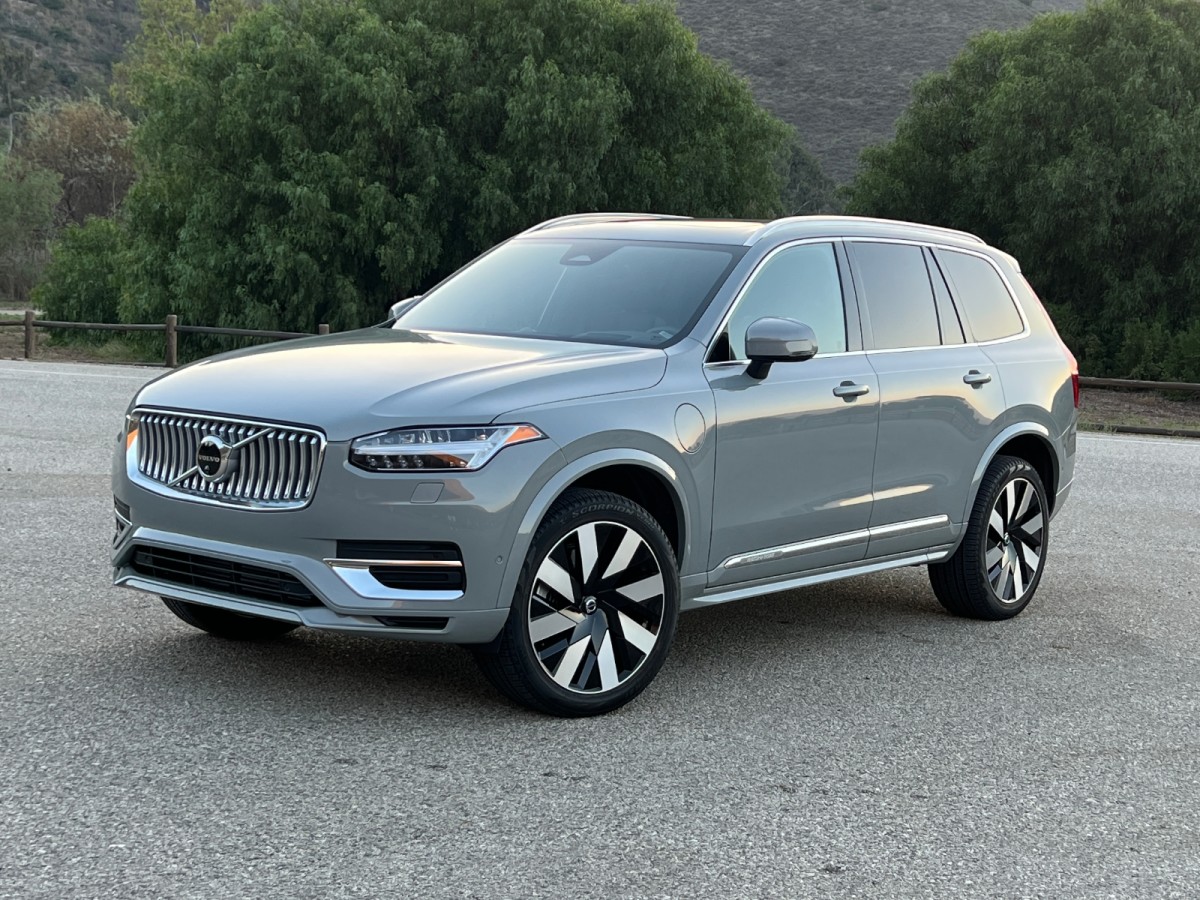
2024 Volvo XC90 Reviews SummaryWhen the current-generation XC90 went on sale nearly a decade ago, it marked the Swedish automaker’s pivot from its boxy and boring past to a future defined by design, quality, and technology. Volvo used the XC90’s blueprint throughout its lineup of cars, SUVs, and wagons, building a bridge to its electrified future. Has it overstayed its welcome? Perhaps, and it carries over this year without changes. But having spent a week driving the 2024 XC90 Recharge T8 plug-in hybrid, it remains an appealing choice in the luxury SUV segment. Verdict: Beautifully styled, inside and out, and offering a range of powertrains that includes a plug-in hybrid variant, the 2024 Volvo XC90 stands out in its field. However, it commands a steep price tag, and its safety tech isn’t as innovative as what you’ll find in some rival SUVs. | |
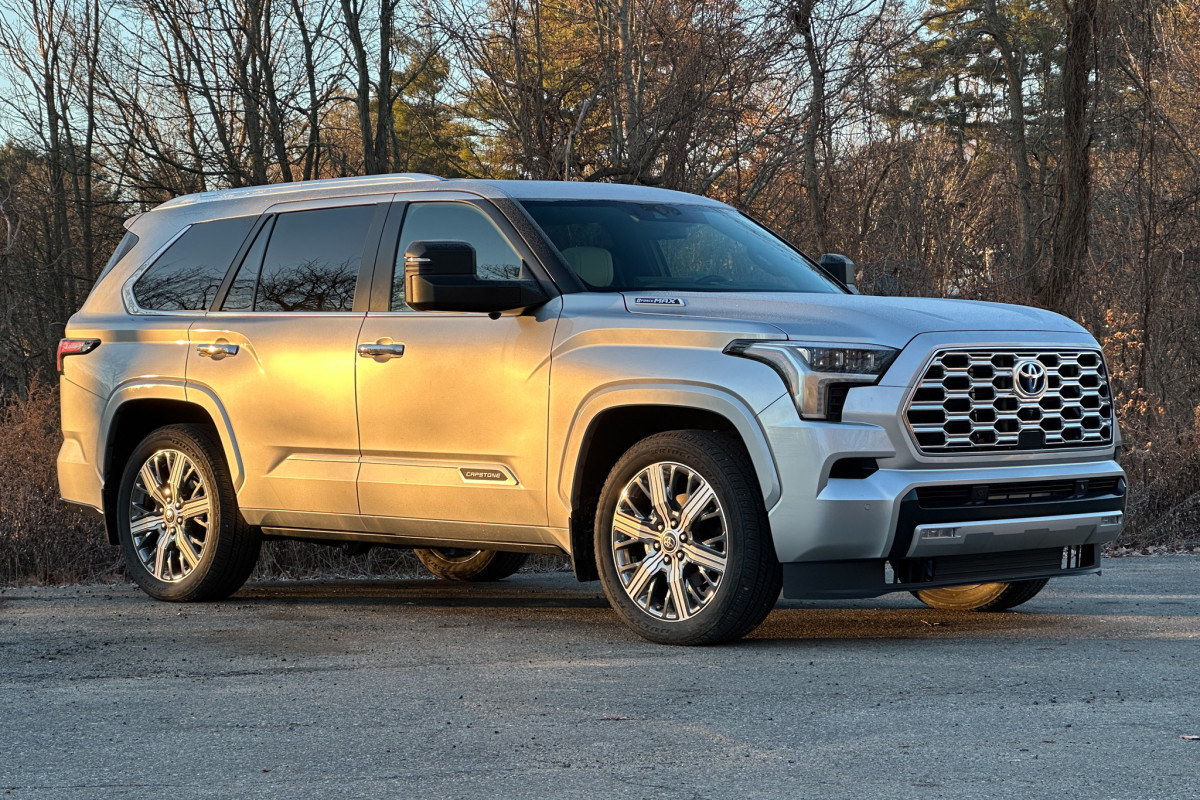
2025 Toyota Sequoia Reviews SummaryThe 2025 Sequoia is Toyota’s full-size SUV, based on the same platform as the Tundra pickup truck and using the same i-Force Max hybrid powertrain. It seats up to eight people, holds up to 2,460 litres of cargo, carries up to 640 kilograms (1,411 pounds) of payload, and tows up to 4,080 kilograms (9,000 pounds) of trailer. But the Toyota Sequoia comes with some fundamental flaws. Verdict: People buy full-size SUVs to carry lots of people, haul lots of cargo, and tow lots of weight. However, due to its packaging requirements, the Sequoia is a rock star only if you’re attaching a trailer to it, and even then, it’s not class-leading in capability. | |
No video found | No video found |
Popular Features & Specs | |
Engine2.0L 247 hp I4 | Engine3.4L 437 hp V6 Hybrid |
DrivetrainAWD | Drivetrain4X2 |
Seating Capacity7 | Seating Capacity8 |
Horsepower247 hp @ 5500 rpm | Horsepower437 hp @ 5200 rpm |
EV Battery Capacity | EV Battery Capacity1.9 kWh |
Fuel Economy (City)10.7 L(e)/100 km | Fuel Economy (City)11.2 L(e)/100 km |
Fuel Economy (Highway)8.7 L(e)/100 km | Fuel Economy (Highway)9.8 L(e)/100 km |
Engine | |
Engine Name2.0L 247 hp I4 | Engine Name3.4L 437 hp V6 Hybrid |
Torque258 lb-ft @ 1500 rpm | Torque583 lb-ft @ 2400 rpm |
Horsepower247 hp @ 5500 rpm | Horsepower437 hp @ 5200 rpm |
DrivetrainAWD | Drivetrain4X2 |
Fuel Economy | |
EV Battery Capacity | EV Battery Capacity1.9 kWh |
Fuel Economy (City)10.7 L(e)/100 km | Fuel Economy (City)11.2 L(e)/100 km |
Fuel Economy (Highway)8.7 L(e)/100 km | Fuel Economy (Highway)9.8 L(e)/100 km |
Interior | |
Seating Capacity7 | Seating Capacity8 |
Key Features | |
Navigation SystemStandard | Navigation System |
Sunroof/MoonroofStandard | Sunroof/MoonroofStandard |
Safety | |
Front Crash Overall5 | Front Crash Overall |
Side Crash Overall5 | Side Crash Overall |
Dimensions & Capacity | |
Cargo Space303 L | Cargo Space631 L |
Curb Weight2082 kg | Curb Weight2549 kg |
Height1775 mm | Height1892 mm |
Length4953 mm | Length5286 mm |
Width2141 mm | Width2027 mm |
Wheelbase2985 mm | Wheelbase3099 mm |
Maximum Payload549 kg | Maximum Payload785 kg |
Number of doors4 | Number of doors4 |
Maximum Towing Capacity2268 kg | Maximum Towing Capacity4318 kg |
Standard Towing Capacity | Standard Towing Capacity4318 kg |
Overview | ||
Listings | ||
Ratings & Reviews | ||
User reviews | ||
Expert reviews | 7.2 out of 10Read full review | 5.5 out of 10Read full review |
Pros & cons | Pros
Cons
| Pros
Cons
|
Summary | When the current-generation XC90 went on sale nearly a decade ago, it marked the Swedish automaker’s pivot from its boxy and boring past to a future defined by design, quality, and technology. Volvo used the XC90’s blueprint throughout its lineup of cars, SUVs, and wagons, building a bridge to its electrified future. Has it overstayed its welcome? Perhaps, and it carries over this year without changes. But having spent a week driving the 2024 XC90 Recharge T8 plug-in hybrid, it remains an appealing choice in the luxury SUV segment. Verdict: Beautifully styled, inside and out, and offering a range of powertrains that includes a plug-in hybrid variant, the 2024 Volvo XC90 stands out in its field. However, it commands a steep price tag, and its safety tech isn’t as innovative as what you’ll find in some rival SUVs. | The 2025 Sequoia is Toyota’s full-size SUV, based on the same platform as the Tundra pickup truck and using the same i-Force Max hybrid powertrain. It seats up to eight people, holds up to 2,460 litres of cargo, carries up to 640 kilograms (1,411 pounds) of payload, and tows up to 4,080 kilograms (9,000 pounds) of trailer. But the Toyota Sequoia comes with some fundamental flaws. Verdict: People buy full-size SUVs to carry lots of people, haul lots of cargo, and tow lots of weight. However, due to its packaging requirements, the Sequoia is a rock star only if you’re attaching a trailer to it, and even then, it’s not class-leading in capability. |
Video | No video found | No video found |
Popular Features & Specs | ||
Engine | 2.0L 247 hp I4 | 3.4L 437 hp V6 Hybrid |
Drivetrain | AWD | 4X2 |
Seating Capacity | 7 | 8 |
Horsepower | 247 hp @ 5500 rpm | 437 hp @ 5200 rpm |
EV Battery Capacity | 1.9 kWh | |
Fuel Economy (City) | 10.7 L(e)/100 km | 11.2 L(e)/100 km |
Fuel Economy (Highway) | 8.7 L(e)/100 km | 9.8 L(e)/100 km |
Engine | ||
Engine Name | 2.0L 247 hp I4 | 3.4L 437 hp V6 Hybrid |
Torque | 258 lb-ft @ 1500 rpm | 583 lb-ft @ 2400 rpm |
Horsepower | 247 hp @ 5500 rpm | 437 hp @ 5200 rpm |
Drivetrain | AWD | 4X2 |
Fuel Economy | ||
EV Battery Capacity | 1.9 kWh | |
Fuel Economy (City) | 10.7 L(e)/100 km | 11.2 L(e)/100 km |
Fuel Economy (Highway) | 8.7 L(e)/100 km | 9.8 L(e)/100 km |
Interior | ||
Seating Capacity | 7 | 8 |
Key Features | ||
Navigation System | Standard | |
Sunroof/Moonroof | Standard | Standard |
Safety | ||
Front Crash Overall | 5 | |
Side Crash Overall | 5 | |
Dimensions & Capacity | ||
Cargo Space | 303 L | 631 L |
Curb Weight | 2082 kg | 2549 kg |
Height | 1775 mm | 1892 mm |
Length | 4953 mm | 5286 mm |
Width | 2141 mm | 2027 mm |
Wheelbase | 2985 mm | 3099 mm |
Maximum Payload | 549 kg | 785 kg |
Number of doors | 4 | 4 |
Maximum Towing Capacity | 2268 kg | 4318 kg |
Standard Towing Capacity | 4318 kg | |
The 2024 Volvo XC90 was available in Canada in two model series: the B6 and the Recharge T8. The B6 featured a turbocharged and supercharged mild-hybrid four-cylinder engine, while the Recharge T8 was a plug-in hybrid offering superior performance and efficiency, with an estimated electric-only range of 53 kilometres. Both models came standard with all-wheel drive (AWD). The XC90 was offered in Core, Plus, and Ultimate trim levels, with prices ranging from $71,550 to $94,500, excluding destination charges and fees. The Recharge T8 in Ultimate trim, which we tested, included luxurious features such as massaging front seats, a premium headliner, active air suspension, and a high-end Bowers & Wilkins audio system. The exterior design was characterized by a subdued and earthy colour palette, with various wheel designs up to 21 inches in diameter, and a Bright theme with chrome and polished metal accents.
The interior of the XC90, though somewhat dated, was adorned with rich materials, especially in the Ultimate trim. Options included wool-blend upholstery or ventilated Nappa leather in various colours, complemented by an Orrefors crystal shift knob and natural wood trim. Volvo allowed buyers to mix and match paint, wheels, and upholstery to suit their preferences. The XC90's interior was designed for comfort, with features like power-adjustable and heated front seats, optional leather upholstery, and a four-zone climate control system. The panoramic glass roof added a touch of elegance, and the SUV could seat seven people, or six with optional second-row captain's chairs. Cargo capacity was up to 2,426 litres with the second-row seat folded.
The 2025 Toyota Sequoia, particularly in the U.S.-only 1794 Edition trim, was equivalent to the Canadian Sequoia Platinum trim but featured dark grey painted 20-inch wheels and less exterior chrome. The Sequoia lineup in Canada included the SR5 TRD Off-road, Limited, Platinum, and Capstone trims, with prices ranging from $87,174 to $106,175, including destination charges and fees. The Sequoia's exterior, dipped in Lunar Rock paint, garnered attention despite its few years on the market. The interior featured typical Toyota-grade plastic, with Saddle Tan leather upholstery and open-pore walnut wood trim not available in Canada. The Sequoia could seat up to eight people, with seven or six being more comfortable, especially in the third row. The Platinum and Capstone trims offered 10-way power-adjustable seats with heating, ventilation, and massage, while heated front seats, a heated steering wheel, and heated outboard mirrors were standard across the lineup.
The Sequoia's interior design was practical, with long rear doors for easier access to the second and third rows, though they could be cumbersome in tight parking spaces. The Platinum and Capstone trims featured second-row heated and ventilated captain's chairs, but they lacked sliding functionality and a console between them. The third-row seats offered stadium-style seating with limited headroom, and the high floor made entry and exit awkward for adults. Cargo space was limited with the third-row seats in use, offering only 325 litres, but folding them down increased capacity to 1,387 litres, with a maximum of 2,460 litres when both the third and second rows were folded.


The 2024 Volvo XC90 Recharge T8 combined an 18.8-kilowatt-hour battery and a 107-kilowatt electric motor with the B6 model’s supercharged and turbocharged 2.0-litre four-cylinder engine, producing 455 horsepower and 523 lb-ft of torque. This power was delivered to all four wheels through an eight-speed automatic transmission. The Recharge T8 offered 53 kilometres of electric-only driving in Pure mode, with an average fuel consumption of 8.9 litres per 100 kilometres in hybrid mode. However, during testing, the XC90 achieved only 45 kilometres of electric range and 9.6 L/100 km in combined driving. The SUV featured multiple driving modes, including Pure, Power, Hybrid, and Off-Road, with a ground clearance of up to 25 centimetres when equipped with optional air suspension. The XC90's performance was lively, with quick acceleration and impressive grip from its P275/40R21 Pirelli Scorpion Verde tires, but it lacked thrilling handling and had a firm ride on irregular pavement.
The 2025 Toyota Sequoia came standard with an i-Force Max hybrid powertrain, featuring a twin-turbocharged 3.4-litre V6 engine, an electric motor, a 1.87-kilowatt-hour nickel metal hydride battery pack, and a 10-speed automatic transmission. This setup produced 437 horsepower and 583 pound-feet of torque, with a part-time four-wheel-drive system standard in Canada. The Sequoia offered Eco, Normal, Sport, and Tow/Haul driving modes. Despite its weight of 2,790 kilograms, the Sequoia delivered quick acceleration and a satisfying engine note, though its fuel economy fell short of expectations, averaging 14.5 L/100 km compared to the predicted 11.7 L/100 km. The Sequoia's maximum towing capacity was 4,137 kilograms, with a peak payload of 640 kilograms. However, its driving dynamics were compromised by the rear-mounted battery pack and solid rear axle, resulting in unwanted body motion and a jittery ride. The Sequoia's steering was light and fluid, but the brakes lacked initial bite and were hard to modulate.
The 2024 Volvo XC90 Recharge T8 offered a well-equipped interior with power-adjustable and heated front seats, optional leather upholstery, wood trim, and a four-zone climate control system. The panoramic glass roof added natural light, and the SUV could seat seven people, or six with optional second-row captain's chairs. The front seats had adjustable lower leg support bolsters, but their winged shape could catch on clothing. The XC90's interior was comfortable, with a commanding driving position and good sightlines. However, the climate control system struggled to cool the cabin on hot days. The XC90 provided up to 1,854 litres of cargo capacity with the third-row seat folded, and 2,426 litres with the second-row seat down.
The 2025 Toyota Sequoia could carry up to eight people, with seven or six being more comfortable. The Platinum and Capstone trims featured 10-way power-adjustable seats with heating, ventilation, and massage, while heated front seats, a heated steering wheel, and heated outboard mirrors were standard. The Sequoia's long rear doors facilitated access to the second and third rows, but they could be cumbersome in tight spaces. The third-row seats offered stadium-style seating with limited headroom, and the high floor made entry and exit awkward for adults. Cargo space was limited with the third-row seats in use, offering only 325 litres, but folding them down increased capacity to 1,387 litres, with a maximum of 2,460 litres when both the third and second rows were folded.
The 2024 Volvo XC90 featured a 9-inch touchscreen infotainment system with Google Built-in technology, including Google Maps, Google Play, and Google Assistant. Apple CarPlay and SiriusXM satellite radio were also standard. The XC90 offered a 14-speaker Harman Kardon premium sound system or a 19-speaker Bowers & Wilkins audio system. The infotainment system was intuitive, with a stereo volume knob and radio tuning buttons. The XC90 also included a 12-inch digital instrumentation panel and an available head-up display.
The 2025 Toyota Sequoia came with a 12.3-inch digital instrumentation panel and a 14-inch touchscreen infotainment system, starting at the Limited trim. The Toyota Audio Multimedia system offered connected services plans with trial subscriptions. Wireless Apple CarPlay and Android Auto were standard, along with a 14-speaker JBL premium sound system. The Sequoia featured a volume knob but lacked a tuning knob, which was inconvenient. The Drive Connect’s natural voice recognition system, Intelligent Assistant, responded to a “Hey Toyota” wake command but had limitations. The Sequoia also included a surround-view camera system and a digital rearview mirror.
The 2024 Volvo XC90 was known for its safety features, earning a five-star rating from the NHTSA in every assessment except rollover resistance, where it received four stars. The IIHS named it a Top Safety Pick+ in 2023. However, the XC90's advanced driving assistance systems (ADAS) were not as innovative as some rivals. It included Pilot Assist, which combined adaptive cruise control with lane-centring assist, but it struggled with curves and passing lanes.
The 2025 Toyota Sequoia featured Toyota Safety Sense 2.5 (TSS 2.5), which included adaptive cruise control, forward collision warning, automatic emergency braking, lane departure warning, lane keep assist, lane-centring assist, and automatic high-beam headlights. Blind-spot monitoring and rear cross-traffic alert were also standard. However, the lane assist features could be aggravating, with frequent false lane departure warnings. Neither the IIHS nor the NHTSA had released crash-test ratings for the Sequoia at the time of publication.
CarGurus highlights
According to CarGurus experts, the overall rating for the 2024 Volvo XC90 is 7.2 out of 10, while the 2025 Toyota Sequoia scores 5.5 out of 10. Based on these ratings, the 2024 Volvo XC90 is the recommended choice, offering a more refined and efficient driving experience with a focus on luxury and safety.
Choose the 2025 Toyota Sequoia if:
- You need a full-size SUV with substantial towing capacity and off-road capabilities.
- You prefer a vehicle with a spacious interior and seating for up to eight passengers.
- You value a robust hybrid powertrain with strong acceleration and a satisfying engine note.


Choose the 2024 Volvo XC90 if:
- You prioritize a luxury SUV with a focus on safety and a high level of comfort.
- You want a plug-in hybrid with impressive electric-only range and efficient fuel consumption.
- You appreciate a refined interior with high-quality materials and customizable options.


CarGurus highlights
According to CarGurus experts, the overall rating for the 2024 Volvo XC90 is 7.2 out of 10, while the 2025 Toyota Sequoia scores 5.5 out of 10. Based on these ratings, the 2024 Volvo XC90 is the recommended choice, offering a more refined and efficient driving experience with a focus on luxury and safety.
Choose the 2025 Toyota Sequoia if:
Shop Now- You need a full-size SUV with substantial towing capacity and off-road capabilities.
- You prefer a vehicle with a spacious interior and seating for up to eight passengers.
- You value a robust hybrid powertrain with strong acceleration and a satisfying engine note.
Choose the 2024 Volvo XC90 if:
Shop Now- You prioritize a luxury SUV with a focus on safety and a high level of comfort.
- You want a plug-in hybrid with impressive electric-only range and efficient fuel consumption.
- You appreciate a refined interior with high-quality materials and customizable options.

By: CarGurus + AI
At CarGurus, our team of experienced automotive writers remain at the heart of our content operation, conducting hands-on car tests and writing insightful guides that are backed by years of industry experience. To complement this, we are harnessing AI to make our content offering more diverse and more helpful to shoppers than ever. To achieve this, our AI systems are based exclusively on CarGurus content, ratings and data, so that what we produce is both unique to CarGurus, and uniquely helpful to car shoppers.
