2024 Volvo XC90 Reviews, Pricing & Specs


Pros & cons
What we like
Stylish design
Comfortable
Great safety ratings
What to consider
Showing its age in several ways
Concerning Pilot Assist behavior
Questionable value for money
Expert review
Timeless beauty is a rarity in SUV design, yet the 2024 Volvo XC90 remains as appealing as ever.
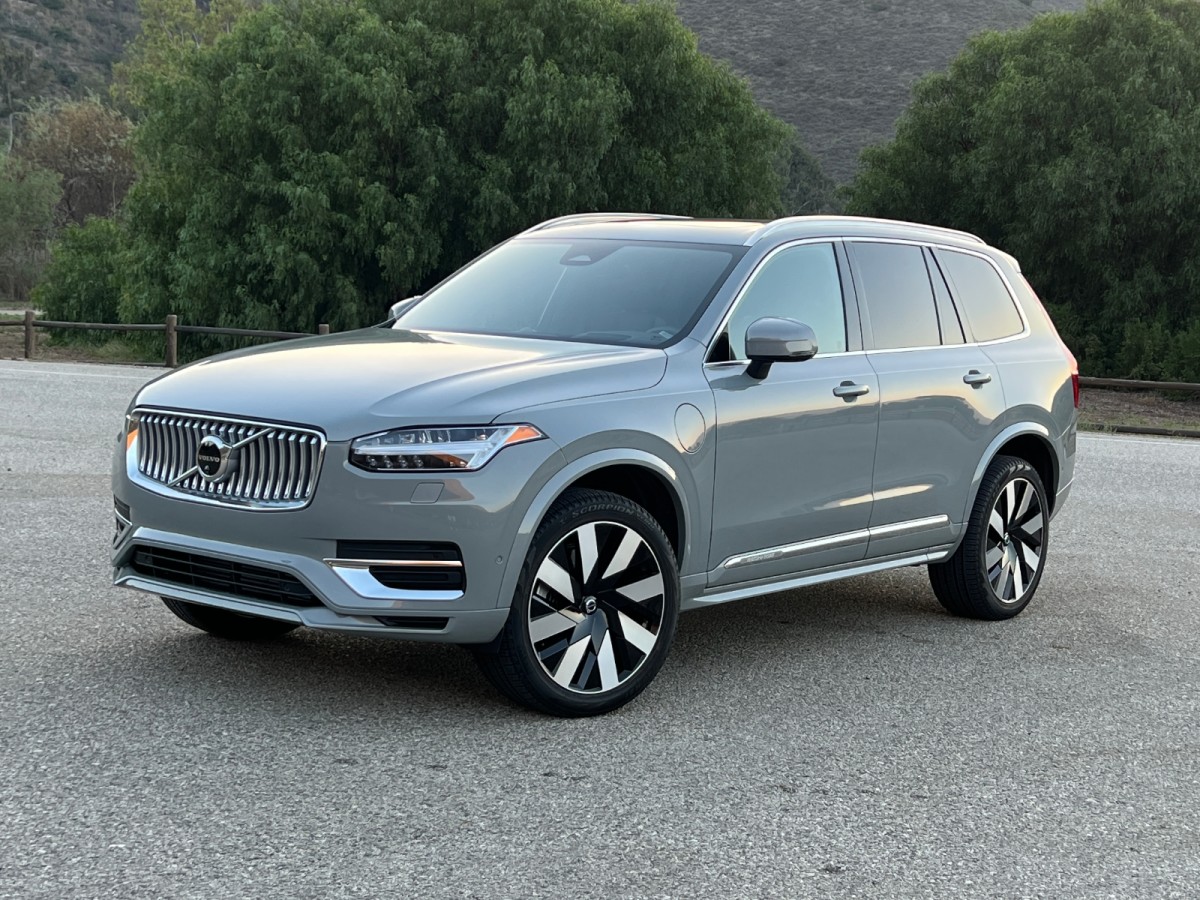
When the current-generation XC90 went on sale nearly a decade ago, it marked the Swedish automaker’s pivot from its boxy and boring past to a future defined by design, quality, and technology. Volvo used the XC90’s blueprint throughout its lineup of cars, SUVs, and wagons, building a bridge to its electrified future. Has it overstayed its welcome? Perhaps, and it carries over this year without changes. But having spent a week driving the 2024 XC90 Recharge T8 plug-in hybrid, it remains an appealing choice in the luxury SUV segment.
Verdict: Beautifully styled, inside and out, and offering a range of powertrains that includes a plug-in hybrid variant, the 2024 Volvo XC90 stands out in its field. However, it commands a steep price tag, and its safety tech isn’t as innovative as what you’ll find in some rival SUVs.
out of 10 expert review
Look & feel
In Canada, Volvo sells the 2024 XC90 in B6 and Recharge T8 model series. The XC90 B6 comes with a turbocharged and supercharged mild-hybrid four-cylinder engine. The XC90 Recharge T8 is a plug-in hybrid offering the most performance, the greatest efficiency, and 53 kilometres of estimated electric-only range. Both models have standard all-wheel drive (AWD).
In addition, Volvo offers the XC90 models in Core, Plus, and Ultimate trim levels. Prices range from $71,550 to $94,500, not including the $2,620 destination charge and other fees.
Our Recharge T8 test vehicle arrived in Ultimate trim with seven-passenger seating. It had the Lounge Package with massaging front seats and a premium headliner, an active air suspension, a high-end Bowers & Wilkins audio system, and a trailer hitch to take advantage of its 2,268-kilogram (5,000-pound) towing capacity. The manufacturer’s suggested retail price (MSRP) in Canada for this configuration comes to $107,709, including the destination charge and fees.
Volvo has mastered the art of colour and materials. The exterior paint palette is subdued and earthy, perfectly in keeping with a luxury SUV bending toward practicality, safety, and sustainability. You can choose from various appealing wheel designs sized up to 21 inches in diameter, and most versions of the SUV have a Bright theme with chrome and polished metal that starkly contrasts with the played-out, blacked-out trend.
The XC90’s interior design is dated but fitted with rich materials, especially in Ultimate trim. Volvo’s wool-blend upholstery is available, or you can get ventilated Nappa leather in various colours. The Orrefors crystal shift knob adds a touch of class, and natural wood trim decorates the cabin. Better yet, Volvo offers buyers more ability than some rivals to mix and match paint, wheels, and upholstery to satisfy picky customers.
Performance
To create the 2024 XC90 Recharge T8, Volvo adds an 18.8-kilowatt-hour battery and a 107-kilowatt electric motor to the B6 model’s supercharged and turbocharged 2.0-litre four-cylinder engine. Together, these components produce 455 horsepower and 523 lb-ft of torque, delivered to all four wheels through an eight-speed automatic transmission.
The battery, electric motor, and Pure driving mode offer 53 kilometres of electric-only driving before the gasoline engine fires up to continue your journey. Driven solely as a hybrid, the XC90 Recharge T8 should average 8.9 litres per 100 kilometres in combined driving. Switch the SUV into Power mode, and Volvo estimates a five-second dash from a stop to 100 km/h.
Recharging the Recharge is easy. Plug it into a standard household power outlet, and it takes about 12 hours. You can reduce that time by more than half using a 240-volt, 16-amp outlet. When driving, a Charge mode can also recharge the battery as you travel if you prefer to use Pure mode closer to your destination.
In addition to Pure and Power modes, Hybrid mode is available. Keep the XC90 Recharge charged up, and in this mode, the SUV automatically switches between electric- and gas-propelled driving, depending on the situation. Constant AWD mode splits power delivery between the front and rear wheels, and in Off-Road mode, the XC90 offers up to 25 centimetres of ground clearance when equipped with its optional air suspension.
There are two more battery modes in addition to Charge. Select Hold, and the XC90 will preserve the battery’s electricity for use at a later time. Auto is the most common battery mode, automatically using whatever juice you have to make driving the XC90 Recharge more efficient.
Evaluation day was hot, with temperatures in the low 30s and the Volvo’s four-zone climate control set to 20 degrees. Unsurprisingly, the XC90 Recharge T8 didn’t travel the indicated 53 kilometres of electric range in Pure mode, providing 45 kilometres instead. Also, after the gas engine turned on, the SUV fell short of Natural Resources Canada’s predicted fuel economy rating of 8.9 L/100 km in combined driving, delivering 9.6 L/100 km.
But that doesn’t tell the whole story. During a week of typical work-from-home suburban living, we kept the Volvo charged up and successfully performed school shuttle runs, local errands, and other near-to-home trips almost purely on electricity. The fuel range indicator barely moved during everyday use of the SUV.
Notably, as the battery approaches its minimum state of charge, the XC90 Recharge’s electric performance wanes. Increasingly, you must treat the accelerator pedal gently, or the gas engine will jump in to assist. It will do that anyway, even in Pure mode, when necessary. However, we noticed an overall degradation in EV performance after 40 kilometres of battery-only driving.
Once the gas engine turns on, the XC90 Recharge T8 shows off its lively side. There is plenty of power, the electric motor launching the SUV with authority, followed by a push of your body deeper into the driver’s seat as the turbocharger and supercharger hustle the SUV up to speed. The powertrain sounds good, too.
Unfortunately, that’s where the fun ends. The XC90 Recharge T8 is a luxury SUV, not a performance SUV. So, while it’s quick, it doesn’t reward you with thrilling handling, though the grip from the P275/40R21 Pirelli Scorpion Verde tires is impressive.
Also, the 21-inch wheels appear to degrade the ride quality, despite the test vehicle’s adaptive air suspension. The SUV feels overly firm on irregular pavement, and the aging vehicle architecture allows more shimmy and shake into the cabin than you expect in a modern flagship luxury SUV. In addition, the cabin isn’t quite as hushed as you might want in exchange for more than $100,000.
When driving enthusiastically in the mountains, we found you can hustle the XC90 Recharge T8, but not joyfully. The suspension allows more roll, pitch, and dive than is ideal for this environment, and the brakes began to fade with prolonged usage as we descended from elevation. But, remember, it was a hot day with winds blowing.
Also, the steering is neither sharp nor communicative. You use it to point the SUV in the dir ection you want to go and then add mid-corner corrections as necessary. These handling traits aren’t necessarily flaws because the XC90 Recharge T8 is a luxury SUV, first and foremost. But the firm ride on bumps and cracks in the road, and wiggly underlying structure, aren’t desirable, that’s for sure.
Form & function
Even with Core trim, the XC90 Recharge T8 is nicely equipped with power-adjustable and heated front seats, optional leather upholstery, wood trim, and a four-zone climate control system with PM2.5 air purification. Overhead, a panoramic glass roof bathes the interior in natural light, and Volvo equips it with a brilliant one-touch swipe control to open and close the sunshade.
As you move up to Plus and Ultimate trim, the SUV offers a heated steering wheel, heated rear seats, ventilated front seats with massage, upgraded interior lighting, an integrated booster child seat, rear door sunshades, and more.
The front seats have adjustable lower leg support bolsters, but when extended, their winged shape can catch on shorts as you step into the SUV, preventing you from entering the Volvo. It’s an odd observation and perhaps something that wouldn’t occur to seat designers in Sweden.
Once aboard, there is a learning curve to using the power seat adjustments. But, after you’ve set everything to your preferences, the XC90 is exceptionally comfortable, and the thick, round steering wheel rim feels terrific in your hands. Not only that, but you sit up high with a commanding driving position and good sightlines in all directions.
Unfortunately, on the sweltering testing day, the climate control system struggled to cool the XC90’s cabin when driving in Pure mode. We set it to 20 degrees, but it didn’t get that chilly inside until after the gas engine turned on.
The XC90 seats seven people, or six if you’ve chosen the second-row captain’s chairs. Our test model had a comfortable bench seat with individual climate zones and heating for the outboard locations. Access to the third-row seat is tight for adults, but these two locations are more accommodating than expected. Interior storage is adequate instead of abundant, and with the third-row seat occupied by people, there isn’t much cargo space on the other side of the hands-free power liftgate. Fold the third-row seat down, and Volvo claims the XC90 supplies up to 1,854 litres of cargo capacity. With the second-row seat dropped it can swallow 2,426 litres of cargo.
Technology
Nestled into the dashboard's centre, the 9-inch touchscreen infotainment system uses Google Built-in technology. That means it has a navigation system with Google Maps, provides access to Google Play, and features a conversational voice recognition tool called Google Assistant. Naturally, it is compatible with your Android-based device, and Volvo provides these features at no cost for four years. After that, subscription payments are necessary.
Apple CarPlay is also standard, along with SiriusXM satellite radio, which is complimentary for three months before you must sign up for a subscription. You can get an impressive 14-speaker Harman Kardon premium sound system or an astounding 19-speaker Bowers & Wilkins high-end audio system with Studio, Concert Hall, Jazz Club, and Individual Stage modes.
Volvo added Google Built-in to the XC90 in 2023, dramatically improving the SUV’s infotainment experience. Though the 9-inch touchscreen is small by modern standards, its proximity to the driver makes its size less of an issue. In addition, it is more intuitive to use than previous Volvo infotainment systems, and while the XC90’s cabin is a model of minimalism, the automaker wisely includes a stereo volume knob and radio tuning buttons.
Say “Hey Google” to rouse the digital voice assistant, then issue commands or ask questions. The experience is generally rewarding, but just as when you use Google as a search engine, you must sometimes try a different prompt to get the directions, information, or action you seek.
In addition, the XC90 Recharge T8 includes a 12-inch digital instrumentation panel with controls and displays that aren’t always intuitive. A head-up display is available, as is a surround-view camera to support the SUV’s standard front and rear parking sensors.
Safety
If you associate the Volvo brand with any trait, safety is it. The automaker pioneered the three-point seatbelt in the 1950s and has been an innovator in this area ever since.
Volvo’s dedication to protecting its customers and their loved ones is evident in the XC90’s crash-test ratings. The National Highway Traffic Safety Administration (NHTSA) gives the SUV a five-star rating in every assessment except rollover resistance, where it earns a four-star rating typical of SUVs. In addition, the Insurance Institute for Highway Safety (IIHS) says the XC90 was a Top Safety Pick+ in 2023 (the 2024 rating was unavailable as of this writing).
Unfortunately, the XC90 is not keeping pace with rivals or the automotive industry regarding advanced driving assistance systems (ADAS). The SUV checks the expected safety feature boxes and even includes an unusual large-animal detection system and a notification system to alert a distracted driver that traffic ahead is moving again. But nothing about the XC90’s ADAS is particularly innovative in the 2024 model year, and Volvo doesn’t offer a hands-free driving assistance system in this SUV.
Instead, you get Pilot Assist, which pairs adaptive cruise control with a lane-centring assist system. As is frequently true with semi-autonomous driving assist systems, Pilot Assist struggled with curves and passing lanes. It also had trouble discerning centre lane markings on rural two-lane roads and issued inaccurate lane-departure warnings where long shadows fell across the pavement. Still, overall, Pilot Assist and the XC90’s other ADAS features worked smoothly enough not to cause aggravation.
However, Pilot Assist made a substantial error when exiting a highway. We signaled to exit, steered onto the exit ramp, released the signal, and then Pilot Assist attempted to steer left and put us back on the highway. We corrected to keep the SUV on the intended path, but this sudden unwanted action from Pilot Assist permanently shook our confidence in the technology.
Cost-effectiveness
Despite numerous flaws, the 2024 Volvo XC90 Recharge T8 is a likeable plug-in hybrid SUV. But with a base price over $85,000, including the destination charge, it costs substantially more than an equivalent B6 model. That means it would take years before you would come out ahead regarding ongoing operational costs.
However, the XC90 Recharge’s closest rival, the two-row BMW X5 xDrive50e plug-in hybrid, costs roughly $8,000 more to start. Also, the new two-row Lexus RX 450h+ costs a couple of grand more but offers more standard equipment. Lexus has a TX 550h+ arriving soon with three rows and likely a higher price tag than the Volvo.
Overall, the Volvo XC90 has aged extraordinarily well, and there is plenty to like about the Recharge T8. But this SUV’s flaws are starting to stand out in starker relief than before, and increasing competition in the electrified luxury SUV space is simply adding pressure on Volvo to get the all-new electric EX90 into production.
Note: Images show a US model.

What owners say
I really wanted this vehicle to work out for us, but it’s just not practical to have people using the back row. Getting in and out is cumbersome just due to how the seats are designed and how they unlock and move. There’s just not enough room for it to be a good experience even for kids, much less a teenager. The back two rows need some re-thinking. For instance, Honda’s seat system in the back two rows is far superior.
September 5, 2025I personally like the car. It's my second. I like the ride and the safety. I put approximately 50 000 miles on my car per year, so I need a car that is reliable and safe. This car meets my desire.
May 26, 2025Trims & specs
Base MSRP $64,600 | Seating 6 |
Engine 2.0L 295 hp I4 | Cargo Capacity 10.7 cu ft |
Combined MPG 23 | Drivetrain AWD |
Base MSRP $70,600 | Seating 6 |
Engine 2.0L 295 hp I4 | Cargo Capacity 10.7 cu ft |
Combined MPG 23 | Drivetrain AWD |
Base MSRP $64,100 | Seating 7 |
Engine 2.0L 295 hp I4 | Cargo Capacity 10.7 cu ft |
Combined MPG 23 | Drivetrain AWD |
Base MSRP $70,100 | Seating 7 |
Engine 2.0L 295 hp I4 | Cargo Capacity 10.7 cu ft |
Combined MPG 23 | Drivetrain AWD |
Base MSRP $60,500 | Seating 7 |
Engine 2.0L 247 hp I4 | Cargo Capacity 10.7 cu ft |
Combined MPG 24 | Drivetrain AWD |
Base MSRP $61,500 | Seating 7 |
Engine 2.0L 295 hp I4 | Cargo Capacity 10.7 cu ft |
Combined MPG 23 | Drivetrain AWD |
Base MSRP $73,600 | Seating 7 |
Engine 2.0L 455 hp I4 Hybrid | Cargo Capacity 10.7 cu ft |
Combined MPG 58 | Drivetrain AWD |
Base MSRP $56,600 | Seating 7 |
Engine 2.0L 247 hp I4 | Cargo Capacity 10.7 cu ft |
Combined MPG 24 | Drivetrain AWD |
Base MSRP $80,100 | Seating 6 |
Engine 2.0L 455 hp I4 Hybrid | Cargo Capacity 10.7 cu ft |
Combined MPG 58 | Drivetrain AWD |
Base MSRP $71,900 | Seating 7 |
Engine 2.0L 455 hp I4 Hybrid | Cargo Capacity 10.7 cu ft |
Combined MPG 58 | Drivetrain AWD |
Base MSRP $79,600 | Seating 7 |
Engine 2.0L 455 hp I4 Hybrid | Cargo Capacity 10.7 cu ft |
Combined MPG 58 | Drivetrain AWD |
Base MSRP $74,100 | Seating 6 |
Engine 2.0L 455 hp I4 Hybrid | Cargo Capacity 10.7 cu ft |
Combined MPG 58 | Drivetrain AWD |


Pricing trends
MSRP range
$56,600 - $80,100
Current avg. market price
$55,738
Trending down by 0.4% this month
May 2026 - October 2026

