2024 Toyota Sequoia vs 2025 Hyundai Kona
Overview | |
MSRP$61,275 | MSRP$24,550 |
Listings11 | Listings347 |
Ratings & Reviews | |
User Reviews | User Reviews |
Expert reviews7.7 out of 10 | Expert reviews8.0 out of 10 |
Pros
Cons
| Pros
Cons
|
2024 Toyota Sequoia Reviews SummaryThe Toyota Sequoia gained a standard hybrid powertrain when it entered its third generation, just last year. While the tech updates were widely celebrated and the facelift considered unobjectionable even by its harshest critics, the move to hybrid power proved to be something of a mixed bag. Increased towing and hauling power bolstered the obvious advantage of improved fuel economy, but impact was somewhat dampened by the reduction in cargo and third-row space to accommodate the new battery. Verdict: The Sequoia may not be the most capable full-size SUV in the segment, and it’s certainly not the most spacious. It is, however, the only hybrid in its class, and it offers a blend of seating capacity, towing power, and fuel efficiency you won’t find elsewhere—at least, not if you don’t want to go diesel. | |
2025 Hyundai Kona Reviews SummaryThat there are no major changes for the 2025 Hyundai Kona is neither a surprise nor a bad thing. Not a surprise because this second-generation model only made its debut a year ago, making it too soon to expect any major updates. And not a bad thing because, frankly, the second-generation Kona was already a great subcompact SUV. Time does not stand still, though, particularly when it comes to crossovers, so it’s time to find out how the Kona performs one year on and whether it continues to deliver value in an increasingly busy part of the market. | |
Popular Features & Specs | |
Engine3.4L 437 hp V6 Hybrid | Engine2.0L 147 hp I4 |
Drivetrain4X2 | DrivetrainFWD |
Seating Capacity8 | Seating Capacity5 |
Horsepower437 hp @ 5200 rpm | Horsepower147 hp @ 6200 rpm |
EV Battery Capacity1.9 kWh | EV Battery Capacity |
MPG City21 | MPG City28 |
MPG Highway24 | MPG Highway35 |
Engine | |
Engine Name3.4L 437 hp V6 Hybrid | Engine Name2.0L 147 hp I4 |
Torque583 lb-ft @ 2400 rpm | Torque132 lb-ft @ 4500 rpm |
Horsepower437 hp @ 5200 rpm | Horsepower147 hp @ 6200 rpm |
Drivetrain4X2 | DrivetrainFWD |
Fuel Economy | |
EV Battery Capacity1.9 kWh | EV Battery Capacity |
MPG City21 | MPG City28 |
MPG Highway24 | MPG Highway35 |
Interior | |
Seating Capacity8 | Seating Capacity5 |
Key Features | |
Navigation System | Navigation SystemStandard |
Sunroof/MoonroofStandard | Sunroof/Moonroof |
Safety | |
Front Crash Overall | Front Crash Overall4 |
Side Crash Overall | Side Crash Overall5 |
Dimensions & Capacity | |
Cargo Space22.3 cu ft | Cargo Space25.5 cu ft |
Curb Weight5620 lbs | Curb Weight3005 lbs |
Height74.5 in | Height62.2 in |
Length208.1 in | Length171.3 in |
Width79.8 in | Width71.9 in |
Wheelbase122.0 in | Wheelbase104.7 in |
Maximum Payload1730 lbs | Maximum Payload1085 lbs |
Number of doors4 | Number of doors4 |
Maximum Towing Capacity9520 lbs | Maximum Towing Capacity |
Standard Towing Capacity9520 lbs | Standard Towing Capacity |
Overview | ||
MSRP | $61,275 | $24,550 |
Listings | ||
Ratings & Reviews | ||
User reviews | ||
Expert reviews | 7.7 out of 10Read full review | 8.0 out of 10Read full review |
Pros & cons | Pros
Cons
| Pros
Cons
|
Summary | The Toyota Sequoia gained a standard hybrid powertrain when it entered its third generation, just last year. While the tech updates were widely celebrated and the facelift considered unobjectionable even by its harshest critics, the move to hybrid power proved to be something of a mixed bag. Increased towing and hauling power bolstered the obvious advantage of improved fuel economy, but impact was somewhat dampened by the reduction in cargo and third-row space to accommodate the new battery. Verdict: The Sequoia may not be the most capable full-size SUV in the segment, and it’s certainly not the most spacious. It is, however, the only hybrid in its class, and it offers a blend of seating capacity, towing power, and fuel efficiency you won’t find elsewhere—at least, not if you don’t want to go diesel. | That there are no major changes for the 2025 Hyundai Kona is neither a surprise nor a bad thing. Not a surprise because this second-generation model only made its debut a year ago, making it too soon to expect any major updates. And not a bad thing because, frankly, the second-generation Kona was already a great subcompact SUV. Time does not stand still, though, particularly when it comes to crossovers, so it’s time to find out how the Kona performs one year on and whether it continues to deliver value in an increasingly busy part of the market. |
Video | ||
Popular Features & Specs | ||
Engine | 3.4L 437 hp V6 Hybrid | 2.0L 147 hp I4 |
Drivetrain | 4X2 | FWD |
Seating Capacity | 8 | 5 |
Horsepower | 437 hp @ 5200 rpm | 147 hp @ 6200 rpm |
EV Battery Capacity | 1.9 kWh | |
MPG City | 21 | 28 |
MPG Highway | 24 | 35 |
Engine | ||
Engine Name | 3.4L 437 hp V6 Hybrid | 2.0L 147 hp I4 |
Torque | 583 lb-ft @ 2400 rpm | 132 lb-ft @ 4500 rpm |
Horsepower | 437 hp @ 5200 rpm | 147 hp @ 6200 rpm |
Drivetrain | 4X2 | FWD |
Fuel Economy | ||
EV Battery Capacity | 1.9 kWh | |
MPG City | 21 | 28 |
MPG Highway | 24 | 35 |
Interior | ||
Seating Capacity | 8 | 5 |
Key Features | ||
Navigation System | Standard | |
Sunroof/Moonroof | Standard | |
Safety | ||
Front Crash Overall | 4 | |
Side Crash Overall | 5 | |
Dimensions & Capacity | ||
Cargo Space | 22.3 cu ft | 25.5 cu ft |
Curb Weight | 5620 lbs | 3005 lbs |
Height | 74.5 in | 62.2 in |
Length | 208.1 in | 171.3 in |
Width | 79.8 in | 71.9 in |
Wheelbase | 122.0 in | 104.7 in |
Maximum Payload | 1730 lbs | 1085 lbs |
Number of doors | 4 | 4 |
Maximum Towing Capacity | 9520 lbs | |
Standard Towing Capacity | 9520 lbs | |
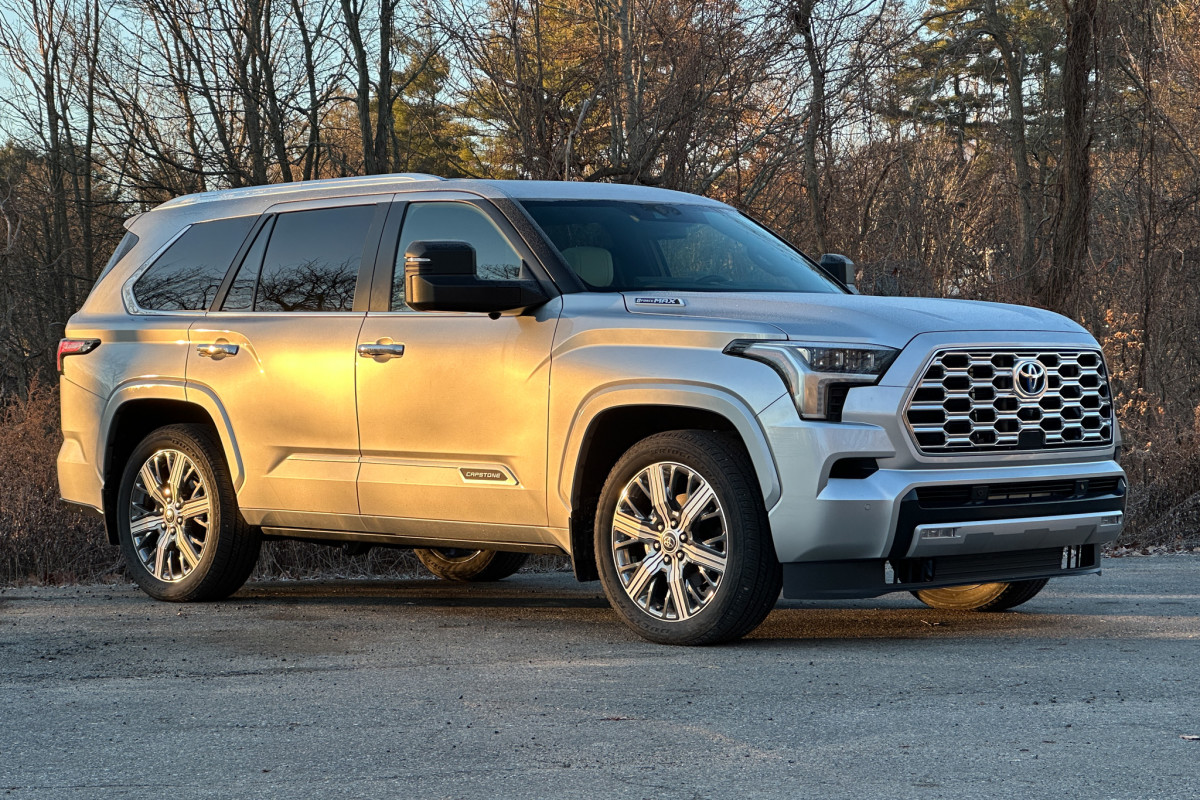
The 2024 Toyota Sequoia shared its platform with the Tundra pickup, and this was evident in its design cues, such as hexagonal grilles, wheel arches, and strong fender creases. The exterior colour significantly influenced its appearance, with the Capstone model featuring more chrome brightwork. Our tester, in Celestial Silver, appeared somewhat dated, reminiscent of a "cop car." Inside, the Sequoia closely resembled the Tundra and other Toyota vehicles, with a blocky, geometric dash layout and physical controls for volume and climate. The Capstone trim boasted semi-aniline leather upholstery, while other trims offered SofTex leatherette or standard leather. All models featured power-adjustable front seats and a moonroof, enhancing the interior's customization and comfort.
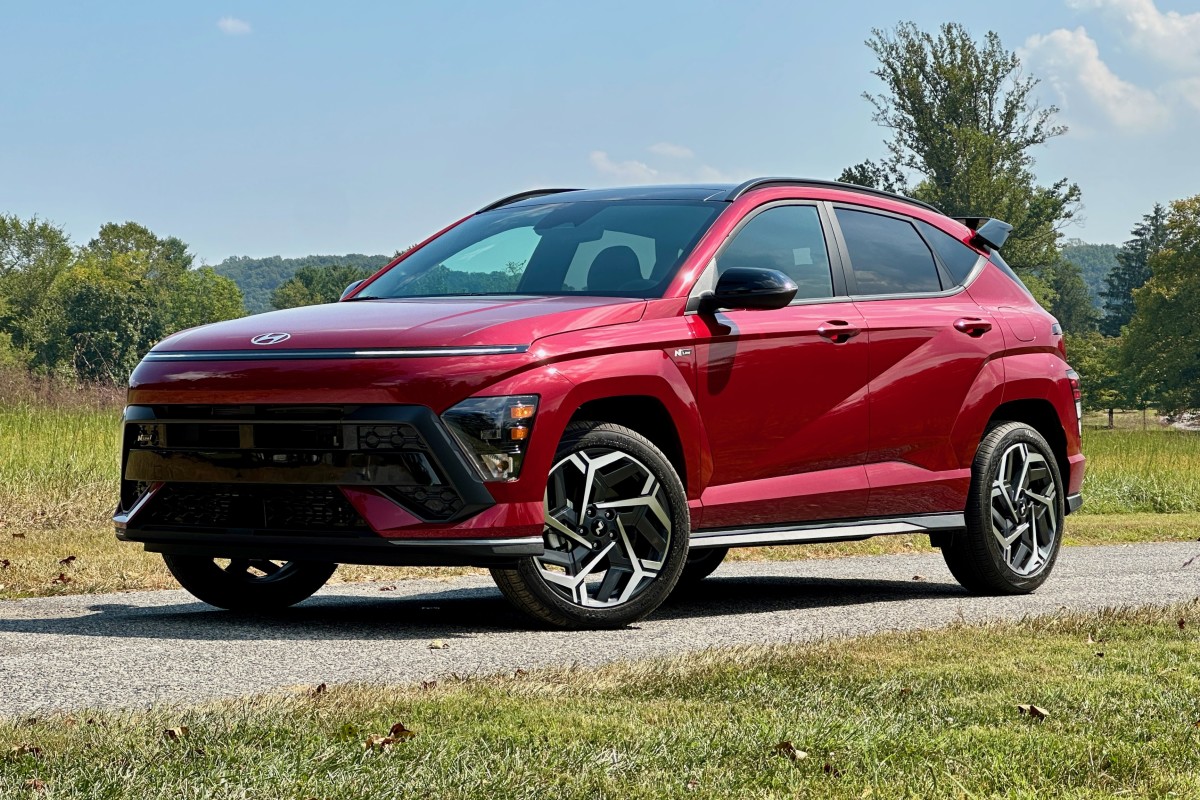
The 2025 Hyundai Kona, while visually unchanged from the 2024 model, maintained a fresh and distinctive appearance in the crossover class. Its flush, single-piece grille and ultra-slim LED light bars gave it a futuristic look. The Kona's design, with its curves and angles, was satisfactory from most perspectives. The newer model was notably larger, offering more interior space and a more assertive stance. The Kona N Line featured a sportier design with body-coloured bumpers and cladding. The interior remained unchanged, providing a solid and airy feel, with tech features that impressed. The Trend package and N Line offered additional features like a sunroof and powered liftgate.


The 2024 Toyota Sequoia was exclusively available in a hybrid format, utilizing Toyota's iForce MAX hybrid powertrain. This combined a twin-turbo V6 engine with an electric motor, producing 427 horsepower and 583 lb-ft of torque, surpassing its V8 predecessor. Fuel economy improved significantly, rated at 11.7 L/100 km combined with 4WD. The Sequoia featured standard 4WD in Canada, with a part-time system and a 10-speed automatic transmission. The TRD Pro models included a skid plate, while the SR5 TRD Off-Road offered adventure-readiness with unique tires, off-road suspension, and driver-assist features. The maximum towing capacity was 4,137 kilograms, with towing-related upgrades available.
The 2025 Hyundai Kona offered a choice between a fully electric drivetrain and gas-powered models. The Essential and Preferred trims featured a 2.0-litre naturally aspirated four-cylinder engine with 147 horsepower and 132 lb-ft of torque, paired with Hyundai's Intelligent Variable Transmission. The Kona N Line, with a turbocharged 1.6-litre four-cylinder engine, delivered 190 horsepower and 195 lb-ft of torque, coupled with an eight-speed automatic transmission. AWD was available for an additional cost on Essential and Preferred trims and standard on the N Line. AWD models featured a multi-link rear suspension for improved ride and handling.
The 2024 Toyota Sequoia Capstone featured automatic power-deploying running boards, aiding entry for shorter individuals. Cargo space was generous, with a maximum of 2,460 litres with seats folded. The second-row seats were easy to move for third-row access, but the third-row seats did not create a flat load floor due to the hybrid powertrain's battery pack. Headroom and legroom measurements varied across rows, with the Sequoia offering competitive space compared to rivals. Second-row captain's chairs were available on higher trims, providing comfort but lacking bolstering.
The 2025 Hyundai Kona offered 723 litres of cargo capacity with rear seats in place, expanding to 1,803 litres when folded. Rear legroom was adequate at 970 millimetres, with 972 mm of headroom. The front seats provided a generous range of movement, and the steering wheel was adjustable. The drive selector's relocation created additional storage space. Interior storage was excellent, with numerous compartments. Upholstery options varied by trim, with heated front seats standard in Canada. Climate control options ranged from basic to dual-zone automatic, with physical controls for ease of use.
The 2024 Toyota Sequoia Capstone trim was equipped with a 14-inch centre touchscreen, offering wireless Apple CarPlay and Android Auto. The Toyota Audio Multimedia system prioritized functionality over flashiness. A 12.3-inch driver information display was standard across trims, with a Panoramic View monitor available on higher trims. The Capstone also featured a 10-inch colour head-up display and a 14-speaker JBL Premium Audio system.
The 2025 Hyundai Kona featured a 12.3-inch central touchscreen infotainment display across all trims, with wireless Android Auto and Apple CarPlay. The Preferred trim with the Trend package and the N Line offered wireless smartphone charging and Hyundai's digital key. The N Line trim included a 12.3-inch digital instrument cluster. Audiophiles could upgrade to the N Line with the Ultimate package for an eight-speaker Bose audio system. Hyundai's Bluelink connectivity allowed for over-the-air software updates.
The 2024 Toyota Sequoia included the Toyota Safety Sense 2.5 suite as standard, featuring a pre-collision system, lane-departure alert, adaptive cruise control, and road-sign recognition. Front and rear parking sensors with automatic braking and blind-spot monitoring were also standard. An optional trailer backup guide was available on higher trims. The Sequoia had not been rated by safety organizations, but the similar Tundra earned a Top Safety Pick+ designation.
The 2025 Hyundai Kona impressed with its standard safety features, including Forward Collision-Avoidance Assist, Lane Keeping Assist, Blind-Spot Collision Warning, and more. The Preferred trim added enhanced collision-avoidance features, while the N Line with the Ultimate package included advanced features like Highway Driving Assist. All Konas featured six airbags, electronic stability control, and a tire pressure monitoring system. The Kona received a Top Safety Pick+ rating from the IIHS.
CarGurus highlights
According to CarGurus experts, the overall rating for the 2024 Toyota Sequoia is 7.7 out of 10, while the 2025 Hyundai Kona scores 8.0 out of 10. Based on these ratings, the 2025 Hyundai Kona is the recommended choice, offering a blend of advanced technology, safety features, and versatility in a compact package.
Choose the 2024 Toyota Sequoia if:
- You need a powerful hybrid SUV with substantial towing capacity.
- You prioritize a spacious interior with flexible seating configurations.
- You value comprehensive safety features as standard across all trims.


Choose the 2025 Hyundai Kona if:
- You prefer a compact crossover with a futuristic design and advanced tech features.
- You seek a vehicle with excellent safety ratings and standard safety equipment.
- You want a versatile and efficient vehicle with both gas and electric options.


CarGurus highlights
According to CarGurus experts, the overall rating for the 2024 Toyota Sequoia is 7.7 out of 10, while the 2025 Hyundai Kona scores 8.0 out of 10. Based on these ratings, the 2025 Hyundai Kona is the recommended choice, offering a blend of advanced technology, safety features, and versatility in a compact package.
Choose the 2024 Toyota Sequoia if:
Shop Now- You need a powerful hybrid SUV with substantial towing capacity.
- You prioritize a spacious interior with flexible seating configurations.
- You value comprehensive safety features as standard across all trims.
Choose the 2025 Hyundai Kona if:
Shop Now- You prefer a compact crossover with a futuristic design and advanced tech features.
- You seek a vehicle with excellent safety ratings and standard safety equipment.
- You want a versatile and efficient vehicle with both gas and electric options.

By: CarGurus + AI
At CarGurus, our team of experienced automotive writers remain at the heart of our content operation, conducting hands-on car tests and writing insightful guides that are backed by years of industry experience. To complement this, we are harnessing AI to make our content offering more diverse and more helpful to shoppers than ever. To achieve this, our AI systems are based exclusively on CarGurus content, ratings and data, so that what we produce is both unique to CarGurus, and uniquely helpful to car shoppers.
