Jeep Wrangler vs Hyundai Ioniq 9
Overview | |
MSRP$36,035 | MSRP$58,995 |
Listings4861 | Listings154 |
Ratings & Reviews | |
User Reviews | User Reviews |
Expert reviews6.3 out of 10 | Expert reviews7.3 out of 10 |
Pros
Cons
| Pros
Cons
|
Reviews SummaryThere are no significant updates for the 2026 Jeep Wrangler, but it does add an enhanced hinge system that makes the doors easier to remove plus some limited-edition exterior colours. As one of the original rough-and-tumble off-roaders, the Wrangler maintains an aura of adventure with a minimalist, rugged interior with analog gauges. The Wrangler shines in an off-road environment but has just enough tech and comfort to double as a commuter car. Verdict: The 2026 Jeep Wrangler is full of compromises. It has unquestionable prowess in the dirt and projects fun-loving confidence. But in a city or suburban environment, drivers will have to deal with a noisy cabin and poor fuel economy. | |
Reviews SummaryAlthough the 2026 Hyundai Ioniq 9 isn’t the first three-row electric SUV through the door, it may be the best choice for most shoppers. With a starting price of $59,999 before fees and qualifying for EV rebates where they still exist, it’s much more affordable than a Tesla Model X or a Rivian R1S. And its standard 110.3-kWh battery pack provides a long range compared to a base-model Kia EV9. Verdict: The Hyundai Ioniq 9 isn’t a perfect vehicle, but it offers terrific passenger space, good tech, and family-friendly features. Shoppers may find its design polarizing — you could easily say the same about the Hyundai Ioniq 5 or the Ioniq 6 — but families interested in electric vehicles will do well to test drive this new option. | |
No video found | |
Popular Features & Specs | |
Engine3.6L 285 hp V6 | Engine215 hp Electric |
Drivetrain4X4 | DrivetrainRWD |
Seating Capacity4 | Seating Capacity7 |
Horsepower285 hp @ 6400 rpm | Horsepower |
EV Battery Capacity | EV Battery Capacity110 kWh |
MPG City17 | MPG City103 |
MPG Highway23 | MPG Highway81 |
Battery Charge Time (120V) | Battery Charge Time (120V)93 hours |
Battery Charge Time (240V) | Battery Charge Time (240V)9.7 hours |
Engine | |
Engine Name3.6L 285 hp V6 | Engine Name215 hp Electric |
Torque260 lb-ft @ 4800 rpm | Torque |
Horsepower285 hp @ 6400 rpm | Horsepower |
Battery Charge Time (120V) | Battery Charge Time (120V)93 hours |
Battery Charge Time (240V) | Battery Charge Time (240V)9.7 hours |
Drivetrain4X4 | DrivetrainRWD |
Fuel Economy | |
EV Battery Capacity | EV Battery Capacity110 kWh |
MPG City17 | MPG City103 |
MPG Highway23 | MPG Highway81 |
Interior | |
Seating Capacity4 | Seating Capacity7 |
Key Features | |
Navigation System | Navigation SystemStandard |
Safety | |
Front Crash Overall | Front Crash Overall5 |
Side Crash Overall | Side Crash Overall5 |
Dimensions & Capacity | |
Cargo Space31.7 cu ft | Cargo Space21.9 cu ft |
Curb Weight4003 lbs | Curb Weight5507 lbs |
Height73.6 in | Height70.5 in |
Length166.8 in | Length199.2 in |
Width73.9 in | Width78.0 in |
Wheelbase96.8 in | Wheelbase123.2 in |
Maximum Payload | Maximum Payload1393 lbs |
Number of doors2 | Number of doors4 |
Maximum Towing Capacity2000 lbs | Maximum Towing Capacity3500 lbs |
Overview | ||
MSRP | $36,035 | $58,995 |
Listings | ||
Ratings & Reviews | ||
User reviews | ||
Expert reviews | 6.3 out of 10Read full review | 7.3 out of 10Read full review |
Pros & cons | Pros
Cons
| Pros
Cons
|
Summary | There are no significant updates for the 2026 Jeep Wrangler, but it does add an enhanced hinge system that makes the doors easier to remove plus some limited-edition exterior colours. As one of the original rough-and-tumble off-roaders, the Wrangler maintains an aura of adventure with a minimalist, rugged interior with analog gauges. The Wrangler shines in an off-road environment but has just enough tech and comfort to double as a commuter car. Verdict: The 2026 Jeep Wrangler is full of compromises. It has unquestionable prowess in the dirt and projects fun-loving confidence. But in a city or suburban environment, drivers will have to deal with a noisy cabin and poor fuel economy. | Although the 2026 Hyundai Ioniq 9 isn’t the first three-row electric SUV through the door, it may be the best choice for most shoppers. With a starting price of $59,999 before fees and qualifying for EV rebates where they still exist, it’s much more affordable than a Tesla Model X or a Rivian R1S. And its standard 110.3-kWh battery pack provides a long range compared to a base-model Kia EV9. Verdict: The Hyundai Ioniq 9 isn’t a perfect vehicle, but it offers terrific passenger space, good tech, and family-friendly features. Shoppers may find its design polarizing — you could easily say the same about the Hyundai Ioniq 5 or the Ioniq 6 — but families interested in electric vehicles will do well to test drive this new option. |
Video | No video found | |
Popular Features & Specs | ||
Engine | 3.6L 285 hp V6 | 215 hp Electric |
Drivetrain | 4X4 | RWD |
Seating Capacity | 4 | 7 |
Horsepower | 285 hp @ 6400 rpm | |
EV Battery Capacity | 110 kWh | |
MPG City | 17 | 103 |
MPG Highway | 23 | 81 |
Battery Charge Time (120V) | 93 hours | |
Battery Charge Time (240V) | 9.7 hours | |
Engine | ||
Engine Name | 3.6L 285 hp V6 | 215 hp Electric |
Torque | 260 lb-ft @ 4800 rpm | |
Horsepower | 285 hp @ 6400 rpm | |
Battery Charge Time (120V) | 93 hours | |
Battery Charge Time (240V) | 9.7 hours | |
Drivetrain | 4X4 | RWD |
Fuel Economy | ||
EV Battery Capacity | 110 kWh | |
MPG City | 17 | 103 |
MPG Highway | 23 | 81 |
Interior | ||
Seating Capacity | 4 | 7 |
Key Features | ||
Navigation System | Standard | |
Safety | ||
Front Crash Overall | 5 | |
Side Crash Overall | 5 | |
Dimensions & Capacity | ||
Cargo Space | 31.7 cu ft | 21.9 cu ft |
Curb Weight | 4003 lbs | 5507 lbs |
Height | 73.6 in | 70.5 in |
Length | 166.8 in | 199.2 in |
Width | 73.9 in | 78.0 in |
Wheelbase | 96.8 in | 123.2 in |
Maximum Payload | 1393 lbs | |
Number of doors | 2 | 4 |
Maximum Towing Capacity | 2000 lbs | 3500 lbs |
The 2026 Hyundai Ioniq 9 presented a polarizing design that drew both admiration and criticism. Its aerodynamic shape, inspired by smooth pebbles and midcentury modern sofas, was crafted to house seven passengers comfortably. Measuring 5,060 millimetres in length with a 3,130 mm wheelbase, the Ioniq 9 offered impressive interior volume, akin to a Honda Pilot in length but with a wheelbase longer than a Chevy Tahoe. Despite its size, it achieved a 0.27 drag coefficient, making it more aerodynamic than larger SUVs like the Rivian. However, its design was not universally praised, with a swooping roofline and a stubby rear end inspired by a ship's stern, creating a dissonant styling. The rear view, with LED taillights wrapping around 75 percent of the tail's circumference, was particularly distinctive.
The Ioniq 9 was available in seven paint colours in Canada, with options varying by trim. The base Essential RWD trim defaulted to Sunset Brown, while the Preferred AWD offered black, white, and grey. The Luxury package added Biophilic Blue and Ionosphere Green, along with extra gloss and matte grey finishes. Wheel sizes ranged from 19 to 21 inches, with unique designs for higher trims. Inside, the Ioniq 9 boasted a spacious and airy interior, thanks to its EV platform allowing flat floors and minimal clutter. The dashboard featured multiple cubbies, and higher trims included a panoramic sunroof. Upholstery options varied from cloth to leatherette, with black and grey combinations available. Despite some plastic elements, the interior maintained a high-quality feel, though the seats lacked thigh support.
The 2026 Jeep Wrangler maintained its iconic, upright military-style stance with a distinct seven-slot grille. Its removable doors and roof, along with a foldable windshield, offered a complete open-air experience. The Wrangler's numerous customization and trim options allowed it to range from basic to luxurious. Our test vehicle, a Willys ’41 model, featured a special army green colour with matching painted wheels and a ’41 hood graphic. The Wrangler's utilitarian interior, with rugged materials and a minimalist design, was practical for off-road adventures. Weatherproof floor mats and tan-coloured cloth seats were standard, and hard plastic surfaces were fitting for its adventurous nature. The Wrangler retained hard buttons and dials for the HVAC system, with some redundant climate controls in the touchscreen.
Jeep's designers added playful Easter eggs throughout the Wrangler's interior and exterior, such as an old-school Wrangler climbing up the windshield and Morse code "JL" generation designation in the cargo area. The Wrangler's powertrain options included the Pentastar 3.6-litre V6, a 2.0-litre four-cylinder turbo, and a 6.4-litre Hemi V8. Our Willys ’41 test vehicle featured the V6 engine, delivering 285 horsepower and 260 pound-feet of torque, paired with an automatic transmission. The Wrangler's maneuverability was impressive, with a tight turning radius suitable for both off-road trails and urban environments. However, the knobby off-road tires and upright stance contributed to rough handling and significant tire and wind noise at highway speeds.

The 2026 Hyundai Ioniq 9 was equipped with a 110.3-kWh battery pack on Hyundai's e-GMP platform, offering a larger battery than the Kia EV9 and Tesla Model X but smaller than Rivian and GM's batteries. The base Essential trim featured a single rear-mounted 160-kW electric motor, producing 215 horsepower with rear-wheel drive. Other trims had dual-motor all-wheel-drive systems, with the Preferred AWD generating 303 hp and the Preferred AWD+ producing 422 hp. Despite its power, the Ioniq 9 demonstrated impressive energy efficiency, often exceeding the 500-kilometre range estimate. The Ioniq 9's chassis was softly sprung, providing a smooth ride but lacking cornering sophistication. It offered a quiet cabin, thanks to active noise cancellation and sound-absorbing features. Towing capacity was 1,587 kilograms for the RWD Essential and 2,268 kilograms for AWD models. Charging options included Tesla-style NACS superchargers and CCS-port Level 3 chargers, with varying charging times depending on the charger type.
The 2026 Jeep Wrangler offered a range of powertrains, including the Pentastar 3.6-litre V6, a 2.0-litre four-cylinder turbo, and a 6.4-litre Hemi V8. Most models came with an eight-speed automatic transmission, while the V6 engine had a six-speed manual option. Our Willys ’41 test vehicle featured the V6 engine, delivering 285 horsepower and 260 pound-feet of torque. The Wrangler's low-end torque was beneficial for off-road crawling and urban maneuverability. Its excellent turning radius made it suitable for tight city spaces. However, the knobby off-road tires and upright stance resulted in rough handling and significant tire and wind noise at highway speeds.
The 2026 Hyundai Ioniq 9 focused on family-SUV practicality, seating seven with a middle-row bench seat or six with the Preferred AWD+ Ultimate Calligraphy Package's ventilated captain's chairs. The sliding centre console improved access for middle-row passengers. The Ioniq 9 offered 1,086 millimetres of legroom in the middle row and 813 mm in the third row, comparable to the Hyundai Palisade. The rear doors provided easy access, and dual-zone climate control with air vents in all rows was standard. Cargo space was 620 litres behind the third row, expanding to 1,323 and 2,462 litres with seats folded. The small front trunk was best for storing the charging cable and adapter.
The Jeep Wrangler's practicality was a double-edged sword. Its 24.6 centimetres of ground clearance and ability to ford 75 centimetres of water made it suitable for off-road and urban environments. The four-door model offered 898 litres of cargo space behind the second row, expanding to 2,050 litres with seats folded. The two-door model had 365 litres behind the second row and 898 litres behind the front seats. The swing-out tailgate and lift-up rear glass provided easy cargo access. However, the high step-in height and tight back seat limited passenger comfort, and front seat space was narrow.
The 2026 Hyundai Ioniq 9 featured dual curved 12.3-inch displays for its infotainment interface, similar to higher-level Hyundai models. Standard features included SiriusXM Satellite Radio, wireless Android Auto and Apple CarPlay, and a wireless charging pad. However, the charging pad struggled to keep up with high-demand devices. Six USB-C ports provided ample charging options. The 14-speaker Bose audio system, standard with the Luxury package and Preferred AWD+ configurations, delivered impressive sound quality.
The Jeep Wrangler offered a 12.3-inch touchscreen with wireless Apple CarPlay and Android Auto. A two-year free trial of the Trails Offroad app was included, and optional tech features included a nine-speaker Alpine audio system, digital rear-view mirror, forward-facing TrailCam, and a 7-inch display screen in the instrument cluster. Our Willys ’41 test vehicle had many optional tech features, including the Alpine audio system, which was crucial for highway driving due to cabin noise.
The 2026 Hyundai Ioniq 9 had not yet received crash-test ratings from NHTSA or IIHS. However, it included an impressive array of advanced driver assistance systems (ADAS) as standard, such as collision avoidance, lane-guidance technologies, driver attention warning, safe-exit assist, and Highway Driving Assist 2. The Preferred AWD's Luxury package and all Preferred AWD+ versions added a surround-view monitor and blind-spot view monitor.
The Jeep Wrangler offered limited standard safety features, with most advanced safety tech available at a cost. The base Sport trim lacked extra safety tech, while the Sport S trim offered optional features like blind spot monitoring and rear cross-traffic alert. These features became standard at the Rubicon X trim level. The Wrangler received mixed safety ratings from IIHS, with "Good" ratings in some crash tests and "Poor" and "Marginal" scores for headlights.
CarGurus highlights
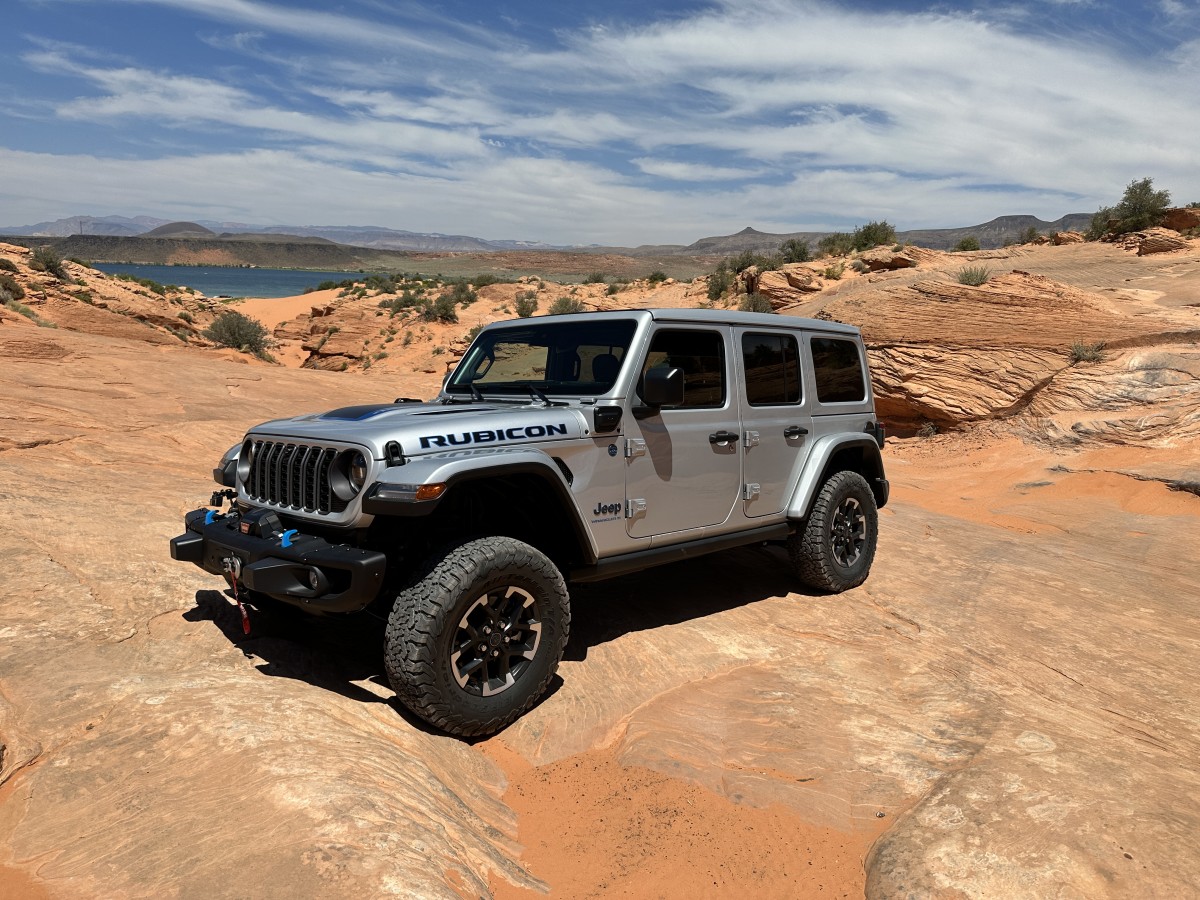
According to CarGurus experts, the overall rating for the 2026 Hyundai Ioniq 9 is 7.3 out of 10, while the 2026 Jeep Wrangler scores 6.3 out of 10. Based on these ratings, the Hyundai Ioniq 9 is the recommended choice for those seeking a well-rounded, family-friendly SUV with advanced technology and impressive energy efficiency.
Choose the 2026 Hyundai Ioniq 9 if:
- You prioritize a spacious and quiet interior with advanced technology features.
- You need a family-friendly SUV with ample cargo space and seating for up to seven.
- You value energy efficiency and a smooth ride in an electric vehicle.


Choose the 2026 Jeep Wrangler if:
- You seek a rugged, off-road-capable vehicle with iconic styling and customization options.
- You need a vehicle with excellent maneuverability for both urban and off-road environments.
- You appreciate a utilitarian design with practical features for adventurous driving.


CarGurus highlights
According to CarGurus experts, the overall rating for the 2026 Hyundai Ioniq 9 is 7.3 out of 10, while the 2026 Jeep Wrangler scores 6.3 out of 10. Based on these ratings, the Hyundai Ioniq 9 is the recommended choice for those seeking a well-rounded, family-friendly SUV with advanced technology and impressive energy efficiency.
Choose the 2026 Hyundai Ioniq 9 if:
Shop Now- You prioritize a spacious and quiet interior with advanced technology features.
- You need a family-friendly SUV with ample cargo space and seating for up to seven.
- You value energy efficiency and a smooth ride in an electric vehicle.
Choose the 2026 Jeep Wrangler if:
Shop Now- You seek a rugged, off-road-capable vehicle with iconic styling and customization options.
- You need a vehicle with excellent maneuverability for both urban and off-road environments.
- You appreciate a utilitarian design with practical features for adventurous driving.

By: CarGurus + AI
At CarGurus, our team of experienced automotive writers remain at the heart of our content operation, conducting hands-on car tests and writing insightful guides that are backed by years of industry experience. To complement this, we are harnessing AI to make our content offering more diverse and more helpful to shoppers than ever. To achieve this, our AI systems are based exclusively on CarGurus content, ratings and data, so that what we produce is both unique to CarGurus, and uniquely helpful to car shoppers.
