Subaru Outback vs Hyundai Ioniq 9
Overview | |
MSRP$34,995 | MSRP$58,995 |
Listings1876 | Listings154 |
Ratings & Reviews | |
User Reviews | User Reviews |
Expert reviews7.2 out of 10 | Expert reviews7.3 out of 10 |
Pros
Cons
| Pros
Cons
|
Reviews SummaryThe redesigned 2026 Subaru Outback may look like an SUV, but it retains all the advantages of its wagon predecessors. It's as impressive off-road as it is comfortable on pavement, while numerous feature enhancements are clear indications that Subaru pays close attention to how its customers use their vehicles. Verdict: In terms of price, performance, and practicality, we found no notable flaws with the redesigned Outback, making it a top choice for adventure-bound shoppers. | |
Reviews SummaryAlthough the 2026 Hyundai Ioniq 9 isn’t the first three-row electric SUV through the door, it may be the best choice for most shoppers. With a starting price of $59,999 before fees and qualifying for EV rebates where they still exist, it’s much more affordable than a Tesla Model X or a Rivian R1S. And its standard 110.3-kWh battery pack provides a long range compared to a base-model Kia EV9. Verdict: The Hyundai Ioniq 9 isn’t a perfect vehicle, but it offers terrific passenger space, good tech, and family-friendly features. Shoppers may find its design polarizing — you could easily say the same about the Hyundai Ioniq 5 or the Ioniq 6 — but families interested in electric vehicles will do well to test drive this new option. | |
Popular Features & Specs | |
Engine2.5L 180 hp H4 | Engine215 hp Electric |
DrivetrainAWD | DrivetrainRWD |
Seating Capacity5 | Seating Capacity7 |
Horsepower180 hp @ 5800 rpm | Horsepower |
EV Battery Capacity | EV Battery Capacity110 kWh |
MPG City25 | MPG City103 |
MPG Highway31 | MPG Highway81 |
Battery Charge Time (120V) | Battery Charge Time (120V)93 hours |
Battery Charge Time (240V) | Battery Charge Time (240V)9.7 hours |
Engine | |
Engine Name2.5L 180 hp H4 | Engine Name215 hp Electric |
Torque178 lb-ft @ 4800 rpm | Torque |
Horsepower180 hp @ 5800 rpm | Horsepower |
Battery Charge Time (120V) | Battery Charge Time (120V)93 hours |
Battery Charge Time (240V) | Battery Charge Time (240V)9.7 hours |
DrivetrainAWD | DrivetrainRWD |
Fuel Economy | |
EV Battery Capacity | EV Battery Capacity110 kWh |
MPG City25 | MPG City103 |
MPG Highway31 | MPG Highway81 |
Interior | |
Seating Capacity5 | Seating Capacity7 |
Key Features | |
Navigation System | Navigation SystemStandard |
Safety | |
Front Crash Overall | Front Crash Overall5 |
Side Crash Overall | Side Crash Overall5 |
Dimensions & Capacity | |
Cargo Space34.6 cu ft | Cargo Space21.9 cu ft |
Curb Weight3741 lbs | Curb Weight5507 lbs |
Height67.5 in | Height70.5 in |
Length191.7 in | Length199.2 in |
Width82.9 in | Width78.0 in |
Wheelbase108.1 in | Wheelbase123.2 in |
Maximum Payload | Maximum Payload1393 lbs |
Number of doors4 | Number of doors4 |
Maximum Towing Capacity2700 lbs | Maximum Towing Capacity3500 lbs |
Standard Towing Capacity1000 lbs | Standard Towing Capacity |
Overview | ||
MSRP | $34,995 | $58,995 |
Listings | ||
Ratings & Reviews | ||
User reviews | ||
Expert reviews | 7.2 out of 10Read full review | 7.3 out of 10Read full review |
Pros & cons | Pros
Cons
| Pros
Cons
|
Summary | The redesigned 2026 Subaru Outback may look like an SUV, but it retains all the advantages of its wagon predecessors. It's as impressive off-road as it is comfortable on pavement, while numerous feature enhancements are clear indications that Subaru pays close attention to how its customers use their vehicles. Verdict: In terms of price, performance, and practicality, we found no notable flaws with the redesigned Outback, making it a top choice for adventure-bound shoppers. | Although the 2026 Hyundai Ioniq 9 isn’t the first three-row electric SUV through the door, it may be the best choice for most shoppers. With a starting price of $59,999 before fees and qualifying for EV rebates where they still exist, it’s much more affordable than a Tesla Model X or a Rivian R1S. And its standard 110.3-kWh battery pack provides a long range compared to a base-model Kia EV9. Verdict: The Hyundai Ioniq 9 isn’t a perfect vehicle, but it offers terrific passenger space, good tech, and family-friendly features. Shoppers may find its design polarizing — you could easily say the same about the Hyundai Ioniq 5 or the Ioniq 6 — but families interested in electric vehicles will do well to test drive this new option. |
Video | ||
Popular Features & Specs | ||
Engine | 2.5L 180 hp H4 | 215 hp Electric |
Drivetrain | AWD | RWD |
Seating Capacity | 5 | 7 |
Horsepower | 180 hp @ 5800 rpm | |
EV Battery Capacity | 110 kWh | |
MPG City | 25 | 103 |
MPG Highway | 31 | 81 |
Battery Charge Time (120V) | 93 hours | |
Battery Charge Time (240V) | 9.7 hours | |
Engine | ||
Engine Name | 2.5L 180 hp H4 | 215 hp Electric |
Torque | 178 lb-ft @ 4800 rpm | |
Horsepower | 180 hp @ 5800 rpm | |
Battery Charge Time (120V) | 93 hours | |
Battery Charge Time (240V) | 9.7 hours | |
Drivetrain | AWD | RWD |
Fuel Economy | ||
EV Battery Capacity | 110 kWh | |
MPG City | 25 | 103 |
MPG Highway | 31 | 81 |
Interior | ||
Seating Capacity | 5 | 7 |
Key Features | ||
Navigation System | Standard | |
Safety | ||
Front Crash Overall | 5 | |
Side Crash Overall | 5 | |
Dimensions & Capacity | ||
Cargo Space | 34.6 cu ft | 21.9 cu ft |
Curb Weight | 3741 lbs | 5507 lbs |
Height | 67.5 in | 70.5 in |
Length | 191.7 in | 199.2 in |
Width | 82.9 in | 78.0 in |
Wheelbase | 108.1 in | 123.2 in |
Maximum Payload | 1393 lbs | |
Number of doors | 4 | 4 |
Maximum Towing Capacity | 2700 lbs | 3500 lbs |
Standard Towing Capacity | 1000 lbs | |
The 2026 Hyundai Ioniq 9 presented a bold and distinctive design that divided opinions. Its aerodynamic shape, inspired by smooth pebbles and midcentury modern sofas, aimed to house seven passengers comfortably. Measuring 5,060 millimetres in length with a 3,130 mm wheelbase, it offered impressive interior volume, akin to a Honda Pilot in length but with a longer wheelbase than a Chevy Tahoe. Despite its size, the Ioniq 9 achieved a 0.27 drag coefficient, making it more aerodynamic than larger SUVs like the Rivian. However, its design, with a swooping roofline and stubby rear end, was not universally praised for beauty. The rear view, with LED taillights wrapping around the tail, was its most recognizable angle.
In contrast, the 2026 Subaru Outback adopted a more SUV-like appearance, despite only being marginally larger than its predecessor. Its blockier and upright design, with a rectangular grille and boxy headlights, gave it a stronger visual presence. The rugged look was enhanced by faceted plastic trim and a flatter roofline. Inside, the Outback featured a flatter dashboard and a digital instrument panel, with physical climate control buttons reintroduced for ease of use. The interior materials were commendable, with woven textile coverings in the base trim and smoother materials in higher trims. The Premier XT trim's saddle brown palette added a warm, rugged personality to the cabin.

The 2026 Hyundai Ioniq 9 was equipped with a 110.3-kWh battery pack on Hyundai’s e-GMP platform. The base Essential trim featured a single rear-mounted 160-kW electric motor, producing 215 horsepower. Other trims had dual-motor AWD systems, with the Preferred AWD generating 303 hp and the Preferred AWD+ producing 422 hp. Despite its weight and soft suspension, the Ioniq 9 offered a smooth ride, though it lacked agility in corners. It was quiet, with active noise cancellation and sound-absorbing tires. Towing capacity was 1,587 kg for the RWD model and 2,268 kg for AWD models. Charging options included Tesla-style NACS superchargers and CCS-port Level 3 chargers, with varying charging times.
The 2026 Subaru Outback offered two engine choices: a 2.5-litre boxer engine with 180 hp and 178 lb-ft of torque, and a turbocharged 2.4-litre boxer-four with 260 hp and 277 lb-ft of torque. Both engines were paired with a CVT and standard AWD. The base engine provided adequate performance, while the turbocharged engine offered more power for an additional cost. The Outback handled well in city and highway driving, with a comfortable ride and quiet interior. The CVT featured eight simulated gears, controllable via shift paddles. The Outback excelled in off-road capability, with 22 cm of ground clearance and X-Mode for improved traction.
The Hyundai Ioniq 9 focused on family-SUV practicality, seating seven with a middle-row bench or six with captain’s chairs in the Ultimate Calligraphy Package. The sliding centre console improved access for middle-row passengers. The Ioniq 9 offered 1,086 mm of legroom in the middle row and 813 mm in the third row, comparable to the Hyundai Palisade. The rear doors provided easy access, and dual-zone climate control was standard. Cargo space was 620 litres behind the third row, expanding to 2,462 litres with seats folded.
The Subaru Outback's interior space increased, with a total volume of 3,146 litres. Rear seats accommodated taller adults with ample legroom and larger windows. Cupholders and door pockets were improved for practicality. Cargo capacity increased to 980 litres behind the rear seats, with a maximum of 2,280 litres with seats folded. The multifunction cargo cover and robust roof rack added versatility for storage and outdoor activities.
The Hyundai Ioniq 9 featured dual curved 12.3-inch displays for infotainment, with standard SiriusXM, wireless Android Auto, and Apple CarPlay. A wireless charging pad was included, though it struggled to keep up with high-demand devices. Six USB-C ports provided ample charging options. The 14-speaker Bose audio system offered impressive sound quality.
The Subaru Outback included a 12.3-inch digital instrument panel and a 12.1-inch infotainment touchscreen with anti-reflective coating. The system was user-friendly, with wireless Apple CarPlay and Android Auto. Climate controls were separate from the infotainment screen for convenience. A cloud-based navigation system was available on higher trims.
The Hyundai Ioniq 9 came with a comprehensive suite of ADAS, including collision avoidance, lane-guidance, driver attention warning, and Highway Driving Assist 2. The Preferred AWD’s Luxury package and Preferred AWD+ included a surround-view monitor and blind-spot view monitor.
The Subaru Outback featured Subaru's EyeSight suite, with frontal collision warning, adaptive cruise control, lane keep assist, blind spot monitoring, and more. The Premium XT trim added a surround-view camera system.
CarGurus highlights
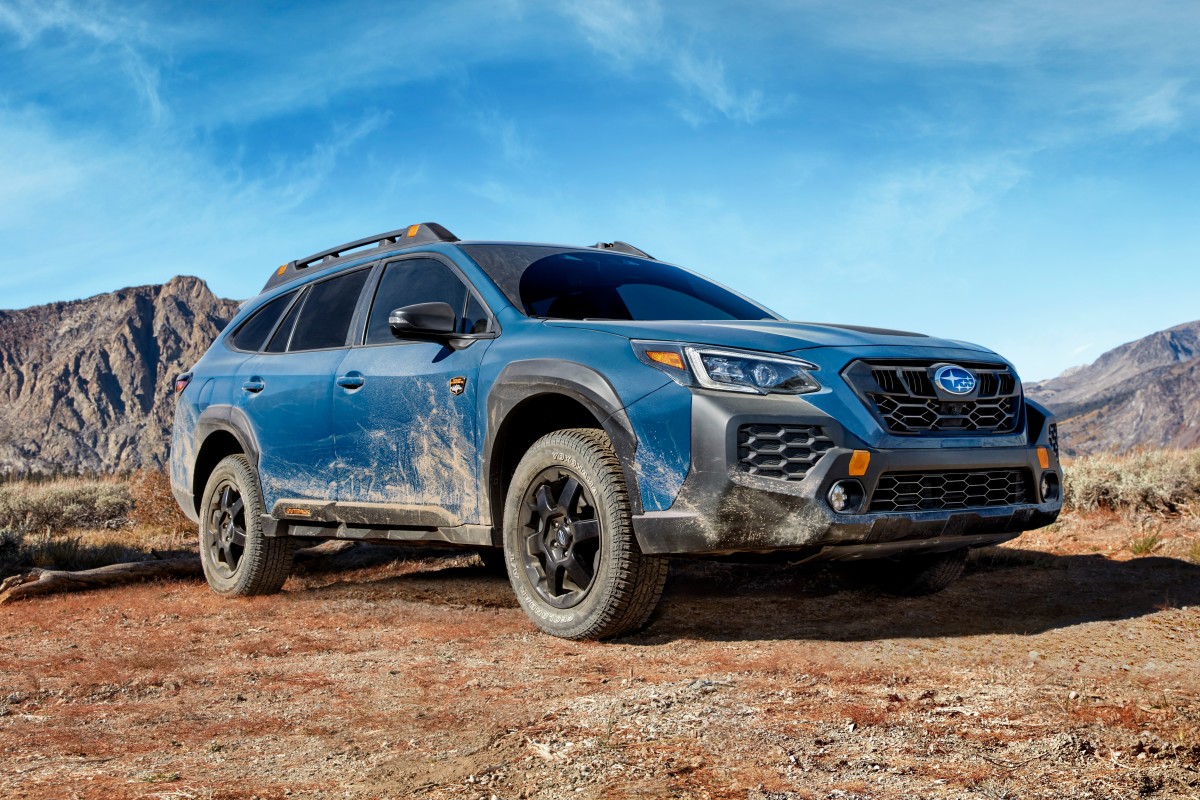
According to CarGurus experts, the overall rating for the 2026 Hyundai Ioniq 9 is 7.3 out of 10, while the 2026 Subaru Outback scores 7.2 out of 10. Based on these ratings, the Hyundai Ioniq 9 is the recommended choice for those seeking a spacious, quiet, and technologically advanced electric SUV.
Choose the 2026 Hyundai Ioniq 9 if:
- You prioritize a spacious and quiet interior with advanced noise cancellation features.
- You want a vehicle with impressive towing capacity and versatile charging options.
- You appreciate a futuristic design with a focus on aerodynamics.


Choose the 2026 Subaru Outback if:
- You need a vehicle with strong off-road capabilities and ample ground clearance.
- You value practical interior features and versatile cargo solutions for outdoor activities.
- You prefer a user-friendly infotainment system with separate climate controls.


CarGurus highlights
According to CarGurus experts, the overall rating for the 2026 Hyundai Ioniq 9 is 7.3 out of 10, while the 2026 Subaru Outback scores 7.2 out of 10. Based on these ratings, the Hyundai Ioniq 9 is the recommended choice for those seeking a spacious, quiet, and technologically advanced electric SUV.
Choose the 2026 Hyundai Ioniq 9 if:
Shop Now- You prioritize a spacious and quiet interior with advanced noise cancellation features.
- You want a vehicle with impressive towing capacity and versatile charging options.
- You appreciate a futuristic design with a focus on aerodynamics.
Choose the 2026 Subaru Outback if:
Shop Now- You need a vehicle with strong off-road capabilities and ample ground clearance.
- You value practical interior features and versatile cargo solutions for outdoor activities.
- You prefer a user-friendly infotainment system with separate climate controls.

By: CarGurus + AI
At CarGurus, our team of experienced automotive writers remain at the heart of our content operation, conducting hands-on car tests and writing insightful guides that are backed by years of industry experience. To complement this, we are harnessing AI to make our content offering more diverse and more helpful to shoppers than ever. To achieve this, our AI systems are based exclusively on CarGurus content, ratings and data, so that what we produce is both unique to CarGurus, and uniquely helpful to car shoppers.
