INFINITI QX60 vs Hyundai IONIQ 9
Overview | |
MSRP$51,590 | MSRP$58,995 |
Listings859 | Listings162 |
Ratings & Reviews | |
User Reviews | User Reviews |
Expert reviews5.3 out of 10 | Expert reviews7.3 out of 10 |
Pros
Cons
| Pros
Cons
|
Reviews SummaryBased on the Nissan Pathfinder, the QX60 is neither compelling nor competitive, meeting the barest of expectations in the midsize luxury SUV segment. Moreover, it looks and feels entirely disconnected from Infiniti’s history of building stylish, fun-to-drive vehicles. Updates to the 2026 QX60 don’t help, either, though its technology now meets the class standards. Reportedly, Infiniti is planning a renaissance, drawing on its roots and its most successful past models. That can’t happen fast enough. Verdict: If you want a soft-riding and quiet luxury three-row SUV that meets most of your technology expectations, an Infiniti QX60 in Luxe trim makes sense if the three-year lease payment undercuts the competition. Otherwise, get a loaded Nissan Pathfinder or spend extra to drive one of this Infiniti’s many rivals. | |
Reviews SummaryAlthough the 2026 Hyundai Ioniq 9 isn’t the first three-row electric SUV through the door, it may be the best choice for most shoppers. With a starting price of $59,999 before fees and qualifying for EV rebates where they still exist, it’s much more affordable than a Tesla Model X or a Rivian R1S. And its standard 110.3-kWh battery pack provides a long range compared to a base-model Kia EV9. Verdict: The Hyundai Ioniq 9 isn’t a perfect vehicle, but it offers terrific passenger space, good tech, and family-friendly features. Shoppers may find its design polarizing — you could easily say the same about the Hyundai Ioniq 5 or the Ioniq 6 — but families interested in electric vehicles will do well to test drive this new option. | |
No video found | |
Popular Features & Specs | |
Engine2.0L 268 hp I4 | Engine215 hp Electric |
DrivetrainFWD | DrivetrainRWD |
Seating Capacity7 | Seating Capacity7 |
Horsepower268 hp @ 5600 rpm | Horsepower |
EV Battery Capacity | EV Battery Capacity110 kWh |
MPG City22 | MPG City103 |
MPG Highway28 | MPG Highway81 |
Battery Charge Time (120V) | Battery Charge Time (120V)93 hours |
Battery Charge Time (240V) | Battery Charge Time (240V)9.7 hours |
Engine | |
Engine Name2.0L 268 hp I4 | Engine Name215 hp Electric |
Torque286 lb-ft @ 4400 rpm | Torque |
Horsepower268 hp @ 5600 rpm | Horsepower |
Battery Charge Time (120V) | Battery Charge Time (120V)93 hours |
Battery Charge Time (240V) | Battery Charge Time (240V)9.7 hours |
DrivetrainFWD | DrivetrainRWD |
Fuel Economy | |
EV Battery Capacity | EV Battery Capacity110 kWh |
MPG City22 | MPG City103 |
MPG Highway28 | MPG Highway81 |
Interior | |
Seating Capacity7 | Seating Capacity7 |
Key Features | |
Navigation SystemStandard | Navigation SystemStandard |
Sunroof/MoonroofStandard | Sunroof/Moonroof |
Safety | |
Front Crash Overall4 | Front Crash Overall5 |
Side Crash Overall5 | Side Crash Overall5 |
Dimensions & Capacity | |
Cargo Space14.5 cu ft | Cargo Space21.9 cu ft |
Curb Weight4540 lbs | Curb Weight5507 lbs |
Height69.7 in | Height70.5 in |
Length198.1 in | Length199.2 in |
Width86.0 in | Width78.0 in |
Wheelbase114.2 in | Wheelbase123.2 in |
Maximum Payload1523 lbs | Maximum Payload1393 lbs |
Number of doors4 | Number of doors4 |
Maximum Towing Capacity6000 lbs | Maximum Towing Capacity3500 lbs |
Overview | ||
MSRP | $51,590 | $58,995 |
Listings | ||
Ratings & Reviews | ||
User reviews | ||
Expert reviews | 5.3 out of 10Read full review | 7.3 out of 10Read full review |
Pros & cons | Pros
Cons
| Pros
Cons
|
Summary | Based on the Nissan Pathfinder, the QX60 is neither compelling nor competitive, meeting the barest of expectations in the midsize luxury SUV segment. Moreover, it looks and feels entirely disconnected from Infiniti’s history of building stylish, fun-to-drive vehicles. Updates to the 2026 QX60 don’t help, either, though its technology now meets the class standards. Reportedly, Infiniti is planning a renaissance, drawing on its roots and its most successful past models. That can’t happen fast enough. Verdict: If you want a soft-riding and quiet luxury three-row SUV that meets most of your technology expectations, an Infiniti QX60 in Luxe trim makes sense if the three-year lease payment undercuts the competition. Otherwise, get a loaded Nissan Pathfinder or spend extra to drive one of this Infiniti’s many rivals. | Although the 2026 Hyundai Ioniq 9 isn’t the first three-row electric SUV through the door, it may be the best choice for most shoppers. With a starting price of $59,999 before fees and qualifying for EV rebates where they still exist, it’s much more affordable than a Tesla Model X or a Rivian R1S. And its standard 110.3-kWh battery pack provides a long range compared to a base-model Kia EV9. Verdict: The Hyundai Ioniq 9 isn’t a perfect vehicle, but it offers terrific passenger space, good tech, and family-friendly features. Shoppers may find its design polarizing — you could easily say the same about the Hyundai Ioniq 5 or the Ioniq 6 — but families interested in electric vehicles will do well to test drive this new option. |
Video | No video found | |
Popular Features & Specs | ||
Engine | 2.0L 268 hp I4 | 215 hp Electric |
Drivetrain | FWD | RWD |
Seating Capacity | 7 | 7 |
Horsepower | 268 hp @ 5600 rpm | |
EV Battery Capacity | 110 kWh | |
MPG City | 22 | 103 |
MPG Highway | 28 | 81 |
Battery Charge Time (120V) | 93 hours | |
Battery Charge Time (240V) | 9.7 hours | |
Engine | ||
Engine Name | 2.0L 268 hp I4 | 215 hp Electric |
Torque | 286 lb-ft @ 4400 rpm | |
Horsepower | 268 hp @ 5600 rpm | |
Battery Charge Time (120V) | 93 hours | |
Battery Charge Time (240V) | 9.7 hours | |
Drivetrain | FWD | RWD |
Fuel Economy | ||
EV Battery Capacity | 110 kWh | |
MPG City | 22 | 103 |
MPG Highway | 28 | 81 |
Interior | ||
Seating Capacity | 7 | 7 |
Key Features | ||
Navigation System | Standard | Standard |
Sunroof/Moonroof | Standard | |
Safety | ||
Front Crash Overall | 4 | 5 |
Side Crash Overall | 5 | 5 |
Dimensions & Capacity | ||
Cargo Space | 14.5 cu ft | 21.9 cu ft |
Curb Weight | 4540 lbs | 5507 lbs |
Height | 69.7 in | 70.5 in |
Length | 198.1 in | 199.2 in |
Width | 86.0 in | 78.0 in |
Wheelbase | 114.2 in | 123.2 in |
Maximum Payload | 1523 lbs | 1393 lbs |
Number of doors | 4 | 4 |
Maximum Towing Capacity | 6000 lbs | 3500 lbs |
The 2026 Hyundai Ioniq 9 presented a bold and distinctive design that divided opinions. While some appreciated its unique aesthetic, others found it less appealing. The design drew inspiration from various sources, including smooth pebbles and midcentury modern sofas, aiming to create an aerodynamic shape that comfortably accommodated seven passengers. Measuring 5,060 millimetres in length with a 3,130 mm wheelbase, the Ioniq 9 offered impressive interior volume, comparable to larger SUVs. Despite its size, it achieved a remarkable 0.27 drag coefficient, enhancing its aerodynamic efficiency. However, the design was not universally praised, with its swooping roofline and stubby rear end creating a polarizing look. The rear view, with its LED taillights wrapping around the tail, was particularly distinctive.
In contrast, the 2026 INFINITI QX60 showcased a stylish and distinctive exterior design, aligning with the brand's reputation for elegance. The QX60 featured a new grille design inspired by a serene bamboo forest, although some likened it to a character from the Pixar "Cars" movie franchise. The Sport trim level added gloss black wheels and blacked-out trim, enhancing its sporty appeal. Inside, the QX60 offered a luxurious cabin with premium materials, including semi-aniline leather and real open-pore wood in the Autograph trim. The interior featured a digital dashboard control panel with haptic feedback and analog controls for volume and temperature, providing a user-friendly experience. However, the driving position in the Autograph trim was less than ideal, with a low, reclined seating position that some found uncomfortable.

The 2026 Hyundai Ioniq 9 was equipped with a 110.3-kWh battery pack on Hyundai's e-GMP platform, offering a range of power outputs depending on the trim. The base Essential trim featured a single rear-mounted 160-kW electric motor, producing 215 horsepower. Other trims boasted dual-motor all-wheel-drive systems, with the Preferred AWD generating 303 hp and the Preferred AWD+ delivering 422 hp. Despite its power, the Ioniq 9 impressed with its energy efficiency, often exceeding the estimated 500-kilometre range. The vehicle's weight and soft suspension provided a smooth ride, though it lacked agility in corners. The Ioniq 9 offered a towing capacity of up to 2,268 kilograms for AWD models and supported fast charging, with a 10 to 80% charge achievable in 24 minutes on a 350-kW CCS-port DC Fast Charger.
The 2026 INFINITI QX60 featured a turbocharged 2.0-litre inline-four VC-Turbo engine, producing 268 horsepower and 286 pound-feet of torque. This engine offered a balance of power and fuel efficiency, with an average consumption of 9.9 litres per 100 kilometres. The QX60's nine-speed automatic transmission and 2,720-kilogram towing capacity added to its versatility. However, the premium fuel requirement diminished the cost-effectiveness of its fuel economy. The QX60 offered multiple driving modes, but Auto mode was preferred for its smoothness and efficiency. While the VC-Turbo engine provided good acceleration, the AWD system lacked sophistication, allowing front wheel slip during hard acceleration. The suspension was soft, leading to excessive body motion on uneven surfaces, and the vehicle felt heavy and uncommunicative on twisty roads.
The 2026 Hyundai Ioniq 9 prioritized family-friendly practicality with its spacious interior. Most configurations seated seven, with the Preferred AWD+ offering six seats with ventilated captain's chairs. The sliding centre console improved access for middle-row passengers. The Ioniq 9 provided 1,086 millimetres of legroom in the middle row, though the third row felt tight for adults. The large rear doors facilitated easy access, and dual-zone climate control with air vents in all rows ensured comfort. However, the driver's seat lacked adjustability, and the glove compartment's low placement was inconvenient. Cargo space was generous, with 620 litres behind the third row, expanding to 2,462 litres with seats folded.
The 2026 INFINITI QX60 offered standard seven-passenger seating, with the Autograph trim featuring six seats with captain's chairs. The interior boasted heated and ventilated front seats, a heated steering wheel, and a triple-zone climate control system. However, the driving position in the Autograph trim was less than ideal, with a low, reclined seating position. The second-row captain's chairs were more comfortable, providing easy access to the third row. The third-row seats were tight for adults, with limited foot space and thigh support. Cargo space was limited, with 411 litres behind the third row, expanding to 2,135 litres with seats folded. A large compartment under the load floor provided additional storage.
The 2026 Hyundai Ioniq 9 featured a dual curved 12.3-inch display infotainment system, offering wireless Android Auto and Apple CarPlay, SiriusXM Satellite Radio, and a wireless charging pad. However, the charging pad struggled to keep up with high-demand devices and lacked ventilation. The Ioniq 9 included six USB-C ports for device charging and a 14-speaker Bose audio system, delivering impressive sound quality.
The 2026 INFINITI QX60 introduced a Google built-in infotainment system with a 12.3-inch touchscreen, offering Google Assistant, Google Maps, and access to apps through the Google Play Store. Wireless Apple CarPlay and Android Auto were standard, along with SiriusXM 360L satellite radio and a 5G Wi-Fi hotspot. The system was user-friendly, though Google Maps occasionally failed to load. The QX60 featured a Klipsch premium audio system, but the sound quality was disappointing compared to competitors. A 12.3-inch digital instrument cluster and a 10.8-inch head-up display were also included.
The 2026 Hyundai Ioniq 9 had not yet received crash-test ratings but came equipped with a comprehensive suite of advanced driver assistance systems (ADAS). Standard features included collision avoidance, lane-guidance technologies, driver attention warning, safe-exit assist, and Highway Driving Assist 2, which combined lane-keeping assist with adaptive cruise control for supervised hands-free driving. The Preferred AWD's Luxury package and Preferred AWD+ trims added a surround-view monitor and blind-spot view monitor.
The 2026 INFINITI QX60 received a five-star overall rating from the NHTSA but had not been rated by the IIHS. Standard safety features included forward collision warning, automatic emergency braking, blind-spot monitors, rear cross-traffic alert, lane-departure warning, and lane-keep assist. ProPilot Assist 1.1, with adaptive cruise control and lane centring assist, was standard, while ProPilot Assist 2.1, offering hands-free driving, was available on the Autograph trim. However, the driver assist tech needed improvement, with inconsistent operation and communication with the driver.
CarGurus highlights
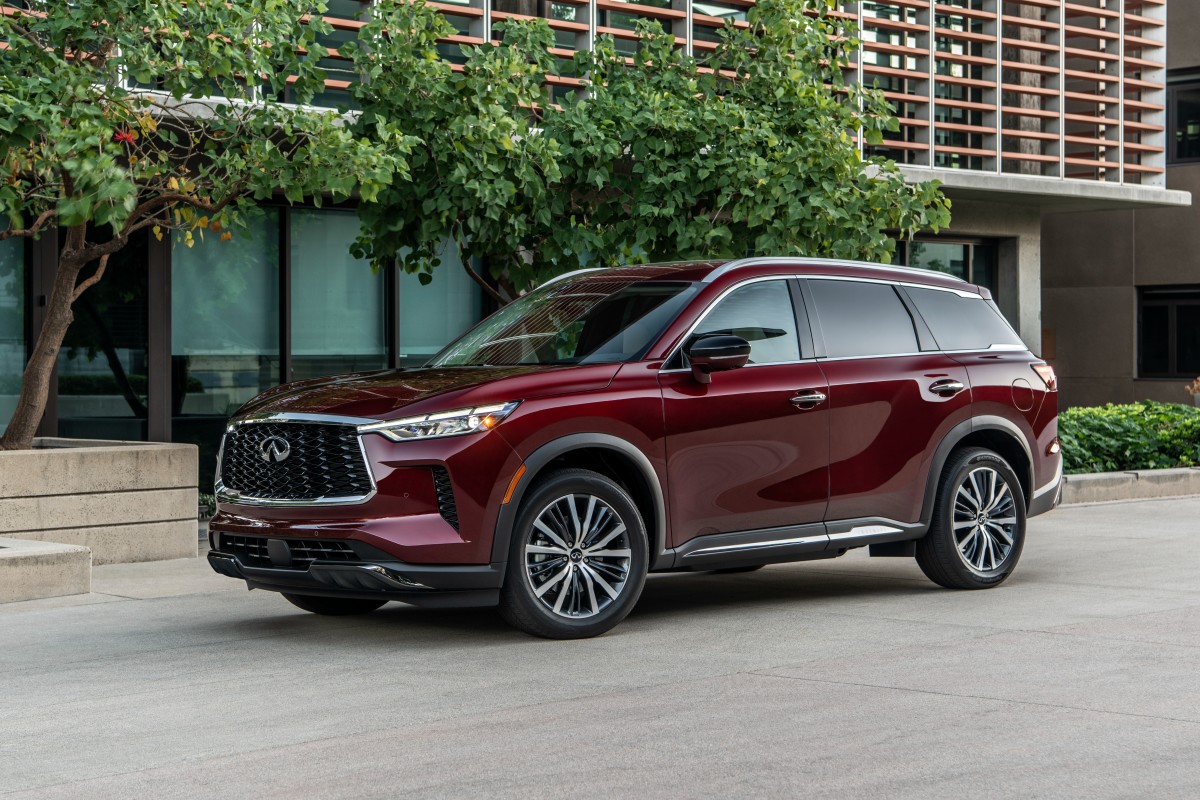
According to CarGurus experts, the overall rating for the 2026 Hyundai Ioniq 9 is 7.3 out of 10, while the 2026 INFINITI QX60 scores 5.3 out of 10. Based on these ratings, the Hyundai Ioniq 9 is the recommended choice, offering a better balance of practicality, performance, and technology.
Choose the 2026 Hyundai IONIQ 9 if:
- You prioritize a spacious and family-friendly interior with flexible seating options.
- You value energy efficiency and impressive range in an electric vehicle.
- You appreciate advanced driver assistance systems without subscription fees.


Choose the 2026 INFINITI QX60 if:
- You prefer a stylish and luxurious interior with premium materials.
- You seek a balance of power and fuel efficiency with a turbocharged engine.
- You desire a user-friendly infotainment system with Google built-in features.


CarGurus highlights
According to CarGurus experts, the overall rating for the 2026 Hyundai Ioniq 9 is 7.3 out of 10, while the 2026 INFINITI QX60 scores 5.3 out of 10. Based on these ratings, the Hyundai Ioniq 9 is the recommended choice, offering a better balance of practicality, performance, and technology.
Choose the 2026 Hyundai IONIQ 9 if:
Shop Now- You prioritize a spacious and family-friendly interior with flexible seating options.
- You value energy efficiency and impressive range in an electric vehicle.
- You appreciate advanced driver assistance systems without subscription fees.
Choose the 2026 INFINITI QX60 if:
Shop Now- You prefer a stylish and luxurious interior with premium materials.
- You seek a balance of power and fuel efficiency with a turbocharged engine.
- You desire a user-friendly infotainment system with Google built-in features.

By: CarGurus + AI
At CarGurus, our team of experienced automotive writers remain at the heart of our content operation, conducting hands-on car tests and writing insightful guides that are backed by years of industry experience. To complement this, we are harnessing AI to make our content offering more diverse and more helpful to shoppers than ever. To achieve this, our AI systems are based exclusively on CarGurus content, ratings and data, so that what we produce is both unique to CarGurus, and uniquely helpful to car shoppers.
