2024 Mazda CX-30 vs 2025 Toyota Sequoia
Overview | |
Listings174 | Listings11 |
Ratings & Reviews | |
User Reviews | User Reviews |
Expert reviews7.7 out of 10 | Expert reviews5.5 out of 10 |
Pros
Cons
| Pros
Cons
|
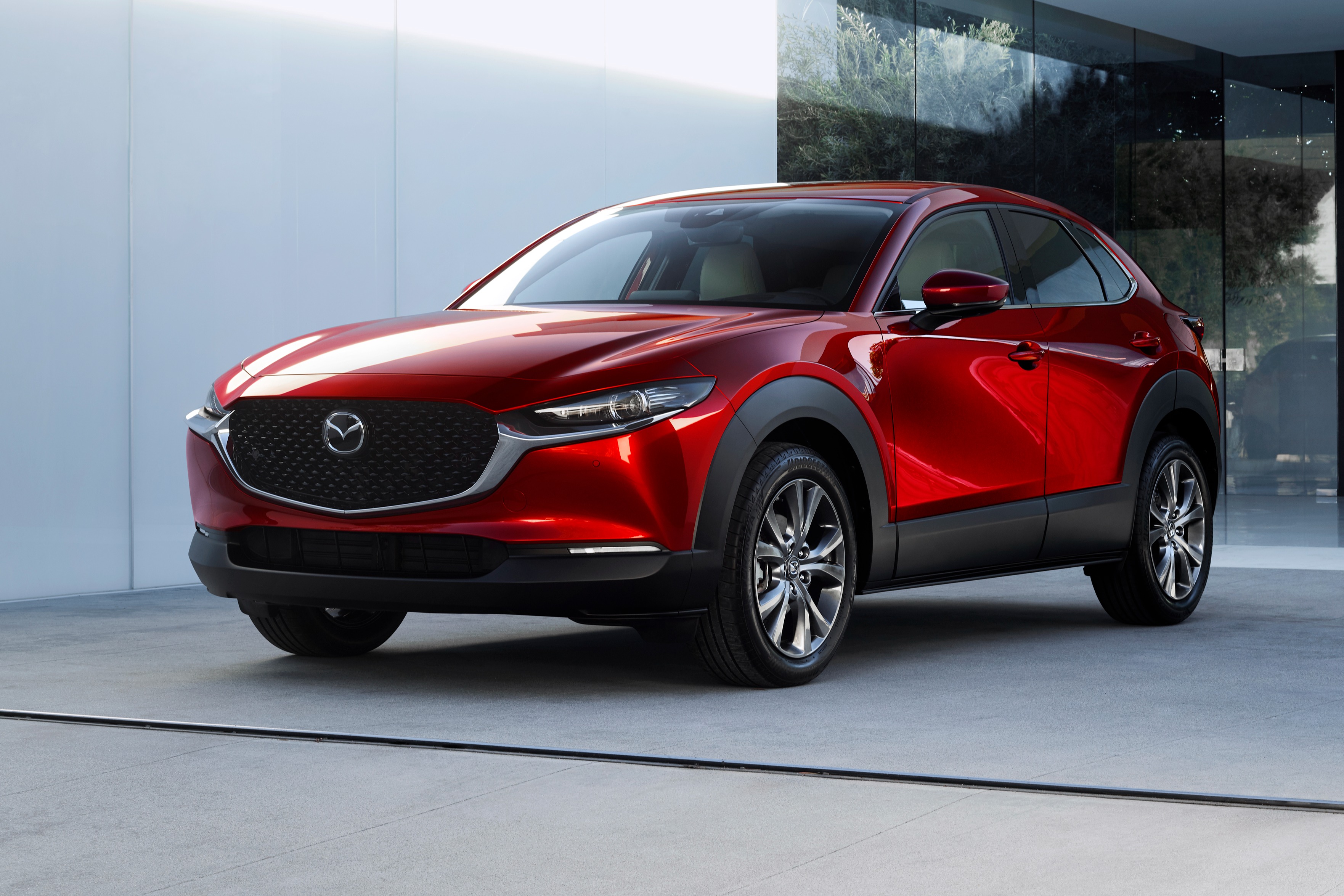
2024 Mazda CX-30 Reviews SummaryIntroduced in 2020 and continually updated and upgraded since then, the CX-30 is Mazda’s smallest crossover SUV. This year, the 2024 CX-30 comes in new a new Suna trim level, adds USB-C charging ports, and is available with a larger infotainment screen featuring wireless Apple CarPlay and Android Auto. All CX-30s have standard all-wheel drive (AWD), and you can upgrade to a turbocharged engine for more power and performance. Verdict: Sticking to its corporate traditions with the 2024 CX-30, Mazda delivers style, refinement, safety, and rewarding driving dynamics in the small crossover SUV segment. As expected, rear-seat room and cargo space are tight, but otherwise, the Mazda CX-30 is a delightful little SUV. | |
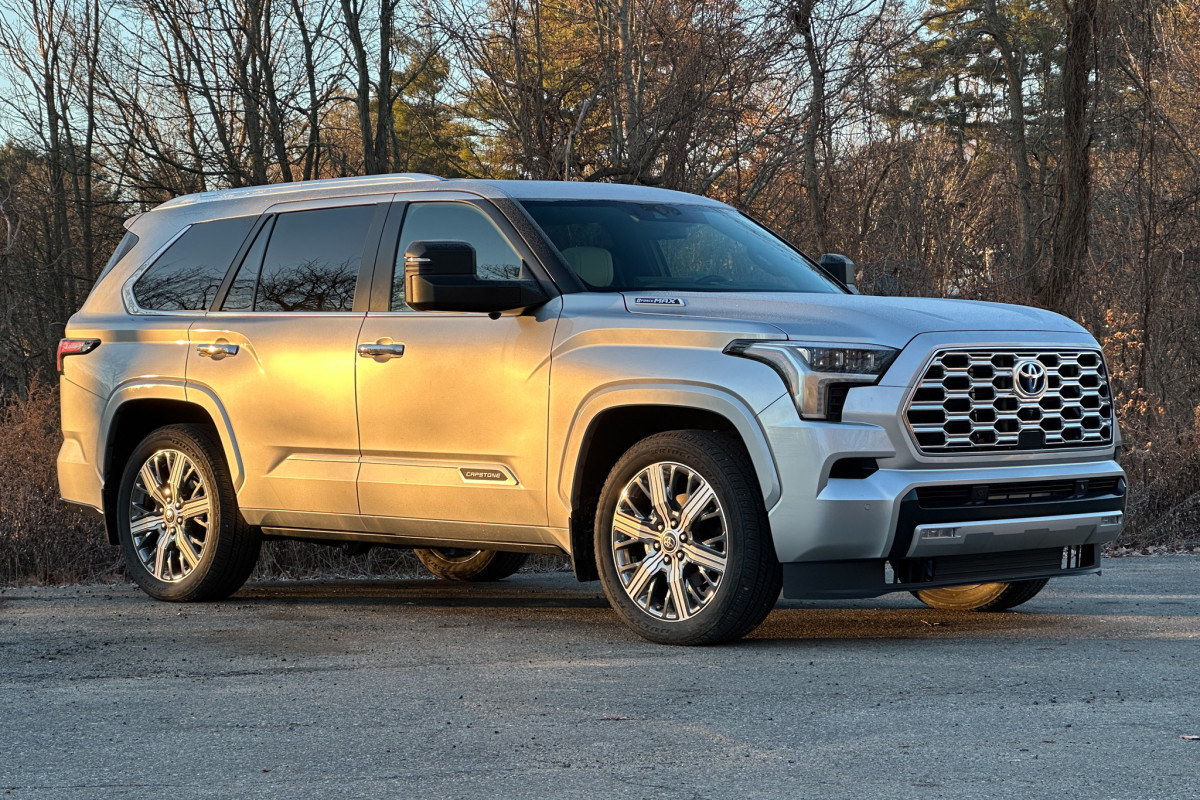
2025 Toyota Sequoia Reviews SummaryThe 2025 Sequoia is Toyota’s full-size SUV, based on the same platform as the Tundra pickup truck and using the same i-Force Max hybrid powertrain. It seats up to eight people, holds up to 2,460 litres of cargo, carries up to 640 kilograms (1,411 pounds) of payload, and tows up to 4,080 kilograms (9,000 pounds) of trailer. But the Toyota Sequoia comes with some fundamental flaws. Verdict: People buy full-size SUVs to carry lots of people, haul lots of cargo, and tow lots of weight. However, due to its packaging requirements, the Sequoia is a rock star only if you’re attaching a trailer to it, and even then, it’s not class-leading in capability. | |
No video found | |
Popular Features & Specs | |
Engine2.5L 191 hp I4 | Engine3.4L 437 hp V6 Hybrid |
DrivetrainAWD | Drivetrain4X2 |
Seating Capacity5 | Seating Capacity8 |
Horsepower191 hp @ 6000 rpm | Horsepower437 hp @ 5200 rpm |
EV Battery Capacity | EV Battery Capacity1.9 kWh |
Fuel Economy (City)9.0 L(e)/100 km | Fuel Economy (City)11.2 L(e)/100 km |
Fuel Economy (Highway)7.1 L(e)/100 km | Fuel Economy (Highway)9.8 L(e)/100 km |
Engine | |
Engine Name2.5L 191 hp I4 | Engine Name3.4L 437 hp V6 Hybrid |
Torque186 lb-ft @ 4000 rpm | Torque583 lb-ft @ 2400 rpm |
Horsepower191 hp @ 6000 rpm | Horsepower437 hp @ 5200 rpm |
DrivetrainAWD | Drivetrain4X2 |
Fuel Economy | |
EV Battery Capacity | EV Battery Capacity1.9 kWh |
Fuel Economy (City)9.0 L(e)/100 km | Fuel Economy (City)11.2 L(e)/100 km |
Fuel Economy (Highway)7.1 L(e)/100 km | Fuel Economy (Highway)9.8 L(e)/100 km |
Interior | |
Seating Capacity5 | Seating Capacity8 |
Key Features | |
Sunroof/Moonroof | Sunroof/MoonroofStandard |
Safety | |
Front Crash Overall5 | Front Crash Overall |
Side Crash Overall5 | Side Crash Overall |
Dimensions & Capacity | |
Cargo Space572 L | Cargo Space631 L |
Curb Weight1551 kg | Curb Weight2549 kg |
Height1567 mm | Height1892 mm |
Length4394 mm | Length5286 mm |
Width1796 mm | Width2027 mm |
Wheelbase2652 mm | Wheelbase3099 mm |
Maximum Payload436 kg | Maximum Payload785 kg |
Number of doors4 | Number of doors4 |
Maximum Towing Capacity | Maximum Towing Capacity4318 kg |
Standard Towing Capacity | Standard Towing Capacity4318 kg |
Overview | ||
Listings | ||
Ratings & Reviews | ||
User reviews | ||
Expert reviews | 7.7 out of 10Read full review | 5.5 out of 10Read full review |
Pros & cons | Pros
Cons
| Pros
Cons
|
Summary | Introduced in 2020 and continually updated and upgraded since then, the CX-30 is Mazda’s smallest crossover SUV. This year, the 2024 CX-30 comes in new a new Suna trim level, adds USB-C charging ports, and is available with a larger infotainment screen featuring wireless Apple CarPlay and Android Auto. All CX-30s have standard all-wheel drive (AWD), and you can upgrade to a turbocharged engine for more power and performance. Verdict: Sticking to its corporate traditions with the 2024 CX-30, Mazda delivers style, refinement, safety, and rewarding driving dynamics in the small crossover SUV segment. As expected, rear-seat room and cargo space are tight, but otherwise, the Mazda CX-30 is a delightful little SUV. | The 2025 Sequoia is Toyota’s full-size SUV, based on the same platform as the Tundra pickup truck and using the same i-Force Max hybrid powertrain. It seats up to eight people, holds up to 2,460 litres of cargo, carries up to 640 kilograms (1,411 pounds) of payload, and tows up to 4,080 kilograms (9,000 pounds) of trailer. But the Toyota Sequoia comes with some fundamental flaws. Verdict: People buy full-size SUVs to carry lots of people, haul lots of cargo, and tow lots of weight. However, due to its packaging requirements, the Sequoia is a rock star only if you’re attaching a trailer to it, and even then, it’s not class-leading in capability. |
Video | No video found | |
Popular Features & Specs | ||
Engine | 2.5L 191 hp I4 | 3.4L 437 hp V6 Hybrid |
Drivetrain | AWD | 4X2 |
Seating Capacity | 5 | 8 |
Horsepower | 191 hp @ 6000 rpm | 437 hp @ 5200 rpm |
EV Battery Capacity | 1.9 kWh | |
Fuel Economy (City) | 9.0 L(e)/100 km | 11.2 L(e)/100 km |
Fuel Economy (Highway) | 7.1 L(e)/100 km | 9.8 L(e)/100 km |
Engine | ||
Engine Name | 2.5L 191 hp I4 | 3.4L 437 hp V6 Hybrid |
Torque | 186 lb-ft @ 4000 rpm | 583 lb-ft @ 2400 rpm |
Horsepower | 191 hp @ 6000 rpm | 437 hp @ 5200 rpm |
Drivetrain | AWD | 4X2 |
Fuel Economy | ||
EV Battery Capacity | 1.9 kWh | |
Fuel Economy (City) | 9.0 L(e)/100 km | 11.2 L(e)/100 km |
Fuel Economy (Highway) | 7.1 L(e)/100 km | 9.8 L(e)/100 km |
Interior | ||
Seating Capacity | 5 | 8 |
Key Features | ||
Sunroof/Moonroof | Standard | |
Safety | ||
Front Crash Overall | 5 | |
Side Crash Overall | 5 | |
Dimensions & Capacity | ||
Cargo Space | 572 L | 631 L |
Curb Weight | 1551 kg | 2549 kg |
Height | 1567 mm | 1892 mm |
Length | 4394 mm | 5286 mm |
Width | 1796 mm | 2027 mm |
Wheelbase | 2652 mm | 3099 mm |
Maximum Payload | 436 kg | 785 kg |
Number of doors | 4 | 4 |
Maximum Towing Capacity | 4318 kg | |
Standard Towing Capacity | 4318 kg | |
The 2024 Mazda CX-30 was designed with a distinctive aesthetic, characterized by its excessive charcoal-coloured plastic cladding on the lower body, which some found overwhelming. Despite this, the crossover maintained an overall appealing look with its short overhangs, long and low hood, and sculpted flanks. The interior of the CX-30 was noted for its upscale feel, with style and refinement akin to an entry-level luxury SUV. The gauges were clear, the infotainment screen was seamlessly integrated into the dashboard, and the dual-zone climate controls were praised for their design.
In contrast, the 2025 Toyota Sequoia, particularly in the 1794 Edition trim, featured dark grey painted 20-inch wheels and less exterior chrome, giving it a unique appearance. The interior was a mix of Saddle Tan leather upholstery and open-pore walnut wood trim, although these were not available in Canada. The Sequoia's cabin was largely covered in typical Toyota-grade plastic, which was not seen as a positive. Despite being a few years old, the Sequoia's design still managed to capture attention, although it was considered a rarity on the road.

The 2024 Mazda CX-30, equipped with a turbocharged 2.5-litre four-cylinder engine, delivered 250 horsepower and 320 pound-feet of torque. Despite these impressive figures, the power delivery was smooth rather than immediate, with torque arriving at 2,000 rpm. The CX-30 was equipped with a six-speed automatic transmission and standard all-wheel drive, providing a zippy and nimble driving experience. However, its fuel economy was less impressive, with observed consumption at 13.3 L/100 km, and a small 48-litre fuel tank limiting its range.
The 2025 Toyota Sequoia came with an i-Force Max hybrid powertrain, combining a twin-turbocharged 3.4-litre V6 engine with an electric motor, producing 437 horsepower and 583 pound-feet of torque. Despite its weight of 2,790 kilograms, the Sequoia offered quick acceleration and a robust engine note. However, its fuel economy was disappointing, with observed consumption at 14.5 L/100 km. The Sequoia excelled in towing capacity, with a maximum of 4,137 kilograms, but its driving dynamics were compromised by its packaging, with a solid rear axle affecting rear-seat room and cargo space.
Inside the 2024 Mazda CX-30, the design was deft, with quality materials and logical controls. The interior was somewhat cramped, especially in the back seat, but the driver and front passenger enjoyed comfort and ease of access. The cargo space was flexible, offering 572 litres behind the back seat and 1,280 litres with the seats folded down.
The 2025 Toyota Sequoia could accommodate up to eight people, though seven or six would be more comfortable. The Platinum and Capstone trims offered luxurious features like 10-way power adjustable seats with heating, ventilation, and massage. However, the high floor and low roof made accessing the third row awkward for adults. Cargo space was limited, with only 325 litres behind the third row, expanding to 1,387 litres with the third row folded, and 2,460 litres with both the second and third rows down.
The 2024 Mazda CX-30 featured a new 10.25-inch infotainment display on GT and Suna trims, with wireless Apple CarPlay and Android Auto. However, the screen's distance from the driver and passenger was a drawback. Mazda Connected Services offered a two-year complimentary subscription, and the GT and Suna trims included USB-C ports, a wireless smartphone charger, and a Bose premium audio system.
The 2025 Toyota Sequoia boasted a 12.3-inch digital instrumentation panel and a 14-inch touchscreen infotainment system from the Limited trim upwards. The Toyota Audio Multimedia system offered various connected services, with trial subscriptions ranging from three to ten years. Wireless Apple CarPlay and Android Auto were standard, and a 14-speaker JBL premium sound system was available on higher trims. The system's natural voice recognition was reasonably capable but had limitations.
The 2024 Mazda CX-30 came equipped with a comprehensive suite of safety features, including blind-spot monitoring, rear cross-traffic alert, forward-collision warning, and adaptive cruise control. Higher trims offered additional features like adaptive headlights and a surround-view camera system. The CX-30 received top safety ratings from both the NHTSA and IIHS.
The 2025 Toyota Sequoia included Toyota Safety Sense 2.5, featuring adaptive cruise control, forward collision warning, and lane-keeping assist. However, the lane assist features were noted for causing aggravation. At the time of publication, crash-test ratings from the IIHS and NHTSA were not available for the Sequoia.
CarGurus highlights
According to CarGurus experts, the overall rating for the 2024 Mazda CX-30 is 7.7 out of 10, while the 2025 Toyota Sequoia scores 5.5 out of 10. Based on these ratings, the Mazda CX-30 is the recommended choice, offering a better balance of performance, safety, and value.
Choose the 2024 Mazda CX-30 if:
- You prioritize a sporty and nimble driving experience with a refined interior.
- You value top safety ratings and a comprehensive suite of safety features.
- You seek a more affordable option with flexible cargo space.


Choose the 2025 Toyota Sequoia if:
- You need a full-size SUV with significant towing capacity.
- You prefer a spacious interior with luxurious features on higher trims.
- You require a vehicle with advanced technology and connected services.


CarGurus highlights
According to CarGurus experts, the overall rating for the 2024 Mazda CX-30 is 7.7 out of 10, while the 2025 Toyota Sequoia scores 5.5 out of 10. Based on these ratings, the Mazda CX-30 is the recommended choice, offering a better balance of performance, safety, and value.
Choose the 2024 Mazda CX-30 if:
Shop Now- You prioritize a sporty and nimble driving experience with a refined interior.
- You value top safety ratings and a comprehensive suite of safety features.
- You seek a more affordable option with flexible cargo space.
Choose the 2025 Toyota Sequoia if:
Shop Now- You need a full-size SUV with significant towing capacity.
- You prefer a spacious interior with luxurious features on higher trims.
- You require a vehicle with advanced technology and connected services.

By: CarGurus + AI
At CarGurus, our team of experienced automotive writers remain at the heart of our content operation, conducting hands-on car tests and writing insightful guides that are backed by years of industry experience. To complement this, we are harnessing AI to make our content offering more diverse and more helpful to shoppers than ever. To achieve this, our AI systems are based exclusively on CarGurus content, ratings and data, so that what we produce is both unique to CarGurus, and uniquely helpful to car shoppers.
