2024 Chevrolet Equinox EV vs 2025 Toyota Sequoia
Overview | |
Listings56 | Listings12 |
Ratings & Reviews | |
User Reviews | User Reviews |
Expert reviews7.8 out of 10 | Expert reviews5.5 out of 10 |
Pros
Cons
| Pros
Cons
|
2024 Chevrolet Equinox EV Reviews SummaryThe 2024 Chevrolet Equinox EV trades on the established Equinox nameplate to help ease the transition to battery-electric power, but the Equinox EV is just that: an EV, from the ground up. Its dedicated architecture is wholly independent of the internal-combustion-engined (ICE) Equinox compact SUV. In Canada, it’s available in 2LT, 2RS, 3LT, and 3RS trims. Accounting for current availability puts base MSRP at $48,199 before fees for the 2LT, but that will fall when the 1LT trim level becomes available in 2025. Verdict: The Equinox EV does exactly what its name promises, offering the benefits of electric power in a comfortable package, and at a price point that’s hard to beat. | |
2025 Toyota Sequoia Reviews SummaryThe 2025 Sequoia is Toyota’s full-size SUV, based on the same platform as the Tundra pickup truck and using the same i-Force Max hybrid powertrain. It seats up to eight people, holds up to 2,460 litres of cargo, carries up to 640 kilograms (1,411 pounds) of payload, and tows up to 4,080 kilograms (9,000 pounds) of trailer. But the Toyota Sequoia comes with some fundamental flaws. Verdict: People buy full-size SUVs to carry lots of people, haul lots of cargo, and tow lots of weight. However, due to its packaging requirements, the Sequoia is a rock star only if you’re attaching a trailer to it, and even then, it’s not class-leading in capability. | |
No video found | |
Popular Features & Specs | |
Engine213 hp Electric | Engine3.4L 437 hp V6 Hybrid |
DrivetrainFWD | Drivetrain4X2 |
Seating Capacity5 | Seating Capacity8 |
Horsepower | Horsepower437 hp @ 5200 rpm |
EV Battery Capacity85 kWh | EV Battery Capacity1.9 kWh |
Fuel Economy (City)2.0 L(e)/100 km | Fuel Economy (City)11.2 L(e)/100 km |
Fuel Economy (Highway)2.4 L(e)/100 km | Fuel Economy (Highway)9.8 L(e)/100 km |
Battery Charge Time (240V)9.4 hours | Battery Charge Time (240V) |
Engine | |
Engine Name213 hp Electric | Engine Name3.4L 437 hp V6 Hybrid |
Torque | Torque583 lb-ft @ 2400 rpm |
Horsepower | Horsepower437 hp @ 5200 rpm |
Battery Charge Time (240V)9.4 hours | Battery Charge Time (240V) |
DrivetrainFWD | Drivetrain4X2 |
Fuel Economy | |
EV Battery Capacity85 kWh | EV Battery Capacity1.9 kWh |
Fuel Economy (City)2.0 L(e)/100 km | Fuel Economy (City)11.2 L(e)/100 km |
Fuel Economy (Highway)2.4 L(e)/100 km | Fuel Economy (Highway)9.8 L(e)/100 km |
Interior | |
Seating Capacity5 | Seating Capacity8 |
Key Features | |
Navigation SystemStandard | Navigation System |
Sunroof/Moonroof | Sunroof/MoonroofStandard |
Safety | |
Front Crash Overall5 | Front Crash Overall |
Side Crash Overall5 | Side Crash Overall |
Dimensions & Capacity | |
Cargo Space748 L | Cargo Space631 L |
Curb Weight2245 kg | Curb Weight2549 kg |
Height1646 mm | Height1892 mm |
Length4841 mm | Length5286 mm |
Width2156 mm | Width2027 mm |
Wheelbase2954 mm | Wheelbase3099 mm |
Maximum Payload503 kg | Maximum Payload785 kg |
Number of doors4 | Number of doors4 |
Maximum Towing Capacity680 kg | Maximum Towing Capacity4318 kg |
Standard Towing Capacity | Standard Towing Capacity4318 kg |
Overview | ||
Listings | ||
Ratings & Reviews | ||
User reviews | ||
Expert reviews | 7.8 out of 10Read full review | 5.5 out of 10Read full review |
Pros & cons | Pros
Cons
| Pros
Cons
|
Summary | The 2024 Chevrolet Equinox EV trades on the established Equinox nameplate to help ease the transition to battery-electric power, but the Equinox EV is just that: an EV, from the ground up. Its dedicated architecture is wholly independent of the internal-combustion-engined (ICE) Equinox compact SUV. In Canada, it’s available in 2LT, 2RS, 3LT, and 3RS trims. Accounting for current availability puts base MSRP at $48,199 before fees for the 2LT, but that will fall when the 1LT trim level becomes available in 2025. Verdict: The Equinox EV does exactly what its name promises, offering the benefits of electric power in a comfortable package, and at a price point that’s hard to beat. | The 2025 Sequoia is Toyota’s full-size SUV, based on the same platform as the Tundra pickup truck and using the same i-Force Max hybrid powertrain. It seats up to eight people, holds up to 2,460 litres of cargo, carries up to 640 kilograms (1,411 pounds) of payload, and tows up to 4,080 kilograms (9,000 pounds) of trailer. But the Toyota Sequoia comes with some fundamental flaws. Verdict: People buy full-size SUVs to carry lots of people, haul lots of cargo, and tow lots of weight. However, due to its packaging requirements, the Sequoia is a rock star only if you’re attaching a trailer to it, and even then, it’s not class-leading in capability. |
Video | No video found | |
Popular Features & Specs | ||
Engine | 213 hp Electric | 3.4L 437 hp V6 Hybrid |
Drivetrain | FWD | 4X2 |
Seating Capacity | 5 | 8 |
Horsepower | 437 hp @ 5200 rpm | |
EV Battery Capacity | 85 kWh | 1.9 kWh |
Fuel Economy (City) | 2.0 L(e)/100 km | 11.2 L(e)/100 km |
Fuel Economy (Highway) | 2.4 L(e)/100 km | 9.8 L(e)/100 km |
Battery Charge Time (240V) | 9.4 hours | |
Engine | ||
Engine Name | 213 hp Electric | 3.4L 437 hp V6 Hybrid |
Torque | 583 lb-ft @ 2400 rpm | |
Horsepower | 437 hp @ 5200 rpm | |
Battery Charge Time (240V) | 9.4 hours | |
Drivetrain | FWD | 4X2 |
Fuel Economy | ||
EV Battery Capacity | 85 kWh | 1.9 kWh |
Fuel Economy (City) | 2.0 L(e)/100 km | 11.2 L(e)/100 km |
Fuel Economy (Highway) | 2.4 L(e)/100 km | 9.8 L(e)/100 km |
Interior | ||
Seating Capacity | 5 | 8 |
Key Features | ||
Navigation System | Standard | |
Sunroof/Moonroof | Standard | |
Safety | ||
Front Crash Overall | 5 | |
Side Crash Overall | 5 | |
Dimensions & Capacity | ||
Cargo Space | 748 L | 631 L |
Curb Weight | 2245 kg | 2549 kg |
Height | 1646 mm | 1892 mm |
Length | 4841 mm | 5286 mm |
Width | 2156 mm | 2027 mm |
Wheelbase | 2954 mm | 3099 mm |
Maximum Payload | 503 kg | 785 kg |
Number of doors | 4 | 4 |
Maximum Towing Capacity | 680 kg | 4318 kg |
Standard Towing Capacity | 4318 kg | |
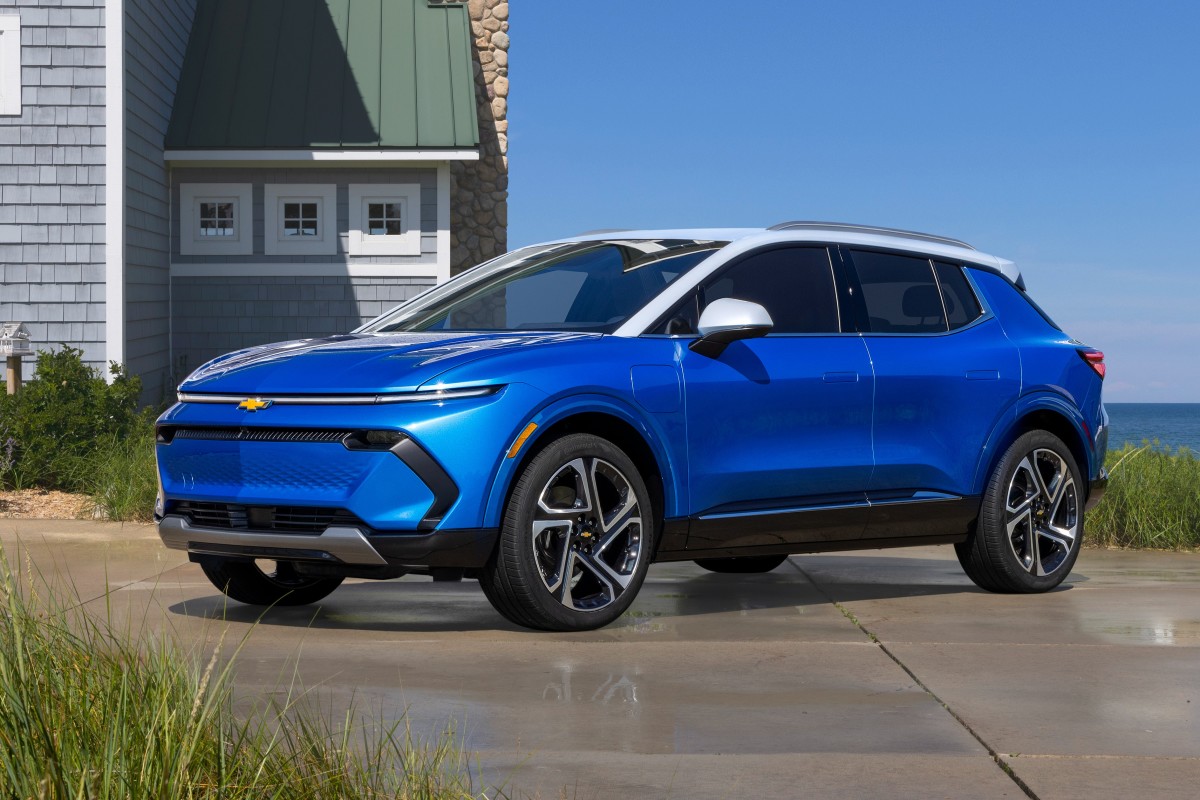
The 2024 Chevrolet Equinox EV initially appeared similar to its internal combustion engine (ICE) counterpart, sharing features like rounded wheel wells and a flat beltline. However, upon closer inspection, the EV version showcased more decisive lines, a thicker body-coloured C-pillar, and a sleeker grille. The front fascia was predominantly body-coloured, and the rear design was more assertive, featuring hexagonal shapes and a light bar echoing the front. Standard 19-inch aluminum wheels adorned the 2LT trim, while other trims boasted 21-inch versions. The Equinox EV offered vibrant colour options like "Red Hot" and "Riptide Blue Metallic," which added a youthful and exuberant touch. Two-tone paint jobs were available, with options for a white or black roof depending on the trim. Interior colour choices expanded with higher trims, offering combinations like black with blue accents or Sky Cool Grey, and sportier options like Adrenaline Red.
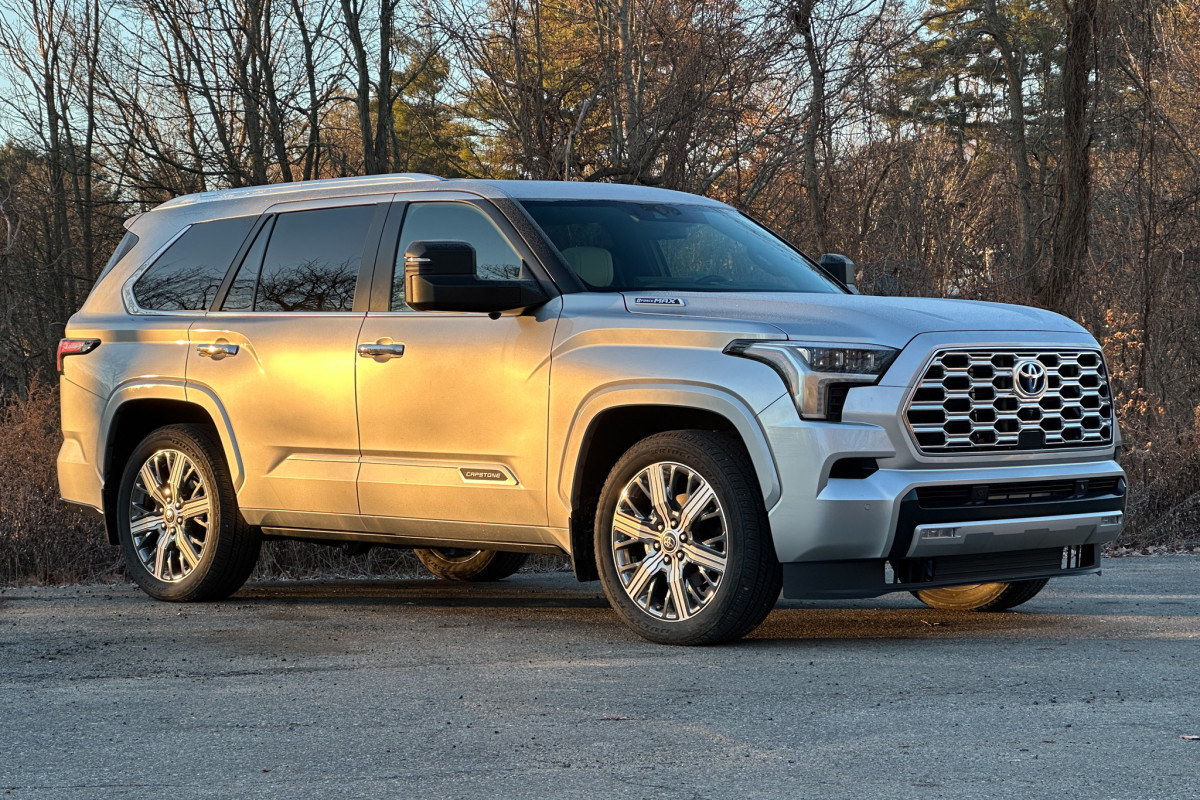
The 2025 Toyota Sequoia, particularly in the U.S.-only 1794 Edition, was a striking presence with its Lunar Rock paint, drawing attention despite its familiarity on the road. The Canadian lineup included trims like the SR5 TRD Off-road, Limited, Platinum, and Capstone, with prices ranging from $87,174 to $106,175. The Sequoia's interior featured Saddle Tan leather upholstery and open-pore walnut wood trim, although the rest of the cabin was dominated by typical Toyota-grade plastic. The Sequoia's design was robust, but its rarity on the road added to its appeal. However, the interior materials did not match the exterior's allure, with the plastic detracting from the overall premium feel.

The 2024 Chevrolet Equinox EV featured a hands-free start, a common trait among modern EVs, allowing drivers to simply get in and go. It offered one-pedal driving across all trims, managed through a standalone regenerative braking setting or drive modes like Tour, Sport, Snow/Ice, and My Mode. The single-motor, front-wheel-drive variant delivered 213 horsepower and 236 lb-ft of torque, while the all-wheel-drive version boasted a dual-motor powertrain with 288 horsepower and 333 lb-ft of torque. The Equinox EV could tow up to 680 kilograms and offered impressive range estimates: 513 kilometres for FWD models and 494 km for AWD. It featured an 85-kilowatt-hour battery, capable of DC fast charging at up to 150 kW, regaining about 125 kilometres of range in 10 minutes.
The 2025 Toyota Sequoia came standard with an i-Force Max hybrid powertrain, combining a twin-turbocharged 3.4-litre V6 engine, an electric motor, and a 1.87-kilowatt-hour nickel metal hydride battery pack. It produced 437 horsepower and 583 pound-feet of torque, with a part-time four-wheel-drive system standard in Canada. Despite its muscular performance, the Sequoia's fuel economy fell short, averaging 14.5 L/100 km in testing. It offered a maximum towing capacity of 4,137 kilograms and a peak payload of 640 kilograms. However, the Sequoia's packaging and driving dynamics were compromised by its solid rear axle and rear-mounted battery pack, leading to unwanted body motion and a jittery ride.
The 2024 Chevrolet Equinox EV's base model, the 1LT, lacked heated front seats, steering wheel, and outside mirrors in the U.S., with Canadian availability uncertain. The 2LT trim added these features, along with an eight-way power-adjustable driver's seat and an optional panoramic moonroof. The 3LT trim introduced front-seat ventilation and heated rear seats, traditionally luxury features. The Equinox EV offered 994 mm of front headroom and 978 mm in the second row, with 1,058 mm of front legroom. Cargo space measured 748 litres with all seats in place, expanding to 1,620 litres with the second row folded.
The 2025 Toyota Sequoia accommodated up to eight passengers, though seven or six would be more comfortable. The Platinum and Capstone trims featured 10-way power adjustable seats with heating, ventilation, and massage. The Sequoia's long rear doors facilitated access to the second and third rows, but were cumbersome in tight spaces. The third row offered limited headroom and cargo space, with only 325 litres available when in use. Folding the third row increased cargo capacity to 1,387 litres, and with both the third and second rows folded, it reached 2,460 litres, still less than rival full-size SUVs.
The 2024 Chevrolet Equinox EV's cockpit was dominated by technology, with a driver-oriented curved display. Even the base 1LT trim featured a 17.7-inch infotainment touchscreen and an 11-inch driver-information screen. Google Built-In was standard, providing Google Maps, Google Assistant, and the Google Play Store. An eight-year OnStar Remote Access Plan subscription was included, essential for the MyChevrolet app, which offered navigation and route planning.
The 2025 Toyota Sequoia came equipped with a 12.3-inch digital instrumentation panel and a 14-inch touchscreen infotainment system from the Limited trim. Four connected services plans were available, with trial subscriptions ranging from three to ten years. Wireless Apple CarPlay and Android Auto were standard, along with a 14-speaker JBL premium sound system on higher trims. The Sequoia's tech included a surround-view camera system and a digital rearview mirror, though the lack of a tuning knob was a notable omission.
The 2024 Chevrolet Equinox EV came standard with Chevy Safety Assist, including automatic emergency braking, lane-keep assist, forward collision alert, and more. Additional features included rear park assist, reverse automatic braking, blind-zone steering assist, and adaptive cruise control. GM’s Teen Driver Technology was also standard, allowing parents to set speed alerts and produce an in-vehicle “report card.” Super Cruise, a hands-free highway-driving assist system, was available from the 2LT trim.
The 2025 Toyota Sequoia featured Toyota Safety Sense 2.5, offering adaptive cruise control, forward collision warning, automatic emergency braking, and more. Blind-spot monitoring and rear cross-traffic alert were also standard. However, the lane assist features were often intrusive, causing false lane departure warnings. At the time of publication, crash-test ratings from the IIHS and NHTSA were unavailable.
CarGurus highlights
According to CarGurus experts, the overall rating for the 2024 Chevrolet Equinox EV is 7.8 out of 10, while the 2025 Toyota Sequoia scores 5.5 out of 10. Based on these ratings, the Chevrolet Equinox EV is the recommended choice, offering a superior blend of technology, performance, and comfort.
Choose the 2024 Chevrolet Equinox EV if:
- You prioritize advanced technology and a driver-oriented cockpit with Google Built-In.
- You seek impressive range and efficient charging capabilities in an EV.
- You value a comfortable ride with premium features like heated and ventilated seats.


Choose the 2025 Toyota Sequoia if:
- You need a full-size SUV with substantial towing capacity and payload.
- You prefer a robust hybrid powertrain with muscular performance.
- You require a spacious interior with comfortable seating for up to eight passengers.


CarGurus highlights
According to CarGurus experts, the overall rating for the 2024 Chevrolet Equinox EV is 7.8 out of 10, while the 2025 Toyota Sequoia scores 5.5 out of 10. Based on these ratings, the Chevrolet Equinox EV is the recommended choice, offering a superior blend of technology, performance, and comfort.
Choose the 2024 Chevrolet Equinox EV if:
Shop Now- You prioritize advanced technology and a driver-oriented cockpit with Google Built-In.
- You seek impressive range and efficient charging capabilities in an EV.
- You value a comfortable ride with premium features like heated and ventilated seats.
Choose the 2025 Toyota Sequoia if:
Shop Now- You need a full-size SUV with substantial towing capacity and payload.
- You prefer a robust hybrid powertrain with muscular performance.
- You require a spacious interior with comfortable seating for up to eight passengers.

By: CarGurus + AI
At CarGurus, our team of experienced automotive writers remain at the heart of our content operation, conducting hands-on car tests and writing insightful guides that are backed by years of industry experience. To complement this, we are harnessing AI to make our content offering more diverse and more helpful to shoppers than ever. To achieve this, our AI systems are based exclusively on CarGurus content, ratings and data, so that what we produce is both unique to CarGurus, and uniquely helpful to car shoppers.
