Toyota Land Cruiser vs Hyundai Kona
Overview | |
MSRP$56,700 | MSRP$24,550 |
Listings128 | Listings3697 |
Ratings & Reviews | |
User Reviews | User Reviews |
Expert reviews6.8 out of 10 | Expert reviews8.0 out of 10 |
Pros
Cons
| Pros
Cons
|
Reviews SummaryThis two-row midsize SUV is designed for travelling almost anywhere at almost any time. It shares its platform with the rugged Toyota 4Runner SUV and Tacoma pickup truck, and it’s equipped with a turbocharged hybrid powertrain better at supplying power than efficiency. The 2025 Land Cruiser is almost unchanged following its 2024 redesign, which saw its return to the Canadian market after a nearly 30-year hiatus. Verdict: There is a lot to like about the Land Cruiser, especially if you don’t care about fuel economy. Our test vehicle averaged 15 litres per 100 kilometres, falling well short of expectations. Its thirst for fuel easily ranks as the worst thing about this SUV. Also, we recommend upgrading from the base 1958 trim level. | |
Reviews SummaryThat there are no major changes for the 2025 Hyundai Kona is neither a surprise nor a bad thing. Not a surprise because this second-generation model only made its debut a year ago, making it too soon to expect any major updates. And not a bad thing because, frankly, the second-generation Kona was already a great subcompact SUV. Time does not stand still, though, particularly when it comes to crossovers, so it’s time to find out how the Kona performs one year on and whether it continues to deliver value in an increasingly busy part of the market. | |
No video found | |
Popular Features & Specs | |
Engine2.4L 326 hp I4 Hybrid | Engine |
Drive Train4X4 | Drive Train |
Seating Capacity5 | Seating Capacity5 |
EV Battery Capacity1.9 kWh | EV Battery Capacity |
MPG City22 | MPG City |
MPG Highway25 | MPG Highway |
Engine | |
Engine Name2.4L 326 hp I4 Hybrid | Engine Name2.0L 147 hp I4 |
Torque | Torque132 lb-ft @ 4500 rpm |
Horsepower | Horsepower147 hp @ 6200 rpm |
Drivetrain4X4 | DrivetrainFWD |
Fuel Economy | |
EV Battery Capacity1.9 kWh | EV Battery Capacity |
MPG City22 | MPG City |
MPG Highway25 | MPG Highway |
Interior | |
Seating Capacity5 | Seating Capacity5 |
Key Features | |
Navigation System | Navigation SystemStandard |
Safety | |
Front Crash Overall | Front Crash Overall4 |
Side Crash Overall | Side Crash Overall5 |
Dimensions & Capacity | |
Cargo Space46.2 cu ft | Cargo Space25.5 cu ft |
Curb Weight5360 lbs | Curb Weight3005 lbs |
Height75.7 in | Height62.2 in |
Length196.4 in | Length171.3 in |
Width83.2 in | Width71.9 in |
Wheelbase112.2 in | Wheelbase104.7 in |
Maximum Payload1100 lbs | Maximum Payload1085 lbs |
Number of doors4 | Number of doors4 |
Maximum Towing Capacity6000 lbs | Maximum Towing Capacity |
Standard Towing Capacity6000 lbs | Standard Towing Capacity |
Overview | ||
MSRP | $56,700 | $24,550 |
Listings | ||
Ratings & Reviews | ||
User reviews | ||
Expert reviews | 6.8 out of 10Read full review | 8.0 out of 10Read full review |
Pros & cons | Pros
Cons
| Pros
Cons
|
Summary | This two-row midsize SUV is designed for travelling almost anywhere at almost any time. It shares its platform with the rugged Toyota 4Runner SUV and Tacoma pickup truck, and it’s equipped with a turbocharged hybrid powertrain better at supplying power than efficiency. The 2025 Land Cruiser is almost unchanged following its 2024 redesign, which saw its return to the Canadian market after a nearly 30-year hiatus. Verdict: There is a lot to like about the Land Cruiser, especially if you don’t care about fuel economy. Our test vehicle averaged 15 litres per 100 kilometres, falling well short of expectations. Its thirst for fuel easily ranks as the worst thing about this SUV. Also, we recommend upgrading from the base 1958 trim level. | That there are no major changes for the 2025 Hyundai Kona is neither a surprise nor a bad thing. Not a surprise because this second-generation model only made its debut a year ago, making it too soon to expect any major updates. And not a bad thing because, frankly, the second-generation Kona was already a great subcompact SUV. Time does not stand still, though, particularly when it comes to crossovers, so it’s time to find out how the Kona performs one year on and whether it continues to deliver value in an increasingly busy part of the market. |
Video | No video found | |
Popular Features & Specs | ||
Engine | 2.4L 326 hp I4 Hybrid | |
Drive Train | 4X4 | |
Seating Capacity | 5 | 5 |
EV Battery Capacity | 1.9 kWh | |
MPG City | 22 | |
MPG Highway | 25 | |
Engine | ||
Engine Name | 2.4L 326 hp I4 Hybrid | 2.0L 147 hp I4 |
Torque | 132 lb-ft @ 4500 rpm | |
Horsepower | 147 hp @ 6200 rpm | |
Drivetrain | 4X4 | FWD |
Fuel Economy | ||
EV Battery Capacity | 1.9 kWh | |
MPG City | 22 | |
MPG Highway | 25 | |
Interior | ||
Seating Capacity | 5 | 5 |
Key Features | ||
Navigation System | Standard | |
Safety | ||
Front Crash Overall | 4 | |
Side Crash Overall | 5 | |
Dimensions & Capacity | ||
Cargo Space | 46.2 cu ft | 25.5 cu ft |
Curb Weight | 5360 lbs | 3005 lbs |
Height | 75.7 in | 62.2 in |
Length | 196.4 in | 171.3 in |
Width | 83.2 in | 71.9 in |
Wheelbase | 112.2 in | 104.7 in |
Maximum Payload | 1100 lbs | 1085 lbs |
Number of doors | 4 | 4 |
Maximum Towing Capacity | 6000 lbs | |
Standard Towing Capacity | 6000 lbs | |
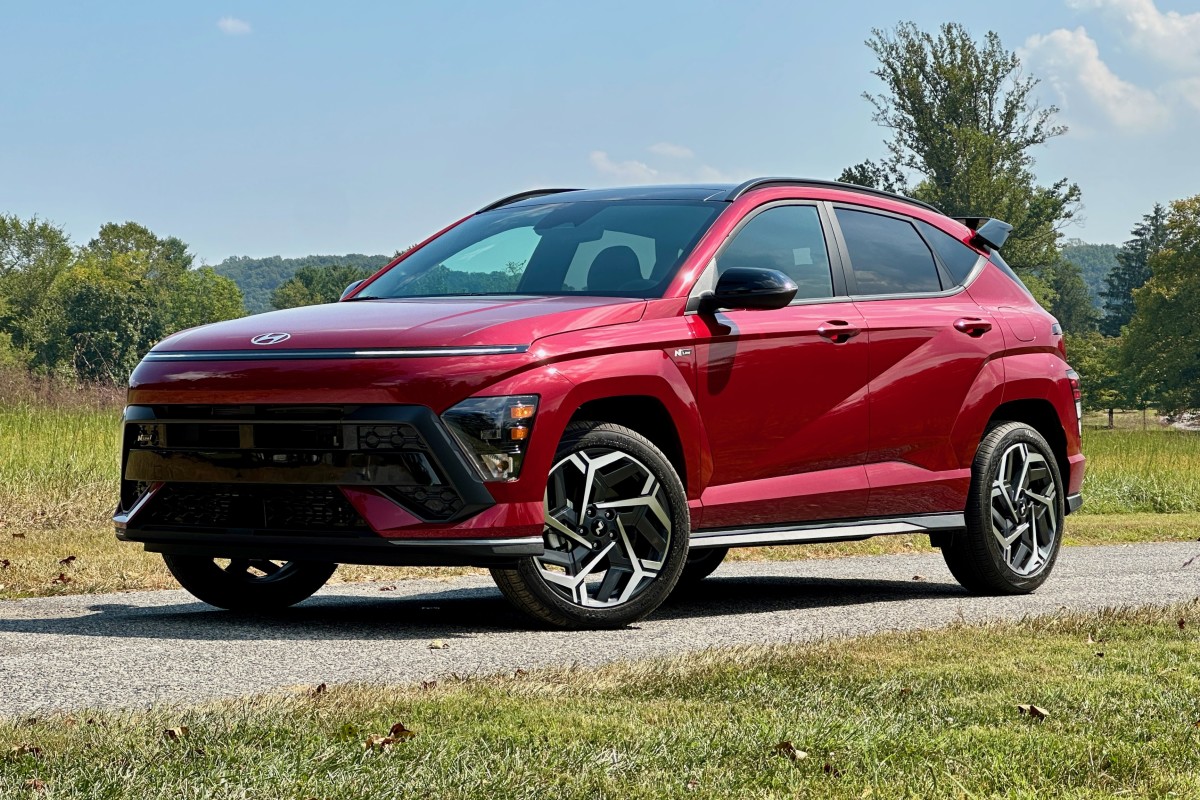
The 2025 Hyundai Kona retained its distinctive appearance from the previous year, maintaining a fresh and futuristic look that set it apart in the crossover class. Its design featured a largely flush, single-piece grille and ultra-slim LED light bars at both the front and rear, giving even the gas-powered models a modern aesthetic. The Kona's design, while not traditionally handsome, was a satisfactory blend of curves, bulges, and sharp angles. The newer model was noticeably larger, offering more interior space and a more assertive stance, especially in the sportier N Line trim with its body-coloured bumpers and cladding.
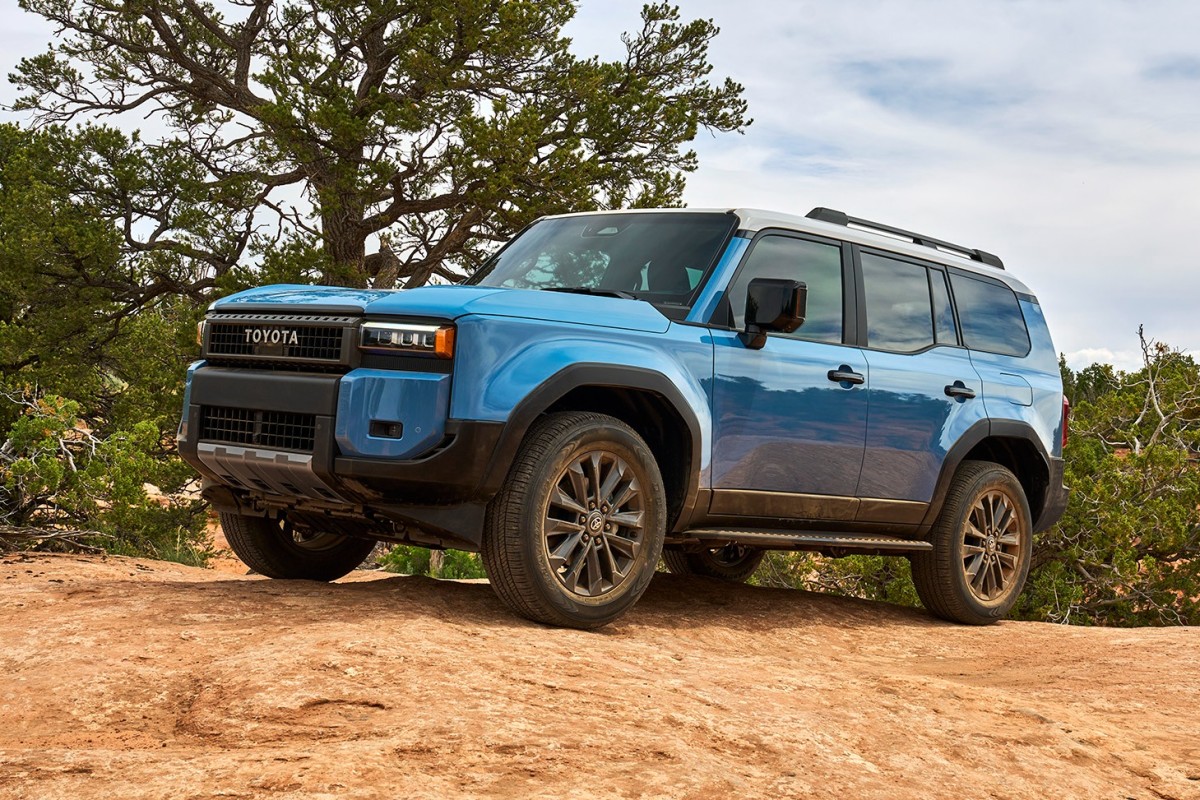
In contrast, the 2025 Toyota Land Cruiser offered a more traditional SUV design with a utilitarian focus. The base model, named the 1958, featured a retro look with round headlights and basic equipment, while the Cruiser trim provided a more modern and upscale appearance. The Cruiser trim also included critical off-roading hardware and software, making it a more capable vehicle for adventurous drivers. Despite its utilitarian design, the Land Cruiser's interior was enhanced with features like a Premium Package that added leather and more tech, although the rear seats lacked comfort and support.

The 2025 Hyundai Kona offered a choice between a fully electric drivetrain and two gas-powered options. The Essential and Preferred trims were equipped with a 2.0-litre naturally aspirated four-cylinder engine, producing 147 horsepower and 132 lb-ft of torque, paired with Hyundai's Intelligent Variable Transmission. The N Line trim featured a more powerful turbocharged 1.6-litre four-cylinder engine, delivering 190 horsepower and 195 lb-ft of torque, coupled with an eight-speed automatic transmission. All-wheel drive was available on the Essential and Preferred trims and standard on the N Line, enhancing the Kona's versatility.
The 2025 Toyota Land Cruiser came standard with Toyota’s i-Force Max hybrid system, combining a turbocharged 2.4-litre four-cylinder engine with an electric motor, producing a total of 326 horsepower and 465 lb-ft of torque. This power was delivered through a full-time four-wheel-drive system, equipped with electronic locking differentials and various off-roading features. Despite its impressive power, the Land Cruiser's fuel efficiency was less than expected, with real-world consumption significantly higher than official ratings. The Land Cruiser excelled in off-road conditions but struggled with handling on twisty roads due to its suspension tuning.
The 2025 Hyundai Kona offered a surprisingly spacious interior for its size, with 723 litres of cargo capacity, expandable to 1,803 litres with the rear seats folded. Rear legroom was adequate, and the front seats provided a comfortable driving position with a range of adjustments. The Kona's interior featured various storage solutions, and the trims offered different upholstery options, from cloth to Alcantara sport seats. Climate control options varied across trims, with dual-zone automatic climate control available on higher trims.
The 2025 Toyota Land Cruiser provided 1,062 litres of cargo space, expandable to 2,324 litres with the rear seats folded. The front seats were comfortable and supportive, but the second-row seats lacked thigh support and had an uncomfortable backrest angle. The Land Cruiser's interior featured SofTex artificial leather or real leather with the Premium Package, and the cabin included a power sunroof. However, the high load floor and running boards could be inconvenient for some users.
The 2025 Hyundai Kona featured a 12.3-inch central touchscreen infotainment display across all trims, offering wireless Android Auto and Apple CarPlay. The N Line trim included a 12.3-inch digital instrument cluster, and the Ultimate package added a Bose premium audio system and built-in navigation. Hyundai’s Bluelink connectivity allowed for over-the-air software updates, ensuring the Kona's features remained up to date.
The 2025 Toyota Land Cruiser's Cruiser trim upgraded to two 12.3-inch displays, offering a sophisticated infotainment experience with wireless Apple CarPlay and Android Auto. The Toyota Audio Multimedia system included various connected services, and the Premium Package added a JBL premium sound system and additional tech features. The Land Cruiser's voice recognition system performed well, providing accurate navigation assistance.
The 2025 Hyundai Kona impressed with its comprehensive safety features, including Forward Collision-Avoidance Assist, Lane Keeping Assist, and Blind-Spot Collision Warning as standard across all trims. The N Line with the Ultimate package added advanced features like Highway Driving Assist and a Blind Spot View Monitor. The Kona was named a Top Safety Pick+ by the IIHS, reflecting its strong safety credentials.
The 2025 Toyota Land Cruiser included Toyota Safety Sense 3.0, offering a suite of advanced driving assistance systems. These included forward-collision warning, lane-departure warning, and adaptive cruise control. The Premium Package added features like front cross-traffic alert and lane-change assist. However, the Land Cruiser's ADAS performance varied, with some systems requiring manual intervention in certain conditions. The Land Cruiser received a four-star overall rating from the NHTSA.
CarGurus highlights

According to CarGurus experts, the overall rating for the 2025 Hyundai Kona is 8.0 out of 10, while the 2025 Toyota Land Cruiser scores 6.8 out of 10. Based on these ratings, the Hyundai Kona is the recommended choice, offering a better balance of design, performance, and safety features.
Choose the 2025 Toyota Land Cruiser if:
- You need a robust SUV with excellent off-road capabilities.
- You prefer a traditional SUV design with a focus on utility.
- You desire a powerful hybrid system with advanced off-roading features.
Choose the 2025 Hyundai Kona if:
- You prioritize a modern, futuristic design with a spacious interior.
- You value comprehensive safety features and a high safety rating.
- You seek a versatile vehicle with multiple drivetrain options, including an electric variant.
CarGurus highlights

According to CarGurus experts, the overall rating for the 2025 Hyundai Kona is 8.0 out of 10, while the 2025 Toyota Land Cruiser scores 6.8 out of 10. Based on these ratings, the Hyundai Kona is the recommended choice, offering a better balance of design, performance, and safety features.
Choose the 2025 Toyota Land Cruiser if:
Shop Now- You need a robust SUV with excellent off-road capabilities.
- You prefer a traditional SUV design with a focus on utility.
- You desire a powerful hybrid system with advanced off-roading features.
Choose the 2025 Hyundai Kona if:
Shop Now- You prioritize a modern, futuristic design with a spacious interior.
- You value comprehensive safety features and a high safety rating.
- You seek a versatile vehicle with multiple drivetrain options, including an electric variant.

By: CarGurus + AI
At CarGurus, our team of experienced automotive writers remain at the heart of our content operation, conducting hands-on car tests and writing insightful guides that are backed by years of industry experience. To complement this, we are harnessing AI to make our content offering more diverse and more helpful to shoppers than ever. To achieve this, our AI systems are based exclusively on CarGurus content, ratings and data, so that what we produce is both unique to CarGurus, and uniquely helpful to car shoppers.