Porsche Cayenne vs Hyundai Kona
Overview | |
Listings416 | Listings4492 |
Ratings & Reviews | |
User Reviews | User Reviews |
Expert reviews8.0 out of 10 | Expert reviews7.8 out of 10 |
Pros
Cons
| Pros
Cons
|
Reviews SummaryVerdict: Even the base model Cayenne delivers an agile driving experience, but those willing to dig deep into their bank account for one of Porsche’s more expensive Cayenne models are rewarded with a spirited drive like no other. The competition here is stiff, in the form of other German SUVs like the Audi Q8, BMW X5, and Mercedes-Benz GLE, and their performance variants. However, the Cayenne is not here to lose. | |
Reviews SummaryAmong subcompact crossovers, the 2026 Kona is one of the biggest in size, passenger room, and cargo volume. Turbocharging and all-wheel drive (AWD) are available, and for this class, the technology is impressive. In Canada, the Kona carries over into the 2026 model year with no changes. Verdict: With the 2026 Kona, Hyundai offers a terrific small SUV. Putting the polarizing design and the unimpressive base powertrain aside, there are few reasons to skip it and a long list of reasons to choose it. | |
No video found | No video found |
Popular Features & Specs | |
Engine3.0L 348 hp V6 | Engine |
DrivetrainAWD | Drivetrain |
Seating Capacity5 | Seating Capacity5 |
Horsepower348 hp @ 5400 rpm | Horsepower |
Fuel Economy (City)13.8 L(e)/100 km | Fuel Economy (City) |
Fuel Economy (Highway)10.2 L(e)/100 km | Fuel Economy (Highway) |
Engine | |
Engine Name3.0L 348 hp V6 | Engine Name |
Torque368 lb-ft @ 1450 rpm | Torque |
Horsepower348 hp @ 5400 rpm | Horsepower |
DrivetrainAWD | Drivetrain |
Fuel Economy | |
Fuel Economy (City)13.8 L(e)/100 km | Fuel Economy (City) |
Fuel Economy (Highway)10.2 L(e)/100 km | Fuel Economy (Highway) |
Interior | |
Seating Capacity5 | Seating Capacity5 |
Key Features | |
Navigation SystemStandard | Navigation SystemStandard |
Safety | |
Front Crash Overall | Front Crash Overall4 |
Side Crash Overall | Side Crash Overall5 |
Dimensions & Capacity | |
Cargo Space770 L | Cargo Space722 L |
Curb Weight2122 kg | Curb Weight1363 kg |
Height1699 mm | Height1580 mm |
Length4930 mm | Length4351 mm |
Width2195 mm | Width1826 mm |
Wheelbase2896 mm | Wheelbase2659 mm |
Maximum Payload713 kg | Maximum Payload492 kg |
Number of doors4 | Number of doors4 |
Maximum Towing Capacity3500 kg | Maximum Towing Capacity |
Overview | ||
Listings | ||
Ratings & Reviews | ||
User reviews | ||
Expert reviews | 8.0 out of 10Read full review | 7.8 out of 10Read full review |
Pros & cons | Pros
Cons
| Pros
Cons
|
Summary | Verdict: Even the base model Cayenne delivers an agile driving experience, but those willing to dig deep into their bank account for one of Porsche’s more expensive Cayenne models are rewarded with a spirited drive like no other. The competition here is stiff, in the form of other German SUVs like the Audi Q8, BMW X5, and Mercedes-Benz GLE, and their performance variants. However, the Cayenne is not here to lose. | Among subcompact crossovers, the 2026 Kona is one of the biggest in size, passenger room, and cargo volume. Turbocharging and all-wheel drive (AWD) are available, and for this class, the technology is impressive. In Canada, the Kona carries over into the 2026 model year with no changes. Verdict: With the 2026 Kona, Hyundai offers a terrific small SUV. Putting the polarizing design and the unimpressive base powertrain aside, there are few reasons to skip it and a long list of reasons to choose it. |
Video | No video found | No video found |
Popular Features & Specs | ||
Engine | 3.0L 348 hp V6 | |
Drivetrain | AWD | |
Seating Capacity | 5 | 5 |
Horsepower | 348 hp @ 5400 rpm | |
Fuel Economy (City) | 13.8 L(e)/100 km | |
Fuel Economy (Highway) | 10.2 L(e)/100 km | |
Engine | ||
Engine Name | 3.0L 348 hp V6 | |
Torque | 368 lb-ft @ 1450 rpm | |
Horsepower | 348 hp @ 5400 rpm | |
Drivetrain | AWD | |
Fuel Economy | ||
Fuel Economy (City) | 13.8 L(e)/100 km | |
Fuel Economy (Highway) | 10.2 L(e)/100 km | |
Interior | ||
Seating Capacity | 5 | 5 |
Key Features | ||
Navigation System | Standard | Standard |
Safety | ||
Front Crash Overall | 4 | |
Side Crash Overall | 5 | |
Dimensions & Capacity | ||
Cargo Space | 770 L | 722 L |
Curb Weight | 2122 kg | 1363 kg |
Height | 1699 mm | 1580 mm |
Length | 4930 mm | 4351 mm |
Width | 2195 mm | 1826 mm |
Wheelbase | 2896 mm | 2659 mm |
Maximum Payload | 713 kg | 492 kg |
Number of doors | 4 | 4 |
Maximum Towing Capacity | 3500 kg | |
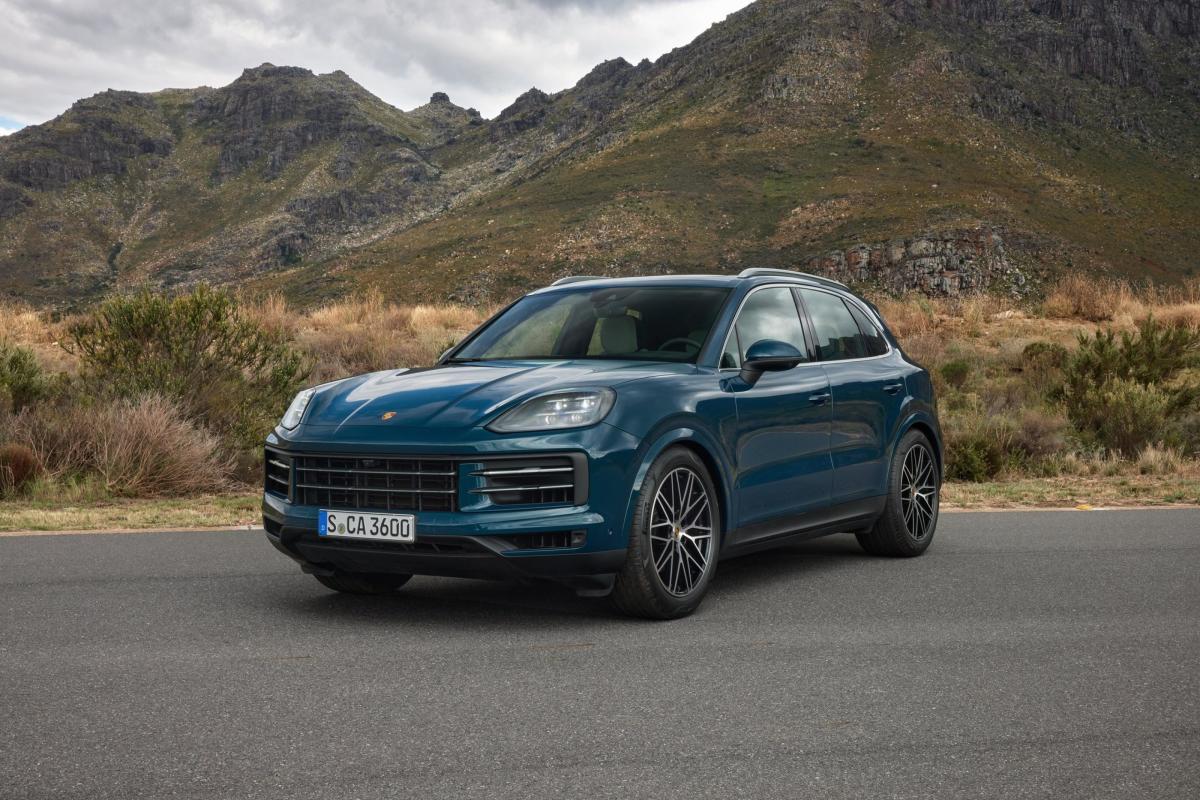
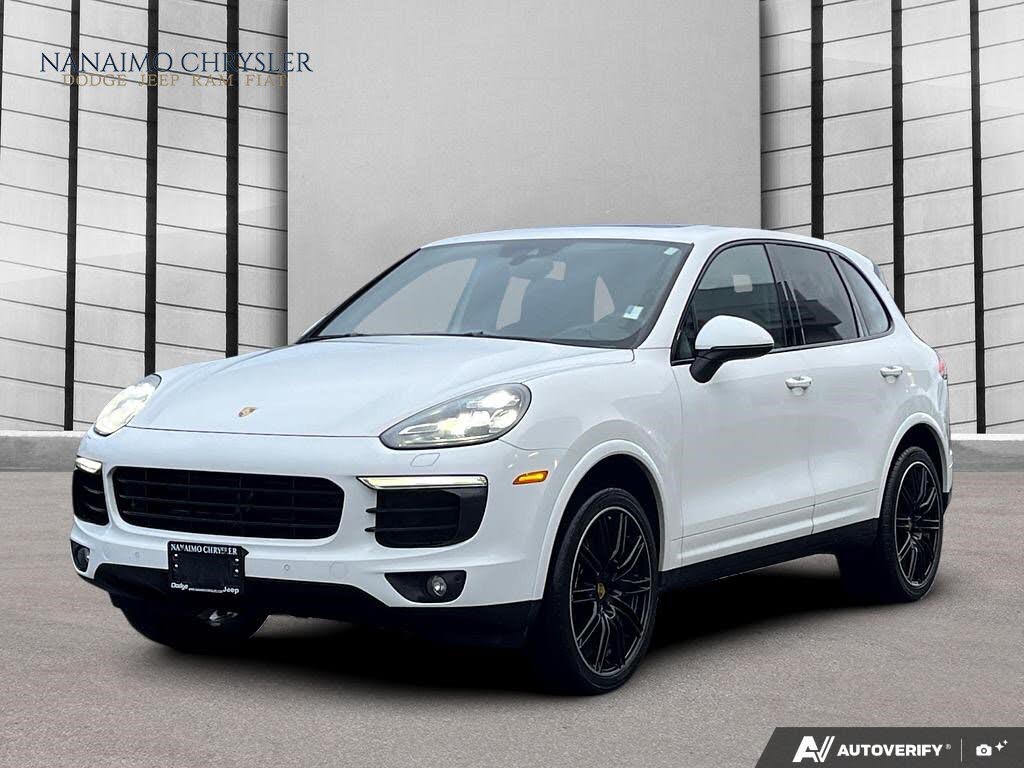
The 2025 Porsche Cayenne presented itself as a versatile SUV, available in both a standard model with a squared-off rear end and a sporty Cayenne Coupe. The GTS trim level, which was the focus of this review, featured high gloss black trim, a unique front fascia with larger air intakes, and tinted headlights. Red brake calipers were visible through 21-inch anthracite gray wheels, and the Cayenne Coupe boasted an adaptive rear spoiler. Inside, the Cayenne offered extensive customization options, from the colour of the cabin to the trim and seat belts. The interior was well-organized, with mechanical controls for essential features and a dashboard-mounted shifter toggle that provided additional storage space.
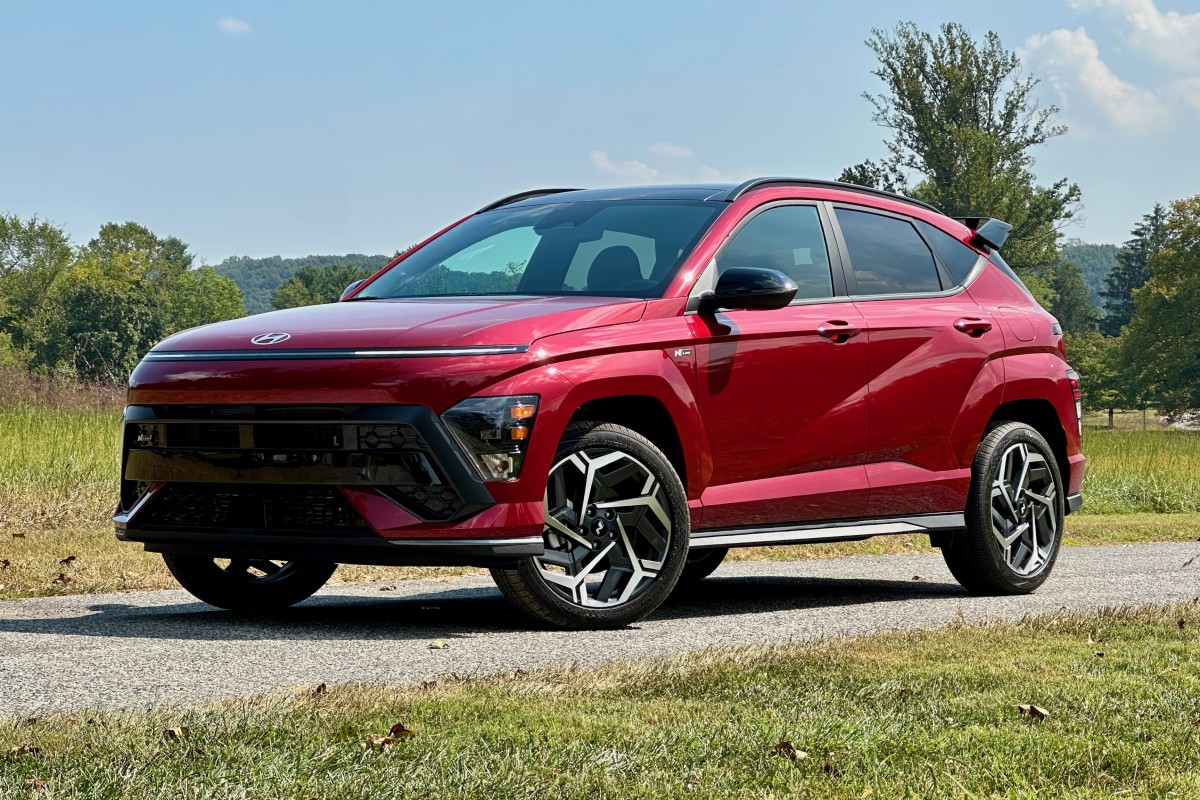
The 2026 Hyundai Kona, available in three trim levels in Canada, stood out with its distinctive design that polarized opinions. The N Line trim, which was tested, featured a turbocharged engine and a competitive price point. The Kona's interior was spacious, offering comfort for four adults and showcasing technological sophistication with widescreen digital instrumentation and a touchscreen infotainment system. Traditional analog controls were also included, allowing for easy adjustments without distraction. However, the use of white control labels on a metallic background posed visibility issues during the day.

The 2025 Porsche Cayenne offered a range of engines, with the GTS trim featuring a twin-turbo 4.0-litre V8 engine producing 493 horsepower and 486 lb-ft of torque. This power was delivered to all four wheels through an eight-speed transmission, allowing the Cayenne to accelerate to 100 km/h in 4.4 seconds and reach a top speed of 275 km/h. The GTS trim struck a balance between sporty performance and comfort, with precise steering and an agile suspension system. The Cayenne also offered various driving modes, including Sport and Sport Plus, which enhanced throttle and transmission response. Optional carbon ceramic brakes provided ample stopping power, and the Cayenne transformed into a comfortable commuter in Normal mode.
The 2026 Hyundai Kona's N Line trim featured a turbocharged 1.6-litre four-cylinder engine with 190 horsepower and 195 lb-ft of torque, paired with an eight-speed automatic transmission. The Kona's AWD system improved ride quality with a multi-link rear suspension. Fuel economy for the turbocharged engine was reasonable, with a combined rating of 9.0 L/100 km. However, the Kona's suspension isolation was lacking, and the ride quality was firm over road irregularities. The brakes heated up quickly during testing, raising concerns about their robustness. Despite these shortcomings, the Kona's turbocharged engine provided responsive performance, especially in Sport mode.
The 2025 Porsche Cayenne offered a customizable interior with options for carbon fibre, aluminum, or bronze Neodyme accents. The base model featured eight-way power-adjustable seats, with upgrades available for 14- or 18-way adjustable seats. The Cayenne accommodated five passengers comfortably, with ample headroom in the second row. Cargo space was slightly smaller than competitors, with 772 litres behind the second row and 1,708 litres with the seats folded down in the standard model. The coupe version offered 576 and 1,486 litres, respectively. The Cayenne could tow up to 3,500 kilograms and handle a payload of over 635 kilograms.
The 2026 Hyundai Kona excelled in practicality, offering more interior room and cargo space than most rivals. The N Line trim featured ambient lighting, sport pedals, leather and suede seat upholstery, and a 12.3-inch digital instrument cluster. Heated front seats were standard, and the Preferred trim added a heated steering wheel and other conveniences. The Kona's front storage space was impressive, with various trays and bins for stashing items. The smart hands-free power liftgate provided easy access to the 723 litres of cargo space, expandable to 1,803 litres with the rear seats folded down.
The 2025 Porsche Cayenne boasted a 12.6-inch digital gauge cluster and a 12.3-inch touchscreen display with wireless Apple CarPlay and Android Auto. An optional 10.9-inch passenger screen allowed for navigation and media control. The Cayenne's infotainment system was user-friendly, with voice control options. A head-up display and night-vision assist were available, along with four high-speed USB-C charging ports and a cooled wireless charging area.
The 2026 Hyundai Kona featured a 12.3-inch digital driver display and a 12.3-inch infotainment touchscreen. Standard features included wireless Apple CarPlay and Android Auto, SiriusXM satellite radio, and BlueLink connected services. The N Line's Ultimate package added a surround-view camera system and Remote Smart Parking Assist. The infotainment system was intuitive, and the Kona's tech offerings enhanced convenience and safety.
The 2025 Porsche Cayenne included standard parking sensors, forward collision warning, and blind-spot monitoring. However, adaptive cruise control, lane-keeping assist, and lane-departure warning were optional. The Cayenne had not been rated by NHTSA or IIHS for safety.
The 2026 Hyundai Kona offered an impressive array of standard driver assistance systems, including forward collision warning, automatic emergency braking, lane departure warning, and more. The Kona Preferred added adaptive cruise control and collision avoidance systems. The N Line's Ultimate package included additional safety features like a Blind-View Monitor and Highway Driving Assist. The IIHS awarded the Kona a Top Safety Pick+ rating, while NHTSA gave it a four-star overall rating.
CarGurus highlights
According to CarGurus experts, the overall rating for the 2025 Porsche Cayenne is 8.0 out of 10, while the 2026 Hyundai Kona scores 7.8 out of 10. Based on these ratings, the 2025 Porsche Cayenne is recommended for those seeking a luxury SUV with superior performance and customization options.
Choose the 2025 Porsche Cayenne if:
- You desire a luxury SUV with customizable interior options and sporty performance.
- You prioritize a balance between sporty driving dynamics and daily comfort.
- You need a vehicle with substantial towing capacity and payload capabilities.




Choose the 2026 Hyundai Kona if:
- You seek a practical subcompact SUV with ample interior space and cargo capacity.
- You value advanced safety features and driver assistance systems as standard.
- You want a competitively priced vehicle with modern technology and convenience features.


CarGurus highlights
According to CarGurus experts, the overall rating for the 2025 Porsche Cayenne is 8.0 out of 10, while the 2026 Hyundai Kona scores 7.8 out of 10. Based on these ratings, the 2025 Porsche Cayenne is recommended for those seeking a luxury SUV with superior performance and customization options.
Choose the 2025 Porsche Cayenne if:
Shop Now- You desire a luxury SUV with customizable interior options and sporty performance.
- You prioritize a balance between sporty driving dynamics and daily comfort.
- You need a vehicle with substantial towing capacity and payload capabilities.
Choose the 2026 Hyundai Kona if:
Shop Now- You seek a practical subcompact SUV with ample interior space and cargo capacity.
- You value advanced safety features and driver assistance systems as standard.
- You want a competitively priced vehicle with modern technology and convenience features.

By: CarGurus + AI
At CarGurus, our team of experienced automotive writers remain at the heart of our content operation, conducting hands-on car tests and writing insightful guides that are backed by years of industry experience. To complement this, we are harnessing AI to make our content offering more diverse and more helpful to shoppers than ever. To achieve this, our AI systems are based exclusively on CarGurus content, ratings and data, so that what we produce is both unique to CarGurus, and uniquely helpful to car shoppers.
