2025 Toyota Sequoia vs 2024 Mazda CX-50
Overview | |
Listings219 | Listings12 |
Ratings & Reviews | |
User Reviews | User Reviews |
Expert reviews6.8 out of 10 | Expert reviews5.5 out of 10 |
Pros
Cons
| Pros
Cons
|
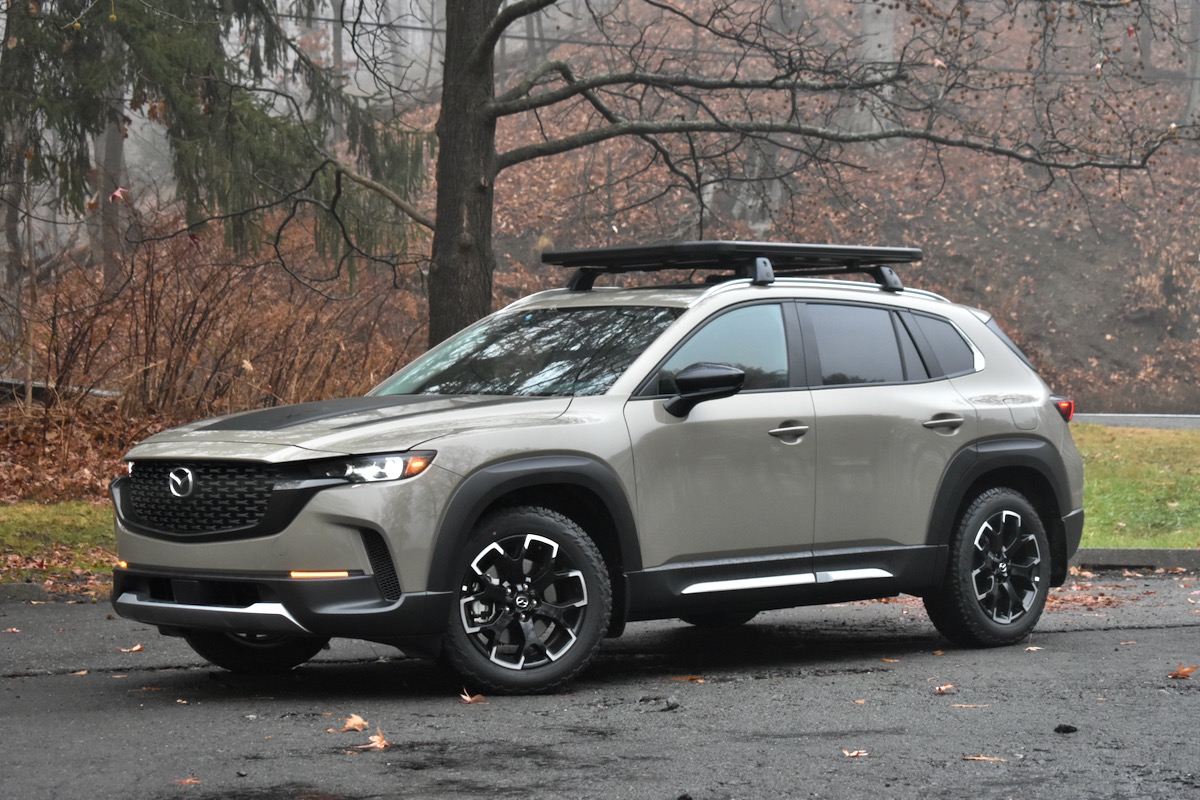
2024 Mazda CX-50 Reviews SummaryNow in its second model year, the 2024 Mazda CX-50 sits on the more rugged end of the compact crossover SUV spectrum. It’s close in size to the Mazda CX-5, but is aimed at more outdoorsy customers. Those customers have plenty of other choices, though, including popular and well-established nameplates like the Ford Escape, Honda CR-V, Kia Sportage, Subaru Forester, and Toyota RAV4. The CX-50 doesn’t offend, but it doesn’t charm either. | |
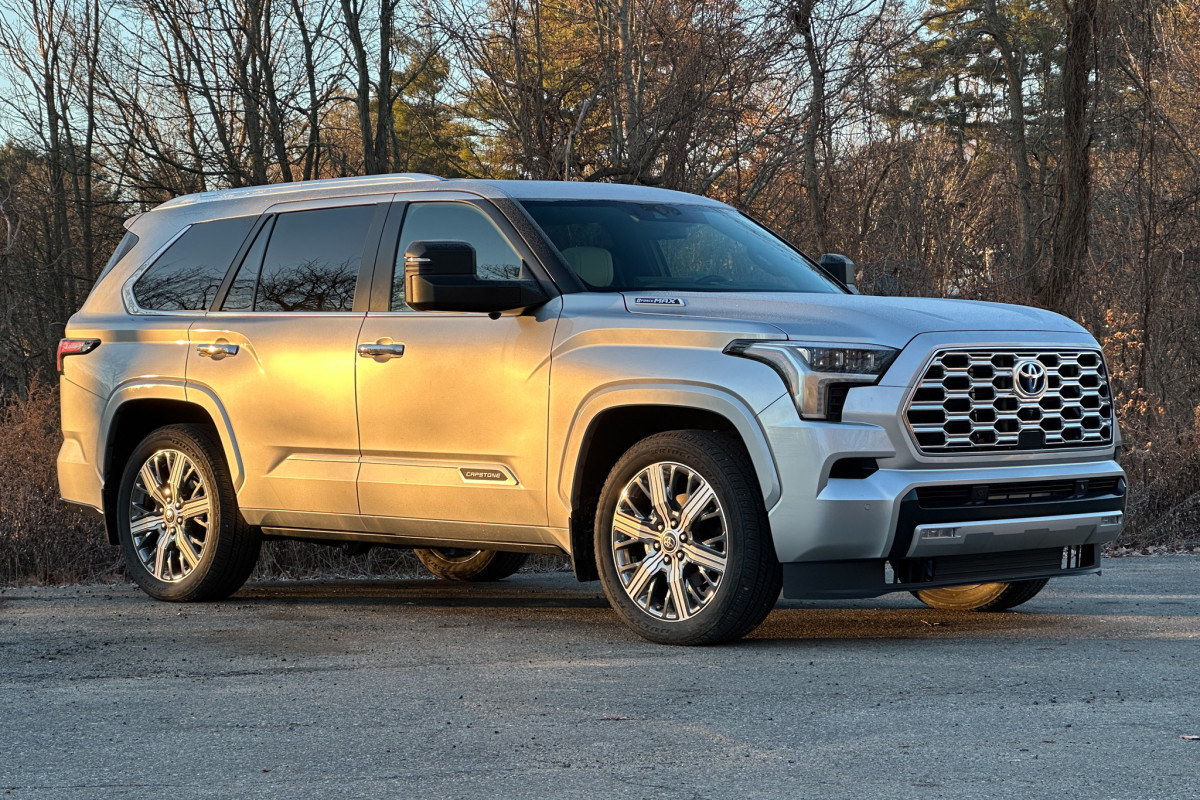
2025 Toyota Sequoia Reviews SummaryThe 2025 Sequoia is Toyota’s full-size SUV, based on the same platform as the Tundra pickup truck and using the same i-Force Max hybrid powertrain. It seats up to eight people, holds up to 2,460 litres of cargo, carries up to 640 kilograms (1,411 pounds) of payload, and tows up to 4,080 kilograms (9,000 pounds) of trailer. But the Toyota Sequoia comes with some fundamental flaws. Verdict: People buy full-size SUVs to carry lots of people, haul lots of cargo, and tow lots of weight. However, due to its packaging requirements, the Sequoia is a rock star only if you’re attaching a trailer to it, and even then, it’s not class-leading in capability. | |
No video found | |
Popular Features & Specs | |
Engine2.5L 187 hp I4 | Engine3.4L 437 hp V6 Hybrid |
DrivetrainAWD | Drivetrain4X2 |
Seating Capacity5 | Seating Capacity8 |
Horsepower187 hp @ 6000 rpm | Horsepower437 hp @ 5200 rpm |
EV Battery Capacity | EV Battery Capacity1.9 kWh |
Fuel Economy (City)9.8 L(e)/100 km | Fuel Economy (City)11.2 L(e)/100 km |
Fuel Economy (Highway)7.8 L(e)/100 km | Fuel Economy (Highway)9.8 L(e)/100 km |
Engine | |
Engine Name2.5L 187 hp I4 | Engine Name3.4L 437 hp V6 Hybrid |
Torque186 lb-ft @ 4000 rpm | Torque583 lb-ft @ 2400 rpm |
Horsepower187 hp @ 6000 rpm | Horsepower437 hp @ 5200 rpm |
DrivetrainAWD | Drivetrain4X2 |
Fuel Economy | |
EV Battery Capacity | EV Battery Capacity1.9 kWh |
Fuel Economy (City)9.8 L(e)/100 km | Fuel Economy (City)11.2 L(e)/100 km |
Fuel Economy (Highway)7.8 L(e)/100 km | Fuel Economy (Highway)9.8 L(e)/100 km |
Interior | |
Seating Capacity5 | Seating Capacity8 |
Key Features | |
Sunroof/Moonroof | Sunroof/MoonroofStandard |
Safety | |
Front Crash Overall5 | Front Crash Overall |
Side Crash Overall5 | Side Crash Overall |
Dimensions & Capacity | |
Cargo Space889 L | Cargo Space631 L |
Curb Weight1681 kg | Curb Weight2549 kg |
Height1613 mm | Height1892 mm |
Length4719 mm | Length5286 mm |
Width2052 mm | Width2027 mm |
Wheelbase2814 mm | Wheelbase3099 mm |
Maximum Payload518 kg | Maximum Payload785 kg |
Number of doors4 | Number of doors4 |
Maximum Towing Capacity907 kg | Maximum Towing Capacity4318 kg |
Standard Towing Capacity | Standard Towing Capacity4318 kg |
Overview | ||
Listings | ||
Ratings & Reviews | ||
User reviews | ||
Expert reviews | 6.8 out of 10Read full review | 5.5 out of 10Read full review |
Pros & cons | Pros
Cons
| Pros
Cons
|
Summary | Now in its second model year, the 2024 Mazda CX-50 sits on the more rugged end of the compact crossover SUV spectrum. It’s close in size to the Mazda CX-5, but is aimed at more outdoorsy customers. Those customers have plenty of other choices, though, including popular and well-established nameplates like the Ford Escape, Honda CR-V, Kia Sportage, Subaru Forester, and Toyota RAV4. The CX-50 doesn’t offend, but it doesn’t charm either. | The 2025 Sequoia is Toyota’s full-size SUV, based on the same platform as the Tundra pickup truck and using the same i-Force Max hybrid powertrain. It seats up to eight people, holds up to 2,460 litres of cargo, carries up to 640 kilograms (1,411 pounds) of payload, and tows up to 4,080 kilograms (9,000 pounds) of trailer. But the Toyota Sequoia comes with some fundamental flaws. Verdict: People buy full-size SUVs to carry lots of people, haul lots of cargo, and tow lots of weight. However, due to its packaging requirements, the Sequoia is a rock star only if you’re attaching a trailer to it, and even then, it’s not class-leading in capability. |
Video | No video found | |
Popular Features & Specs | ||
Engine | 2.5L 187 hp I4 | 3.4L 437 hp V6 Hybrid |
Drivetrain | AWD | 4X2 |
Seating Capacity | 5 | 8 |
Horsepower | 187 hp @ 6000 rpm | 437 hp @ 5200 rpm |
EV Battery Capacity | 1.9 kWh | |
Fuel Economy (City) | 9.8 L(e)/100 km | 11.2 L(e)/100 km |
Fuel Economy (Highway) | 7.8 L(e)/100 km | 9.8 L(e)/100 km |
Engine | ||
Engine Name | 2.5L 187 hp I4 | 3.4L 437 hp V6 Hybrid |
Torque | 186 lb-ft @ 4000 rpm | 583 lb-ft @ 2400 rpm |
Horsepower | 187 hp @ 6000 rpm | 437 hp @ 5200 rpm |
Drivetrain | AWD | 4X2 |
Fuel Economy | ||
EV Battery Capacity | 1.9 kWh | |
Fuel Economy (City) | 9.8 L(e)/100 km | 11.2 L(e)/100 km |
Fuel Economy (Highway) | 7.8 L(e)/100 km | 9.8 L(e)/100 km |
Interior | ||
Seating Capacity | 5 | 8 |
Key Features | ||
Sunroof/Moonroof | Standard | |
Safety | ||
Front Crash Overall | 5 | |
Side Crash Overall | 5 | |
Dimensions & Capacity | ||
Cargo Space | 889 L | 631 L |
Curb Weight | 1681 kg | 2549 kg |
Height | 1613 mm | 1892 mm |
Length | 4719 mm | 5286 mm |
Width | 2052 mm | 2027 mm |
Wheelbase | 2814 mm | 3099 mm |
Maximum Payload | 518 kg | 785 kg |
Number of doors | 4 | 4 |
Maximum Towing Capacity | 907 kg | 4318 kg |
Standard Towing Capacity | 4318 kg | |
The 2024 Mazda CX-50 was a more rugged alternative to the Mazda CX-5, featuring a design that was both broader and longer, with a lower stance. Its square wheel arches and faux air vents gave it a robust appearance, while the earthy colour palette and Terracotta leather upholstery added a touch of sophistication. The interior was well-crafted, with a BMW-like infotainment screen and minimal piano black plastic, ensuring longevity in style. However, despite Mazda's aspirations to move upscale, the CX-50 still had some reminders of its mainstream roots, such as the manually adjustable passenger seat in the base model.
In contrast, the 2025 Toyota Sequoia, particularly in the U.S.-only 1794 Edition, offered a bold presence with its Lunar Rock paint and dark grey wheels. The interior was a mix of luxury and practicality, with Saddle Tan leather upholstery and walnut wood trim. However, the cabin was also filled with typical Toyota-grade plastic, which detracted from the overall premium feel. The Sequoia's design was eye-catching, but its rarity on the road added to its appeal. Despite its size, the Sequoia's interior space was somewhat compromised, especially in the third row, where headroom was limited.


The 2024 Mazda CX-50 was powered by a 2.5-litre four-cylinder engine, with turbocharging available on higher trims. The base engine delivered 187 horsepower and 186 pound-feet of torque, while the turbo variant offered up to 256 hp and 320 lb-ft on premium fuel. All models came with a six-speed automatic transmission and all-wheel drive, featuring Normal, Sport, and Off-road driving modes. Turbo models also included a Towing mode, increasing towing capacity to 1,587 kilograms. While the CX-50 shared powertrains with the CX-5, it offered a more subdued driving experience, with the Meridian Edition's all-terrain tires adding noise and reducing grip.
The 2025 Toyota Sequoia boasted an i-Force Max hybrid powertrain, combining a twin-turbocharged 3.4-litre V6 engine with an electric motor, producing 437 horsepower and 583 pound-feet of torque. A 10-speed automatic transmission and part-time four-wheel-drive system were standard in Canada. Despite its muscular performance, the Sequoia's fuel economy was disappointing, averaging 14.5 L/100 km in testing. The Sequoia excelled in towing, with a maximum capacity of 4,137 kilograms, but its solid rear axle and battery placement compromised ride quality and interior space. The steering was light, but the brakes lacked initial bite and were difficult to modulate.
The 2024 Mazda CX-50 offered similar passenger space to the CX-5, with slightly less headroom but more legroom. It provided 889 litres of cargo space with the rear seats up and 1,595 litres with them folded. While it trailed competitors in cargo capacity, the power liftgate improved access. The interior layout was sensible, with a substantial shifter and rotary infotainment controller on the centre console, maintaining functionality without sacrificing space.
The 2025 Toyota Sequoia accommodated up to eight passengers, though the third row was best suited for shorter individuals. The Platinum and Capstone trims featured comfortable, power-adjustable seats with heating, ventilation, and massage functions. Access to the rear seats was facilitated by long doors, but they posed challenges in tight spaces. The third row's high floor and low roof made entry awkward, and cargo space was limited to 325 litres with all seats in use. Folding the third row expanded capacity to 1,387 litres, but even with all seats down, the Sequoia offered less cargo space than rivals.
The 2024 Mazda CX-50 came with a 10.25-inch infotainment screen controlled by a rotary dial and buttons. Wireless Apple CarPlay and Android Auto were standard, with higher trims adding wireless charging and a Bose audio system. While the interface required adjustment, it was straightforward once familiar. The system's graphics were basic, but the focus on simplicity appealed to those uninterested in excessive tech.
The 2025 Toyota Sequoia featured a 12.3-inch digital instrumentation panel and a 14-inch touchscreen infotainment system from the Limited trim onwards. Connected services plans offered advanced features like cloud-based navigation and remote engine start. Wireless Apple CarPlay and Android Auto were standard, with a JBL sound system available on higher trims. The system included a large volume knob but lacked a tuning knob, which was inconvenient. The voice recognition system was capable but had limitations, and the surround-view camera system was a valuable addition.
The 2024 Mazda CX-50 earned a 2023 Top Safety Pick from the IIHS, with top scores in crash tests and front-crash prevention. However, it received a "Basic" score for nighttime pedestrian detection. Standard safety features included automatic emergency braking, blind-spot monitoring, and adaptive cruise control, with additional options available.
The 2025 Toyota Sequoia came with Toyota Safety Sense 2.5, offering adaptive cruise control, forward collision warning, and lane-keeping assist. While the tech was helpful, lane assist features could be intrusive. Neither the IIHS nor NHTSA had released crash-test ratings for the Sequoia at the time of publication.
CarGurus highlights
According to CarGurus experts, the overall rating for the 2024 Mazda CX-50 is 6.8 out of 10, while the 2025 Toyota Sequoia scores 5.5 out of 10. Based on these ratings, the Mazda CX-50 is the recommended choice, offering a better balance of design, performance, and safety features.
Choose the 2025 Toyota Sequoia if:
- You need a vehicle with a high towing capacity and robust powertrain.
- You require a full-size SUV with seating for up to eight passengers.
- You appreciate advanced connected services and a larger infotainment screen.


Choose the 2024 Mazda CX-50 if:
- You prefer a vehicle with a more refined interior and better material quality.
- You value a simpler, less tech-heavy infotainment system.
- You want a vehicle with a higher safety rating from the IIHS.


CarGurus highlights
According to CarGurus experts, the overall rating for the 2024 Mazda CX-50 is 6.8 out of 10, while the 2025 Toyota Sequoia scores 5.5 out of 10. Based on these ratings, the Mazda CX-50 is the recommended choice, offering a better balance of design, performance, and safety features.
Choose the 2025 Toyota Sequoia if:
Shop Now- You need a vehicle with a high towing capacity and robust powertrain.
- You require a full-size SUV with seating for up to eight passengers.
- You appreciate advanced connected services and a larger infotainment screen.
Choose the 2024 Mazda CX-50 if:
Shop Now- You prefer a vehicle with a more refined interior and better material quality.
- You value a simpler, less tech-heavy infotainment system.
- You want a vehicle with a higher safety rating from the IIHS.

By: CarGurus + AI
At CarGurus, our team of experienced automotive writers remain at the heart of our content operation, conducting hands-on car tests and writing insightful guides that are backed by years of industry experience. To complement this, we are harnessing AI to make our content offering more diverse and more helpful to shoppers than ever. To achieve this, our AI systems are based exclusively on CarGurus content, ratings and data, so that what we produce is both unique to CarGurus, and uniquely helpful to car shoppers.
