2024 Chevrolet Traverse vs 2025 Toyota Sequoia
Overview | |
Listings58 | Listings11 |
Ratings & Reviews | |
User Reviews | User Reviews |
Expert reviews7.8 out of 10 | Expert reviews5.5 out of 10 |
Pros
Cons
| Pros
Cons
|
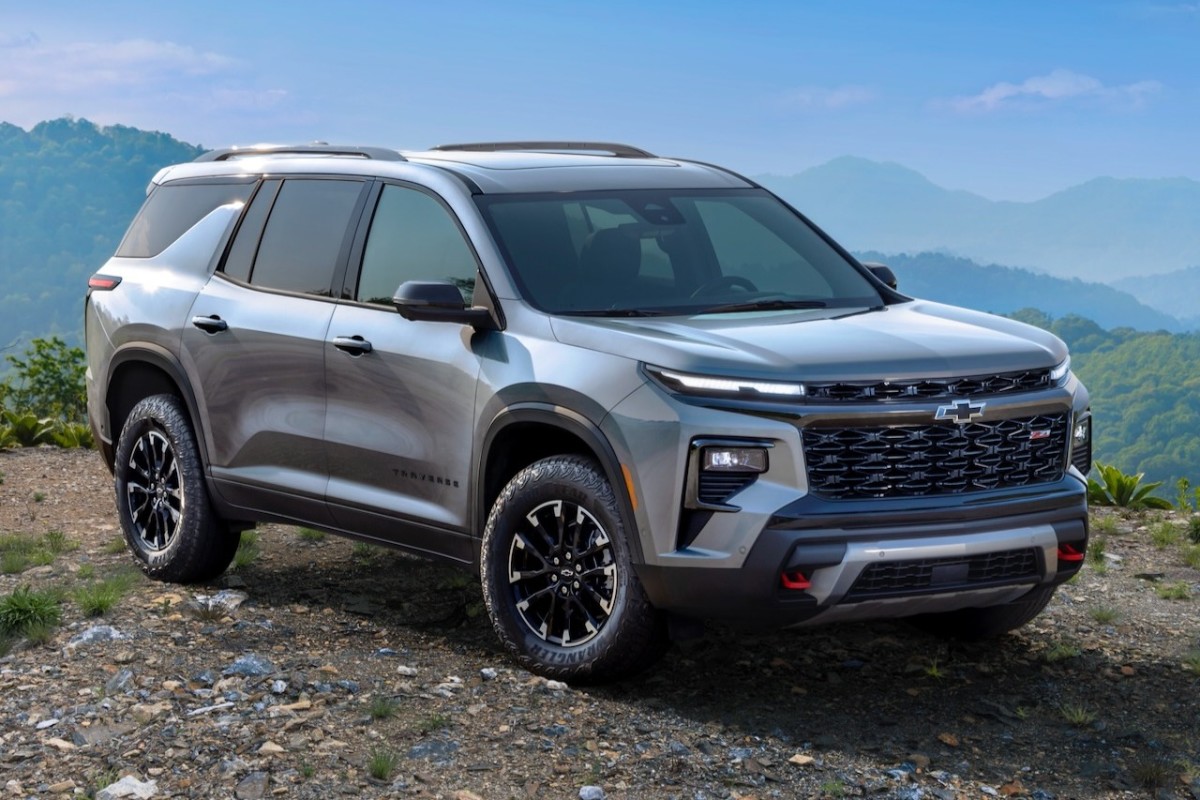
2024 Chevrolet Traverse Reviews SummaryThe 2024 Chevrolet Traverse has gone from being something of a wallflower to becoming one of the more stand-out choices among midsize SUVs with three rows of seating. That’s because Chevrolet’s design and engineering team did its homework when it came time to update this third generation of the Traverse, a model that has featured in the brand’s lineup since its introduction back for the 2009 model year. The 2024 Chevy Traverse is taller, wider, and longer than the outgoing variant. It’s also much more memorable to look at; following current SUV trends, Chevrolet gave the Traverse a more rugged appearance that borrows from both the full-size Tahoe SUV and Sierra pickup truck. Styling is always subjective, but in this instance, we think it’s fair to say Chevy got things right. Verdict: More important than any additional visual bravado is that the 2024 Traverse has been improved in countless other ways. It has more standard driver aids, such as blind-spot monitoring and rear cross-traffic alert. There is more space for passengers, particularly those seated in the third row. And the infotainment system gets a much larger touchscreen. | |
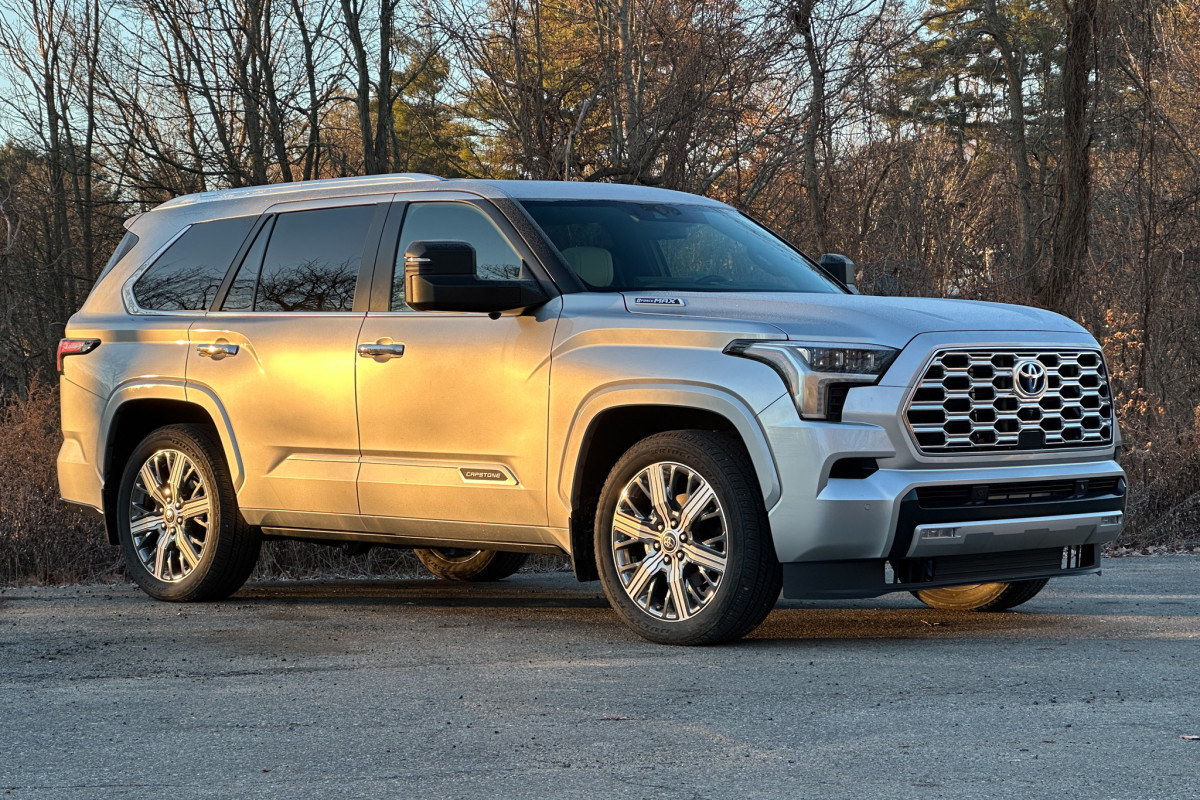
2025 Toyota Sequoia Reviews SummaryThe 2025 Sequoia is Toyota’s full-size SUV, based on the same platform as the Tundra pickup truck and using the same i-Force Max hybrid powertrain. It seats up to eight people, holds up to 2,460 litres of cargo, carries up to 640 kilograms (1,411 pounds) of payload, and tows up to 4,080 kilograms (9,000 pounds) of trailer. But the Toyota Sequoia comes with some fundamental flaws. Verdict: People buy full-size SUVs to carry lots of people, haul lots of cargo, and tow lots of weight. However, due to its packaging requirements, the Sequoia is a rock star only if you’re attaching a trailer to it, and even then, it’s not class-leading in capability. | |
No video found | No video found |
Popular Features & Specs | |
Engine3.6L 310 hp V6 | Engine3.4L 437 hp V6 Hybrid |
DrivetrainFWD | Drivetrain4X2 |
Seating Capacity8 | Seating Capacity8 |
Horsepower310 hp @ 6800 rpm | Horsepower437 hp @ 5200 rpm |
EV Battery Capacity | EV Battery Capacity1.9 kWh |
Fuel Economy (City)13.1 L(e)/100 km | Fuel Economy (City)11.2 L(e)/100 km |
Fuel Economy (Highway)9.0 L(e)/100 km | Fuel Economy (Highway)9.8 L(e)/100 km |
Engine | |
Engine Name3.6L 310 hp V6 | Engine Name3.4L 437 hp V6 Hybrid |
Torque266 lb-ft @ 2800 rpm | Torque583 lb-ft @ 2400 rpm |
Horsepower310 hp @ 6800 rpm | Horsepower437 hp @ 5200 rpm |
DrivetrainFWD | Drivetrain4X2 |
Fuel Economy | |
EV Battery Capacity | EV Battery Capacity1.9 kWh |
Fuel Economy (City)13.1 L(e)/100 km | Fuel Economy (City)11.2 L(e)/100 km |
Fuel Economy (Highway)9.0 L(e)/100 km | Fuel Economy (Highway)9.8 L(e)/100 km |
Interior | |
Seating Capacity8 | Seating Capacity8 |
Key Features | |
Navigation SystemOptional | Navigation System |
Sunroof/MoonroofOptional | Sunroof/MoonroofStandard |
Safety | |
Front Crash Overall5 | Front Crash Overall |
Side Crash Overall5 | Side Crash Overall |
Dimensions & Capacity | |
Cargo Space651 L | Cargo Space631 L |
Curb Weight1955 kg | Curb Weight2549 kg |
Height1796 mm | Height1892 mm |
Length5230 mm | Length5286 mm |
Width2250 mm | Width2027 mm |
Wheelbase3073 mm | Wheelbase3099 mm |
Maximum Payload | Maximum Payload785 kg |
Number of doors4 | Number of doors4 |
Maximum Towing Capacity680 kg | Maximum Towing Capacity4318 kg |
Standard Towing Capacity | Standard Towing Capacity4318 kg |
Overview | ||
Listings | ||
Ratings & Reviews | ||
User reviews | ||
Expert reviews | 7.8 out of 10Read full review | 5.5 out of 10Read full review |
Pros & cons | Pros
Cons
| Pros
Cons
|
Summary | The 2024 Chevrolet Traverse has gone from being something of a wallflower to becoming one of the more stand-out choices among midsize SUVs with three rows of seating. That’s because Chevrolet’s design and engineering team did its homework when it came time to update this third generation of the Traverse, a model that has featured in the brand’s lineup since its introduction back for the 2009 model year. The 2024 Chevy Traverse is taller, wider, and longer than the outgoing variant. It’s also much more memorable to look at; following current SUV trends, Chevrolet gave the Traverse a more rugged appearance that borrows from both the full-size Tahoe SUV and Sierra pickup truck. Styling is always subjective, but in this instance, we think it’s fair to say Chevy got things right. Verdict: More important than any additional visual bravado is that the 2024 Traverse has been improved in countless other ways. It has more standard driver aids, such as blind-spot monitoring and rear cross-traffic alert. There is more space for passengers, particularly those seated in the third row. And the infotainment system gets a much larger touchscreen. | The 2025 Sequoia is Toyota’s full-size SUV, based on the same platform as the Tundra pickup truck and using the same i-Force Max hybrid powertrain. It seats up to eight people, holds up to 2,460 litres of cargo, carries up to 640 kilograms (1,411 pounds) of payload, and tows up to 4,080 kilograms (9,000 pounds) of trailer. But the Toyota Sequoia comes with some fundamental flaws. Verdict: People buy full-size SUVs to carry lots of people, haul lots of cargo, and tow lots of weight. However, due to its packaging requirements, the Sequoia is a rock star only if you’re attaching a trailer to it, and even then, it’s not class-leading in capability. |
Video | No video found | No video found |
Popular Features & Specs | ||
Engine | 3.6L 310 hp V6 | 3.4L 437 hp V6 Hybrid |
Drivetrain | FWD | 4X2 |
Seating Capacity | 8 | 8 |
Horsepower | 310 hp @ 6800 rpm | 437 hp @ 5200 rpm |
EV Battery Capacity | 1.9 kWh | |
Fuel Economy (City) | 13.1 L(e)/100 km | 11.2 L(e)/100 km |
Fuel Economy (Highway) | 9.0 L(e)/100 km | 9.8 L(e)/100 km |
Engine | ||
Engine Name | 3.6L 310 hp V6 | 3.4L 437 hp V6 Hybrid |
Torque | 266 lb-ft @ 2800 rpm | 583 lb-ft @ 2400 rpm |
Horsepower | 310 hp @ 6800 rpm | 437 hp @ 5200 rpm |
Drivetrain | FWD | 4X2 |
Fuel Economy | ||
EV Battery Capacity | 1.9 kWh | |
Fuel Economy (City) | 13.1 L(e)/100 km | 11.2 L(e)/100 km |
Fuel Economy (Highway) | 9.0 L(e)/100 km | 9.8 L(e)/100 km |
Interior | ||
Seating Capacity | 8 | 8 |
Key Features | ||
Navigation System | Optional | |
Sunroof/Moonroof | Optional | Standard |
Safety | ||
Front Crash Overall | 5 | |
Side Crash Overall | 5 | |
Dimensions & Capacity | ||
Cargo Space | 651 L | 631 L |
Curb Weight | 1955 kg | 2549 kg |
Height | 1796 mm | 1892 mm |
Length | 5230 mm | 5286 mm |
Width | 2250 mm | 2027 mm |
Wheelbase | 3073 mm | 3099 mm |
Maximum Payload | 785 kg | |
Number of doors | 4 | 4 |
Maximum Towing Capacity | 680 kg | 4318 kg |
Standard Towing Capacity | 4318 kg | |
The 2024 Chevrolet Traverse was available in three trims in Canada: LT, Z71, and RS. The Z71 was a new addition, designed for those interested in moderate off-roading. Chevrolet emphasized that the Z71 was not intended to compete with hardcore off-roaders like the Jeep Wrangler or Ford Bronco but was capable of handling reasonably rugged terrain. Pricing for the Traverse was competitive, with the LT starting at $50,833 and the RS reaching $65,733. The Z71 model, priced at $56,833, featured gloss black-painted 18-inch alloy wheels and Iridescent Pearl Tricoat paint, with a Jet Black interior accented by "Torch Red" highlights. The standard cloth seats were comfortable, though synthetic leather was available for an additional cost.
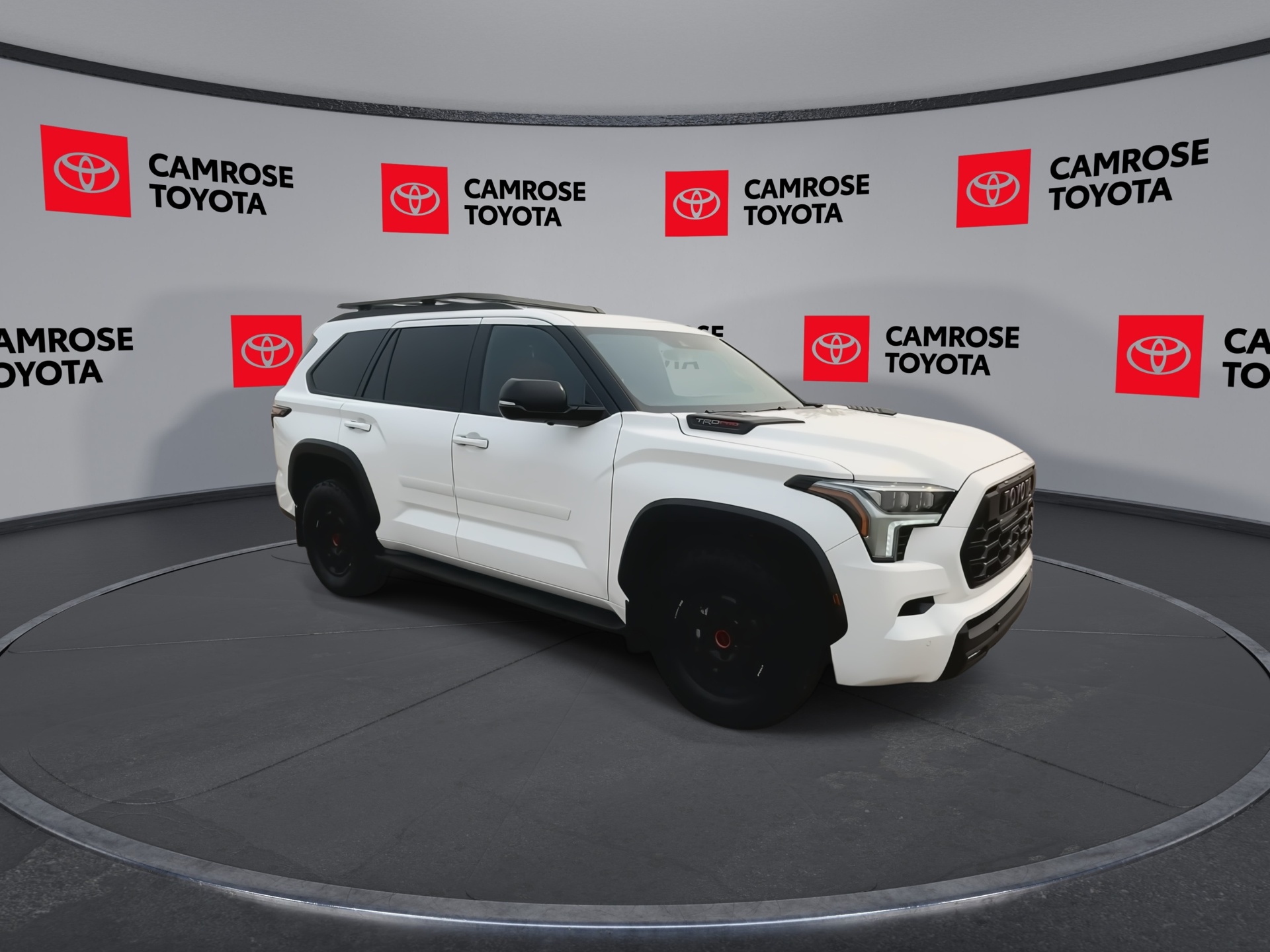
The 2025 Toyota Sequoia, particularly the U.S.-only 1794 Edition, was equivalent to the Canadian Platinum trim but with unique features like dark grey 20-inch wheels and less chrome. In Canada, the Sequoia lineup included the SR5 TRD Off-road, Limited, Platinum, and Capstone trims, with prices ranging from $87,174 to $106,175. The Sequoia's Lunar Rock paint turned heads, despite the model's age. The interior featured typical Toyota-grade plastic, which was less impressive compared to the leather upholstery. The Sequoia's design was functional but lacked the premium feel expected at its price point.
The 2024 Chevrolet Traverse replaced its previous 310-horsepower V6 with a turbocharged 2.5-litre four-cylinder engine, producing 328 horsepower and 326 lb-ft of torque. This new engine offered more power and torque than its predecessor. All-wheel drive was standard, with the Z71 trim featuring an advanced dual-clutch system for better grip. The Traverse provided satisfactory acceleration and a pleasant exhaust note, with a smooth ride despite its size. The brakes were progressive, and the fuel-saving stop-and-start feature was seamless. Fuel economy was rated at 12.4 L/100 km in the city, 9.9 on the highway, and 11.3 combined.
The 2025 Toyota Sequoia came with an i-Force Max hybrid powertrain, combining a twin-turbocharged 3.4-litre V6, an electric motor, and a 10-speed automatic transmission. It delivered 437 horsepower and 583 lb-ft of torque. The Sequoia's part-time 4WD system offered multiple driving modes. Despite its weight, the Sequoia accelerated quickly, but fuel economy was disappointing, averaging 14.5 L/100 km. Towing capacity was impressive, but the solid rear axle and battery placement compromised interior space and ride quality. The Sequoia's steering was light, but the brakes lacked initial bite and were difficult to modulate.
The 2024 Chevrolet Traverse offered seating for eight in the LT and Z71 trims, with the RS model featuring second-row captain’s chairs for seven-passenger capacity. The Smart Slide second-row seats were easy to use, and a power-folding third row was available. Cargo volume was 648 litres behind the third row, expanding to 2,764 litres with seats folded. The Traverse had ample storage, including a hidden area under the centre console. Visibility was generally good, though the third row felt a bit enclosed. The driver's seat was power-operated, but the front passenger seat was manual.
The 2025 Toyota Sequoia accommodated up to eight passengers, though seven or six were more comfortable. The Platinum and Capstone trims featured 10-way power adjustable seats with heating, ventilation, and massage. Access to the third row was challenging due to the high floor and low roof. Cargo space was limited, with only 325 litres behind the third row, expanding to 1,387 litres with it folded, and 2,460 litres with both rows down. These figures were less than rivals, and the high floor made third-row seating awkward for adults.
The 2024 Chevrolet Traverse featured a 17.7-inch infotainment touchscreen and an 11-inch digital instrument display. The system ran on Google-based software with wireless Apple CarPlay and Android Auto. A wireless charging pad was included, and physical controls for volume and HVAC were retained. Super Cruise, a hands-free driving aid, was available for the first time, expanding its functionality to single-lane roads.
The 2025 Toyota Sequoia came with a 12.3-inch digital instrumentation panel and a 14-inch touchscreen infotainment system from the Limited trim. Connected services plans offered various features, but wireless Apple CarPlay and Android Auto were standard. The JBL premium sound system was available on higher trims. The system included a surround-view camera and a digital rearview mirror, though the lack of a tuning knob was frustrating. The voice recognition system was capable but had limitations.
The 2024 Chevrolet Traverse had not been crash-tested by NHTSA or IIHS at the time of review. However, it included a comprehensive suite of driver aids, such as automatic emergency braking, lane-keep assist, blind-spot warning, and adaptive cruise control.
The 2025 Toyota Sequoia featured Toyota Safety Sense 2.5, which included adaptive cruise control, forward collision warning, and lane-keeping aids. Blind-spot monitoring and rear cross-traffic alert were also standard. However, the lane assist features were sometimes intrusive, and crash-test ratings were not available.
CarGurus highlights
According to CarGurus experts, the overall rating for the 2024 Chevrolet Traverse is 7.8 out of 10, while the 2025 Toyota Sequoia scores 5.5 out of 10. Based on these ratings, the Chevrolet Traverse is the recommended choice, offering a better balance of performance, technology, and value for Canadian consumers.
Choose the 2024 Chevrolet Traverse if:
- You value a more affordable price point with competitive features.
- You prefer a vehicle with a spacious interior and ample cargo capacity.
- You appreciate advanced technology like Super Cruise for hands-free driving.


Choose the 2025 Toyota Sequoia if:
- You need a powerful hybrid powertrain with impressive towing capacity.
- You desire a full-size SUV with premium seating options and comfort features.
- You prioritize a comprehensive suite of safety features with Toyota Safety Sense 2.5.




CarGurus highlights
According to CarGurus experts, the overall rating for the 2024 Chevrolet Traverse is 7.8 out of 10, while the 2025 Toyota Sequoia scores 5.5 out of 10. Based on these ratings, the Chevrolet Traverse is the recommended choice, offering a better balance of performance, technology, and value for Canadian consumers.
Choose the 2024 Chevrolet Traverse if:
Shop Now- You value a more affordable price point with competitive features.
- You prefer a vehicle with a spacious interior and ample cargo capacity.
- You appreciate advanced technology like Super Cruise for hands-free driving.
Choose the 2025 Toyota Sequoia if:
Shop Now- You need a powerful hybrid powertrain with impressive towing capacity.
- You desire a full-size SUV with premium seating options and comfort features.
- You prioritize a comprehensive suite of safety features with Toyota Safety Sense 2.5.

By: CarGurus + AI
At CarGurus, our team of experienced automotive writers remain at the heart of our content operation, conducting hands-on car tests and writing insightful guides that are backed by years of industry experience. To complement this, we are harnessing AI to make our content offering more diverse and more helpful to shoppers than ever. To achieve this, our AI systems are based exclusively on CarGurus content, ratings and data, so that what we produce is both unique to CarGurus, and uniquely helpful to car shoppers.
