Toyota RAV4 vs Toyota bZ4X
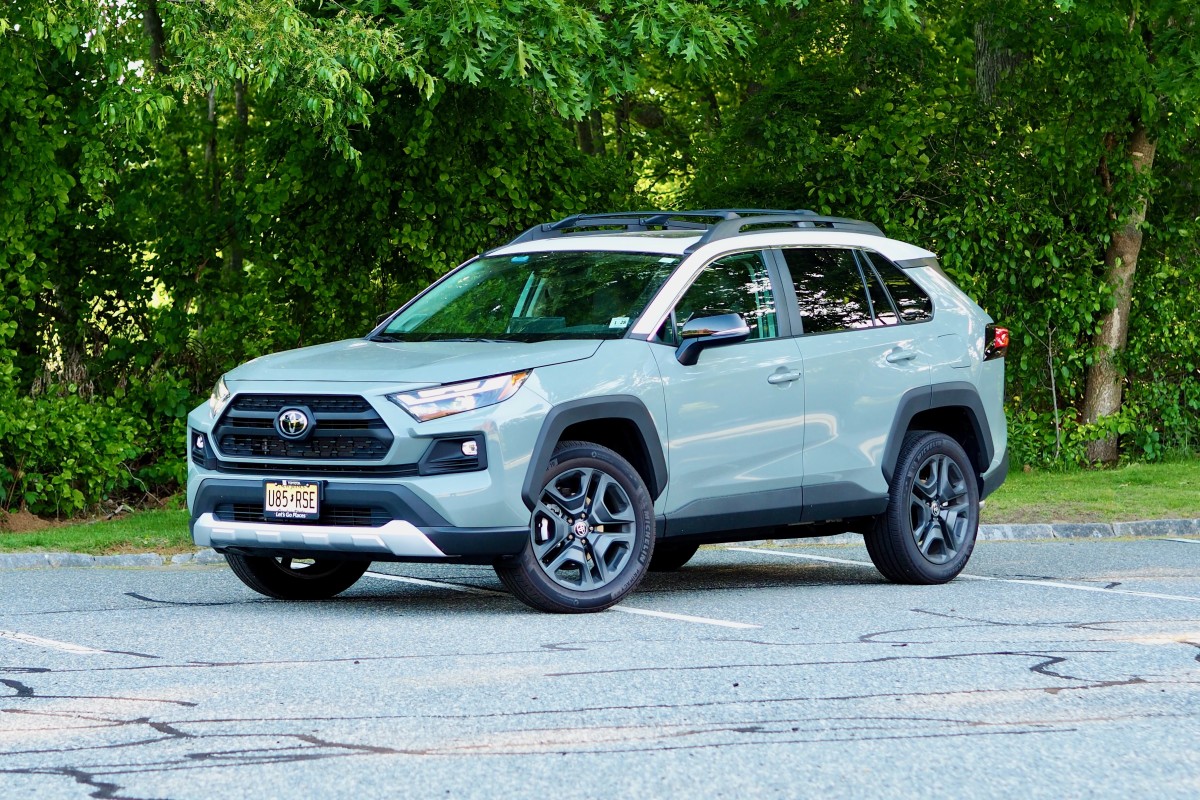
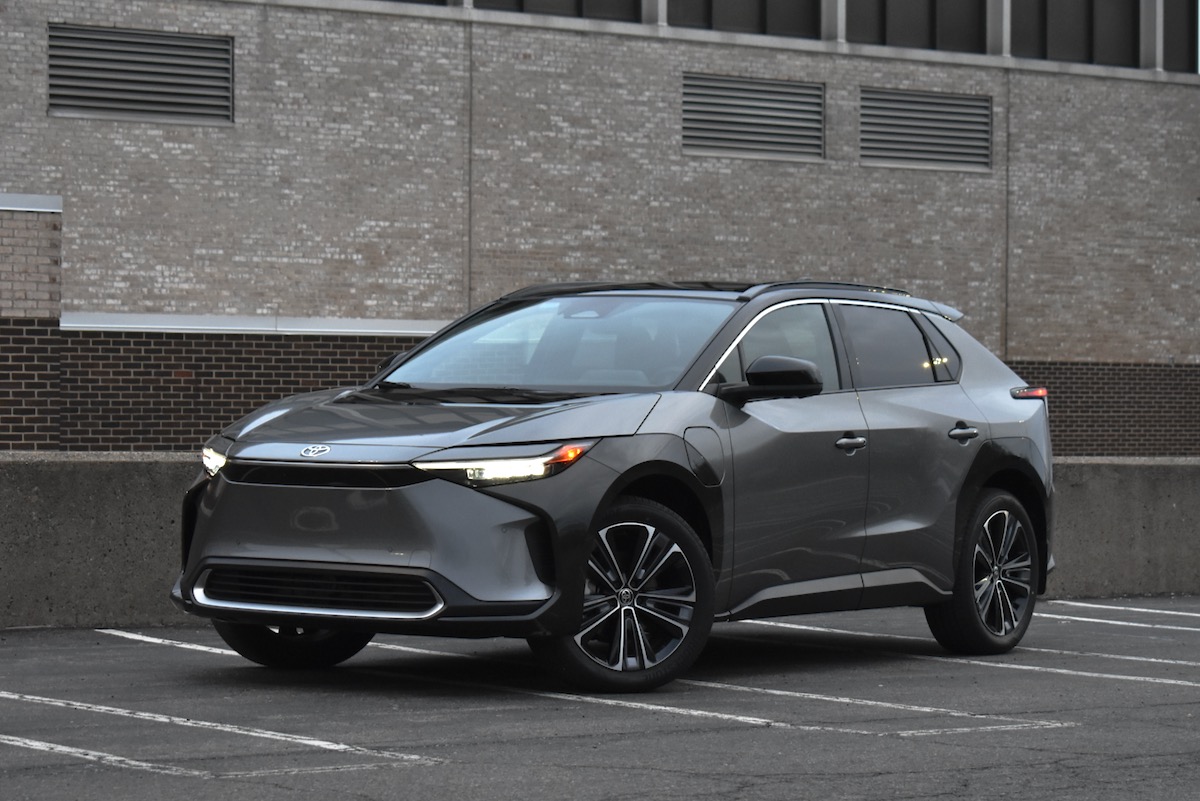
Overview | |
MSRP$28,675 | MSRP$42,000 |
Listings2796 | Listings49 |
Ratings & Reviews | |
User Reviews | User Reviews |
Expert reviews7.0 out of 10 | Expert reviews6.3 out of 10 |
Pros
Cons
| Pros
Cons
|
Reviews SummaryThat’s not surprising, considering how people have adopted SUVs of every size as their favourite kind of vehicle. Back in the mid-1990s, the original RAV4 (Recreational Activity Vehicle with 4WD) ushered in the era of the crossover. Almost 30 years later, the 2024 Toyota RAV4 helps to set standards in its segment, available with gas, hybrid, and plug-in hybrid drivetrains in trim levels ranging from basic or sporty to rugged or upscale. Verdict: Last redesigned in 2019, the current-generation RAV4 is nearing the end of its run. But if you’re looking for a dependable, roomy, and practical compact SUV, a 2024 RAV4 will serve you well for a long time to come. | |
Reviews SummaryToyota is not known for battery-electric vehicles. Aside from the RAV4 EV models built to satisfy California regulations, Japan’s largest automaker’s quest to reduce emissions has mostly focused on hybrids like the Prius. So, the 2023 Toyota bZ4X is a major shift for the firm. The bZ4X is Toyota’s first electric car for the North American market aimed at volume sales—and it won’t be the last. The “bZ” prefix stands for “Beyond Zero,” the name Toyota is using for a family of planned electric models. For now, the bZ4X enters a crowded market of small electric crossover SUVs, already populated with a long list of entries like the Hyundai Ioniq 5, Ford Mustang Mach-E, Nissan Ariya, and Volkswagen ID.4, among others. When it comes to configurations, Toyota keeps things simple. In Canada, buyers can choose between L, LE, and XLE trim levels, and single-motor front-wheel drive (FWD) or dual-motor all-wheel drive (AWD) powertrains. This bZ4X review is based on our experience with the U.S. equivalent of an XLE AWD model with the Technology package. | |
No video found | No video found |
Popular Features & Specs | |
Engine2.5L 203 hp I4 | Engine201 hp Electric |
DrivetrainFWD | DrivetrainFWD |
Seating Capacity5 | Seating Capacity5 |
EV Battery Capacity | EV Battery Capacity71.4 kWh |
MPG City27 | MPG City131 |
MPG Highway35 | MPG Highway107 |
Battery Charge Time (120V) | Battery Charge Time (120V)50 hours |
Battery Charge Time (240V) | Battery Charge Time (240V)9.5 hours |
Engine | |
Engine Name2.5L 203 hp I4 | Engine Name201 hp Electric |
Battery Charge Time (120V) | Battery Charge Time (120V)50 hours |
Battery Charge Time (240V) | Battery Charge Time (240V)9.5 hours |
DrivetrainFWD | DrivetrainFWD |
Fuel Economy | |
EV Battery Capacity | EV Battery Capacity71.4 kWh |
MPG City27 | MPG City131 |
MPG Highway35 | MPG Highway107 |
Interior | |
Seating Capacity5 | Seating Capacity5 |
Key Features | |
Navigation System | Navigation SystemStandard |
Sunroof/Moonroof | Sunroof/MoonroofStandard |
Safety | |
Front Crash Overall4 | Front Crash Overall5 |
Side Crash Overall5 | Side Crash Overall5 |
Dimensions & Capacity | |
Cargo Space37.5 cu ft | Cargo Space27.7 cu ft |
Curb Weight3370 lbs | Curb Weight4266 lbs |
Height67.0 in | Height65.0 in |
Length180.9 in | Length184.6 in |
Width73.0 in | Width73.2 in |
Wheelbase105.9 in | Wheelbase112.2 in |
Maximum Payload1230 lbs | Maximum Payload1169 lbs |
Number of doors4 | Number of doors4 |
Maximum Towing Capacity1500 lbs | Maximum Towing Capacity |
Overview | ||
MSRP | $28,675 | $42,000 |
Listings | ||
Ratings & Reviews | ||
User reviews | ||
Expert reviews | 7.0 out of 10Read full review | 6.3 out of 10Read full review |
Pros & cons | Pros
Cons
| Pros
Cons
|
Summary | That’s not surprising, considering how people have adopted SUVs of every size as their favourite kind of vehicle. Back in the mid-1990s, the original RAV4 (Recreational Activity Vehicle with 4WD) ushered in the era of the crossover. Almost 30 years later, the 2024 Toyota RAV4 helps to set standards in its segment, available with gas, hybrid, and plug-in hybrid drivetrains in trim levels ranging from basic or sporty to rugged or upscale. Verdict: Last redesigned in 2019, the current-generation RAV4 is nearing the end of its run. But if you’re looking for a dependable, roomy, and practical compact SUV, a 2024 RAV4 will serve you well for a long time to come. | Toyota is not known for battery-electric vehicles. Aside from the RAV4 EV models built to satisfy California regulations, Japan’s largest automaker’s quest to reduce emissions has mostly focused on hybrids like the Prius. So, the 2023 Toyota bZ4X is a major shift for the firm. The bZ4X is Toyota’s first electric car for the North American market aimed at volume sales—and it won’t be the last. The “bZ” prefix stands for “Beyond Zero,” the name Toyota is using for a family of planned electric models. For now, the bZ4X enters a crowded market of small electric crossover SUVs, already populated with a long list of entries like the Hyundai Ioniq 5, Ford Mustang Mach-E, Nissan Ariya, and Volkswagen ID.4, among others. When it comes to configurations, Toyota keeps things simple. In Canada, buyers can choose between L, LE, and XLE trim levels, and single-motor front-wheel drive (FWD) or dual-motor all-wheel drive (AWD) powertrains. This bZ4X review is based on our experience with the U.S. equivalent of an XLE AWD model with the Technology package. |
Video | No video found | No video found |
Popular Features & Specs | ||
Engine | 2.5L 203 hp I4 | 201 hp Electric |
Drivetrain | FWD | FWD |
Seating Capacity | 5 | 5 |
EV Battery Capacity | 71.4 kWh | |
MPG City | 27 | 131 |
MPG Highway | 35 | 107 |
Battery Charge Time (120V) | 50 hours | |
Battery Charge Time (240V) | 9.5 hours | |
Engine | ||
Engine Name | 2.5L 203 hp I4 | 201 hp Electric |
Battery Charge Time (120V) | 50 hours | |
Battery Charge Time (240V) | 9.5 hours | |
Drivetrain | FWD | FWD |
Fuel Economy | ||
EV Battery Capacity | 71.4 kWh | |
MPG City | 27 | 131 |
MPG Highway | 35 | 107 |
Interior | ||
Seating Capacity | 5 | 5 |
Key Features | ||
Navigation System | Standard | |
Sunroof/Moonroof | Standard | |
Safety | ||
Front Crash Overall | 4 | 5 |
Side Crash Overall | 5 | 5 |
Dimensions & Capacity | ||
Cargo Space | 37.5 cu ft | 27.7 cu ft |
Curb Weight | 3370 lbs | 4266 lbs |
Height | 67.0 in | 65.0 in |
Length | 180.9 in | 184.6 in |
Width | 73.0 in | 73.2 in |
Wheelbase | 105.9 in | 112.2 in |
Maximum Payload | 1230 lbs | 1169 lbs |
Number of doors | 4 | 4 |
Maximum Towing Capacity | 1500 lbs | |


By: CarGurus + AI
At CarGurus, our team of experienced automotive writers remain at the heart of our content operation, conducting hands-on car tests and writing insightful guides that are backed by years of industry experience. To complement this, we are harnessing AI to make our content offering more diverse and more helpful to shoppers than ever. To achieve this, our AI systems are based exclusively on CarGurus content, ratings and data, so that what we produce is both unique to CarGurus, and uniquely helpful to car shoppers.
