Toyota RAV4 vs Chevrolet Bolt
Overview | |
Listings2946 | Listings781 |
Ratings & Reviews | |
User Reviews | User Reviews |
Expert reviews6.8 out of 10 | Expert reviews6.3 out of 10 |
Pros
Cons
| Pros
Cons
|
Reviews SummaryThe sixth-generation Toyota RAV4 comes with three distinct design themes, two powertrain and drivetrain options, and five trim levels. It has a hybrid drivetrain as standard offering fuel efficiency as low as 5.5 L/100 km combined along with more standard features, a quicker operating system, and improvements across the board to bolster its bestselling position. Verdict: In the 2026 Toyota RAV4, the good gets better. | |
Reviews SummaryWith more range, more power, and improved technology, the Chevrolet Bolt EV returns after a three-year hiatus. It’s also one of the most affordable EVs in Canada, but it’s due to remain in production only until mid-2027. Verdict: The 2027 Chevrolet Bolt EV is an excellent choice for shoppers seeking an electric vehicle that won't break the bank. It may not be all that fancy or refined, but it gets the basics right when it comes to range and capabilities. | |
No video found | |
Popular Features & Specs | |
Engine2.5L 226 hp I4 Hybrid | Engine |
DrivetrainFWD | Drivetrain |
Seating Capacity5 | Seating Capacity5 |
EV Battery Capacity1.01 kWh | EV Battery Capacity65 kWh |
Fuel Economy (City)5.0 L(e)/100 km | Fuel Economy (City) |
Fuel Economy (Highway)5.9 L(e)/100 km | Fuel Economy (Highway) |
Battery Charge Time (120V) | Battery Charge Time (120V)64 hours |
Battery Charge Time (240V) | Battery Charge Time (240V)9.8 hours |
Engine | |
Engine Name2.5L 226 hp I4 Hybrid | Engine Name210 hp Electric |
Battery Charge Time (120V) | Battery Charge Time (120V)64 hours |
Battery Charge Time (240V) | Battery Charge Time (240V)9.8 hours |
DrivetrainFWD | DrivetrainFWD |
Fuel Economy | |
EV Battery Capacity1.01 kWh | EV Battery Capacity65 kWh |
Fuel Economy (City)5.0 L(e)/100 km | Fuel Economy (City) |
Fuel Economy (Highway)5.9 L(e)/100 km | Fuel Economy (Highway) |
Interior | |
Seating Capacity5 | Seating Capacity5 |
Key Features | |
Navigation System | Navigation SystemStandard |
Dimensions & Capacity | |
Cargo Space1070 L | Cargo Space459 L |
Curb Weight1630 kg | Curb Weight1713 kg |
Height1694 mm | Height1623 mm |
Length4597 mm | Length4308 mm |
Width1854 mm | Width2035 mm |
Wheelbase2690 mm | Wheelbase2675 mm |
Maximum Payload408 kg | Maximum Payload396 kg |
Number of doors4 | Number of doors4 |
Maximum Towing Capacity794 kg | Maximum Towing Capacity |
Overview | ||
Listings | ||
Ratings & Reviews | ||
User reviews | ||
Expert reviews | 6.8 out of 10Read full review | 6.3 out of 10Read full review |
Pros & cons | Pros
Cons
| Pros
Cons
|
Summary | The sixth-generation Toyota RAV4 comes with three distinct design themes, two powertrain and drivetrain options, and five trim levels. It has a hybrid drivetrain as standard offering fuel efficiency as low as 5.5 L/100 km combined along with more standard features, a quicker operating system, and improvements across the board to bolster its bestselling position. Verdict: In the 2026 Toyota RAV4, the good gets better. | With more range, more power, and improved technology, the Chevrolet Bolt EV returns after a three-year hiatus. It’s also one of the most affordable EVs in Canada, but it’s due to remain in production only until mid-2027. Verdict: The 2027 Chevrolet Bolt EV is an excellent choice for shoppers seeking an electric vehicle that won't break the bank. It may not be all that fancy or refined, but it gets the basics right when it comes to range and capabilities. |
Video | No video found | |
Popular Features & Specs | ||
Engine | 2.5L 226 hp I4 Hybrid | |
Drivetrain | FWD | |
Seating Capacity | 5 | 5 |
EV Battery Capacity | 1.01 kWh | 65 kWh |
Fuel Economy (City) | 5.0 L(e)/100 km | |
Fuel Economy (Highway) | 5.9 L(e)/100 km | |
Battery Charge Time (120V) | 64 hours | |
Battery Charge Time (240V) | 9.8 hours | |
Engine | ||
Engine Name | 2.5L 226 hp I4 Hybrid | 210 hp Electric |
Battery Charge Time (120V) | 64 hours | |
Battery Charge Time (240V) | 9.8 hours | |
Drivetrain | FWD | FWD |
Fuel Economy | ||
EV Battery Capacity | 1.01 kWh | 65 kWh |
Fuel Economy (City) | 5.0 L(e)/100 km | |
Fuel Economy (Highway) | 5.9 L(e)/100 km | |
Interior | ||
Seating Capacity | 5 | 5 |
Key Features | ||
Navigation System | Standard | |
Dimensions & Capacity | ||
Cargo Space | 1070 L | 459 L |
Curb Weight | 1630 kg | 1713 kg |
Height | 1694 mm | 1623 mm |
Length | 4597 mm | 4308 mm |
Width | 1854 mm | 2035 mm |
Wheelbase | 2690 mm | 2675 mm |
Maximum Payload | 408 kg | 396 kg |
Number of doors | 4 | 4 |
Maximum Towing Capacity | 794 kg | |
The 2026 Toyota RAV4 presented a more robust and squared-off design compared to its predecessor, aligning with Toyota's SUV and truck lineup. It featured three distinct design themes—Core, Rugged, and Sport—across five trim levels. The RAV4 maintained its boxy wheel arches and introduced a bulge over the rear fenders, reminiscent of the Highlander and 4Runner models. The vehicle's overall boxiness extended from the fascias to the hood and roof lines, with daytime running lights clipping the corners and a vertical tailgate bracketed by an integrated rear roof spoiler. The taillights resembled vertical slash marks narrowing towards the RAV4 badge.
Inside, the RAV4 boasted a standard 12.3-inch digital instrument cluster and a 10.5-inch touchscreen, with an available 12.9-inch option. The interior felt more streamlined, although the migration of climate controls to the touchscreen might have posed a challenge for some users. The centre console housed a mechanical gear shifter, except on the Limited trim, which featured a slimmer electric shifter. USB-C ports on top trims offered 45 watts, while the base LE had 15-watt chargers. Wireless device chargers were available on all trims except the base LE.
The 2027 Chevrolet Bolt retained a familiar look, with slight styling changes that made it resemble a conventional gas-powered car. The front end featured a thin slot behind the Chevy Bowtie logo, and the grille insert was integrated into the bumper. The Bolt EUV body style returned, offering a tall and narrow stance that prioritized utility and interior space. The RS model added gloss black exterior trim for a touch of flair. Inside, the Bolt underwent a more dramatic makeover, with a larger digital instrument panel and infotainment touchscreen. The push-button gear selector moved to the steering column, freeing up centre console space.
The Bolt's cabin was dominated by hard plastic surfaces, reinforcing its budget feel, though elbow touch points had thin padding. The base LT trim featured cloth upholstery, while the RS trim upgraded to Evotex synthetic leather with red stitching. The rear seating area also had an abundance of hard plastics and lacked padding for the door armrests. Despite these materials, the Bolt offered a practical and spacious interior for its class.

The 2026 Toyota RAV4 featured a more robust and efficient hybrid system, combining a 2.5-litre four-cylinder engine with three electric motors to produce 236 horsepower. In Canada, it came with standard all-wheel drive and an electronically controlled continuously variable transmission (CVT). The electric motor provided quick power off the line, while the four-cylinder engine, rated at 183 hp, supplemented under heavier acceleration. The RAV4's structural rigidity improved, reducing wind noise during cruising.
The CVT offered smooth transitions between motor and engine, with paddle shifters on the Limited trim mimicking eight gear shifts. The RAV4 excelled as a quiet and comfortable driver, with MacPherson front struts and a multi-link rear suspension tuned for comfort. The Woodland trim, exclusive to the Rugged style, featured all-terrain tires, a roof rack, and a tow hitch, enhancing its off-road capability. Fuel efficiency varied across trims, with the base LE rated at 5.5 L/100 km combined and the Woodland at 6.2 L/100 km.
The 2027 Chevrolet Bolt introduced a new 65-kilowatt-hour lithium-iron phosphate battery pack, reducing costs and reliance on rare earth minerals. A new motor from the Chevy Equinox EV delivered 210 horsepower and 169 lb-ft of torque to the front wheels, achieving a 0-100 km/h time in the low seven-second range. The Bolt's acceleration was quick compared to gas-powered subcompact SUVs, with one-pedal driving available for enhanced brake regeneration.
The Bolt's ride was firm but not overly stiff, with road noise more noticeable due to the absence of an internal combustion engine. Its low centre of gravity, thanks to the heavy battery, contributed to agility on curvy roads. The Bolt offered an estimated range of 422 kilometres on a full charge, with a Tesla-derived NACS charge port standard on all models. Charging speed increased to 150 kW, allowing a 10% to 80% recharge in 25 minutes.
The 2026 Toyota RAV4 maintained the same dimensions as its predecessor, with a 2,690-millimetre wheelbase and unchanged interior passenger space. Cargo volume increased slightly, offering 1,070 litres with the seats up and 1,994 litres with the seats down. The hatch opening was large and square, though a leap for small dogs. Toyota optimized interior space with clever storage features, including a dashboard shelf for small devices and a centre console storage accessible from both sides.
The RAV4 accommodated four passengers comfortably, with five being a squeeze. Heated front seats were standard in Canada, and deep door pockets held large water bottles. The RAV4's rear legroom measured 960 millimetres, trailing larger competitors like the Honda CR-V and Volkswagen Tiguan.
The 2027 Chevrolet Bolt offered an upright driving position with ample space for larger occupants. Taller drivers might have wished for more telescopic extension from the steering wheel. The rear seats provided plenty of headroom and adequate thigh support, with a flat floor reducing the penalty for centre-seat passengers. The Bolt's cargo capacity was 459 litres behind the rear seats, with a large bin underneath the floor for additional storage.
The Bolt lacked a frunk but compensated with ample storage for personal items up front. A large bin with movable dividers, a big floor tray, and a deep centre armrest bin provided versatile storage options. The Bolt's interior was practical and spacious, catering to the needs of most users.
The 2026 Toyota RAV4 featured a 12.3-inch digital instrument cluster and a 10.5-inch touchscreen, with a larger 12.9-inch option on top trims. Wireless Apple CarPlay and Android Auto were standard, and Toyota introduced a new operating system called Arene. Arene offered quicker load times, crisper graphics, and customizable vehicle info settings. The Voice Assistant, requiring a subscription, responded to a broader range of prompts.
The 2027 Chevrolet Bolt came with an 11-inch digital instrument panel and an 11.3-inch centre touchscreen, running on a Google-based operating system. Apple CarPlay and standalone Android Auto were not supported, but some Android Auto features were integrated. The optional Technology package added a surround-view camera system, a digital rear-view mirror, and a wireless charging pad. The infotainment system was user-friendly, with logical menus and quick responses.
The Bolt's navigation system helped drivers find charging stations and preconditioned the battery for optimal charge rates. Vehicle-to-load charging was available, allowing the Bolt to serve as a backup power source for a home.
The 2026 Toyota RAV4 came with Toyota Safety Sense 4.0, featuring a comprehensive suite of driver assistance features. The system included automatic emergency braking with pedestrian detection, lane departure alert, lane keep assist, adaptive cruise control, blind spot monitoring, and a safe exit alert. An enhanced rearview camera and driver attention monitor were available on higher grades. The RAV4's safety record was historically strong, with the redesign expected to address previous shortcomings.
The 2027 Chevrolet Bolt's crash test results were pending, but it was expected to achieve high scores based on its platform. Standard safety features included forward-collision warning, adaptive cruise control, lane-keep assist, and blind-spot monitors. The optional Technology package added a surround-view camera system, digital rear-view mirror, and traffic-sign recognition. GM's Super Cruise hands-free driving system was available for an additional cost.
CarGurus highlights
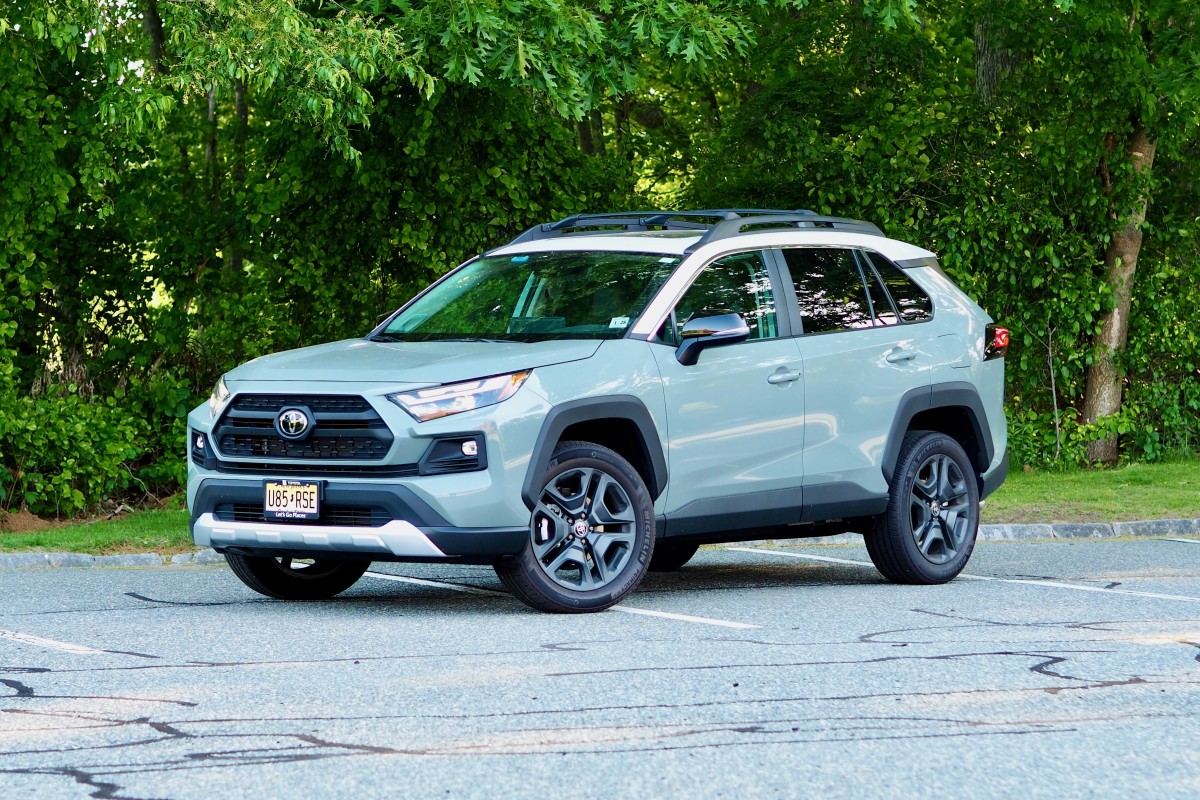
According to CarGurus experts, the overall rating for the 2026 Toyota RAV4 is 6.8 out of 10, while the 2027 Chevrolet Bolt scores 6.3 out of 10. Based on these ratings, the 2026 Toyota RAV4 is the recommended choice, offering a more balanced package of performance, comfort, and safety features.
Choose the 2026 Toyota RAV4 if:
- You prioritize a robust hybrid system with all-wheel drive and excellent fuel efficiency.
- You value a spacious interior with clever storage solutions and a comfortable ride.
- You seek a comprehensive suite of standard safety features and a strong safety record.


Choose the 2027 Chevrolet Bolt if:
- You want an affordable EV with a long range and quick charging capabilities.
- You appreciate a practical and spacious interior with ample storage options.
- You desire advanced technology features, including vehicle-to-load charging and optional Super Cruise.


CarGurus highlights
According to CarGurus experts, the overall rating for the 2026 Toyota RAV4 is 6.8 out of 10, while the 2027 Chevrolet Bolt scores 6.3 out of 10. Based on these ratings, the 2026 Toyota RAV4 is the recommended choice, offering a more balanced package of performance, comfort, and safety features.
Choose the 2026 Toyota RAV4 if:
Shop Now- You prioritize a robust hybrid system with all-wheel drive and excellent fuel efficiency.
- You value a spacious interior with clever storage solutions and a comfortable ride.
- You seek a comprehensive suite of standard safety features and a strong safety record.
Choose the 2027 Chevrolet Bolt if:
Shop Now- You want an affordable EV with a long range and quick charging capabilities.
- You appreciate a practical and spacious interior with ample storage options.
- You desire advanced technology features, including vehicle-to-load charging and optional Super Cruise.

By: CarGurus + AI
At CarGurus, our team of experienced automotive writers remain at the heart of our content operation, conducting hands-on car tests and writing insightful guides that are backed by years of industry experience. To complement this, we are harnessing AI to make our content offering more diverse and more helpful to shoppers than ever. To achieve this, our AI systems are based exclusively on CarGurus content, ratings and data, so that what we produce is both unique to CarGurus, and uniquely helpful to car shoppers.
