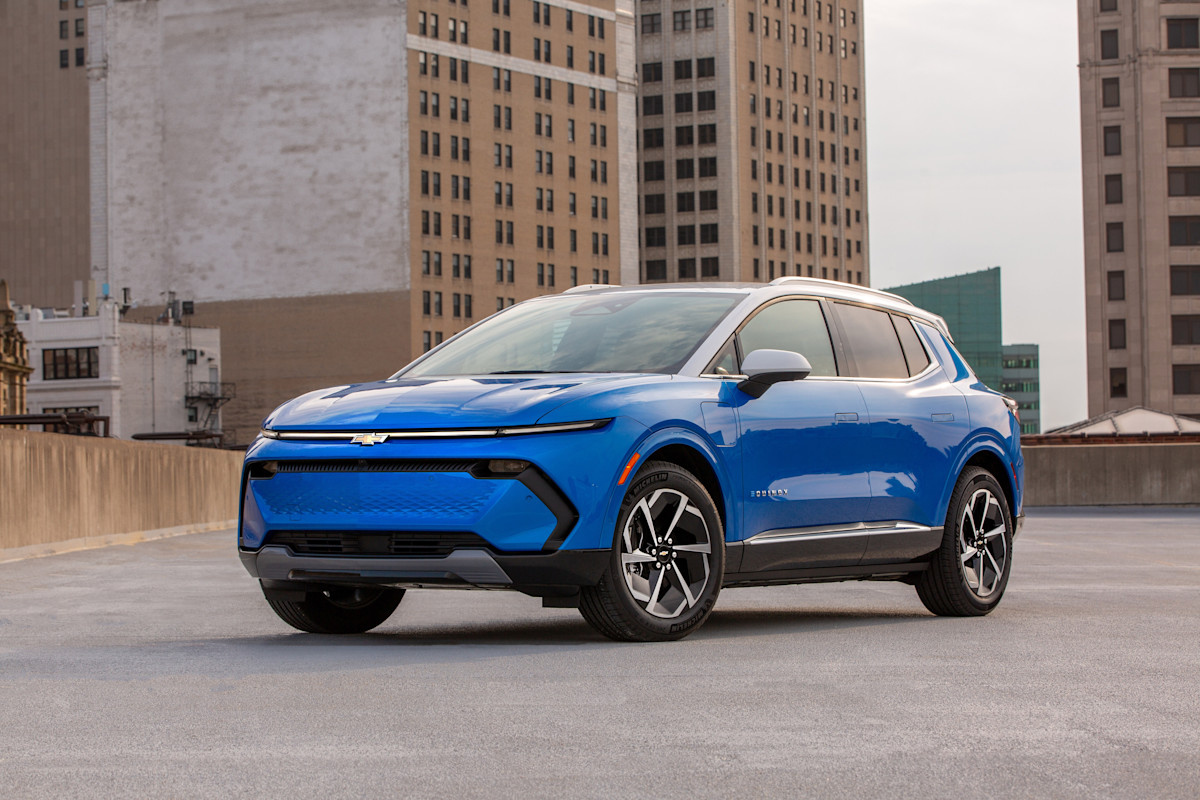
2027 Chevrolet Bolt Reviews, Pricing & Specs


Pros & cons
What we like
Excellent value
Low cost of ownership
Ample storage cubbies and compartments
What to consider
Firm ride quality
Noticeable road noise
No Apple CarPlay or Android Auto
The CarGurus verdict
The Chevrolet Bolt is back, offering EV shoppers an affordable alternative.
With more range, more power, and improved technology, the Chevrolet Bolt EV returns after a three-year hiatus. It’s also one of the most affordable EVs in Canada, but it’s due to remain in production only until mid-2027.
Verdict: The 2027 Chevrolet Bolt EV is an excellent choice for shoppers seeking an electric vehicle that won't break the bank. It may not be all that fancy or refined, but it gets the basics right when it comes to range and capabilities.
out of 10 expert review
Look & feel
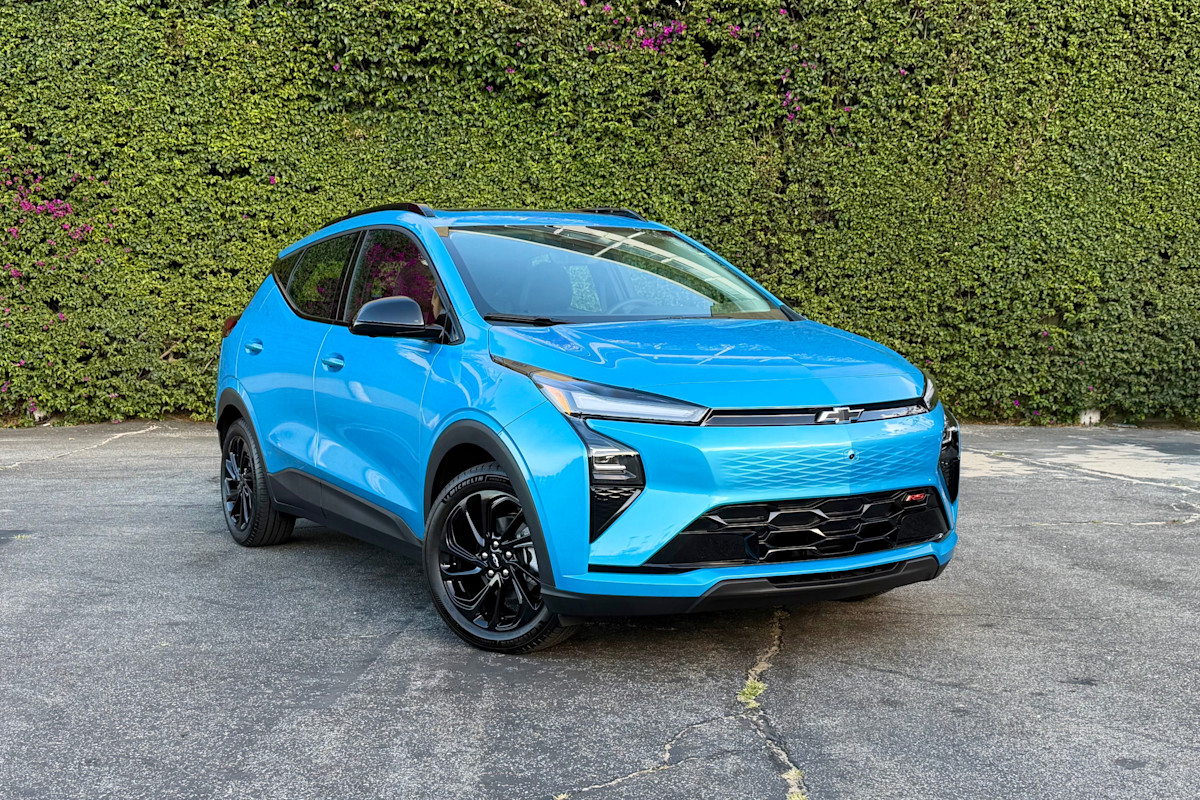
The Bolt EV returns with a very familiar look. Styling changes are slight, and the front end looks more like that of a conventional gas-powered car than an EV. A thin slot now sits behind the Chevy Bowtie logo, and the previous grille insert has been integrated into the bumper. Otherwise, the 2027 model picks up where the 2023 version left off, straddling the line between a large hatchback and a subcompact SUV (it was referred to as an "EUV," or electric SUV). Chevy previously offered both the standard Bolt EV and the higher-roof EUV, but it’s only bringing back the EUV body style for 2027.
It's tall and narrow, so the Bolt EV has an econobox-like footprint, prioritizing utility and interior space over a sporty stance. The RS model adds some gloss black exterior trim to spice things up, but only a little.
The interior has had a more dramatic makeover but maintains some of its basic structure. A larger digital instrument panel sits in front of the driver, and a larger infotainment touchscreen occupies the centre of the dashboard. The previous push-button gear selector has been moved to the steering column, freeing up more storage space in the centre console. There are also storage pockets on the passenger side of the dashboard.
The cabin is dominated by hard plastic surfaces that reinforce the Bolt’s budget feel, but at least the elbow touch points have thin padding. Most plastics are sturdy, though the centre console feels flimsy by comparison. The base LT trim comes with cloth upholstery, while the RS trim upgrades to Evotex synthetic leather with racy red stitching. The rear seating area also features an abundance of hard plastics and lacks any padding for the door armrests.

Performance
More impactful changes happen under the surface. A new 65-kilowatt-hour lithium-iron phosphate battery pack requires fewer rare earth minerals and reduces costs compared to the previous battery. A new motor taken from Chevy's Equinox EV sends 210 horsepower and 169 pound-feet of torque to the front wheels. Expect a 0-100 km/h time similar to that of the previous Bolt EV, which usually landed in the low seven-second range.
That acceleration estimate may seem slow by EV standards, but it's plenty quick in the real world. The Bolt is a rocket compared to gas-powered subcompact SUVs, and responds immediately to pedal inputs. One-pedal driving is available and accessed via the settings menu with either medium or high levels of brake regeneration. In the highest setting, the Bolt EV can be a little jumpy at low speeds when maneuvering into tight spaces, but we got used to it after only a short time behind the wheel and managed smoother movements.
The ride is on the firm side, but it's not overly stiff or intrusive. Drivers feel almost every imperfection in the road, but even the larger bumps won't send shockwaves through the cabin. The absence of an internal combustion engine means road noise is more obvious than in a gasoline car, but turning up the stereo to even a relatively low volume easily overcomes the din.
Despite its tall, narrow stance, the Bolt EV is surprisingly agile on curvy roads. This is likely thanks to the heavy battery in the floor, which creates a low centre of gravity.
On a full charge, Natural Resources Canada estimates that the 2027 Bolt will return up to 422 kilometres of range—an improvement of five kilometres over the previous Bolt EV and 25 kilometres over the last Bolt EUV.
A Tesla-derived North American Charging Standard (NACS) charge port is standard on all models with adapters available for CCS and J1772 connectors. Charging speed has also increased from 55 kilowatts to 150 kW, which should allow the Bolt to recharge from 10% to 80% in 25 minutes.

Form & function
The Bolt’s driving position is a bit more upright than that of a typical SUV, and there's plenty of space for larger occupants. Taller drivers might wish for more telescopic extension from the steering wheel. We felt the need to scoot the seat forward more than we'd like to comfortably reach it.
The rear seats are also more upright, but there's plenty of headroom for adults. There’s also adequate thigh support from the seat cushions. In this class, those cushions are typically mounted lower to the floor to provide enough headroom, but the Bolt makes no such compromises. The floor is also flat, reducing the penalty for centre-seat passengers.
The Bolt can hold up to 459 litres of cargo behind the rear seats, which is small for the class. That said, it still provides plenty of cargo capacity for most users. Underneath the floor is a very large bin, and the floor can be slid into it to provide even more luggage space. The release latches for the rear seatbacks are easy to reach from the cargo area, and the seats fold flat with the cargo floor when it’s in its upper position.
There's no frunk, but there is ample storage for personal items up front. A large bin with movable/removable dividers can hold drinks securely, while a big floor tray and a deep centre armrest bin can accommodate pretty much everything else. Combined with a rubberized wireless phone charger, additional pockets in the dashboard, and moderate door pockets, shoppers probably won't want for more storage.

Technology
All 2027 Chevrolet Bolt EV models come with an 11-inch digital instrument panel and an 11.3-inch centre touchscreen—both shared with the Chevy Colorado midsize truck. The infotainment system runs on the same Google-based operating system as other General Motors EVs, meaning Apple CarPlay and standalone Android Auto are not supported (although some of the features of the latter are built into the infotainment system itself). That forced us to pair our phone via Bluetooth to listen to our personal music library, but there was just enough browsing control to keep us satisfied.
Our test vehicle also came equipped with the optional Technology package for $1,495. It added a surround-view camera system, a digital rear-view mirror, a few additional safety features, and a wireless charging pad. The wireless charging pad easily accommodates a larger iPhone with a case and keeps it from sliding around.
The infotainment system is easy to use thanks to logical menus, sharp graphics, and quick responses to inputs. Separate physical climate controls reduce distraction, while streaming entertainment options could help to make up for the lack of Apple CarPlay. Like most EVs, the Bolt’s navigation system can help drivers find charging stations along the route and suggest which might be the fastest for the trip. The system also preconditions the battery to take advantage of the highest charge rates from the start of the session.
The 2027 Bolt EV is capable of vehicle-to-load charging, which allows it to serve as a backup power source for a home when the power goes out. This does require additional equipment and installation, though.

Safety
Crash test results for the 2027 Bolt EV hadn't been published by either the U.S. National Highway Traffic Safety Administration or the Insurance Institute for Highway Safety at the time of writing. Considering that this version is built on the same platform as the 2023 Bolt EUV, we expect it to achieve similarly high scores from both organizations.
Standard advanced safety features include forward-collision warning with automatic emergency braking, adaptive cruise control, lane-keep assist, blind-spot monitors with active steering assist, and a safety alert seat that vibrates. The optional Technology package adds a surround-view camera system, a digital rear-view mirror, rain-sensing wipers, rear pedestrian alert, and traffic-sign recognition. In our time with the Bolt, all these features operated smoothly with no notable false alarms or glitches.
For an additional $4,200, GM's Super Cruise hands-free automated highway driving system is available. This makes the Bolt EV one of the few budget EVs to include such an advanced system, though it comes at significant cost relative to the overall MSRP.

Cost-effectiveness
Prices for the 2027 Chevrolet Bolt EV in Canada start at $42,599 (including $2,600 in destination fees) for the base LT trim. The RS we drove starts at $45,199, and with the optional Technology package and sunroof, the as-tested price rose to $48,569. With before-fees prices of less than $50,000, each of these configurations qualifies for the federal Electric Vehicle Affordability Program rebate, which takes $5,000 off the price.
There's really no advantage to stepping up to the RS trim. Almost all the added features are available on the LT trim as options, leaving only some minor cosmetic enhancements (gloss black grille, red seat upholstery stitching, and badging) as exclusives. Unfortunately, it isn't possible to pick and choose between some option packages. For example, if shoppers want the Technology package, they'll also have to spring for the supporting Evotex and Comfort packages. In this case, the price advantage wanes.
The Bolt EV’s closest rival is the recently redesigned Nissan Leaf, which will become the lowest-priced new EV available in Canada when the new S grade launches for 2027 at a starting price of CA$37,966 with delivery fees. This version will have a range of 341 kilometres, while the pricier S+ has 488 km, the SV+ has 463 km, and the Platinum+ has 417 km. All trims but the Platinum+ qualify for the EVAP rebate before options. The Leaf also has more cargo space, but rear passenger space is noticeably less. The Nissan Leaf and Chevy Bolt EV deliver similar experiences at similar prices, which means the decision between the two could come down to the differences in rear passenger and cargo space.
The Hyundai Kona Electric starts at $46,199 including delivery and is rated at 420 kilometres of range. For 2026, it’s available in Preferred trim with Trend or Ultimate packages available, and all three versions qualify for the EVAP rebate.
The Subaru Uncharted is a new entry worthy of consideration. It’s priced competitively with the Bolt, offers 399 to 496 km of range, and qualifies for the EVAP rebate in all configurations. The same is true of the closely related Toyota C-HR, which has between 438 and 496 km of range. The Kia EV3, due to arrive for the 2027 model year, will have between 356 and 517 km of range and is also priced competitively to these EVs with all versions but the GT trim qualifying for the EVAP rebate.

What owners say
Trims & specs
Base MSRP $31,600 | Seating 5 |
Engine N/A | Cargo Capacity 16.2 cu ft |
Combined MPG N/A | Drivetrain N/A |
Base MSRP $27,600 | Seating 5 |
Engine N/A | Cargo Capacity 16.2 cu ft |
Combined MPG N/A | Drivetrain N/A |