2026 Toyota RAV4 Reviews, Pricing & Specs



Pros & cons
What we like
Multiple trims and styles
Standard hybrid
Updated tech
What to consider
Confusing trim levels
Size hasn't kept up with rivals
Expert review
The redesigned 2026 Toyota RAV4 arrives with more power and greater efficiency.
The sixth-generation Toyota RAV4 comes with three distinct design themes, two powertrain and drivetrain options, and five trim levels. It has a hybrid drivetrain as standard offering fuel efficiency as low as 5.5 L/100 km combined along with more standard features, a quicker operating system, and improvements across the board to bolster its bestselling position.
Verdict: In the 2026 Toyota RAV4, the good gets better.
out of 10 expert review
Look & feel
The sixth-generation RAV4 has three distinct design themes — Core, Rugged, and Sport — spread among five trim levels. Across all designs and trims, the new RAV4 ditches the angular cuts of its predecessor for a blockier appearance in line with Toyota’s other SUVs and trucks. The boxy wheel arches remain, and a bulge bows out over the rear fenders similar to the Highlander models and, to a lesser degree, the 4Runner.
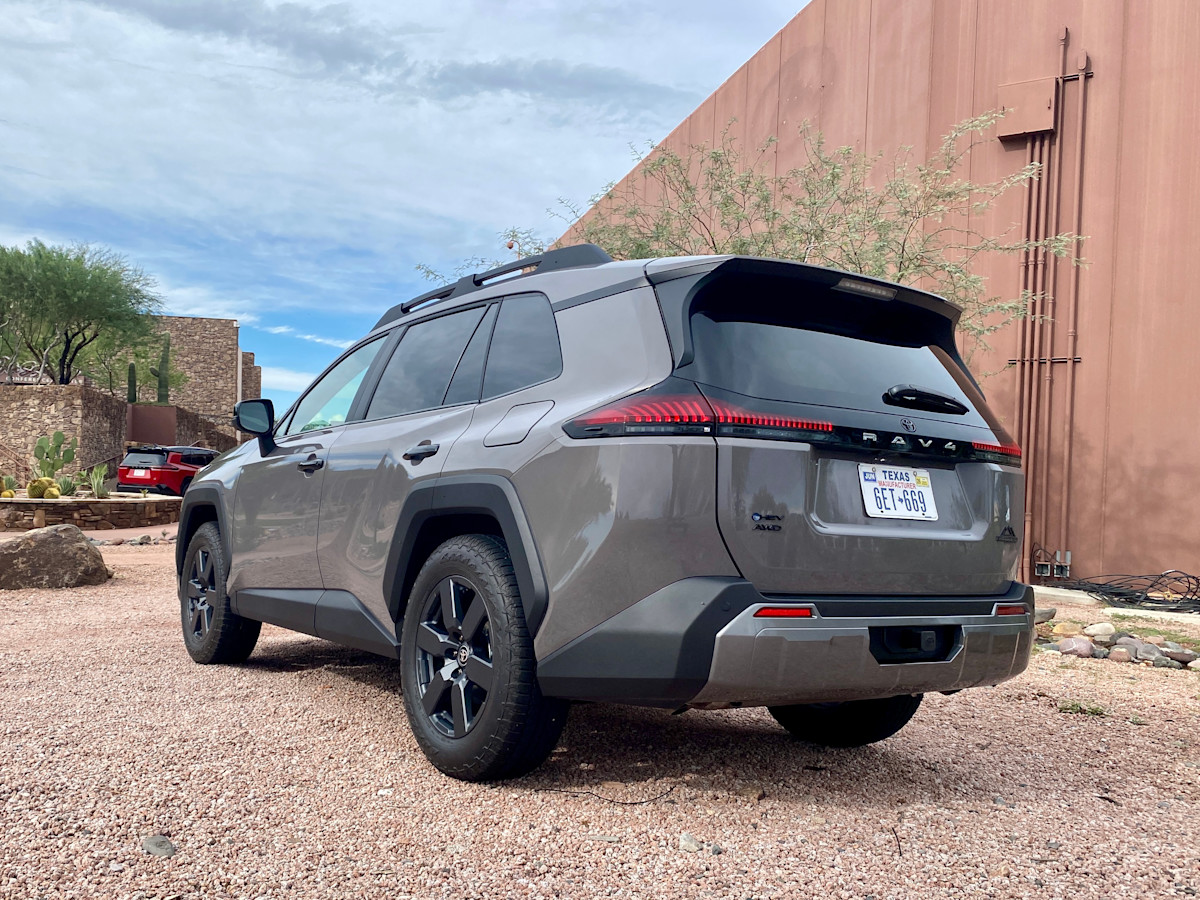
Everywhere else, boxiness reigns from the fascias to the hood and roof lines. Daytime running lights clip the corners, and an integrated rear roof spoiler brackets a vertical tailgate. The taillights look like vertical slash marks that narrow as they home in on the RAV4 badge. Then things differ.
Aside from different wheel sizes and designs, the three distinct styles play out in the front fascia. The Core models are the most sedate and clearly evolve from past RAV4s. The upper grille could be a cheese grater flanked by recessed fog lights, and the lower grille wears the familiar RAV4 robot pout.
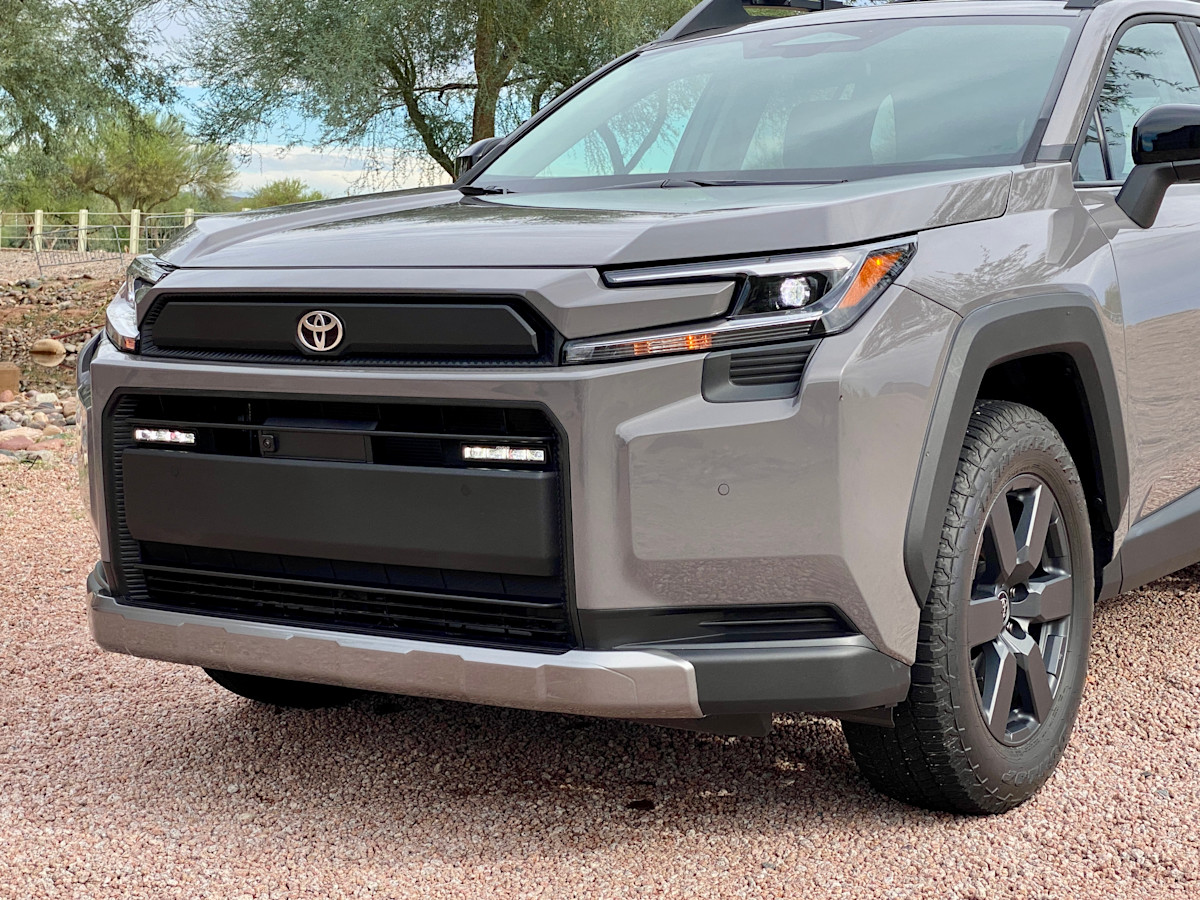
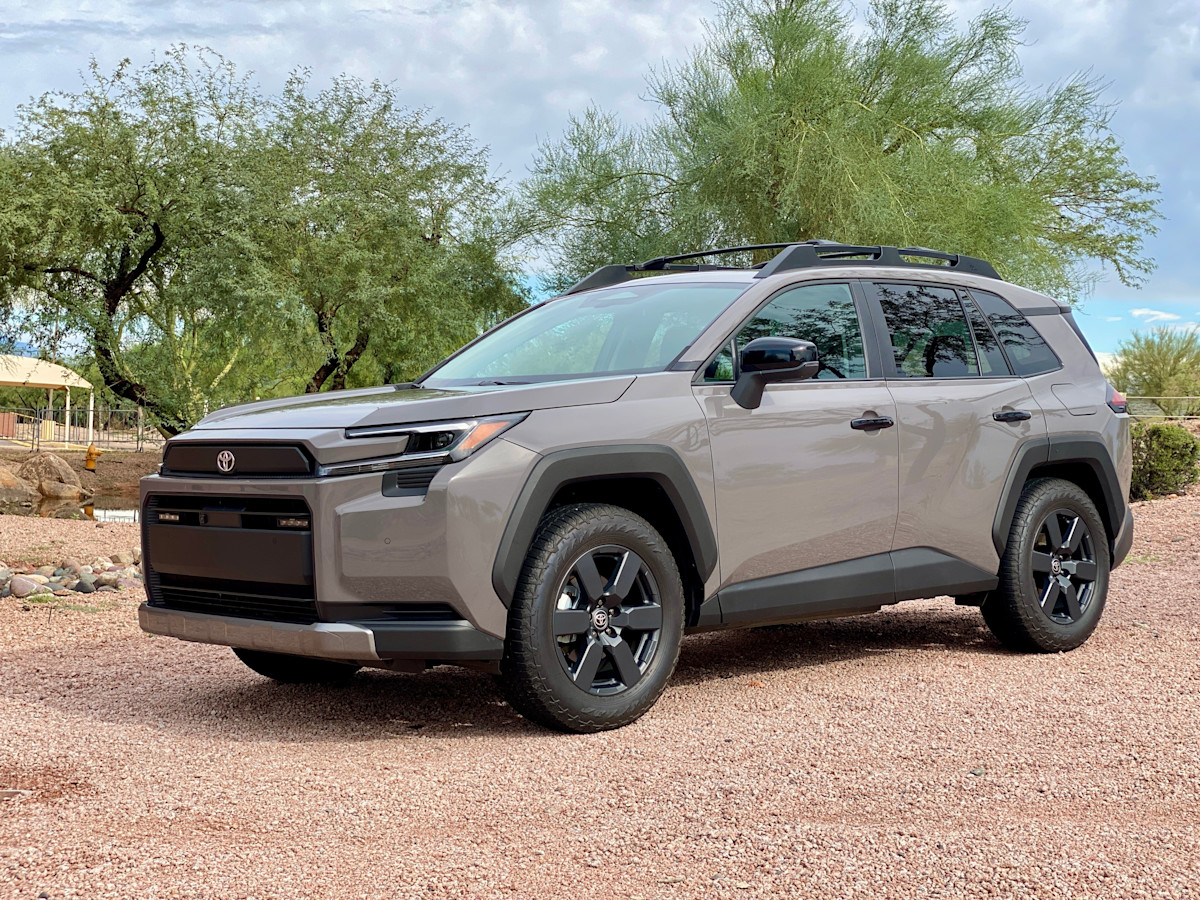
The Rugged grade is paired with the Woodland trim, and the styling is boxy all-around. The lower grille looks like a skid plate, but above it, solid panels close in on a partially solid grille with two rectangular fog lights. Amber lights accent the running lights, and all-terrain tires, a roof rack with cross bars, and a tow hitch are standard.
The Sport style is paired with the first-ever RAV4 GR Sport, inspired by Toyota’s Gazoo Racing division. The GR Sport trim is exclusive to the Toyota RAV4 Plug-in Hybrid powertrain, which we review separately.
Inside, the most notable upgrade across all lines is a standard 12.3-inch digital instrument cluster. A 10.5-inch touchscreen or available 12.9-inch touchscreen sticks out like a tablet instead of being integrated into the dash. Despite that, the overall cockpit feels more streamlined and less stacked than its predecessor. Unfortunately, Toyota migrated the climate controls from a dedicated panel of dials and buttons into the lower portion of the touchscreen. Fortunately, temperature buttons sit below it, so it shouldn’t frustrate gloved fingers. We discuss the improved functionality further in the technology section.
A wide centre console houses a mechanical gear shifter except on the Limited trim, where it’s a slimmer electric shifter. The cupholder separator can be removed for more flexibility. On top trims, the USB-C ports are rated at 45 watts, instead of the standard 15-watt chargers on the base LE. All versions but the base LE have one or two wireless device chargers where the stack meets the console.

Performance
The RAV4 has a beefier and a slightly more efficient hybrid system than its predecessor. A 2.5-litre four-cylinder engine and three electric motors generate a combined 236 horsepower. In Canada, power is sent to standard all-wheel drive (AWD) through an electronically controlled continuously variable transmission (CVT).
The electric motor (134 hp and 153 lb-ft of torque) makes power off the line quicker than a small, turbocharged engine. Under heavier acceleration, it supplements the carryover four-cylinder engine (rated at 183 hp and 163 lb-ft) that still calls out its presence in the cabin, even with greater noise deadening.
Since the sixth-gen RAV4 was designed with a multi-pathway approach to accommodate different powertrains and larger capacity batteries for the PHEV, structural rigidity has improved, mostly at the chassis mounting points. The corners of the SUV are also more rigid, specifically where the front and rear pillars holding the roof and windshields meet the body. There’s only a small amount of wind noise when you're just cruising along and not hammering the throttle.
The CVT is smoother than ever, and the handoff from motor to engine is hardly noticeable in most instances. The Limited trim has paddle shifters that mimic eight gear shifts, but it’s quicker to toggle from Normal through Eco, Sport, and Custom modes. There are no regenerative braking settings.
MacPherson front struts and a multi-link rear suspension support the RAV4, and it’s tuned for comfort. There’s body roll in corners that’s typical for the class, but the suspension evenly soaks up rough roads. Steering feel is light, and overall the RAV4 excels as a mostly quiet, pleasant driver. The RAV4 PHEV (formerly known as RAV4 Prime) marks the most significant difference for this generation and includes the new GR Sport model. We review it separately.
The Woodland trim returns as its own distinct model, exclusively representing the Rugged part of the RAV4 style triumvirate. In Canada, the Woodland trim is offered exclusively with the standard hybrid powertrain. In addition to the style differences, the Woodland has all-terrain tires strapped on 18-inch wheels that raise the ground clearance from 20.6 to 21.6 centimetres. A roof rack with cross bars and a tow hitch with a rating of 1,587 kilograms (3,500 pounds) are also standard, as are small rectangular fog lights from Rigid Industries.
On a loose but brief off-road course, the Woodland tiptoed around obstacles. Is the Woodland that much more capable off-road than fitting your own set of all-terrain tires to any other RAV4? Not really. We probably could have done the same loop in any other RAV4, but the Woodland looks cool.
Natural Resources Canada rates the 2026 RAV4 at 5.5 litres per 100 kilometres combined for the base LE trim, 5.7 L/100 km combined for the XLE, 5.8 L/100 km combined for the XSE and Limited, and 6.2 L/100 km combined for the Woodland. The latter gets dinged by its heavier equipment and all-terrain tires. It’s worth considering how much you value those cool looks relative to higher fuel costs.
Form & function
Even though the 2026 RAV4 looks bigger and has more physical presence than the outgoing fifth-generation model, the length, width, and height are the same, as are the 2,690-millimetre wheelbase and the interior passenger space. The cargo volume increases slightly with the 60/40-split rear seats folded down. It’s rated at 1,070 litres with the seats up and 1,994 litres with the seats down. The hatch opening is big and square, but it’ll still be a leap for small dogs.
The footprint may be more or less identical, but Toyota has optimized the interior space with clever storage features. The shelf over the dashboard remains, and it’s perfect for smartphones, earbuds, and other small devices. Another storage shelf rests between the stack and the console, and above it is yet another shelf for the wireless device charger that comes on all models but the base LE. The centre console storage can be opened from either the driver or passenger side, and on higher trims the cover can be removed and turned over into a tray. In Canada, heated front seats are standard.
Deep door pockets hold big water bottles, and the door handle recesses could double as phone holders. Every RAV4 seats four passengers in relative comfort, although five passengers make for more of a squeeze and the available panoramic sunroof eats into some headroom. Even though the 960 millimetres of rear legroom is ample (it's the same in PHEV models), the RAV4 trails larger competitors such as the Honda CR-V and Volkswagen Tiguan.

Technology
A new 12.3-inch digital instrument cluster and an enhanced 10.5-inch touchscreen highlight the fresh tech loaded into the RAV4. The digital displays are standard, as are wireless Apple CarPlay and Android Auto, while a larger 12.9-inch touchscreen graces the top trim levels.
Toyota introduced a new operating system called Arene that’s more responsive, quicker to load, and has crisper graphics. The graphics in particular represent a leap for Toyota with a half-dozen different configurations in the cluster and the ability to customize the vehicle info settings. Customizable tiles on the touchscreen act like big hot buttons for the info you use the most, and the Voice Assistant (which requires a subscription) responds to a broader range of “Hey Toyota” prompts.
Safety
Every 2026 RAV4 comes with a comprehensive suite of driver assistance features as standard. Now dubbed Toyota Safety Sense 4.0, it runs on a new operating system and pulls from a wider view for cameras and a broader detection range for radar.
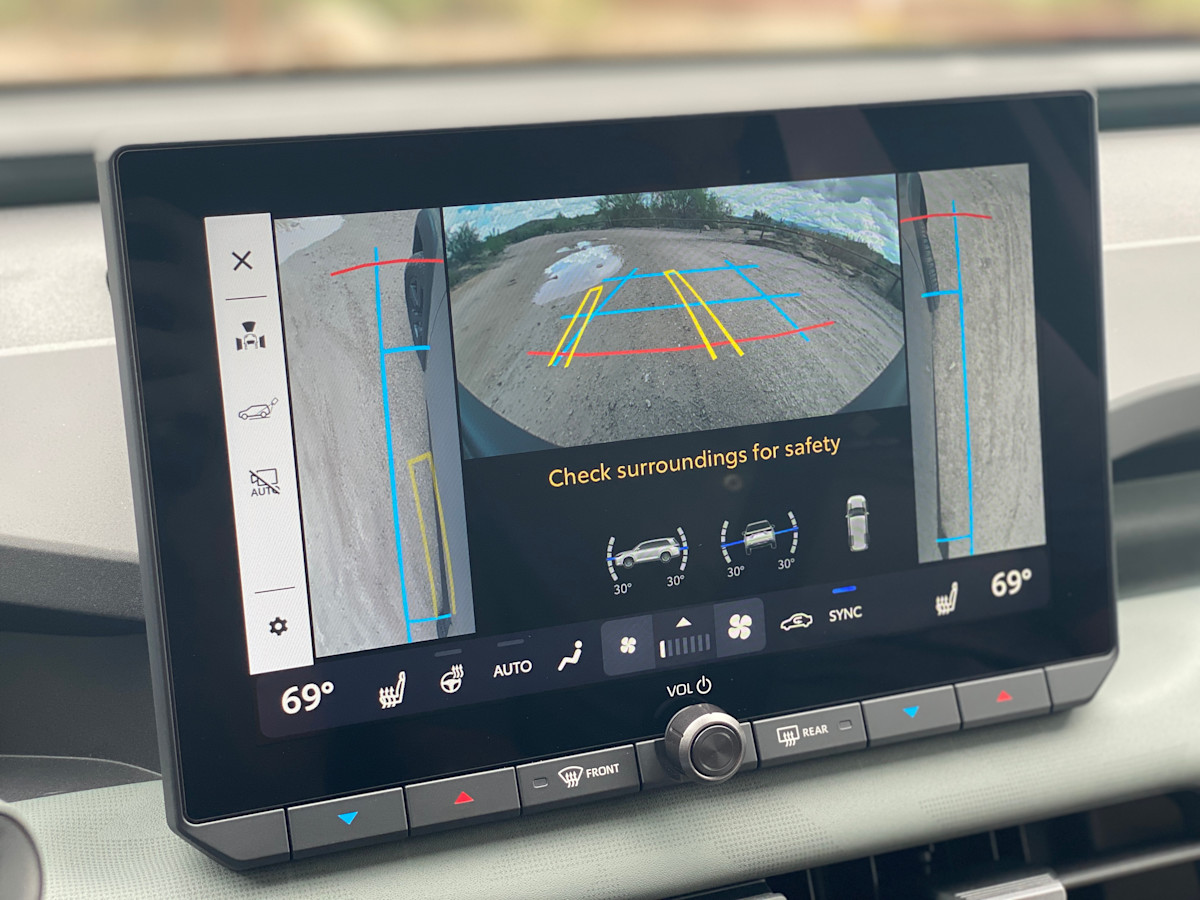
The enhancements should improve the system’s responsiveness and its detection at night. Driver assist tech on the 2026 RAV4 includes automatic emergency braking with pedestrian detection that senses both moving vehicles and people at intersections; an updated lane departure alert and lane keep assist that centres the RAV4 in its lane; adaptive cruise control; blind spot monitoring with rear cross-traffic alert; an emergency stop system; a safe exit alert that warns occupants about to get out of the car if a vehicle or a cyclist is coming up on their blind side; and an enhanced rearview camera with guidelines meant to ease backing up in crowded places. A driver attention monitor is available on higher grades.
The enhancements should contribute to the Toyota RAV4’s historically strong safety record, and we’ll update this space once crash-testing of the 2026 RAV4 is completed by the Insurance Institute for Highway Safety (IIHS) and the U.S. National Highway Traffic Safety Administration (NHTSA). The redesign should address shortcomings the IIHS found in the outgoing RAV4’s front crash protection, although the NHTSA rated the 2025 RAV4 at five out of five stars.

Cost-effectiveness
Canadian pricing for the 2026 Toyota RAV4 starts at $40,622 for the base LE grade, including the $1,930 destination charge and other fees. The XLE starts at $44,422, and a Premium package with a panoramic sunroof, LED fog lamps, and other additions costs $2,499 more. The Woodland trim is priced at $50,122. The XSE starts at $54,022, and a Technology package with a panoramic sunroof, the low-profile shifter, and some extra driver assistance technologies such as lane change assist and traffic jam assist adds $1,550 to that price. Finally, the Limited brings up the top end of the line-up at $55,122.
For comparison, the 2026 Hyundai Tucson Hybrid with standard AWD starts at $46,396, while the 2026 Honda CR-V Hybrid starts at $49,041. In that context, the higher base price of the RAV4 looks less daunting — provided you wanted a hybrid powertrain to begin with.
The 2026 RAV4 LE rolls on 17-inch alloy wheels and comes with the standard screens listed above. Toyota equips it with the expected modern features, including push-button start, three USB ports, cloth upholstery, and heated and manually adjustable seats. We’d recommend at least the XLE with its 18-inch wheels, power driver’s seat, and five USB ports.
The standard hybrid powertrain promises owners will pay less in fuel over time than with a gas-only model. Natural Resources Canada estimate the 2026 RAV4 Hybrid will save you $720 in fuel costs annually and $3,600 over five years compared to the base 2025 RAV4 AWD.

What owners say
Trims & specs
Base MSRP $43,300 | Seating 5 |
Engine 2.5L 236 hp I4 Hybrid | Cargo Capacity 37.8 cu ft |
Combined MPG 40 | Drivetrain AWD |
Base MSRP $41,300 | Seating 5 |
Engine 2.5L 236 hp I4 Hybrid | Cargo Capacity 37.8 cu ft |
Combined MPG 40 | Drivetrain AWD |
Base MSRP $31,900 | Seating 5 |
Engine 2.5L 226 hp I4 Hybrid | Cargo Capacity 37.8 cu ft |
Combined MPG 44 | Drivetrain FWD |
Base MSRP $33,300 | Seating 5 |
Engine 2.5L 236 hp I4 Hybrid | Cargo Capacity 37.8 cu ft |
Combined MPG 43 | Drivetrain AWD |
Base MSRP N/A | Seating N/A |
Engine N/A | Cargo Capacity N/A |
Combined MPG N/A | Drivetrain N/A |
Base MSRP $34,700 | Seating 5 |
Engine 2.5L 226 hp I4 Hybrid | Cargo Capacity 37.8 cu ft |
Combined MPG 44 | Drivetrain FWD |
Base MSRP N/A | Seating N/A |
Engine N/A | Cargo Capacity N/A |
Combined MPG N/A | Drivetrain N/A |
Base MSRP $36,100 | Seating 5 |
Engine 2.5L 226 hp I4 Hybrid | Cargo Capacity 37.8 cu ft |
Combined MPG 44 | Drivetrain FWD |
Base MSRP $37,500 | Seating 5 |
Engine 2.5L 236 hp I4 Hybrid | Cargo Capacity 37.8 cu ft |
Combined MPG 42 | Drivetrain AWD |
Base MSRP $36,100 | Seating 5 |
Engine 2.5L 236 hp I4 Hybrid | Cargo Capacity 37.8 cu ft |
Combined MPG 43 | Drivetrain AWD |
Base MSRP $39,900 | Seating 5 |
Engine 2.5L 236 hp I4 Hybrid | Cargo Capacity 37.8 cu ft |
Combined MPG 38 | Drivetrain AWD |


Pricing trends
MSRP range
$31,900 - $43,300
Current avg. market price
$52,040
Trending down by 1.1% this month
May 2026 - October 2026