2025 BMW X3 vs 2025 Toyota Sequoia
Overview | |
Listings45 | Listings11 |
Ratings & Reviews | |
User Reviews | User Reviews |
Expert reviews7.5 out of 10 | Expert reviews5.5 out of 10 |
Pros
Cons
| Pros
Cons
|
2025 BMW X3 Reviews SummaryWith alluring proportions, unusual design, and impressive technology, the 2025 X3 seems like a bargain at its sticker price. However, this BMW is not about traditional luxury, so set those expectations aside. Instead, it is a study in minimalism, with simple forms, reductive controls, and Germanic austerity. Nevertheless, its comfort, technology, and driving dynamics make the X3 rewarding, and BMW provides plenty of options to tailor the X3 to your preferences. Verdict: We had some unexpected trouble with BMW’s latest infotainment system, the Steering Assistant technology proved aggravating in certain situations, and our test vehicle’s 21-inch wheels and M Sport suspension tuning produced a firm, jiggly ride on imperfect road surfaces. However, despite these complaints, the redesigned 2025 BMW X3 impresses. | |
2025 Toyota Sequoia Reviews SummaryThe 2025 Sequoia is Toyota’s full-size SUV, based on the same platform as the Tundra pickup truck and using the same i-Force Max hybrid powertrain. It seats up to eight people, holds up to 2,460 litres of cargo, carries up to 640 kilograms (1,411 pounds) of payload, and tows up to 4,080 kilograms (9,000 pounds) of trailer. But the Toyota Sequoia comes with some fundamental flaws. Verdict: People buy full-size SUVs to carry lots of people, haul lots of cargo, and tow lots of weight. However, due to its packaging requirements, the Sequoia is a rock star only if you’re attaching a trailer to it, and even then, it’s not class-leading in capability. | |
No video found | No video found |
Popular Features & Specs | |
Engine2.0L 255 hp I4 | Engine3.4L 437 hp V6 Hybrid |
DrivetrainAWD | Drivetrain4X2 |
Seating Capacity5 | Seating Capacity8 |
Horsepower255 hp @ 4700 rpm | Horsepower437 hp @ 5200 rpm |
EV Battery Capacity | EV Battery Capacity1.9 kWh |
Fuel Economy (City)8.7 L(e)/100 km | Fuel Economy (City)11.2 L(e)/100 km |
Fuel Economy (Highway)7.1 L(e)/100 km | Fuel Economy (Highway)9.8 L(e)/100 km |
Engine | |
Engine Name2.0L 255 hp I4 | Engine Name3.4L 437 hp V6 Hybrid |
Torque295 lb-ft @ 1600 rpm | Torque583 lb-ft @ 2400 rpm |
Horsepower255 hp @ 4700 rpm | Horsepower437 hp @ 5200 rpm |
DrivetrainAWD | Drivetrain4X2 |
Fuel Economy | |
EV Battery Capacity | EV Battery Capacity1.9 kWh |
Fuel Economy (City)8.7 L(e)/100 km | Fuel Economy (City)11.2 L(e)/100 km |
Fuel Economy (Highway)7.1 L(e)/100 km | Fuel Economy (Highway)9.8 L(e)/100 km |
Interior | |
Seating Capacity5 | Seating Capacity8 |
Key Features | |
Navigation SystemStandard | Navigation System |
Sunroof/Moonroof | Sunroof/MoonroofStandard |
Safety | |
Front Crash Overall4 | Front Crash Overall |
Side Crash Overall5 | Side Crash Overall |
Dimensions & Capacity | |
Cargo Space892 L | Cargo Space631 L |
Curb Weight1894 kg | Curb Weight2549 kg |
Height1661 mm | Height1892 mm |
Length4755 mm | Length5286 mm |
Width2131 mm | Width2027 mm |
Wheelbase2865 mm | Wheelbase3099 mm |
Maximum Payload502 kg | Maximum Payload785 kg |
Number of doors4 | Number of doors4 |
Maximum Towing Capacity1815 kg | Maximum Towing Capacity4318 kg |
Standard Towing Capacity | Standard Towing Capacity4318 kg |
Overview | ||
Listings | ||
Ratings & Reviews | ||
User reviews | ||
Expert reviews | 7.5 out of 10Read full review | 5.5 out of 10Read full review |
Pros & cons | Pros
Cons
| Pros
Cons
|
Summary | With alluring proportions, unusual design, and impressive technology, the 2025 X3 seems like a bargain at its sticker price. However, this BMW is not about traditional luxury, so set those expectations aside. Instead, it is a study in minimalism, with simple forms, reductive controls, and Germanic austerity. Nevertheless, its comfort, technology, and driving dynamics make the X3 rewarding, and BMW provides plenty of options to tailor the X3 to your preferences. Verdict: We had some unexpected trouble with BMW’s latest infotainment system, the Steering Assistant technology proved aggravating in certain situations, and our test vehicle’s 21-inch wheels and M Sport suspension tuning produced a firm, jiggly ride on imperfect road surfaces. However, despite these complaints, the redesigned 2025 BMW X3 impresses. | The 2025 Sequoia is Toyota’s full-size SUV, based on the same platform as the Tundra pickup truck and using the same i-Force Max hybrid powertrain. It seats up to eight people, holds up to 2,460 litres of cargo, carries up to 640 kilograms (1,411 pounds) of payload, and tows up to 4,080 kilograms (9,000 pounds) of trailer. But the Toyota Sequoia comes with some fundamental flaws. Verdict: People buy full-size SUVs to carry lots of people, haul lots of cargo, and tow lots of weight. However, due to its packaging requirements, the Sequoia is a rock star only if you’re attaching a trailer to it, and even then, it’s not class-leading in capability. |
Video | No video found | No video found |
Popular Features & Specs | ||
Engine | 2.0L 255 hp I4 | 3.4L 437 hp V6 Hybrid |
Drivetrain | AWD | 4X2 |
Seating Capacity | 5 | 8 |
Horsepower | 255 hp @ 4700 rpm | 437 hp @ 5200 rpm |
EV Battery Capacity | 1.9 kWh | |
Fuel Economy (City) | 8.7 L(e)/100 km | 11.2 L(e)/100 km |
Fuel Economy (Highway) | 7.1 L(e)/100 km | 9.8 L(e)/100 km |
Engine | ||
Engine Name | 2.0L 255 hp I4 | 3.4L 437 hp V6 Hybrid |
Torque | 295 lb-ft @ 1600 rpm | 583 lb-ft @ 2400 rpm |
Horsepower | 255 hp @ 4700 rpm | 437 hp @ 5200 rpm |
Drivetrain | AWD | 4X2 |
Fuel Economy | ||
EV Battery Capacity | 1.9 kWh | |
Fuel Economy (City) | 8.7 L(e)/100 km | 11.2 L(e)/100 km |
Fuel Economy (Highway) | 7.1 L(e)/100 km | 9.8 L(e)/100 km |
Interior | ||
Seating Capacity | 5 | 8 |
Key Features | ||
Navigation System | Standard | |
Sunroof/Moonroof | Standard | |
Safety | ||
Front Crash Overall | 4 | |
Side Crash Overall | 5 | |
Dimensions & Capacity | ||
Cargo Space | 892 L | 631 L |
Curb Weight | 1894 kg | 2549 kg |
Height | 1661 mm | 1892 mm |
Length | 4755 mm | 5286 mm |
Width | 2131 mm | 2027 mm |
Wheelbase | 2865 mm | 3099 mm |
Maximum Payload | 502 kg | 785 kg |
Number of doors | 4 | 4 |
Maximum Towing Capacity | 1815 kg | 4318 kg |
Standard Towing Capacity | 4318 kg | |
The 2025 BMW X3 presented a seductive appearance for a two-box SUV, with its redesigned features capturing attention. Despite the oversized grille, the vehicle's aerodynamically honed flanks and overall proportions contributed to its athletic look. The long and tall hood, captivating dashboard-to-axle ratio, and tapering greenhouse and roofline emphasized its sporty stance. The test model, adorned in Arctic Race Blue paint with chilly silver undertones, paired perfectly with machined surface wheels and gloss black M Sport details. Inside, the cabin featured quality materials, though some plastic elements revealed the X3's price point. The Veganza artificial leather upholstery, perforated and quilted, mimicked the feel of real leather, adding to the interior's appeal.
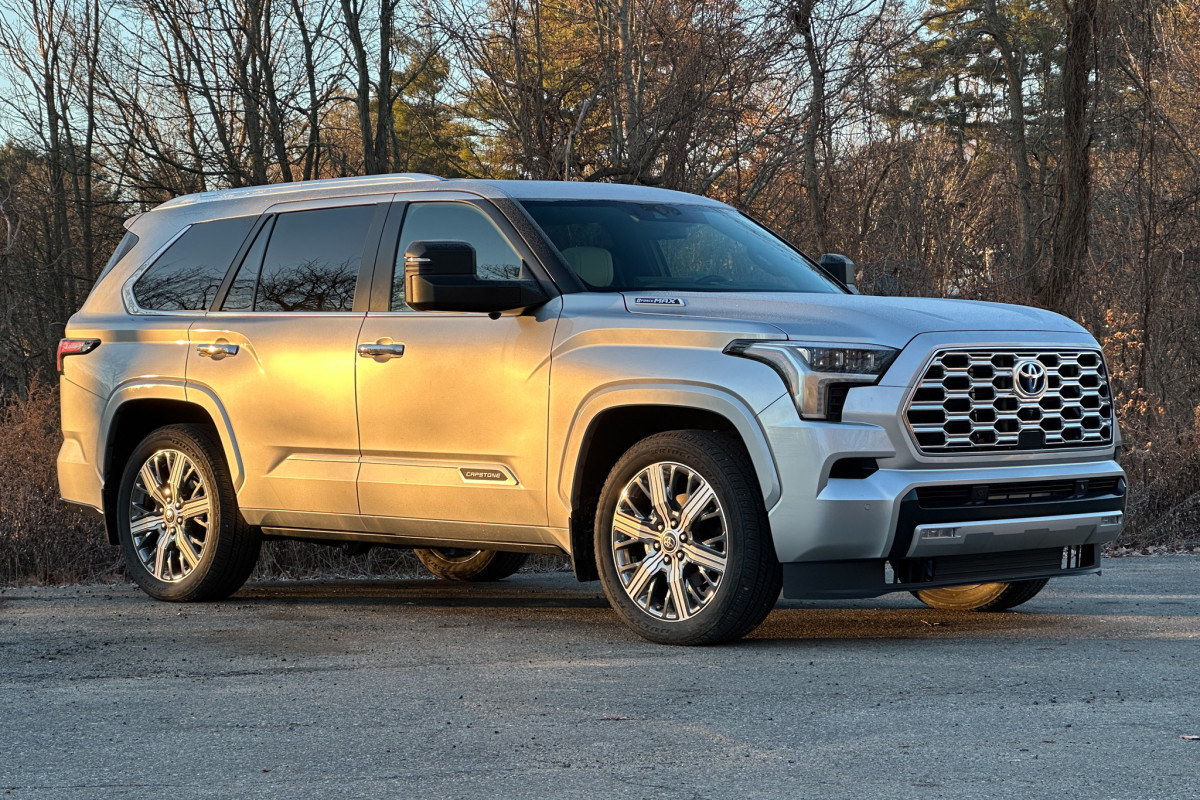
In contrast, the 2025 Toyota Sequoia, particularly the U.S.-only 1794 Edition, showcased a rugged yet refined look. The Lunar Rock paint drew attention, despite the Sequoia's familiarity on the road. The cabin, while featuring Saddle Tan leather upholstery and open-pore walnut wood trim, was predominantly covered in typical Toyota-grade plastic. The Sequoia's interior offered spacious seating for up to eight people, though the third row was best suited for shorter passengers. The high floor and low roof made accessing the third row awkward for adults. Cargo space was limited with all seats in use, but folding the third row expanded the capacity significantly.
The 2025 BMW X3 30 xDrive featured a turbocharged 2.0-litre four-cylinder engine, producing 255 horsepower and 295 pound-feet of torque. Despite its 1,894-kilogram weight, the X3 delivered a credible zero-to-100 km/h time of 6.3 seconds, thanks to its eight-speed automatic transmission and standard xDrive AWD system. The 48-volt mild-hybrid system enhanced off-the-line responsiveness and improved the engine's automatic start-stop system. For those seeking more power, the X3 M50 xDrive offered a turbocharged 3.0-litre inline six-cylinder engine with 393 horsepower and 428 pound-feet of torque, achieving zero-to-100 km/h in 4.6 seconds. The X3's sport-tuned suspension and performance tires provided an engaging driving experience, though the ride quality was firm on imperfect roads.
The 2025 Toyota Sequoia came standard with an i-Force Max hybrid powertrain, combining a twin-turbocharged 3.4-litre V6 engine, an electric motor, and a 10-speed automatic transmission. This setup delivered 437 horsepower and 583 pound-feet of torque, providing muscular performance despite the Sequoia's 2,790-kilogram weight. However, fuel economy fell short of expectations, with the test vehicle averaging 14.5 litres per 100 kilometres. The Sequoia excelled in towing, with a maximum capacity of 4,137 kilograms and a peak payload of 640 kilograms. Despite its power, the Sequoia's driving dynamics were compromised by its solid rear axle and battery pack placement, resulting in a jittery ride and excessive lateral weight transfer.
The 2025 BMW X3 offered a spacious and comfortable interior, with power-adjustable front seats featuring heating and ventilation. The dashboard housed a 12.3-inch digital instrument panel and a 14.9-inch touchscreen infotainment system, enhancing the cabin's modern feel. The cargo area provided 892 litres of space, with a lightweight, easy-to-remove cargo cover and additional storage under the load floor. The 40/20/40 split-folding rear seat allowed for versatile cargo and passenger configurations.
In comparison, the 2025 Toyota Sequoia accommodated up to eight passengers, though the third row was best suited for shorter individuals. The Platinum and Capstone trims offered 10-way power-adjustable front seats with heating, ventilation, and massage functions. The Sequoia's high floor and low roof made accessing the third row challenging for adults. With the third row in use, cargo space was limited to 325 litres, but folding it down expanded the capacity to 1,387 litres. The maximum cargo volume with both the third and second rows folded was 2,460 litres, less than rival full-size SUVs.
The 2025 BMW X3 featured the BMW Curved Display with iDrive 9 software, offering a user-friendly interface with Quick Select functionality. However, the test vehicle experienced issues with profile creation and accessing BMW Digital Services. Despite these challenges, the navigation system with augmented video provided accurate directions. Wireless Apple CarPlay connectivity worked flawlessly, offering a reliable alternative to the native infotainment features.
The 2025 Toyota Sequoia came equipped with a 12.3-inch digital instrumentation panel and a 14-inch touchscreen infotainment system, starting at the Limited trim. The Toyota Audio Multimedia system offered advanced features through subscription-based connected services plans. Wireless Apple CarPlay and Android Auto were standard, along with a 14-speaker JBL premium sound system on higher trims. The Drive Connect's natural voice recognition system, Intelligent Assistant, responded to "Hey Toyota" commands, though it struggled with some requests.
The 2025 BMW X3 offered a comprehensive suite of driver assistance features, including forward collision warning, automatic emergency braking, lane-keeping assist, and blind-spot monitoring. The Premium Package added adaptive cruise control with stop-and-go capability and Steering Assistant technology. The Parking Assistant Professional Package provided semi-automated parking tech. The X3 earned a four-star overall rating from the NHTSA, with four-star ratings for the driver and front passenger in the frontal-impact crash test.
The 2025 Toyota Sequoia featured Toyota Safety Sense 2.5, including adaptive cruise control, forward collision warning, automatic emergency braking, and lane-centring assist. Blind-spot monitoring and rear cross-traffic alert were also standard. However, the lane assist features caused some aggravation, with frequent false lane departure warnings. At the time of publication, crash-test ratings from the IIHS and NHTSA were not available for the Sequoia.
CarGurus highlights

According to CarGurus experts, the overall rating for the 2025 BMW X3 is 7.5 out of 10, while the 2025 Toyota Sequoia scores 5.5 out of 10. Based on these ratings, the BMW X3 is the recommended choice, offering a better balance of performance, technology, and overall value.
Choose the 2025 BMW X3 if:
- You value a sporty and athletic design with a luxurious interior.
- You seek a compact SUV with engaging driving dynamics and a robust powertrain.
- You prefer a vehicle with advanced technology and infotainment features.


Choose the 2025 Toyota Sequoia if:
- You need a full-size SUV with ample seating capacity and towing capabilities.
- You prioritize a rugged and muscular powertrain for quick acceleration.
- You require a vehicle with comprehensive safety features and driver assistance technology.


CarGurus highlights
According to CarGurus experts, the overall rating for the 2025 BMW X3 is 7.5 out of 10, while the 2025 Toyota Sequoia scores 5.5 out of 10. Based on these ratings, the BMW X3 is the recommended choice, offering a better balance of performance, technology, and overall value.
Choose the 2025 BMW X3 if:
Shop Now- You value a sporty and athletic design with a luxurious interior.
- You seek a compact SUV with engaging driving dynamics and a robust powertrain.
- You prefer a vehicle with advanced technology and infotainment features.
Choose the 2025 Toyota Sequoia if:
Shop Now- You need a full-size SUV with ample seating capacity and towing capabilities.
- You prioritize a rugged and muscular powertrain for quick acceleration.
- You require a vehicle with comprehensive safety features and driver assistance technology.

By: CarGurus + AI
At CarGurus, our team of experienced automotive writers remain at the heart of our content operation, conducting hands-on car tests and writing insightful guides that are backed by years of industry experience. To complement this, we are harnessing AI to make our content offering more diverse and more helpful to shoppers than ever. To achieve this, our AI systems are based exclusively on CarGurus content, ratings and data, so that what we produce is both unique to CarGurus, and uniquely helpful to car shoppers.
