2020 Toyota Camry vs 2020 Nissan Altima

Overview | |
MSRP$24,425 | MSRP$24,300 |
Listings46 | Listings14 |
Ratings & Reviews | |
User Reviews | User Reviews |
Expert reviews7.5 out of 10 | Expert reviews7.3 out of 10 |
Pros
Cons
| Pros
Cons
|
2020 Toyota Camry Reviews SummaryIf you can't beat them, join them. That seems to be Toyota's philosophy in updating the eighth generation of the Camry for the 2020 model year. This latest version debuted in 2017 as a 2018 model. As buyers continue to defect from cars into SUVs like Toyota's own RAV4, Toyota hopes to entice more shoppers to stick with its midsize sedan by offering all-wheel drive on the Camry for the first time since 1991. What's new for 2020 is the Camry TRD option package on the XSE V6, with 301 horsepower that make the case to a buyer who might never have considered a Camry. | |
2020 Nissan Altima Reviews SummarySedans are not dead, though some models in the segment are not long for this world. In fact, post-pandemic financial pressure on consumers could result in a resurgence of the traditional 4-door car as consumers seek lower-cost, higher-value transportation. Clearly, Nissan believes in sedans. And should economic headwinds once again favour cars over more expensive and less efficient SUVs, the company is perfectly positioned to capitalize on such a theoretical trend. During the past two years, the company has redesigned or refreshed its entire sedan lineup, which includes the Versa, Sentra, Altima, and Maxima. New last year, the Altima comes with an important feature for Canada: all-wheel drive is standard equipment, an unusual offering in mainstream sedans that makes the 2020 Altima even more worthy of your consideration. But is that enough? | |
No video found | No video found |
Popular Features & Specs | |
Engine2.5L 203 hp I4 | Engine2.5L 188 hp I4 |
DrivetrainFWD | DrivetrainFWD |
Seating Capacity5 | Seating Capacity5 |
Horsepower | Horsepower188 hp @ 6000 rpm |
MPG City29 | MPG City28 |
MPG Highway41 | MPG Highway39 |
Engine | |
Engine Name2.5L 203 hp I4 | Engine Name2.5L 188 hp I4 |
Torque | Torque180 lb-ft @ 3600 rpm |
Horsepower | Horsepower188 hp @ 6000 rpm |
DrivetrainFWD | DrivetrainFWD |
Fuel Economy | |
MPG City29 | MPG City28 |
MPG Highway41 | MPG Highway39 |
Interior | |
Seating Capacity5 | Seating Capacity5 |
Safety | |
Front Crash Overall5 | Front Crash Overall4 |
Side Crash Overall5 | Side Crash Overall5 |
Dimensions & Capacity | |
Cargo Space14.1 cu ft | Cargo Space15.4 cu ft |
Curb Weight3241 lbs | Curb Weight3208 lbs |
Height56.9 in | Height56.7 in |
Length192.1 in | Length192.9 in |
Width72.4 in | Width72.9 in |
Wheelbase111.2 in | Wheelbase111.2 in |
Maximum Payload925 lbs | Maximum Payload1120 lbs |
Number of doors4 | Number of doors4 |
Overview | ||
MSRP | $24,425 | $24,300 |
Listings | ||
Ratings & Reviews | ||
User reviews | ||
Expert reviews | 7.5 out of 10Read full review | 7.3 out of 10Read full review |
Pros & cons | Pros
Cons
| Pros
Cons
|
Summary | If you can't beat them, join them. That seems to be Toyota's philosophy in updating the eighth generation of the Camry for the 2020 model year. This latest version debuted in 2017 as a 2018 model. As buyers continue to defect from cars into SUVs like Toyota's own RAV4, Toyota hopes to entice more shoppers to stick with its midsize sedan by offering all-wheel drive on the Camry for the first time since 1991. What's new for 2020 is the Camry TRD option package on the XSE V6, with 301 horsepower that make the case to a buyer who might never have considered a Camry. | Sedans are not dead, though some models in the segment are not long for this world. In fact, post-pandemic financial pressure on consumers could result in a resurgence of the traditional 4-door car as consumers seek lower-cost, higher-value transportation. Clearly, Nissan believes in sedans. And should economic headwinds once again favour cars over more expensive and less efficient SUVs, the company is perfectly positioned to capitalize on such a theoretical trend. During the past two years, the company has redesigned or refreshed its entire sedan lineup, which includes the Versa, Sentra, Altima, and Maxima. New last year, the Altima comes with an important feature for Canada: all-wheel drive is standard equipment, an unusual offering in mainstream sedans that makes the 2020 Altima even more worthy of your consideration. But is that enough? |
Video | No video found | No video found |
Popular Features & Specs | ||
Engine | 2.5L 203 hp I4 | 2.5L 188 hp I4 |
Drivetrain | FWD | FWD |
Seating Capacity | 5 | 5 |
Horsepower | 188 hp @ 6000 rpm | |
MPG City | 29 | 28 |
MPG Highway | 41 | 39 |
Engine | ||
Engine Name | 2.5L 203 hp I4 | 2.5L 188 hp I4 |
Torque | 180 lb-ft @ 3600 rpm | |
Horsepower | 188 hp @ 6000 rpm | |
Drivetrain | FWD | FWD |
Fuel Economy | ||
MPG City | 29 | 28 |
MPG Highway | 41 | 39 |
Interior | ||
Seating Capacity | 5 | 5 |
Safety | ||
Front Crash Overall | 5 | 4 |
Side Crash Overall | 5 | 5 |
Dimensions & Capacity | ||
Cargo Space | 14.1 cu ft | 15.4 cu ft |
Curb Weight | 3241 lbs | 3208 lbs |
Height | 56.9 in | 56.7 in |
Length | 192.1 in | 192.9 in |
Width | 72.4 in | 72.9 in |
Wheelbase | 111.2 in | 111.2 in |
Maximum Payload | 925 lbs | 1120 lbs |
Number of doors | 4 | 4 |
The 2020 Toyota Camry had a renewed focus on quality and appeal, aiming to reclaim its status as a top contender in the sedan market. Known for its reliability and value, the Camry's latest generation featured expressive styling with a bold front fascia and taut lines, reminiscent of BMW's sport sedans. With 13 exterior colour options, including a fashionable black roof, the Camry sought to make a statement. Inside, the use of high-quality materials and a driver-focused dashboard design elevated even the base trims, while higher trims offered leather and wood finishes akin to an entry-level Lexus. Despite not being a luxury or sport sedan, the Camry's starting price of $26,620 made it a compelling choice for those seeking a balance of style and practicality.
The 2020 Nissan Altima, available in Canada in S, SV, and Platinum trims, offered a sleek design with 19-inch machined-finish aluminum wheels on the Platinum model. The interior was praised for its clean, contemporary design and ergonomic simplicity, featuring a high-mounted touchscreen infotainment system with stereo knobs and clear climate controls. While the materials quality was on par with the midsize sedan segment, the colour options were limited to black or gray. The Altima's interior was dressed up with matte chrome detailing and simulated wood trim, providing a sense of value. Despite some design quirks, the Altima's overall look and feel were well-received, with pricing starting at $30,028 and reaching $37,028 for the Platinum trim.


The 2020 Toyota Camry offered a range of powertrains, including a 2.5-litre four-cylinder engine with both FWD and AWD options, and a 3.5-litre V6 engine. The V6 produced 301 horsepower and was paired with an eight-speed automatic transmission, providing a smooth and powerful driving experience. The four-cylinder engine delivered 203 horsepower (206 in XSE trim) and was noted for its lighter weight, enhancing steering and driving dynamics. The AWD system, similar to that in the RAV4, could send up to half of the engine's torque to the rear wheels, improving traction in slippery conditions. Fuel efficiency varied, with the FWD Camry achieving 7.6 L/100 km and the AWD version at 8.4 L/100 km.
In contrast, the 2020 Nissan Altima in Canada came with a 2.5-litre four-cylinder engine producing up to 188 horsepower, paired with a CVT and standard AWD. The Altima's suspension and steering systems contributed to a smooth ride, with Intelligent Ride Control and Intelligent Trace Control enhancing handling. The CVT was designed to mimic a traditional automatic, though it could produce sudden power surges. The Altima's ride and handling were praised, with the AWD system making it a strong competitor against SUVs. However, the lack of a variable-compression turbo engine in Canada limited its performance options.
The 2020 Toyota Camry was designed for ease of use, with intuitive controls and a well-organized centre console. Front legroom and hip room increased, but rear legroom and overall passenger volume decreased compared to competitors. The trunk offered 428 litres of cargo space, smaller than some rivals. The addition of AWD did not compromise interior space, as Toyota made structural modifications to maintain the rear seats and trunk size.
The 2020 Nissan Altima featured NASA-inspired seats for comfort, though it lacked a front passenger seat height adjuster and ventilated front seats. Heated front seats and side mirrors were standard, with optional heated steering wheel and rear air conditioning vents. The Altima provided ample in-cabin storage but lacked a wireless charging pad. The trunk offered 436 litres of space, with optional grocery bag hooks and an interior grab handle for convenience.
The 2020 Toyota Camry included Apple CarPlay and Android Auto as standard, alongside Bluetooth and a SiriusXM trial. The infotainment system, though functional, felt dated with low-resolution graphics. The touchscreen was responsive, with hard buttons for major functions. A 7-inch screen was standard, with an optional 8-inch upgrade. Higher trims offered a 7-inch multi-information display and an optional 10-inch HUD. Remote Connect allowed smartphone-based vehicle access on select trims.
The 2020 Nissan Altima boasted a nearly perfect infotainment system with an 8-inch display, physical and virtual buttons, and standard connectivity features like Bluetooth, Apple CarPlay, and Android Auto. Available upgrades included SiriusXM, navigation, a Bose audio system, and NissanConnect Services. The latter offered connected services with various plans, including collision notification and smartphone alerts. The door-to-door navigation feature was particularly useful, though voice recognition technology had room for improvement.
The 2020 Toyota Camry came with Toyota Safety Sense, including emergency braking, adaptive cruise control, lane-departure warning, and automatic high beams. Blind-spot monitoring was optional, and higher trims offered Bird's Eye View for enhanced parking safety. The Camry received a five-star NHTSA rating and a Top Safety Pick+ from the IIHS. A recall for engine coolant leaks affected some models.
The 2020 Nissan Altima's base trim included forward collision warning and automatic emergency braking, with higher trims adding pedestrian detection, blind-spot monitoring, and more. ProPilot Assist offered semi-autonomous driving features, though it was not entirely reliable. The Altima earned a five-star NHTSA rating and a Top Safety Pick from the IIHS, with automatic high-beam LED headlights.
CarGurus highlights
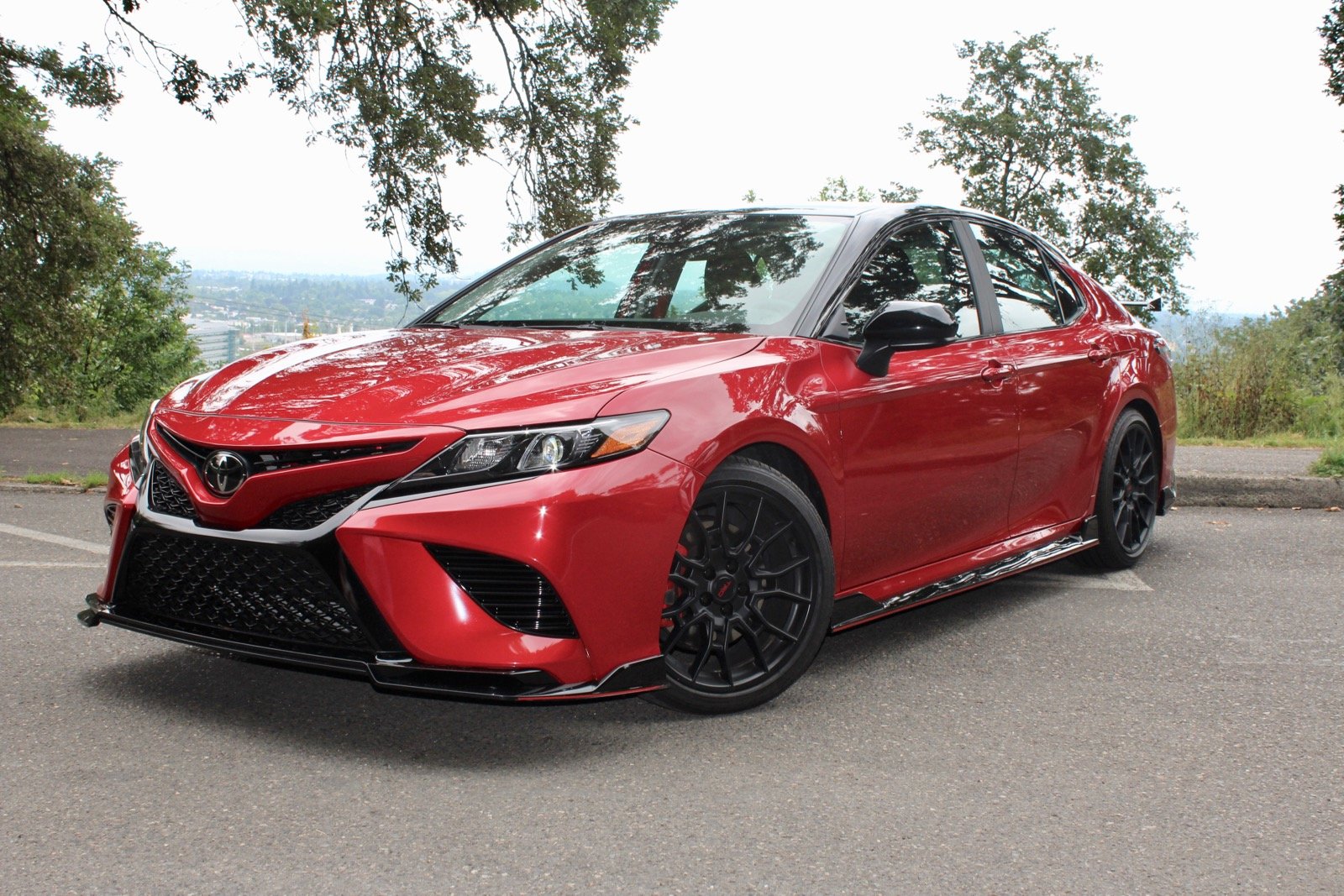
According to CarGurus experts, the overall rating for the 2020 Toyota Camry is 7.5 out of 10, while the 2020 Nissan Altima scores 7.3 out of 10. Based on these ratings, the Toyota Camry is the recommended choice, offering a better balance of performance, safety, and overall value.
Choose the 2020 Toyota Camry if:
- You value a range of powertrain options, including a powerful V6 and AWD capability.
- You appreciate a stylish design with high-quality interior materials.
- Safety is a priority, with top ratings from both NHTSA and IIHS.


Choose the 2020 Nissan Altima if:
- You prefer standard AWD for better traction and handling.
- You want a user-friendly infotainment system with comprehensive connectivity features.
- Comfort is important, with NASA-inspired seating and ample in-cabin storage.


CarGurus highlights
According to CarGurus experts, the overall rating for the 2020 Toyota Camry is 7.5 out of 10, while the 2020 Nissan Altima scores 7.3 out of 10. Based on these ratings, the Toyota Camry is the recommended choice, offering a better balance of performance, safety, and overall value.
Choose the 2020 Toyota Camry if:
Shop Now- You value a range of powertrain options, including a powerful V6 and AWD capability.
- You appreciate a stylish design with high-quality interior materials.
- Safety is a priority, with top ratings from both NHTSA and IIHS.
Choose the 2020 Nissan Altima if:
Shop Now- You prefer standard AWD for better traction and handling.
- You want a user-friendly infotainment system with comprehensive connectivity features.
- Comfort is important, with NASA-inspired seating and ample in-cabin storage.

By: CarGurus + AI
At CarGurus, our team of experienced automotive writers remain at the heart of our content operation, conducting hands-on car tests and writing insightful guides that are backed by years of industry experience. To complement this, we are harnessing AI to make our content offering more diverse and more helpful to shoppers than ever. To achieve this, our AI systems are based exclusively on CarGurus content, ratings and data, so that what we produce is both unique to CarGurus, and uniquely helpful to car shoppers.
