2022 BMW 3 Series vs 2021 Toyota Camry
Overview | |
MSRP$25,045 | MSRP$41,450 |
Listings221 | Listings217 |
Ratings & Reviews | |
User Reviews | User Reviews |
Expert reviews7.8 out of 10 | Expert reviews8.7 out of 10 |
Pros
Cons
| Pros
Cons
|
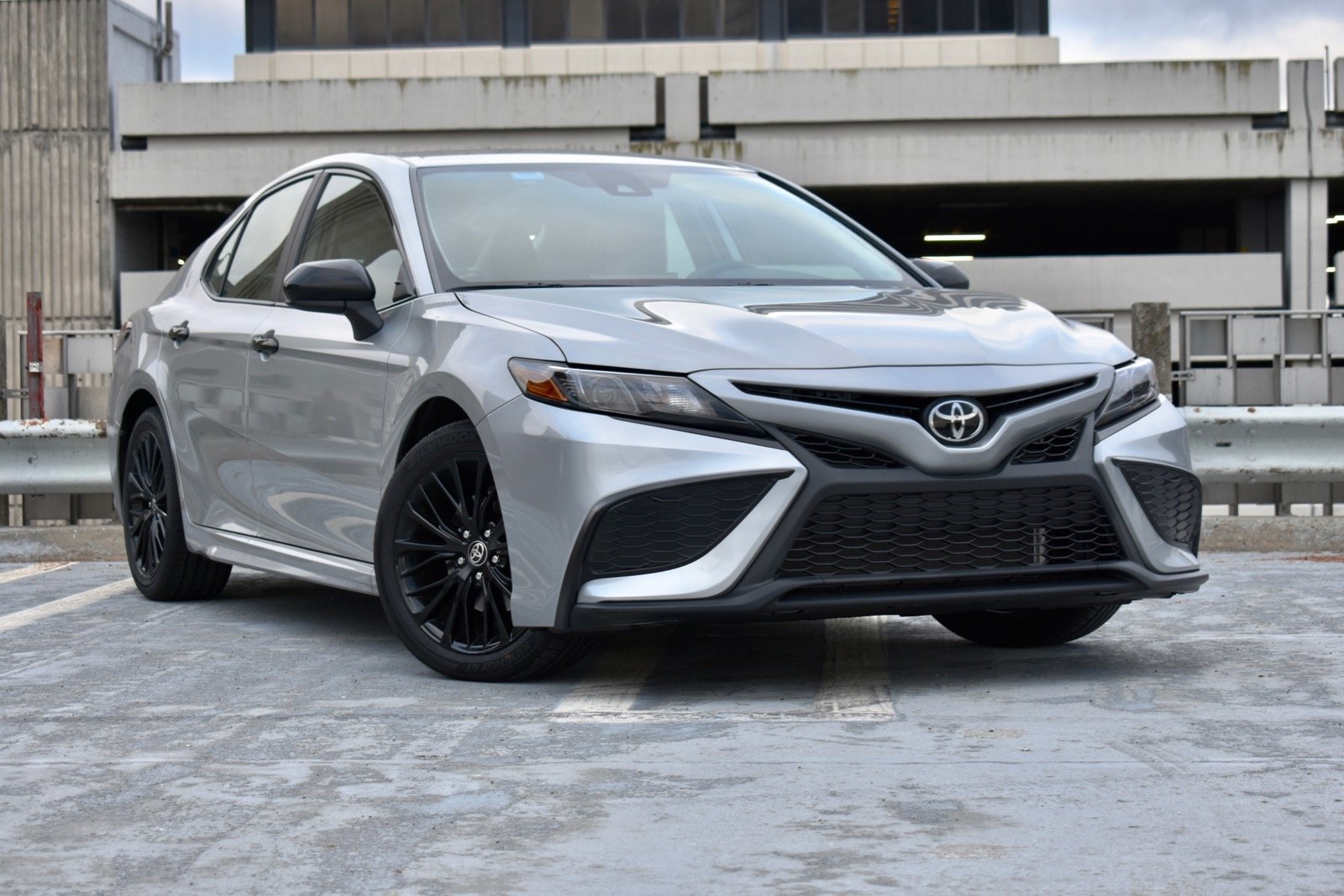
2021 Toyota Camry Reviews SummaryThe Toyota Camry has long been many new-car buyers’ default choice—but not because it’s interesting. Reliability and practicality have traditionally been the Camry’s strengths, not sportiness or style. Toyota tried to change that for the 2018 model year, when the Camry was last redesigned. The current-generation Camry adopted more extroverted styling, and engineers tried to make the driving experience more exciting, too. While Toyota’s approach has changed, the Camry still competes against the same array of midsize sedans, including the Honda Accord, Hyundai Sonata, Mazda 6, Nissan Altima, Subaru Legacy, and Volkswagen Passat. Changes for the 2021 model year include subtle styling tweaks, new infotainment displays, an upgrade to the Toyota Safety Sense 2.5+ (TSS 2.5+) package of driver aids, some changes to the dashboard trim, and the discontinuation of the Camry L trim level. That leaves the Camry LE as the new base trim level. The Camry offers buyers more choices than many rivals, encompassing three powertrains (inline-four, V6, and hybrid), six trim levels (LE, XLE, SE, SE Nightshade Edition, XSE, and TRD), and the choice of front-wheel drive (FWD) or all-wheel drive (AWD). Our test car was an AWD SE Nightshade Edition, positioned close to the middle of the lineup. | |
2022 BMW 3 Series Reviews SummaryFour years ago, the seventh-generation BMW 3 Series sedan arrived wearing an evolutionary design and a traditionally conservative appearance. While BMW has expanded the lineup to add plug-in hybrid and performance-tuned models and has tweaked the car’s available colors and features, the 2022 3 Series remains essentially the same as it has since 2019. Every 3 Series has the Live Cockpit Professional digital instrumentation with navigation this year, and BMW makes minor changes to the standard and optional equipment lists. | |
No video found | No video found |
Popular Features & Specs | |
Engine2.5L 203 hp I4 | Engine2.0L 255 hp I4 |
Drive TrainFWD | Drive TrainRWD |
Seating Capacity5 | Seating Capacity5 |
Horsepower | Horsepower255 hp @ 5000 rpm |
MPG City28 | MPG City26 |
MPG Highway39 | MPG Highway36 |
Engine | |
Engine Name2.5L 203 hp I4 | Engine Name2.0L 255 hp I4 |
Torque | Torque295 lb-ft @ 1450 rpm |
Horsepower | Horsepower255 hp @ 5000 rpm |
DrivetrainFWD | DrivetrainRWD |
Fuel Economy | |
MPG City28 | MPG City26 |
MPG Highway39 | MPG Highway36 |
Interior | |
Seating Capacity5 | Seating Capacity5 |
Key Features | |
Navigation System | Navigation SystemStandard |
Sunroof/Moonroof | Sunroof/MoonroofStandard |
Safety | |
Front Crash Overall5 | Front Crash Overall5 |
Side Crash Overall5 | Side Crash Overall5 |
Dimensions & Capacity | |
Cargo Space15.1 cu ft | Cargo Space13.0 cu ft |
Curb Weight3310 lbs | Curb Weight3560 lbs |
Height56.9 in | Height56.8 in |
Length192.1 in | Length185.7 in |
Width72.4 in | Width81.4 in |
Wheelbase111.2 in | Wheelbase112.2 in |
Maximum Payload925 lbs | Maximum Payload836 lbs |
Number of doors4 | Number of doors4 |
Overview | ||
MSRP | $25,045 | $41,450 |
Listings | ||
Ratings & Reviews | ||
User reviews | ||
Expert reviews | 7.8 out of 10Read full review | 8.7 out of 10Read full review |
Pros & cons | Pros
Cons
| Pros
Cons
|
Summary | The Toyota Camry has long been many new-car buyers’ default choice—but not because it’s interesting. Reliability and practicality have traditionally been the Camry’s strengths, not sportiness or style. Toyota tried to change that for the 2018 model year, when the Camry was last redesigned. The current-generation Camry adopted more extroverted styling, and engineers tried to make the driving experience more exciting, too. While Toyota’s approach has changed, the Camry still competes against the same array of midsize sedans, including the Honda Accord, Hyundai Sonata, Mazda 6, Nissan Altima, Subaru Legacy, and Volkswagen Passat. Changes for the 2021 model year include subtle styling tweaks, new infotainment displays, an upgrade to the Toyota Safety Sense 2.5+ (TSS 2.5+) package of driver aids, some changes to the dashboard trim, and the discontinuation of the Camry L trim level. That leaves the Camry LE as the new base trim level. The Camry offers buyers more choices than many rivals, encompassing three powertrains (inline-four, V6, and hybrid), six trim levels (LE, XLE, SE, SE Nightshade Edition, XSE, and TRD), and the choice of front-wheel drive (FWD) or all-wheel drive (AWD). Our test car was an AWD SE Nightshade Edition, positioned close to the middle of the lineup. | Four years ago, the seventh-generation BMW 3 Series sedan arrived wearing an evolutionary design and a traditionally conservative appearance. While BMW has expanded the lineup to add plug-in hybrid and performance-tuned models and has tweaked the car’s available colors and features, the 2022 3 Series remains essentially the same as it has since 2019. Every 3 Series has the Live Cockpit Professional digital instrumentation with navigation this year, and BMW makes minor changes to the standard and optional equipment lists. |
Video | No video found | No video found |
Popular Features & Specs | ||
Engine | 2.5L 203 hp I4 | 2.0L 255 hp I4 |
Drive Train | FWD | RWD |
Seating Capacity | 5 | 5 |
Horsepower | 255 hp @ 5000 rpm | |
MPG City | 28 | 26 |
MPG Highway | 39 | 36 |
Engine | ||
Engine Name | 2.5L 203 hp I4 | 2.0L 255 hp I4 |
Torque | 295 lb-ft @ 1450 rpm | |
Horsepower | 255 hp @ 5000 rpm | |
Drivetrain | FWD | RWD |
Fuel Economy | ||
MPG City | 28 | 26 |
MPG Highway | 39 | 36 |
Interior | ||
Seating Capacity | 5 | 5 |
Key Features | ||
Navigation System | Standard | |
Sunroof/Moonroof | Standard | |
Safety | ||
Front Crash Overall | 5 | 5 |
Side Crash Overall | 5 | 5 |
Dimensions & Capacity | ||
Cargo Space | 15.1 cu ft | 13.0 cu ft |
Curb Weight | 3310 lbs | 3560 lbs |
Height | 56.9 in | 56.8 in |
Length | 192.1 in | 185.7 in |
Width | 72.4 in | 81.4 in |
Wheelbase | 111.2 in | 112.2 in |
Maximum Payload | 925 lbs | 836 lbs |
Number of doors | 4 | 4 |
The 2021 Toyota Camry made a concerted effort to shed its previous image as a bland, uninspired sedan. Designers incorporated various stylistic elements to add excitement and make the vehicle stand out. The flared wheel arches, thin headlights, and taillights contributed to a visually wider stance, which was generally well-received. But opting for the SE, XSE, or TRD trims introduced fake vents that cluttered the exterior aesthetic. LE and XLE trims had a slightly cleaner, though still massive, grille.
Toyota’s 2021 update was subtle, with the TRD model featuring a large rear spoiler and the Nightshade Edition carrying over with blacked-out trims and wheels. The base LE trim came standard with 17-inch alloy wheels, while higher trims upgraded to 18- and 19-inch options.
Inside, the chaotic design continued with a dashboard that seemed cobbled together from disparate parts. The SE Nightshade Edition test car featured a mix of trim elements, including contrast stitching, piano black plastic, and plastic resembling carbon fiber. Material quality felt subpar, contributing to an overall haphazard theme.
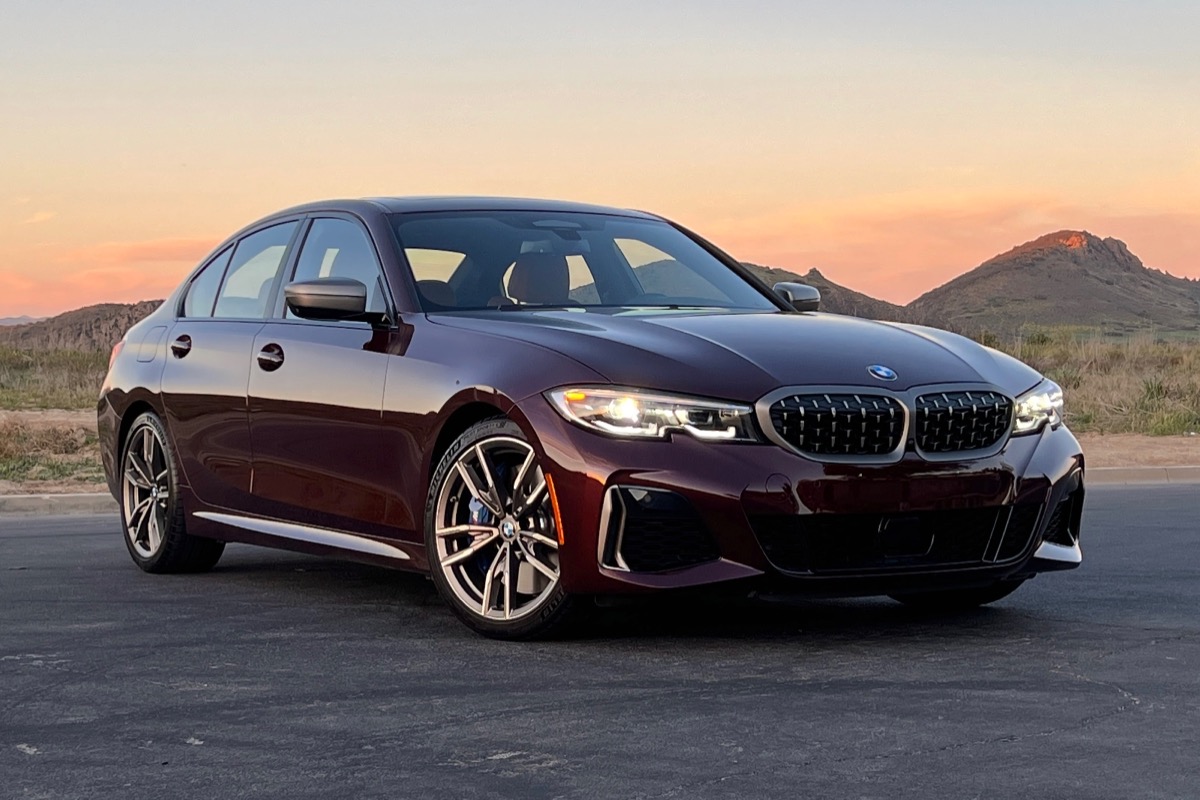
In contrast, the 2022 BMW 3 Series M340i focused on blending performance design with luxury elements. Base prices for the series ranged from $41,450 to $73,000, excluding the destination charge. The test model featured a special-order Barbera Red paint, paired with Cognac-color SensaTec simulated leather upholstery. The car’s exterior showcased an M Performance treatment with exclusive grille and bumper designs, Shadowline trim, and blue brake calipers. The optional Cooling and High-Performance Tire package added 19-inch Cerium Grey wheels, completing its assertive stance.
Inside, the BMW was driver-focused yet comfortable, featuring high-quality materials and an appealing design. The M340i’s SensaTec upholstery mimicked leather convincingly, and the dashboard wrap added to the upscale feel. The Cognac color contrasting against a darker cabin delivered a harmonious blend of tones and textures.


The 2021 Toyota Camry offered a variety of powertrains. The base 2.5-liter four-cylinder engine, dubbed Dynamic Force, produced 203 horsepower and 184 pound-feet of torque (202 hp and 182 lb-ft with AWD). The XSE model, with a dual-exhaust system, boosted output slightly. The eight-speed automatic transmission was standard across the range.
Toyota's naturally aspirated 3.5-liter V6 offered 301 hp and 267 lb-ft of torque, proving robust alongside competitors moving towards turbocharged engines. The Camry Hybrid's powertrain combined a 2.5-liter four-cylinder engine with an electric motor, totaling 208 hp.
Our SE Nightshade Edition test car, equipped with the base four-cylinder engine and AWD, surprised with its sporty dynamics. The engine’s enthusiastic revving and lively sound rejuvenated the driving experience, striking a balance between handling and ride quality. Steering was precise, though lacking a tactile feel. Despite not being as sharp as competitors like the Honda Accord, the Camry stood out in its segment for those who enjoy driving.
In stark contrast, the 2022 BMW 3 Series M340i was equipped with a turbocharged 3.0-liter inline-six engine featuring mild-hybrid technology. Delivering 382 horsepower and 368 pound-feet of torque, the drivetrain paired with an eight-speed automatic transmission, offering Sport mode, paddle shifters, and launch control. The M340i lacked all-wheel-drive, but its rear-wheel-drive setup, variable sport steering, and Adaptive M Suspension provided thrilling and precise handling.
During testing, the M340i accelerated to 60 mph in 4.4 seconds, embodying smooth and powerful performance. The powertrain’s responsiveness along winding roads demonstrated BMW’s commitment to driving enjoyment, proving it a formidable tool for spirited driving.
The 2021 Toyota Camry’s interior space was a mixed bag. The rear seats offered generous headroom and legroom, although this came at the expense of the front seats, which had below-average space. Nonetheless, the front seats were adjustable, comfortable, and supportive, with excellent outward visibility.
Cargo capacity in the Camry stood at 15.1 cubic feet—average for midsize sedans but lagging behind competitors like the Honda Accord. Interior storage was limited, with smaller cupholders and door bottle holders, resulting in items getting stuck in the door bins’ crevices. The analog controls for essential functions were a practical touch but could have been more accessible due to their placement.
Meanwhile, the 2022 BMW 3 Series M340i melded driving satisfaction with practical passenger comfort. The power-adjustable front sport seats provided ample support, with a perfect driving position augmented by a comfortable steering wheel design. Rear passengers had adequate legroom, although the center rear seat was likely more ornamental due to inwardly positioned outboard bolstering.
The 3 Series offered decent interior storage, with a 17-cubic-foot trunk outshining the Camry’s capacity. The back seat’s 40/20/40-split folding design and center armrest pass-through added utility, though the absence of a sports wagon option was a noted disappointment.
The 2021 Toyota Camry came equipped with a standard infotainment system featuring a 7-inch touchscreen, Apple CarPlay and Android Auto connectivity, Amazon Alexa compatibility, Bluetooth, Siri Eyes Free, and SiriusXM satellite radio. Higher trims upgraded to a 9-inch touchscreen, WiFi, navigation, and a nine-speaker JBL audio system, along with an available 10-inch head-up display on the XSE and XLE trims.
The inclusion of analog controls was practical but their placement led to usability concerns. The system was functional but lacked standout graphics or innovative features.
The 2022 BMW 3 Series M340i, however, featured the advanced Live Cockpit Professional, standard across models. It incorporated a 12.3-inch digital instrumentation panel, a 10.25-inch touchscreen display, and a navigation system. Though traditional analog gauges were missed, BMW iDrive 7.0 proved intuitive, with controls easily managed via touchscreen, console knob, or voice recognition. Gesture control was available but inconsistent.
Standard tech included Apple CarPlay, Android Auto, satellite radio, and a 10-speaker HiFi sound system, with Connected Package Pro adding BMW Remote Services and the Intelligent Personal Assistant. A head-up display was optional, though less effective with polarized sunglasses. The Driving Assistance Professional package added a surround-view camera, parking sensors, and advanced autonomous parking features.
The 2021 Toyota Camry boasted a comprehensive suite of safety features, earning a “Top Safety Pick+” rating from IIHS and a five-star overall rating from NHTSA. It included the TSS 2.5+ package with adaptive cruise control, automatic emergency braking, forward-collision warning, lane-departure warning, automatic high beams, and traffic-sign recognition. Enhancements like acceleration assist during lane changes and additional detection capabilities for cyclists and pedestrians were notable. The new Rear Seat Reminder and optional blind-spot monitoring and rear cross-traffic alert further emphasized safety.
The 2022 BMW 3 Series M340i featured a more minimalist approach with its Active Guard package, including forward-collision warning, pedestrian and cyclist detection, city-speed automatic emergency braking, and lane-departure warning. Enhanced options came with the Driving Assistance and Driving Assistance Professional packages, including lane-keeping and centering assists, evasive-steering assist, and semi-autonomous driving capabilities during traffic jams. The 3 Series also earned a Top Safety Pick from IIHS and five-star ratings from NHTSA.
CarGurus highlights
According to CarGurus experts, the overall rating for the 2021 Toyota Camry is 7.8 out of 10, while the 2022 BMW 3 Series scores 8.7 out of 10. Both vehicles offer compelling features suited to different needs. However, the BMW 3 Series edges out the Camry with its superior performance, advanced technology, and upscale interior quality. Thus, for those who seek a more refined driving experience combined with luxury and cutting-edge features, the 2022 BMW 3 Series comes out as the better option.
Choose the 2022 BMW 3 Series if:
- Driving enjoyment, athletic handling, and powerful performance are high priorities.
- You appreciate a tech-rich, intuitive infotainment system and advanced driver-assist features.
- You need a luxury sedan with well-crafted interior materials and ample cargo capacity.


Choose the 2021 Toyota Camry if:
- You prefer a vehicle with a broad range of safety features as standard, earning top safety ratings.
- You seek a more budget-friendly vehicle with robust, considered options like a V6 or hybrid powertrain.
- You value a family sedan with substantial rear passenger space and practical utility for daily driving.


CarGurus highlights
According to CarGurus experts, the overall rating for the 2021 Toyota Camry is 7.8 out of 10, while the 2022 BMW 3 Series scores 8.7 out of 10. Both vehicles offer compelling features suited to different needs. However, the BMW 3 Series edges out the Camry with its superior performance, advanced technology, and upscale interior quality. Thus, for those who seek a more refined driving experience combined with luxury and cutting-edge features, the 2022 BMW 3 Series comes out as the better option.
Choose the 2022 BMW 3 Series if:
Shop Now- Driving enjoyment, athletic handling, and powerful performance are high priorities.
- You appreciate a tech-rich, intuitive infotainment system and advanced driver-assist features.
- You need a luxury sedan with well-crafted interior materials and ample cargo capacity.
Choose the 2021 Toyota Camry if:
Shop Now- You prefer a vehicle with a broad range of safety features as standard, earning top safety ratings.
- You seek a more budget-friendly vehicle with robust, considered options like a V6 or hybrid powertrain.
- You value a family sedan with substantial rear passenger space and practical utility for daily driving.

By: CarGurus + AI
At CarGurus, our team of experienced automotive writers remain at the heart of our content operation, conducting hands-on car tests and writing insightful guides that are backed by years of industry experience. To complement this, we are harnessing AI to make our content offering more diverse and more helpful to shoppers than ever. To achieve this, our AI systems are based exclusively on CarGurus content, ratings and data, so that what we produce is both unique to CarGurus, and uniquely helpful to car shoppers.

