2021 Toyota Camry vs 2020 Nissan Sentra

Overview | |
MSRP$19,310 | MSRP$25,045 |
Listings112 | Listings211 |
Ratings & Reviews | |
User Reviews | User Reviews |
Expert reviews7.7 out of 10 | Expert reviews7.8 out of 10 |
Pros
Cons
| Pros
Cons
|
2020 Nissan Sentra Reviews SummaryFor 38 years, Nissan has peddled the Sentra as its definitive starter car. It’s a household name like Civic, Corolla, and Jetta—all of which are brand-new or have been refreshed in the last couple of years. The eighth-generation Sentra has the look of a larger, more luxurious car. It reflects major upgrades in style, technology, and driving dynamics. Compact sedans have a high bar to clear, even at $20,000. The 2020 Sentra delivers in every respect. | |
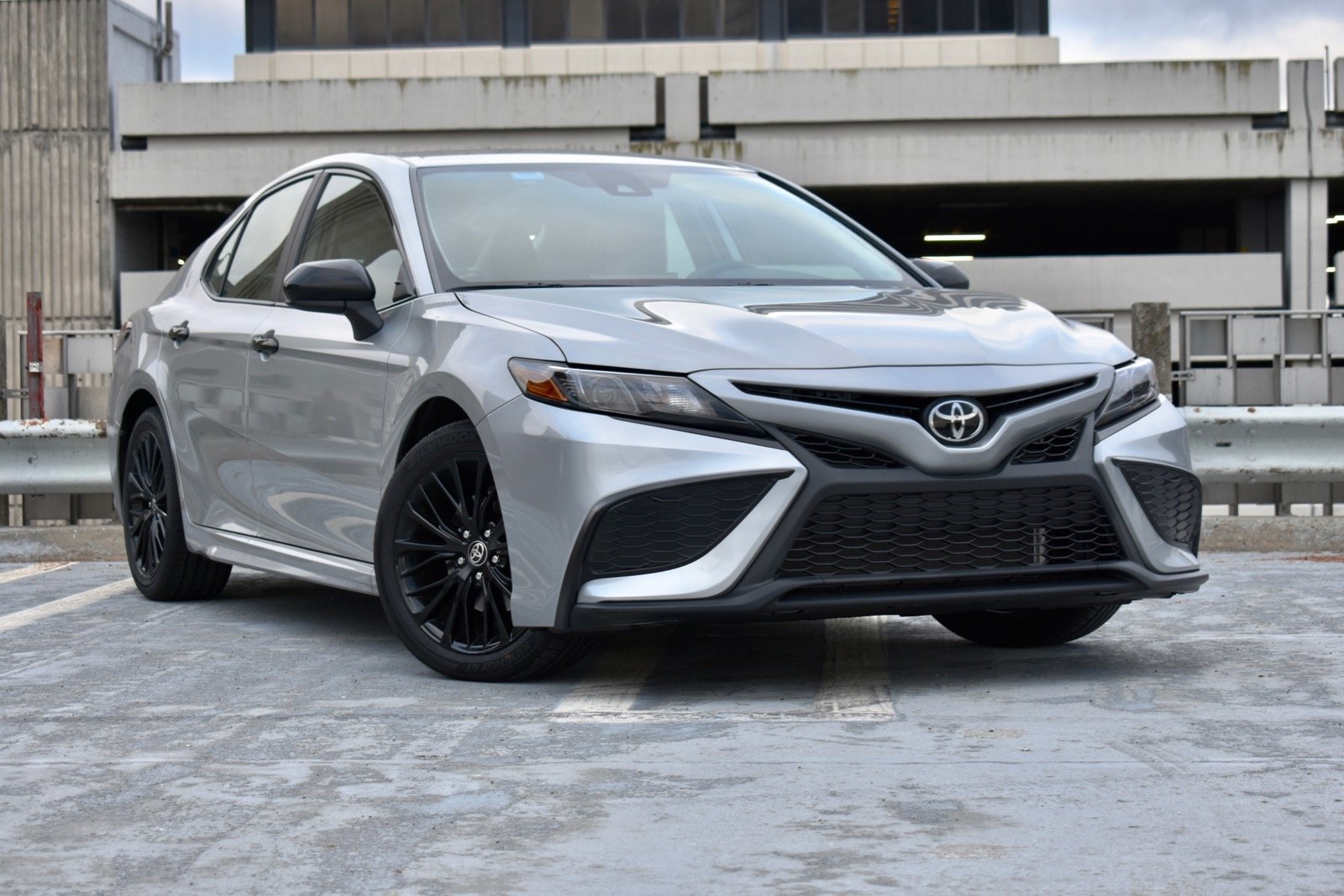
2021 Toyota Camry Reviews SummaryThe Toyota Camry has long been many new-car buyers’ default choice—but not because it’s interesting. Reliability and practicality have traditionally been the Camry’s strengths, not sportiness or style. Toyota tried to change that for the 2018 model year, when the Camry was last redesigned. The current-generation Camry adopted more extroverted styling, and engineers tried to make the driving experience more exciting, too. While Toyota’s approach has changed, the Camry still competes against the same array of midsize sedans, including the Honda Accord, Hyundai Sonata, Mazda 6, Nissan Altima, Subaru Legacy, and Volkswagen Passat. Changes for the 2021 model year include subtle styling tweaks, new infotainment displays, an upgrade to the Toyota Safety Sense 2.5+ (TSS 2.5+) package of driver aids, some changes to the dashboard trim, and the discontinuation of the Camry L trim level. That leaves the Camry LE as the new base trim level. The Camry offers buyers more choices than many rivals, encompassing three powertrains (inline-four, V6, and hybrid), six trim levels (LE, XLE, SE, SE Nightshade Edition, XSE, and TRD), and the choice of front-wheel drive (FWD) or all-wheel drive (AWD). Our test car was an AWD SE Nightshade Edition, positioned close to the middle of the lineup. | |
No video found | |
Popular Features & Specs | |
Engine2.0L 149 hp I4 | Engine2.5L 203 hp I4 |
Drive TrainFWD | Drive TrainFWD |
Seating Capacity5 | Seating Capacity5 |
Horsepower149 hp @ 6400 rpm | Horsepower |
MPG City29 | MPG City28 |
MPG Highway39 | MPG Highway39 |
Engine | |
Engine Name2.0L 149 hp I4 | Engine Name2.5L 203 hp I4 |
Torque146 lb-ft @ 4400 rpm | Torque |
Horsepower149 hp @ 6400 rpm | Horsepower |
DrivetrainFWD | DrivetrainFWD |
Fuel Economy | |
MPG City29 | MPG City28 |
MPG Highway39 | MPG Highway39 |
Interior | |
Seating Capacity5 | Seating Capacity5 |
Safety | |
Front Crash Overall4 | Front Crash Overall5 |
Side Crash Overall5 | Side Crash Overall5 |
Dimensions & Capacity | |
Cargo Space14.3 cu ft | Cargo Space15.1 cu ft |
Curb Weight3047 lbs | Curb Weight3310 lbs |
Height56.9 in | Height56.9 in |
Length182.7 in | Length192.1 in |
Width71.5 in | Width72.4 in |
Wheelbase106.8 in | Wheelbase111.2 in |
Maximum Payload910 lbs | Maximum Payload925 lbs |
Number of doors4 | Number of doors4 |
Overview | ||
MSRP | $19,310 | $25,045 |
Listings | ||
Ratings & Reviews | ||
User reviews | ||
Expert reviews | 7.7 out of 10Read full review | 7.8 out of 10Read full review |
Pros & cons | Pros
Cons
| Pros
Cons
|
Summary | For 38 years, Nissan has peddled the Sentra as its definitive starter car. It’s a household name like Civic, Corolla, and Jetta—all of which are brand-new or have been refreshed in the last couple of years. The eighth-generation Sentra has the look of a larger, more luxurious car. It reflects major upgrades in style, technology, and driving dynamics. Compact sedans have a high bar to clear, even at $20,000. The 2020 Sentra delivers in every respect. | The Toyota Camry has long been many new-car buyers’ default choice—but not because it’s interesting. Reliability and practicality have traditionally been the Camry’s strengths, not sportiness or style. Toyota tried to change that for the 2018 model year, when the Camry was last redesigned. The current-generation Camry adopted more extroverted styling, and engineers tried to make the driving experience more exciting, too. While Toyota’s approach has changed, the Camry still competes against the same array of midsize sedans, including the Honda Accord, Hyundai Sonata, Mazda 6, Nissan Altima, Subaru Legacy, and Volkswagen Passat. Changes for the 2021 model year include subtle styling tweaks, new infotainment displays, an upgrade to the Toyota Safety Sense 2.5+ (TSS 2.5+) package of driver aids, some changes to the dashboard trim, and the discontinuation of the Camry L trim level. That leaves the Camry LE as the new base trim level. The Camry offers buyers more choices than many rivals, encompassing three powertrains (inline-four, V6, and hybrid), six trim levels (LE, XLE, SE, SE Nightshade Edition, XSE, and TRD), and the choice of front-wheel drive (FWD) or all-wheel drive (AWD). Our test car was an AWD SE Nightshade Edition, positioned close to the middle of the lineup. |
Video | No video found | |
Popular Features & Specs | ||
Engine | 2.0L 149 hp I4 | 2.5L 203 hp I4 |
Drive Train | FWD | FWD |
Seating Capacity | 5 | 5 |
Horsepower | 149 hp @ 6400 rpm | |
MPG City | 29 | 28 |
MPG Highway | 39 | 39 |
Engine | ||
Engine Name | 2.0L 149 hp I4 | 2.5L 203 hp I4 |
Torque | 146 lb-ft @ 4400 rpm | |
Horsepower | 149 hp @ 6400 rpm | |
Drivetrain | FWD | FWD |
Fuel Economy | ||
MPG City | 29 | 28 |
MPG Highway | 39 | 39 |
Interior | ||
Seating Capacity | 5 | 5 |
Safety | ||
Front Crash Overall | 4 | 5 |
Side Crash Overall | 5 | 5 |
Dimensions & Capacity | ||
Cargo Space | 14.3 cu ft | 15.1 cu ft |
Curb Weight | 3047 lbs | 3310 lbs |
Height | 56.9 in | 56.9 in |
Length | 182.7 in | 192.1 in |
Width | 71.5 in | 72.4 in |
Wheelbase | 106.8 in | 111.2 in |
Maximum Payload | 910 lbs | 925 lbs |
Number of doors | 4 | 4 |
In 2020, the Nissan Sentra underwent a significant visual transformation. Historically, the Sentra wasn't known for its aesthetic appeal, often appearing plain and utilitarian. However, the 2020 Sentra broke this mold. Test vehicles, especially those adorned in eye-catching hues like Electric Blue, turned heads with their modern looks. Even the mid-level SV trim, despite its smaller 16-inch alloy wheels and halogen headlights, appeared refined rather than drab. The Sentra boasted a design that's a scaled-down version of the larger Altima, making it appear more substantial. It sat two inches lower and wider than its predecessor, providing a broad stance and sophisticated creases along its body. The V-shaped grille was tastefully executed, lending the car an unmistakable and mature presence. The interior, apart from some hard plastic elements on the rear doors and switches, matched the exterior's premium feel, with leatherette dash and quality finishes hinting at higher-priced vehicles.
The 2021 Toyota Camry worked to shake off its "generic car" image with a more dynamic design approach. The Camry’s flared wheel arches and sleek headlights added a sense of width and aggression. However, certain trims like the SE, XSE, and TRD were criticized for their overly busy fake vents, which created visual clutter. The LE and XLE trims featured cleaner yet still massive grilles. The interior followed a similar eclectic design philosophy. Our SE Nightshade Edition test model featured a mix of materials, from piano black plastics to faux carbon fiber, creating a disjointed aesthetic. Despite this, seats in higher trims like the XLE and XSE provided comfort with leather upholstery, though some parts of the interior still felt low-grade.


The 2020 Nissan Sentra focused on simplicity with its sole powertrain—a 2.0-liter inline 4-cylinder engine producing 149 horsepower and 146 pound-feet of torque, paired with a continuously variable transmission (CVT) driving the front wheels. This setup provided a smooth and responsive driving experience, even without manual modes or paddle shifters, thanks to the CVT’s adept imitation of gear shifts. The Sentra’s independent rear suspension and well-tuned chassis facilitated commendable handling and a comfortable ride. However, acceleration lagged slightly, especially past 30 mph, and the throttle could be overly sensitive. Fuel efficiency was rated favorably at 29 mpg city, 39 highway, and 33 combined.
In comparison, the 2021 Toyota Camry offered more variety in its powertrains. The base 2.5-liter four-cylinder engine, labeled Dynamic Force, produced 203 horsepower and 184 pound-feet of torque in FWD trims, slightly adjusted in AWD configurations. An XSE trim could enhance this to 206 horsepower with dual exhausts. Additionally, the Camry offered a robust 3.5-liter V6 with 301 horsepower and a hybrid variant with a total system output of 208 horsepower. Our test vehicle, an SE Nightshade Edition with the base engine and AWD, impressed with its lively, sporty engine characteristics. The responsive steering and balanced chassis made it enjoyable to drive, though not as sharp as some competitors. The TRD model offered even more enthusiast-oriented tweaks. Moreover, the AWD system borrowed from the RAV4 maximized traction without affecting interior space.
Inside the 2020 Nissan Sentra, the backseat provided unexpected spaciousness, accommodating taller passengers comfortably. Upfront, Zero Gravity seats promised reduced fatigue during long drives, and the laid-out dashboard ensured easy access to controls. The view from the rear window, however, was limited, and the trunk offered 14.3 cubic feet of cargo space, less than its predecessor but still ample for its class.
The 2021 Toyota Camry excelled in rear passenger comfort with ample headroom and legroom, although front seat dimensions were less generous. Additionally, cargo capacity at 15.1 cubic feet was on par with midsize sedan averages but fell short of the Honda Accord’s roominess. Inside storage was minimal, consistent with sedan standards. The intuitive analog controls for essential functions helped ease use, despite some ergonomic issues like the reachability of certain knobs. Dual-zone climate control added a touch of luxury at higher trims.
The 2020 Nissan Sentra did not feature Nissan’s ProPilot semi-automated driving system, navigation, or wireless charging. However, it included essentials like Apple CarPlay, Android Auto, Amazon Alexa, WiFi, multiple USB ports, and larger screens in the SV trim, along with advanced lighting options in upgraded packages. Missing luxuries like the Bose sound system and sunroof could be found in higher packages. Standard features included dual-zone climate control, adaptive cruise control, and a proximity-entry key.
Conversely, the 2021 Toyota Camry's base infotainment system included a 7-inch touchscreen, Apple CarPlay, Android Auto, Amazon Alexa compatibility, and SiriusXM. Higher trims introduced a 9-inch touchscreen, WiFi for five devices, navigation, and a nine-speaker JBL audio system. A 10-inch HUD was available on XSE and XLE trims. Unlike higher-end variants, fewer USB ports were provided, and while the infotainment system was functional, its graphics were mundane.
The 2020 Nissan Sentra was anticipated to score high in safety tests. It featured a substantial list of safety additions, including rear side and knee airbags, not common in compact cars. Other standard features included emergency braking, pedestrian detection, blind-spot monitoring, rear cross-traffic alert, lane-departure warning, automatic high beams, and a driver attention monitor.
The 2021 Toyota Camry earned top safety ratings from both the IIHS and NHTSA, including a "Top Safety Pick+" distinction. Toyota’s TSS 2.5+ safety suite came standard, upgrading previously established systems with added functionalities like improved adaptive cruise control and forward-collision detection involving cyclists and left-turn scenarios. The new Rear Seat Reminder system was also standard, aiming to prevent forgotten passengers. Optional safety features included blind-spot monitoring and rear cross-traffic alert, standard on higher trims.
CarGurus highlights
According to CarGurus experts, the overall rating for the 2020 Nissan Sentra is 7.7 out of 10, while the 2021 Toyota Camry scores 7.8 out of 10. Based on these ratings and the comparative analysis, the final recommendation leans towards the 2021 Toyota Camry for its superior safety ratings, versatile powertrain options, and driving dynamics that add spice to an otherwise pragmatic class. The 2021 Camry blends reliability with an engaging driving experience, making it the preferred choice between the two.
Choose the 2021 Toyota Camry if:
- You desire a more powerful performance range, including robust V6 and hybrid options.
- You need advanced standard safety features with top safety ratings from reputable bodies.
- You prefer a midsize sedan that balances sporty handling with a comfortable ride experience.


Choose the 2020 Nissan Sentra if:
- You prioritize a high-end feel with premium interior materials at an affordable price.
- You value comprehensive standard safety features seldom found in compact sedans.
- You seek a fuel-efficient vehicle with a smooth ride perfect for daily commutes.


CarGurus highlights
According to CarGurus experts, the overall rating for the 2020 Nissan Sentra is 7.7 out of 10, while the 2021 Toyota Camry scores 7.8 out of 10. Based on these ratings and the comparative analysis, the final recommendation leans towards the 2021 Toyota Camry for its superior safety ratings, versatile powertrain options, and driving dynamics that add spice to an otherwise pragmatic class. The 2021 Camry blends reliability with an engaging driving experience, making it the preferred choice between the two.
Choose the 2021 Toyota Camry if:
Shop Now- You desire a more powerful performance range, including robust V6 and hybrid options.
- You need advanced standard safety features with top safety ratings from reputable bodies.
- You prefer a midsize sedan that balances sporty handling with a comfortable ride experience.
Choose the 2020 Nissan Sentra if:
Shop Now- You prioritize a high-end feel with premium interior materials at an affordable price.
- You value comprehensive standard safety features seldom found in compact sedans.
- You seek a fuel-efficient vehicle with a smooth ride perfect for daily commutes.

By: CarGurus + AI
At CarGurus, our team of experienced automotive writers remain at the heart of our content operation, conducting hands-on car tests and writing insightful guides that are backed by years of industry experience. To complement this, we are harnessing AI to make our content offering more diverse and more helpful to shoppers than ever. To achieve this, our AI systems are based exclusively on CarGurus content, ratings and data, so that what we produce is both unique to CarGurus, and uniquely helpful to car shoppers.

