Honda Pilot vs Chevrolet Bolt
Overview | |
MSRP$42,395 | MSRP$27,600 |
Listings1326 | Listings1661 |
Ratings & Reviews | |
User Reviews | User Reviews |
Expert reviews7.0 out of 10 | Expert reviews6.3 out of 10 |
Pros
Cons
| Pros
Cons
|
Reviews SummaryWhile it has a more truck-like presence, the 2026 Honda Pilot remains fundamentally the same as before—and that's a good thing. It's the automaker's midsize three-row crossover SUV, competing against family-focused models such as the Toyota Grand Highlander and the Ford Explorer. Verdict: Clever features help the Pilot stand out from other three-row SUVs. Our only major complaint is the lack of a more fuel-efficient model. | |
Reviews SummaryWith more range, more power, and improved technology, the Chevrolet Bolt EV returns after a three-year hiatus. It’s also one of the most affordable EVs in Canada, but it’s due to remain in production only until mid-2027. Verdict: The 2027 Chevrolet Bolt EV is an excellent choice for shoppers seeking an electric vehicle that won't break the bank. It may not be all that fancy or refined, but it gets the basics right when it comes to range and capabilities. | |
No video found | |
Popular Features & Specs | |
Engine3.5L 285 hp V6 | Engine |
DrivetrainFWD | Drivetrain |
Seating Capacity8 | Seating Capacity5 |
Horsepower285 hp @ 6100 rpm | Horsepower |
EV Battery Capacity | EV Battery Capacity65 kWh |
MPG City19 | MPG City |
MPG Highway27 | MPG Highway |
Battery Charge Time (120V) | Battery Charge Time (120V)64 hours |
Battery Charge Time (240V) | Battery Charge Time (240V)9.8 hours |
Engine | |
Engine Name3.5L 285 hp V6 | Engine Name210 hp Electric |
Torque262 lb-ft @ 5000 rpm | Torque |
Horsepower285 hp @ 6100 rpm | Horsepower |
Battery Charge Time (120V) | Battery Charge Time (120V)64 hours |
Battery Charge Time (240V) | Battery Charge Time (240V)9.8 hours |
DrivetrainFWD | DrivetrainFWD |
Fuel Economy | |
EV Battery Capacity | EV Battery Capacity65 kWh |
MPG City19 | MPG City |
MPG Highway27 | MPG Highway |
Interior | |
Seating Capacity8 | Seating Capacity5 |
Key Features | |
Navigation SystemStandard | Navigation SystemStandard |
Safety | |
Front Crash Overall4 | Front Crash Overall |
Side Crash Overall5 | Side Crash Overall |
Dimensions & Capacity | |
Cargo Space18.6 cu ft | Cargo Space16.2 cu ft |
Curb Weight4336 lbs | Curb Weight3776 lbs |
Height71.0 in | Height63.9 in |
Length200.1 in | Length169.6 in |
Width78.5 in | Width80.1 in |
Wheelbase113.8 in | Wheelbase105.3 in |
Maximum Payload1340 lbs | Maximum Payload873 lbs |
Number of doors4 | Number of doors4 |
Maximum Towing Capacity3500 lbs | Maximum Towing Capacity |
Overview | ||
MSRP | $42,395 | $27,600 |
Listings | ||
Ratings & Reviews | ||
User reviews | ||
Expert reviews | 7.0 out of 10Read full review | 6.3 out of 10Read full review |
Pros & cons | Pros
Cons
| Pros
Cons
|
Summary | While it has a more truck-like presence, the 2026 Honda Pilot remains fundamentally the same as before—and that's a good thing. It's the automaker's midsize three-row crossover SUV, competing against family-focused models such as the Toyota Grand Highlander and the Ford Explorer. Verdict: Clever features help the Pilot stand out from other three-row SUVs. Our only major complaint is the lack of a more fuel-efficient model. | With more range, more power, and improved technology, the Chevrolet Bolt EV returns after a three-year hiatus. It’s also one of the most affordable EVs in Canada, but it’s due to remain in production only until mid-2027. Verdict: The 2027 Chevrolet Bolt EV is an excellent choice for shoppers seeking an electric vehicle that won't break the bank. It may not be all that fancy or refined, but it gets the basics right when it comes to range and capabilities. |
Video | No video found | |
Popular Features & Specs | ||
Engine | 3.5L 285 hp V6 | |
Drivetrain | FWD | |
Seating Capacity | 8 | 5 |
Horsepower | 285 hp @ 6100 rpm | |
EV Battery Capacity | 65 kWh | |
MPG City | 19 | |
MPG Highway | 27 | |
Battery Charge Time (120V) | 64 hours | |
Battery Charge Time (240V) | 9.8 hours | |
Engine | ||
Engine Name | 3.5L 285 hp V6 | 210 hp Electric |
Torque | 262 lb-ft @ 5000 rpm | |
Horsepower | 285 hp @ 6100 rpm | |
Battery Charge Time (120V) | 64 hours | |
Battery Charge Time (240V) | 9.8 hours | |
Drivetrain | FWD | FWD |
Fuel Economy | ||
EV Battery Capacity | 65 kWh | |
MPG City | 19 | |
MPG Highway | 27 | |
Interior | ||
Seating Capacity | 8 | 5 |
Key Features | ||
Navigation System | Standard | Standard |
Safety | ||
Front Crash Overall | 4 | |
Side Crash Overall | 5 | |
Dimensions & Capacity | ||
Cargo Space | 18.6 cu ft | 16.2 cu ft |
Curb Weight | 4336 lbs | 3776 lbs |
Height | 71.0 in | 63.9 in |
Length | 200.1 in | 169.6 in |
Width | 78.5 in | 80.1 in |
Wheelbase | 113.8 in | 105.3 in |
Maximum Payload | 1340 lbs | 873 lbs |
Number of doors | 4 | 4 |
Maximum Towing Capacity | 3500 lbs | |
The 2026 Honda Pilot underwent a subtle transformation, adopting a more rugged, truck-like appearance with a larger, blockier grille and grey plastic scuff plates. This design shift aligned with industry trends, enhancing its utilitarian style with standard roof rails and a matching rear bumper scuff plate. While the exterior updates were modest, they complemented the rugged design direction introduced three years prior. Inside, the Pilot retained its familiar layout but introduced notable upgrades, including larger infotainment and digital instrument panels. The top trims featured unique diamond quilting in synthetic suede, contrast stitching, and a new trim element that varied in appearance based on lighting. These changes maintained the Pilot's reputation as a practical midsize SUV with high-quality materials and construction.
The 2027 Chevrolet Bolt retained its familiar look, with slight styling changes that made it resemble a conventional gas-powered car. The front end featured a thin slot behind the Chevy Bowtie logo, and the previous grille insert was integrated into the bumper. The Bolt continued to straddle the line between a large hatchback and a subcompact SUV, with only the EUV body style returning for 2027. Its tall and narrow stance prioritized utility and interior space over sportiness. The RS model added gloss black exterior trim for a touch of flair. Inside, the Bolt received a more dramatic makeover, with a larger digital instrument panel and infotainment touchscreen. The push-button gear selector was relocated to the steering column, freeing up centre console space. While hard plastic surfaces dominated the cabin, the RS trim offered Evotex synthetic leather with red stitching for a sportier feel.

The 2026 Honda Pilot retained its 3.5-litre V6 engine, delivering 285 horsepower and 262 pound-feet of torque, paired with a 10-speed automatic transmission. In Canada, all-wheel drive was standard. The Pilot's acceleration was more than adequate, with responsive performance that didn't require flooring the pedal for highway merging or passing. The V6 engine provided a confident sound, and the brake pedal effort was appropriately soft for a family SUV. While subtle downshifts occasionally disrupted smooth stops, the revised steering for 2026 improved feedback and stability, eliminating the previous vague feel on highways. Overall, the Pilot maintained its confident handling, though it didn't aim for sportiness.
The 2027 Chevrolet Bolt introduced significant changes under the surface, featuring a new 65-kilowatt-hour lithium-iron phosphate battery pack that reduced costs and reliance on rare earth minerals. A new motor from Chevy's Equinox EV delivered 210 horsepower and 169 pound-feet of torque to the front wheels, achieving a 0-100 km/h time in the low seven-second range. While this acceleration might seem slow by EV standards, it was quick compared to gas-powered subcompact SUVs. The Bolt offered one-pedal driving with adjustable brake regeneration levels, though it could be jumpy at low speeds. The ride was firm but not overly stiff, and road noise was more noticeable due to the absence of an internal combustion engine. The Bolt's agility on curvy roads was surprising, thanks to its low centre of gravity. On a full charge, it offered up to 422 kilometres of range, with faster charging capabilities and a Tesla-derived North American Charging Standard (NACS) charge port.
The 2026 Honda Pilot's cabin remained largely unchanged, which was a positive aspect given its reputation for interior space and versatility. A standout feature was the removable second-row centre seat, offering flexibility between a bench and captain's chairs. This seat could be stowed under the cargo floor, and it wasn't overly heavy to move. While the centre seat was more suitable for smaller passengers, the outboard seats provided ample legroom and comfort for larger adults. Access to the third row was easy, with a button folding the second-row seatback and sliding it forward. The third row offered adequate space for smaller adults, though the seat cushions were lower to the floor. Behind the third row, the Pilot could hold up to 635 litres of cargo, with a large underfloor bin for additional storage. Folding the third row expanded cargo capacity to 1,702 litres, and with both rows folded, it could accommodate up to 3,219 litres, depending on the trim.
The 2027 Chevrolet Bolt offered an upright driving position with ample space for larger occupants, though taller drivers might have wished for more telescopic extension from the steering wheel. The rear seats were also upright, providing plenty of headroom and adequate thigh support. The flat floor reduced the penalty for centre-seat passengers. The Bolt's cargo capacity was 459 litres behind the rear seats, which was small for the class but still sufficient for most users. A large bin under the floor and easy-to-reach release latches for the rear seatbacks added to its practicality. While there was no frunk, the Bolt offered ample storage for personal items, including a large bin with movable dividers, a big floor tray, and a deep centre armrest bin.
The 2026 Honda Pilot featured a larger standard 12.3-inch infotainment touchscreen and a 10.2-inch digital instrument panel for all trims. Physical shortcut buttons were replaced with customizable on-screen shortcuts, and the volume knob was relocated below the dashboard. The system ran on the latest Honda software, offering quick responses and easy usability. Wireless Apple CarPlay and Android Auto were included, though a wireless phone charger required an upgrade to the EX-L trim. The charging pad was temperamental, requiring precise phone positioning. Unique features like multiple camera angles and the CabinTalk intercom system carried over, enhancing the Pilot's tech offerings.
The 2027 Chevrolet Bolt came with an 11-inch digital instrument panel and an 11.3-inch centre touchscreen, running on a Google-based operating system. Apple CarPlay and standalone Android Auto were not supported, necessitating Bluetooth pairing for personal music libraries. The optional Technology package added a surround-view camera system, a digital rear-view mirror, and a wireless charging pad. The infotainment system featured logical menus, sharp graphics, and quick responses. Separate physical climate controls reduced distraction, and the navigation system helped locate charging stations. The Bolt also offered vehicle-to-load charging for backup power, though additional equipment was required.
Crash test scores for the 2026 Honda Pilot were unavailable, but it was expected to achieve similar high ratings as the 2025 model. The Honda Sensing suite of safety features included forward collision warning, automatic emergency braking, lane-departure warning, lane-keep assist, adaptive cruise control, blind-spot monitoring, and more. The forward collision warning was sensitive but didn't trigger braking intervention, while lane departure warning was similarly sensitive.
Crash test results for the 2027 Chevrolet Bolt were also unavailable, but it was expected to perform well based on its platform. Standard safety features included forward-collision warning, automatic emergency braking, adaptive cruise control, lane-keep assist, blind-spot monitors, and a safety alert seat. The optional Technology package added a surround-view camera system, a digital rear-view mirror, and more. GM's Super Cruise hands-free driving system was available for an additional cost.
CarGurus highlights
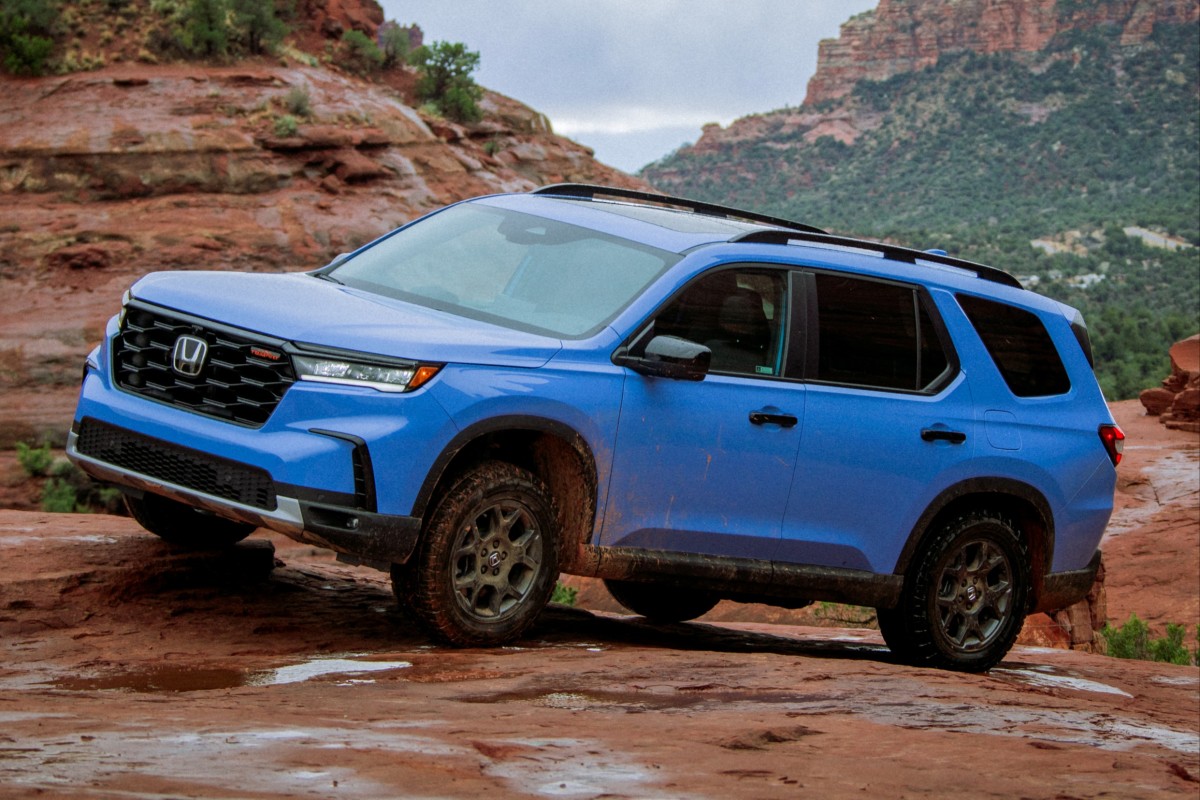
According to CarGurus experts, the overall rating for the 2026 Honda Pilot is 7.0 out of 10, while the 2027 Chevrolet Bolt scores 6.3 out of 10. Based on these ratings, the 2026 Honda Pilot is the recommended choice, offering a well-rounded package of practicality, safety, and technology.
Choose the 2026 Honda Pilot if:
- You prioritize a spacious and versatile interior with flexible seating options.
- You value a rugged, truck-like exterior design with practical features.
- You seek a midsize SUV with a strong reputation for safety and reliability.


Choose the 2027 Chevrolet Bolt if:
- You want an electric vehicle with a respectable range and fast charging capabilities.
- You prefer a compact vehicle with a surprising amount of interior space and storage options.
- You are interested in advanced technology features, including vehicle-to-load charging and optional Super Cruise.


CarGurus highlights
According to CarGurus experts, the overall rating for the 2026 Honda Pilot is 7.0 out of 10, while the 2027 Chevrolet Bolt scores 6.3 out of 10. Based on these ratings, the 2026 Honda Pilot is the recommended choice, offering a well-rounded package of practicality, safety, and technology.
Choose the 2026 Honda Pilot if:
Shop Now- You prioritize a spacious and versatile interior with flexible seating options.
- You value a rugged, truck-like exterior design with practical features.
- You seek a midsize SUV with a strong reputation for safety and reliability.
Choose the 2027 Chevrolet Bolt if:
Shop Now- You want an electric vehicle with a respectable range and fast charging capabilities.
- You prefer a compact vehicle with a surprising amount of interior space and storage options.
- You are interested in advanced technology features, including vehicle-to-load charging and optional Super Cruise.

By: CarGurus + AI
At CarGurus, our team of experienced automotive writers remain at the heart of our content operation, conducting hands-on car tests and writing insightful guides that are backed by years of industry experience. To complement this, we are harnessing AI to make our content offering more diverse and more helpful to shoppers than ever. To achieve this, our AI systems are based exclusively on CarGurus content, ratings and data, so that what we produce is both unique to CarGurus, and uniquely helpful to car shoppers.
