2026 Hyundai IONIQ 5 vs 2026 Lexus TX
Overview | |
MSRP$35,000 | MSRP$56,940 |
Listings41 | Listings217 |
Ratings & Reviews | |
User Reviews | User Reviews |
Expert reviews8.0 out of 10 | Expert reviews7.0 out of 10 |
Pros
Cons
| Pros
Cons
|
2026 Hyundai IONIQ 5 Reviews SummaryMany automakers have had a tough time launching electric vehicles. Teething problems have resulted in build quality issues, gremlins, and production delays. Hyundai, however, got it right from the start with the Ioniq 5. Not only did this compact crossover nail the basics, it has also struck a chord for its stylish looks, fast charging capability, good range, and practicality. Verdict: Five years into its run, the Ioniq 5 is still the electric vehicle we would recommend to most EV buyers. | |
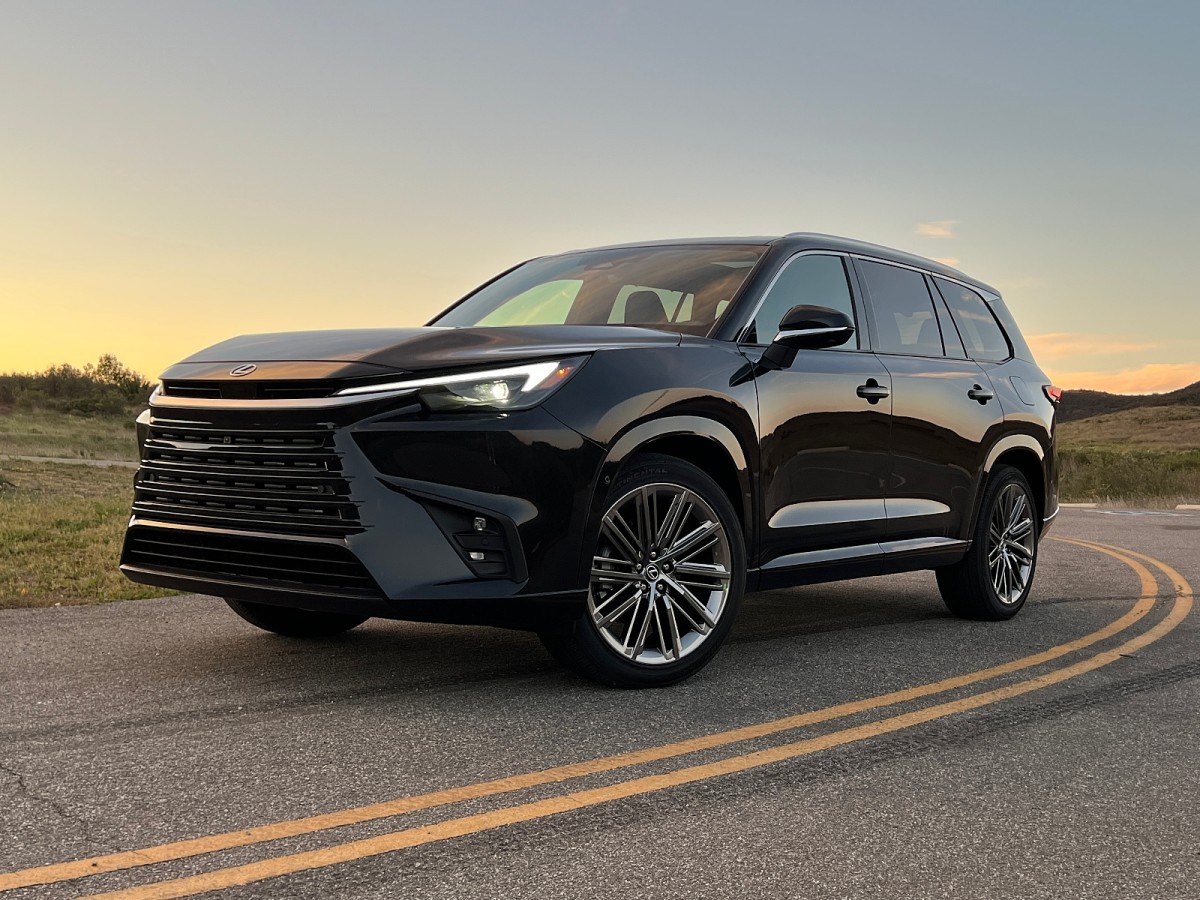
2026 Lexus TX Reviews SummaryYou may not have heard much about the Lexus TX, the company’s full-size three-row SUV. Introduced for the 2024 model year, it’s still a young’un compared to its competition, but it’s made its mark by offering a spacious interior and two different powertrains, wrapped in a stylish package. In Lexus’s seven-model SUV lineup, the TX slots just below the GX and LX — two body-on-frame models focused on off-roading. In Canada, you can snag a gas-powered TX or one with a hybrid powertrain. (Note the test unit for this review, the 550h+ plug-in hybrid, is not yet available in Canada. Lexus Canada plans to offer it but not in time for the 2026 model year.) Verdict: The 2026 Lexus TX is a great option for large families that need a spacious third row, but some of the technology comes with a steep learning curve. | |
No video found | No video found |
Popular Features & Specs | |
Engine168 hp Electric | Engine2.4L 275 hp I4 |
DrivetrainRWD | DrivetrainFWD |
Seating Capacity5 | Seating Capacity7 |
Horsepower | Horsepower275 hp @ 6000 rpm |
EV Battery Capacity63 kWh | EV Battery Capacity |
MPG City131 | MPG City21 |
MPG Highway100 | MPG Highway27 |
Battery Charge Time (120V)54 hours | Battery Charge Time (120V) |
Battery Charge Time (240V)5.7 hours | Battery Charge Time (240V) |
Engine | |
Engine Name168 hp Electric | Engine Name2.4L 275 hp I4 |
Torque | Torque317 lb-ft @ 1700 rpm |
Horsepower | Horsepower275 hp @ 6000 rpm |
Battery Charge Time (120V)54 hours | Battery Charge Time (120V) |
Battery Charge Time (240V)5.7 hours | Battery Charge Time (240V) |
DrivetrainRWD | DrivetrainFWD |
Fuel Economy | |
EV Battery Capacity63 kWh | EV Battery Capacity |
MPG City131 | MPG City21 |
MPG Highway100 | MPG Highway27 |
Interior | |
Seating Capacity5 | Seating Capacity7 |
Key Features | |
Navigation SystemStandard | Navigation SystemStandard |
Safety | |
Front Crash Overall4 | Front Crash Overall4 |
Side Crash Overall5 | Side Crash Overall5 |
Dimensions & Capacity | |
Cargo Space26.3 cu ft | Cargo Space20.2 cu ft |
Curb Weight4145 lbs | Curb Weight4445 lbs |
Height63.0 in | Height70.1 in |
Length183.3 in | Length203.1 in |
Width74.4 in | Width78.4 in |
Wheelbase118.1 in | Wheelbase116.1 in |
Maximum Payload1080 lbs | Maximum Payload1565 lbs |
Number of doors4 | Number of doors4 |
Maximum Towing Capacity | Maximum Towing Capacity5000 lbs |
Overview | ||
MSRP | $35,000 | $56,940 |
Listings | ||
Ratings & Reviews | ||
User reviews | ||
Expert reviews | 8.0 out of 10Read full review | 7.0 out of 10Read full review |
Pros & cons | Pros
Cons
| Pros
Cons
|
Summary | Many automakers have had a tough time launching electric vehicles. Teething problems have resulted in build quality issues, gremlins, and production delays. Hyundai, however, got it right from the start with the Ioniq 5. Not only did this compact crossover nail the basics, it has also struck a chord for its stylish looks, fast charging capability, good range, and practicality. Verdict: Five years into its run, the Ioniq 5 is still the electric vehicle we would recommend to most EV buyers. | You may not have heard much about the Lexus TX, the company’s full-size three-row SUV. Introduced for the 2024 model year, it’s still a young’un compared to its competition, but it’s made its mark by offering a spacious interior and two different powertrains, wrapped in a stylish package. In Lexus’s seven-model SUV lineup, the TX slots just below the GX and LX — two body-on-frame models focused on off-roading. In Canada, you can snag a gas-powered TX or one with a hybrid powertrain. (Note the test unit for this review, the 550h+ plug-in hybrid, is not yet available in Canada. Lexus Canada plans to offer it but not in time for the 2026 model year.) Verdict: The 2026 Lexus TX is a great option for large families that need a spacious third row, but some of the technology comes with a steep learning curve. |
Video | No video found | No video found |
Popular Features & Specs | ||
Engine | 168 hp Electric | 2.4L 275 hp I4 |
Drivetrain | RWD | FWD |
Seating Capacity | 5 | 7 |
Horsepower | 275 hp @ 6000 rpm | |
EV Battery Capacity | 63 kWh | |
MPG City | 131 | 21 |
MPG Highway | 100 | 27 |
Battery Charge Time (120V) | 54 hours | |
Battery Charge Time (240V) | 5.7 hours | |
Engine | ||
Engine Name | 168 hp Electric | 2.4L 275 hp I4 |
Torque | 317 lb-ft @ 1700 rpm | |
Horsepower | 275 hp @ 6000 rpm | |
Battery Charge Time (120V) | 54 hours | |
Battery Charge Time (240V) | 5.7 hours | |
Drivetrain | RWD | FWD |
Fuel Economy | ||
EV Battery Capacity | 63 kWh | |
MPG City | 131 | 21 |
MPG Highway | 100 | 27 |
Interior | ||
Seating Capacity | 5 | 7 |
Key Features | ||
Navigation System | Standard | Standard |
Safety | ||
Front Crash Overall | 4 | 4 |
Side Crash Overall | 5 | 5 |
Dimensions & Capacity | ||
Cargo Space | 26.3 cu ft | 20.2 cu ft |
Curb Weight | 4145 lbs | 4445 lbs |
Height | 63.0 in | 70.1 in |
Length | 183.3 in | 203.1 in |
Width | 74.4 in | 78.4 in |
Wheelbase | 118.1 in | 116.1 in |
Maximum Payload | 1080 lbs | 1565 lbs |
Number of doors | 4 | 4 |
Maximum Towing Capacity | 5000 lbs | |
The 2026 Hyundai IONIQ 5 combined the retro charm of a 1980s hatchback with the modern appeal of a crossover SUV, creating a unique and attractive design. Its profile was distinctly hatchback-like, yet larger than familiar models like the Volkswagen Golf GTI and Toyota Corolla. Angular lines and a character line rising from the rear wheels to the front doors formed a triangular shape that defined its profile. Dark cladding around the wheels and lower body added a crossover flavour. The front featured a visor slit with rectangular headlights and a small grille in a darkened fascia, while the rear boasted an integrated spoiler and rectangular taillights. Despite its crossover classification, the IONIQ 5 appeared more car-like, with a hatchback design that made it look smaller than its actual size. In Canada, it came standard with 19-inch wheels.
Inside, the IONIQ 5 leaned towards a utilitarian aesthetic with a strong emphasis on technology. Standard cloth upholstery could be upgraded to synthetic leather with the Ultimate Package, but genuine leather was absent. Upholstery options included black, grey, and teal-grey, contributing to a somewhat cold interior theme. The tech suite featured dual 12.3-inch screens and touch controls for the climate system, creating a modern yet sterile environment typical of contemporary EVs.
The 2026 Lexus TX offered a range of packages tailored to different powertrains. The TX 350 came with the Luxury package by default, with options for Ultra Luxury, Executive, and F Sport 3 packages. The 500h hybrid started with the F Sport Performance 2 package, with the F Sport 3 package as an option. Higher packages included towing capability. Base models had 20-inch wheels, while most featured 22-inch wheels that filled the wheel wells. The grille retained a large, spindle-like shape, complemented by sharp bi-LED headlights. Rear LED lighting spanned the vehicle's width, topped by a small roof spoiler, with optional roof rails for added storage.
Inside, the TX offered three interior colour options: standard grey, light grey Birch, and dark brown Peppercorn. Ambient lighting added warmth, and suede trim adorned the glovebox. However, material quality fell short of luxury standards, with basic plastics present. Redesigned door handles, which reacted to pressure rather than pulling out, were a unique feature, though some might have preferred more attention to cabin detail over reimagined handles.
The 2026 Hyundai IONIQ 5 offered a choice between a single-motor, rear-wheel-drive (RWD) powertrain producing 225 hp and 258 lb-ft of torque, and a dual-motor, all-wheel-drive (AWD) powertrain with 320 hp and 446 lb-ft. The IONIQ 5 N performance model boasted a dual-motor setup delivering up to 641 hp and 568 lb-ft of torque. During test drives, the dual-motor powertrain provided quiet, robust power, especially from a stop. Sport mode enhanced throttle response, achieving an estimated 0 to 100 km/h time of 5.3 seconds, making it quicker than most gas-powered crossovers. Regenerative braking offered five settings, from freewheeling to one-pedal driving, with the Max setting ideal for city driving. While steering was direct, it lacked agility, and the vehicle's weight led to some lean in corners.
The 2026 Lexus TX 350 featured a 275-horsepower 2.4-litre turbocharged four-cylinder engine, while the TX 500h hybrid increased output to 366 hp. The gas model used an eight-speed automatic transmission, while the hybrid had a six-speed automatic. The TX 350 came with full-time AWD, and the TX 500h used Lexus's Direct4 AWD system for torque distribution. Drive modes included Normal, Eco, and Sport, with Sport mode enhancing throttle sensitivity. While not aggressive, the TX wasn't designed as a sports car. The 500h offered adaptive suspension and rear steering for improved handling.
The 2026 Hyundai IONIQ 5 featured spacious front seats with an eight-way power-adjustable driver's seat as standard. The Ultimate Package added a power-adjustable front passenger seat, ventilated front seats, heated outboard rear seats, driver’s seat memory, and a “Relaxation” seat for the driver. The rear seat offered 1,002 millimetres of legroom, accommodating two adults comfortably. Cargo space was slightly smaller than average for compact crossovers, with 745 litres behind the rear seats and 1,655 litres with the second row folded. A 24-litre front trunk provided additional storage, though overall cargo space was less than some gas-powered competitors.
The 2026 Lexus TX included three-zone automatic climate control, heated and cooled front seats, heated second-row seats, and a heated steering wheel. Ventilated second-row seats were standard on the TX 500h. The third row was spacious, with a recline function and ample headroom. A one-touch button facilitated third-row access, though folding the second row flat was more complex. Front seats were roomy but lacked thigh support. The TX offered excellent cargo space, with 572 litres behind the third row, 1,625 litres with the third row flat, and 2,747 litres with all rear seats folded. All models could tow up to 2,268 kilograms when properly equipped.
The 2026 Hyundai IONIQ 5 featured a 12.3-inch digital instrument cluster and a 12.3-inch infotainment touchscreen under a single glass panel. Standard features included wireless Apple CarPlay and Android Auto, built-in navigation, and a wireless smartphone charger. The Ultimate Package added a head-up display and a Bose eight-speaker audio system. The MyHyundai app allowed remote access to various functions, including preconditioning, charge monitoring, and navigation. The infotainment system was user-friendly, with voice commands and separate climate controls.
The 2026 Lexus TX had a 14-inch touchscreen that was responsive but lacked some features, such as manual satellite radio input. Steering wheel buttons controlled adaptive cruise control and volume, though they were multi-functional and unlabeled. Wireless Apple CarPlay and Android Auto were standard but occasionally conflicted with the native audio system. In-dash navigation required a subscription, as did other features like a voice assistant and digital key. The back-up camera offered a clear view, and the Advanced Park system could handle parking duties. The TX had seven USB ports and wireless charging, with an available 120-volt outlet in the second row.
The 2026 Hyundai IONIQ 5 came with a comprehensive list of standard safety features, including blind spot monitoring, parking sensors, rear cross-traffic alert, forward collision warning, automatic emergency braking, lane keep assist, and adaptive cruise control. The Ultimate Package added a surround-view camera system, blind spot cameras, and Highway Driving Assist 2 with automatic lane changes. The IONIQ 5 earned a Top Safety Pick+ from the IIHS but lacked NHTSA ratings.
The 2026 Lexus TX featured Safety System+ 3.0, including forward collision warning, lane tracing assist, lane departure warning, and Proactive Driving Assist. Adaptive cruise control worked well once set up, though it was initially confusing. The TX received five-star crash safety ratings from the NHTSA and mixed ratings from the IIHS, with an "Acceptable" score for the driver's side small overlap front crash test and "Good" for the passenger's side.
CarGurus highlights

According to CarGurus experts, the overall rating for the 2026 Hyundai IONIQ 5 is 8.0 out of 10, while the 2026 Lexus TX scores 7.0 out of 10. Based on these ratings, the Hyundai IONIQ 5 is the recommended choice for those seeking a high-performance electric vehicle with advanced technology and safety features.
Choose the 2026 Hyundai IONIQ 5 if:
- You prioritize a high-performance electric vehicle with quick acceleration.
- You value advanced technology and user-friendly infotainment systems.
- You seek a vehicle with a comprehensive suite of safety features and top safety ratings.


Choose the 2026 Lexus TX if:
- You need a spacious SUV with ample cargo capacity and towing capability.
- You prefer a vehicle with a variety of luxury packages and customization options.
- You appreciate a well-rounded safety system with high crash safety ratings.


CarGurus highlights
According to CarGurus experts, the overall rating for the 2026 Hyundai IONIQ 5 is 8.0 out of 10, while the 2026 Lexus TX scores 7.0 out of 10. Based on these ratings, the Hyundai IONIQ 5 is the recommended choice for those seeking a high-performance electric vehicle with advanced technology and safety features.
Choose the 2026 Hyundai IONIQ 5 if:
Shop Now- You prioritize a high-performance electric vehicle with quick acceleration.
- You value advanced technology and user-friendly infotainment systems.
- You seek a vehicle with a comprehensive suite of safety features and top safety ratings.
Choose the 2026 Lexus TX if:
Shop Now- You need a spacious SUV with ample cargo capacity and towing capability.
- You prefer a vehicle with a variety of luxury packages and customization options.
- You appreciate a well-rounded safety system with high crash safety ratings.

By: CarGurus + AI
At CarGurus, our team of experienced automotive writers remain at the heart of our content operation, conducting hands-on car tests and writing insightful guides that are backed by years of industry experience. To complement this, we are harnessing AI to make our content offering more diverse and more helpful to shoppers than ever. To achieve this, our AI systems are based exclusively on CarGurus content, ratings and data, so that what we produce is both unique to CarGurus, and uniquely helpful to car shoppers.
