2025 Hyundai Ioniq 5 vs 2024 Chevrolet Suburban

Overview | |
MSRP$57,600 | MSRP$42,600 |
Listings19 | Listings8 |
Ratings & Reviews | |
User Reviews | User Reviews |
Expert reviews7.5 out of 10 | Expert reviews |
Pros
Cons
| |
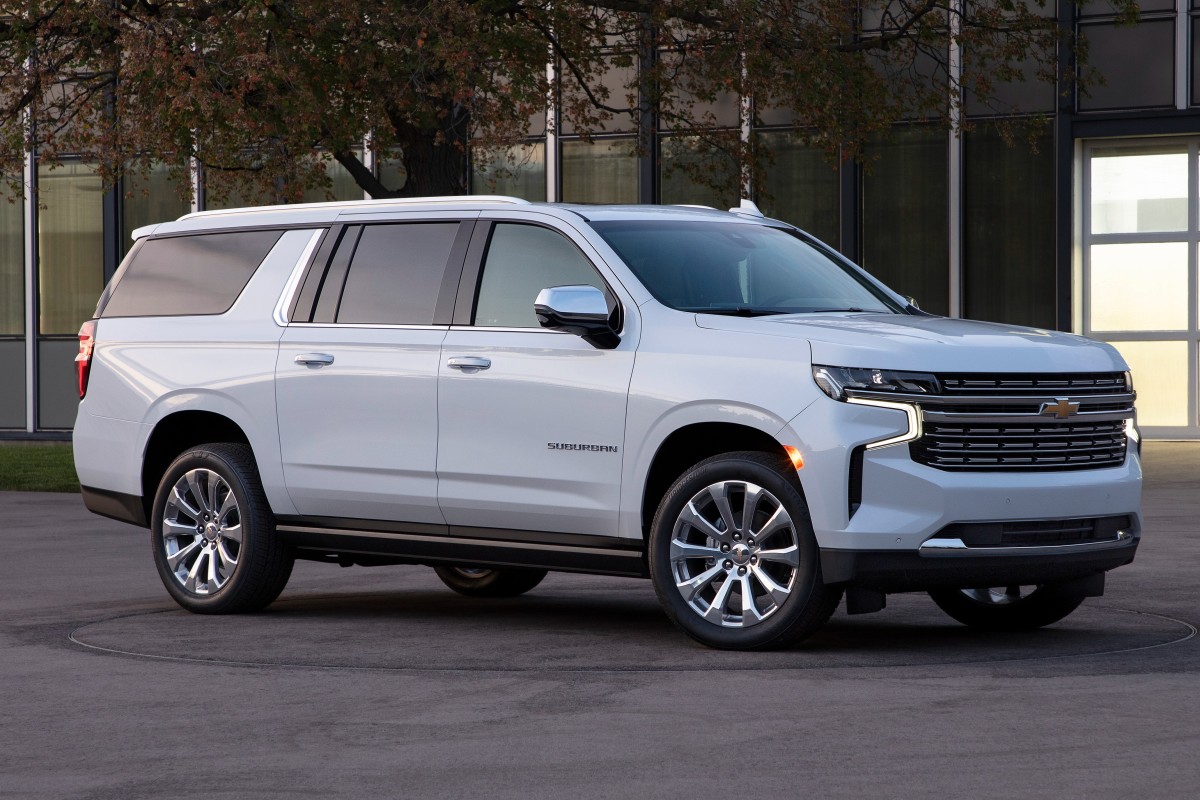
2024 Chevrolet Suburban Reviews SummaryFor most families, the smart vehicle choice is either a minivan or a three-row crossover—something big but built on a car platform, like the Toyota Highlander or the Kia Telluride. But for families that are both big and enjoy big hobbies (think boats and horses), there’s no replacement for a body-on-frame hauler like the Chevrolet Suburban. Verdict: The Suburban has long been a truck re-fitted to haul people, but its 2021 redesign introduced an independent rear suspension that resulted in more usable third-row space than ever before. Now, three years later, the 2024 Chevrolet Suburban still thrives as a capable and capacious family truckster, and it's a genuinely great option for anyone that needs its special blend of practicality. | |
2025 Hyundai Ioniq 5 Reviews Summary | |
No video found | |
Popular Features & Specs | |
Engine5.3L 355 hp V8 | Engine168 hp Electric |
Drivetrain4X2 | DrivetrainRWD |
Seating Capacity9 | Seating Capacity5 |
Horsepower355 hp @ 5600 rpm | Horsepower |
EV Battery Capacity | EV Battery Capacity63 kWh |
MPG City15 | MPG City131 |
MPG Highway20 | MPG Highway100 |
Battery Charge Time (120V) | Battery Charge Time (120V)54 hours |
Battery Charge Time (240V) | Battery Charge Time (240V)5.7 hours |
Engine | |
Engine Name5.3L 355 hp V8 | Engine Name168 hp Electric |
Torque383 lb-ft @ 4100 rpm | Torque |
Horsepower355 hp @ 5600 rpm | Horsepower |
Battery Charge Time (120V) | Battery Charge Time (120V)54 hours |
Battery Charge Time (240V) | Battery Charge Time (240V)5.7 hours |
Drivetrain4X2 | DrivetrainRWD |
Fuel Economy | |
EV Battery Capacity | EV Battery Capacity63 kWh |
MPG City15 | MPG City131 |
MPG Highway20 | MPG Highway100 |
Interior | |
Seating Capacity9 | Seating Capacity5 |
Key Features | |
Navigation System | Navigation SystemStandard |
Safety | |
Front Crash Overall4 | Front Crash Overall |
Side Crash Overall5 | Side Crash Overall |
Dimensions & Capacity | |
Cargo Space41.5 cu ft | Cargo Space26.3 cu ft |
Curb Weight5616 lbs | Curb Weight4144 lbs |
Height75.7 in | Height63.0 in |
Length225.7 in | Length183.3 in |
Width81.1 in | Width74.4 in |
Wheelbase134.1 in | Wheelbase118.1 in |
Maximum Payload1750 lbs | Maximum Payload1081 lbs |
Number of doors4 | Number of doors4 |
Maximum Towing Capacity8300 lbs | Maximum Towing Capacity |
Standard Towing Capacity7800 lbs | Standard Towing Capacity |
Overview | ||
MSRP | $57,600 | $42,600 |
Listings | ||
Ratings & Reviews | ||
User reviews | ||
Expert reviews | 7.5 out of 10Read full review | |
Pros & cons | Pros
Cons
| |
Summary | For most families, the smart vehicle choice is either a minivan or a three-row crossover—something big but built on a car platform, like the Toyota Highlander or the Kia Telluride. But for families that are both big and enjoy big hobbies (think boats and horses), there’s no replacement for a body-on-frame hauler like the Chevrolet Suburban. Verdict: The Suburban has long been a truck re-fitted to haul people, but its 2021 redesign introduced an independent rear suspension that resulted in more usable third-row space than ever before. Now, three years later, the 2024 Chevrolet Suburban still thrives as a capable and capacious family truckster, and it's a genuinely great option for anyone that needs its special blend of practicality. | |
Video | No video found | |
Popular Features & Specs | ||
Engine | 5.3L 355 hp V8 | 168 hp Electric |
Drivetrain | 4X2 | RWD |
Seating Capacity | 9 | 5 |
Horsepower | 355 hp @ 5600 rpm | |
EV Battery Capacity | 63 kWh | |
MPG City | 15 | 131 |
MPG Highway | 20 | 100 |
Battery Charge Time (120V) | 54 hours | |
Battery Charge Time (240V) | 5.7 hours | |
Engine | ||
Engine Name | 5.3L 355 hp V8 | 168 hp Electric |
Torque | 383 lb-ft @ 4100 rpm | |
Horsepower | 355 hp @ 5600 rpm | |
Battery Charge Time (120V) | 54 hours | |
Battery Charge Time (240V) | 5.7 hours | |
Drivetrain | 4X2 | RWD |
Fuel Economy | ||
EV Battery Capacity | 63 kWh | |
MPG City | 15 | 131 |
MPG Highway | 20 | 100 |
Interior | ||
Seating Capacity | 9 | 5 |
Key Features | ||
Navigation System | Standard | |
Safety | ||
Front Crash Overall | 4 | |
Side Crash Overall | 5 | |
Dimensions & Capacity | ||
Cargo Space | 41.5 cu ft | 26.3 cu ft |
Curb Weight | 5616 lbs | 4144 lbs |
Height | 75.7 in | 63.0 in |
Length | 225.7 in | 183.3 in |
Width | 81.1 in | 74.4 in |
Wheelbase | 134.1 in | 118.1 in |
Maximum Payload | 1750 lbs | 1081 lbs |
Number of doors | 4 | 4 |
Maximum Towing Capacity | 8300 lbs | |
Standard Towing Capacity | 7800 lbs | |


By: CarGurus + AI
At CarGurus, our team of experienced automotive writers remain at the heart of our content operation, conducting hands-on car tests and writing insightful guides that are backed by years of industry experience. To complement this, we are harnessing AI to make our content offering more diverse and more helpful to shoppers than ever. To achieve this, our AI systems are based exclusively on CarGurus content, ratings and data, so that what we produce is both unique to CarGurus, and uniquely helpful to car shoppers.
