2025 Hyundai IONIQ 5 vs 2025 Toyota Sequoia
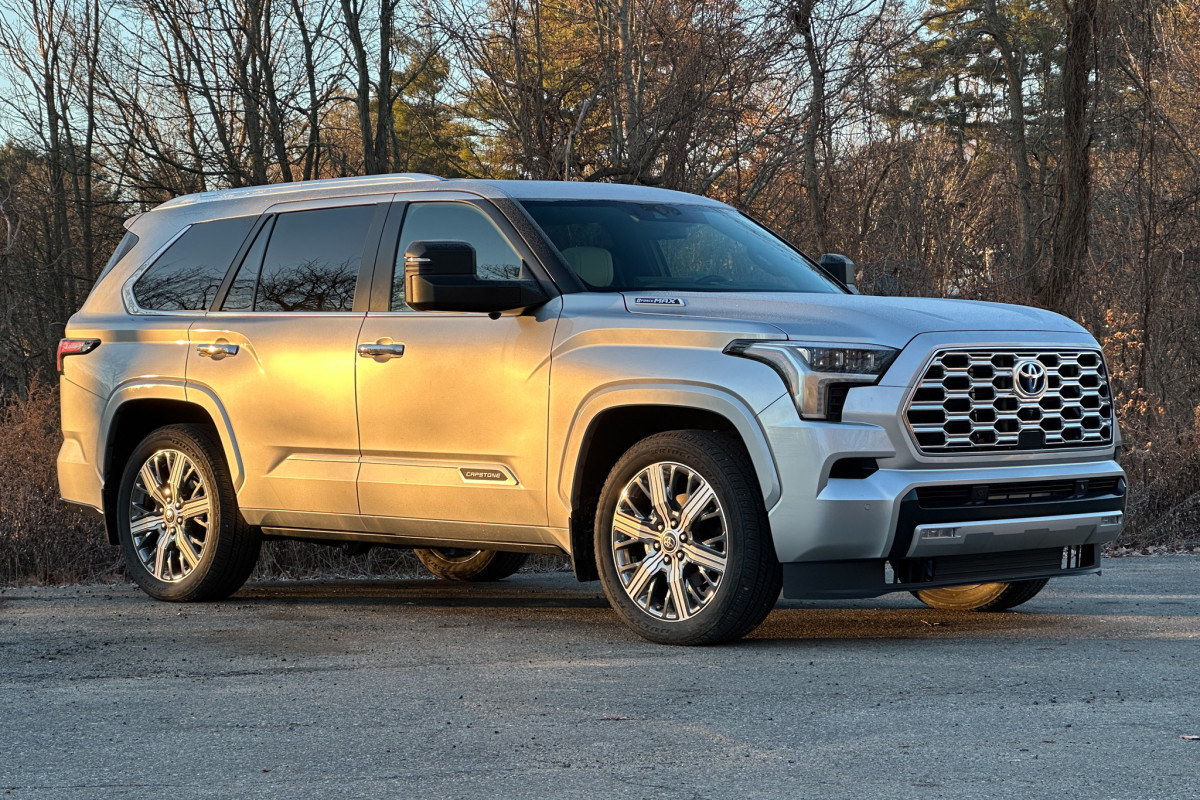

Overview | |
Listings11 | Listings8 |
Ratings & Reviews | |
User Reviews | User Reviews |
Expert reviews5.5 out of 10 | Expert reviews |
Pros
Cons
| |
2025 Toyota Sequoia Reviews SummaryThe 2025 Sequoia is Toyota’s full-size SUV, based on the same platform as the Tundra pickup truck and using the same i-Force Max hybrid powertrain. It seats up to eight people, holds up to 2,460 litres of cargo, carries up to 640 kilograms (1,411 pounds) of payload, and tows up to 4,080 kilograms (9,000 pounds) of trailer. But the Toyota Sequoia comes with some fundamental flaws. Verdict: People buy full-size SUVs to carry lots of people, haul lots of cargo, and tow lots of weight. However, due to its packaging requirements, the Sequoia is a rock star only if you’re attaching a trailer to it, and even then, it’s not class-leading in capability. | |
2025 Hyundai IONIQ 5 Reviews Summary | |
No video found | No video found |
Popular Features & Specs | |
Engine3.4L 437 hp V6 Hybrid | Engine168 hp Electric |
Drivetrain4X2 | DrivetrainRWD |
Seating Capacity8 | Seating Capacity5 |
Horsepower437 hp @ 5200 rpm | Horsepower |
EV Battery Capacity1.9 kWh | EV Battery Capacity63 kWh |
Fuel Economy (City)11.2 L(e)/100 km | Fuel Economy (City)1.8 L(e)/100 km |
Fuel Economy (Highway)9.8 L(e)/100 km | Fuel Economy (Highway)2.4 L(e)/100 km |
Battery Charge Time (120V) | Battery Charge Time (120V)54 hours |
Battery Charge Time (240V) | Battery Charge Time (240V)5.7 hours |
Engine | |
Engine Name3.4L 437 hp V6 Hybrid | Engine Name168 hp Electric |
Torque583 lb-ft @ 2400 rpm | Torque |
Horsepower437 hp @ 5200 rpm | Horsepower |
Battery Charge Time (120V) | Battery Charge Time (120V)54 hours |
Battery Charge Time (240V) | Battery Charge Time (240V)5.7 hours |
Drivetrain4X2 | DrivetrainRWD |
Fuel Economy | |
EV Battery Capacity1.9 kWh | EV Battery Capacity63 kWh |
Fuel Economy (City)11.2 L(e)/100 km | Fuel Economy (City)1.8 L(e)/100 km |
Fuel Economy (Highway)9.8 L(e)/100 km | Fuel Economy (Highway)2.4 L(e)/100 km |
Interior | |
Seating Capacity8 | Seating Capacity5 |
Key Features | |
Navigation System | Navigation SystemStandard |
Sunroof/MoonroofStandard | Sunroof/Moonroof |
Dimensions & Capacity | |
Cargo Space631 L | Cargo Space745 L |
Curb Weight2549 kg | Curb Weight1880 kg |
Height1892 mm | Height1600 mm |
Length5286 mm | Length4656 mm |
Width2027 mm | Width1890 mm |
Wheelbase3099 mm | Wheelbase3000 mm |
Maximum Payload785 kg | Maximum Payload490 kg |
Number of doors4 | Number of doors4 |
Maximum Towing Capacity4318 kg | Maximum Towing Capacity |
Standard Towing Capacity4318 kg | Standard Towing Capacity |
Overview | ||
Listings | ||
Ratings & Reviews | ||
User reviews | ||
Expert reviews | 5.5 out of 10Read full review | |
Pros & cons | Pros
Cons
| |
Summary | The 2025 Sequoia is Toyota’s full-size SUV, based on the same platform as the Tundra pickup truck and using the same i-Force Max hybrid powertrain. It seats up to eight people, holds up to 2,460 litres of cargo, carries up to 640 kilograms (1,411 pounds) of payload, and tows up to 4,080 kilograms (9,000 pounds) of trailer. But the Toyota Sequoia comes with some fundamental flaws. Verdict: People buy full-size SUVs to carry lots of people, haul lots of cargo, and tow lots of weight. However, due to its packaging requirements, the Sequoia is a rock star only if you’re attaching a trailer to it, and even then, it’s not class-leading in capability. | |
Video | No video found | No video found |
Popular Features & Specs | ||
Engine | 3.4L 437 hp V6 Hybrid | 168 hp Electric |
Drivetrain | 4X2 | RWD |
Seating Capacity | 8 | 5 |
Horsepower | 437 hp @ 5200 rpm | |
EV Battery Capacity | 1.9 kWh | 63 kWh |
Fuel Economy (City) | 11.2 L(e)/100 km | 1.8 L(e)/100 km |
Fuel Economy (Highway) | 9.8 L(e)/100 km | 2.4 L(e)/100 km |
Battery Charge Time (120V) | 54 hours | |
Battery Charge Time (240V) | 5.7 hours | |
Engine | ||
Engine Name | 3.4L 437 hp V6 Hybrid | 168 hp Electric |
Torque | 583 lb-ft @ 2400 rpm | |
Horsepower | 437 hp @ 5200 rpm | |
Battery Charge Time (120V) | 54 hours | |
Battery Charge Time (240V) | 5.7 hours | |
Drivetrain | 4X2 | RWD |
Fuel Economy | ||
EV Battery Capacity | 1.9 kWh | 63 kWh |
Fuel Economy (City) | 11.2 L(e)/100 km | 1.8 L(e)/100 km |
Fuel Economy (Highway) | 9.8 L(e)/100 km | 2.4 L(e)/100 km |
Interior | ||
Seating Capacity | 8 | 5 |
Key Features | ||
Navigation System | Standard | |
Sunroof/Moonroof | Standard | |
Dimensions & Capacity | ||
Cargo Space | 631 L | 745 L |
Curb Weight | 2549 kg | 1880 kg |
Height | 1892 mm | 1600 mm |
Length | 5286 mm | 4656 mm |
Width | 2027 mm | 1890 mm |
Wheelbase | 3099 mm | 3000 mm |
Maximum Payload | 785 kg | 490 kg |
Number of doors | 4 | 4 |
Maximum Towing Capacity | 4318 kg | |
Standard Towing Capacity | 4318 kg | |
2025 Hyundai IONIQ 5 for Sale


2025 Toyota Sequoia for Sale


By: CarGurus + AI
At CarGurus, our team of experienced automotive writers remain at the heart of our content operation, conducting hands-on car tests and writing insightful guides that are backed by years of industry experience. To complement this, we are harnessing AI to make our content offering more diverse and more helpful to shoppers than ever. To achieve this, our AI systems are based exclusively on CarGurus content, ratings and data, so that what we produce is both unique to CarGurus, and uniquely helpful to car shoppers.
