2025 Ford Explorer vs 2025 Toyota Sequoia
Overview | |
Listings197 | Listings11 |
Ratings & Reviews | |
User Reviews | User Reviews |
Expert reviews8.0 out of 10 | Expert reviews5.5 out of 10 |
Pros
Cons
| Pros
Cons
|
2025 Ford Explorer Reviews SummaryThanks to numerous changes for 2025, the Ford Explorer is a more appealing alternative to the seemingly countless choices in the midsize three-row SUV segment. Highlights include sophisticated new infotainment and safety technologies, improved interior quality, bolder styling, and a simplified lineup offering Active, ST-Line, Platinum, and ST trim levels. Also, as the prices of rivals have risen, the 2025 Ford Explorer seems properly priced in comparison. Verdict: Ford’s updates to the Explorer for the 2025 model year have a positive effect on the SUV’s desirability. It looks tougher, it feels nicer inside, and the family-friendly SUV leaps forward technologically. Turbocharged power and a rear-drive platform add driving enjoyment. All that’s missing is a more comfortable third-row seat, an electrified powertrain option, and an off-road trim level. | |
2025 Toyota Sequoia Reviews SummaryThe 2025 Sequoia is Toyota’s full-size SUV, based on the same platform as the Tundra pickup truck and using the same i-Force Max hybrid powertrain. It seats up to eight people, holds up to 2,460 litres of cargo, carries up to 640 kilograms (1,411 pounds) of payload, and tows up to 4,080 kilograms (9,000 pounds) of trailer. But the Toyota Sequoia comes with some fundamental flaws. Verdict: People buy full-size SUVs to carry lots of people, haul lots of cargo, and tow lots of weight. However, due to its packaging requirements, the Sequoia is a rock star only if you’re attaching a trailer to it, and even then, it’s not class-leading in capability. | |
No video found | |
Popular Features & Specs | |
Engine2.3L 300 hp I4 | Engine3.4L 437 hp V6 Hybrid |
DrivetrainRWD | Drivetrain4X2 |
Seating Capacity7 | Seating Capacity8 |
Horsepower300 hp @ 5500 rpm | Horsepower437 hp @ 5200 rpm |
EV Battery Capacity | EV Battery Capacity1.9 kWh |
Fuel Economy (City)11.8 L(e)/100 km | Fuel Economy (City)11.2 L(e)/100 km |
Fuel Economy (Highway)8.1 L(e)/100 km | Fuel Economy (Highway)9.8 L(e)/100 km |
Engine | |
Engine Name2.3L 300 hp I4 | Engine Name3.4L 437 hp V6 Hybrid |
Torque310 lb-ft @ 3500 rpm | Torque583 lb-ft @ 2400 rpm |
Horsepower300 hp @ 5500 rpm | Horsepower437 hp @ 5200 rpm |
DrivetrainRWD | Drivetrain4X2 |
Fuel Economy | |
EV Battery Capacity | EV Battery Capacity1.9 kWh |
Fuel Economy (City)11.8 L(e)/100 km | Fuel Economy (City)11.2 L(e)/100 km |
Fuel Economy (Highway)8.1 L(e)/100 km | Fuel Economy (Highway)9.8 L(e)/100 km |
Interior | |
Seating Capacity7 | Seating Capacity8 |
Key Features | |
Navigation SystemStandard | Navigation System |
Sunroof/Moonroof | Sunroof/MoonroofStandard |
Safety | |
Front Crash Overall5 | Front Crash Overall |
Side Crash Overall5 | Side Crash Overall |
Dimensions & Capacity | |
Cargo Space462 L | Cargo Space631 L |
Curb Weight1952 kg | Curb Weight2549 kg |
Height1768 mm | Height1892 mm |
Length5047 mm | Length5286 mm |
Width2268 mm | Width2027 mm |
Wheelbase3025 mm | Wheelbase3099 mm |
Maximum Payload665 kg | Maximum Payload785 kg |
Number of doors4 | Number of doors4 |
Maximum Towing Capacity2268 kg | Maximum Towing Capacity4318 kg |
Standard Towing Capacity2268 kg | Standard Towing Capacity4318 kg |
Overview | ||
Listings | ||
Ratings & Reviews | ||
User reviews | ||
Expert reviews | 8.0 out of 10Read full review | 5.5 out of 10Read full review |
Pros & cons | Pros
Cons
| Pros
Cons
|
Summary | Thanks to numerous changes for 2025, the Ford Explorer is a more appealing alternative to the seemingly countless choices in the midsize three-row SUV segment. Highlights include sophisticated new infotainment and safety technologies, improved interior quality, bolder styling, and a simplified lineup offering Active, ST-Line, Platinum, and ST trim levels. Also, as the prices of rivals have risen, the 2025 Ford Explorer seems properly priced in comparison. Verdict: Ford’s updates to the Explorer for the 2025 model year have a positive effect on the SUV’s desirability. It looks tougher, it feels nicer inside, and the family-friendly SUV leaps forward technologically. Turbocharged power and a rear-drive platform add driving enjoyment. All that’s missing is a more comfortable third-row seat, an electrified powertrain option, and an off-road trim level. | The 2025 Sequoia is Toyota’s full-size SUV, based on the same platform as the Tundra pickup truck and using the same i-Force Max hybrid powertrain. It seats up to eight people, holds up to 2,460 litres of cargo, carries up to 640 kilograms (1,411 pounds) of payload, and tows up to 4,080 kilograms (9,000 pounds) of trailer. But the Toyota Sequoia comes with some fundamental flaws. Verdict: People buy full-size SUVs to carry lots of people, haul lots of cargo, and tow lots of weight. However, due to its packaging requirements, the Sequoia is a rock star only if you’re attaching a trailer to it, and even then, it’s not class-leading in capability. |
Video | No video found | |
Popular Features & Specs | ||
Engine | 2.3L 300 hp I4 | 3.4L 437 hp V6 Hybrid |
Drivetrain | RWD | 4X2 |
Seating Capacity | 7 | 8 |
Horsepower | 300 hp @ 5500 rpm | 437 hp @ 5200 rpm |
EV Battery Capacity | 1.9 kWh | |
Fuel Economy (City) | 11.8 L(e)/100 km | 11.2 L(e)/100 km |
Fuel Economy (Highway) | 8.1 L(e)/100 km | 9.8 L(e)/100 km |
Engine | ||
Engine Name | 2.3L 300 hp I4 | 3.4L 437 hp V6 Hybrid |
Torque | 310 lb-ft @ 3500 rpm | 583 lb-ft @ 2400 rpm |
Horsepower | 300 hp @ 5500 rpm | 437 hp @ 5200 rpm |
Drivetrain | RWD | 4X2 |
Fuel Economy | ||
EV Battery Capacity | 1.9 kWh | |
Fuel Economy (City) | 11.8 L(e)/100 km | 11.2 L(e)/100 km |
Fuel Economy (Highway) | 8.1 L(e)/100 km | 9.8 L(e)/100 km |
Interior | ||
Seating Capacity | 7 | 8 |
Key Features | ||
Navigation System | Standard | |
Sunroof/Moonroof | Standard | |
Safety | ||
Front Crash Overall | 5 | |
Side Crash Overall | 5 | |
Dimensions & Capacity | ||
Cargo Space | 462 L | 631 L |
Curb Weight | 1952 kg | 2549 kg |
Height | 1768 mm | 1892 mm |
Length | 5047 mm | 5286 mm |
Width | 2268 mm | 2027 mm |
Wheelbase | 3025 mm | 3099 mm |
Maximum Payload | 665 kg | 785 kg |
Number of doors | 4 | 4 |
Maximum Towing Capacity | 2268 kg | 4318 kg |
Standard Towing Capacity | 2268 kg | 4318 kg |
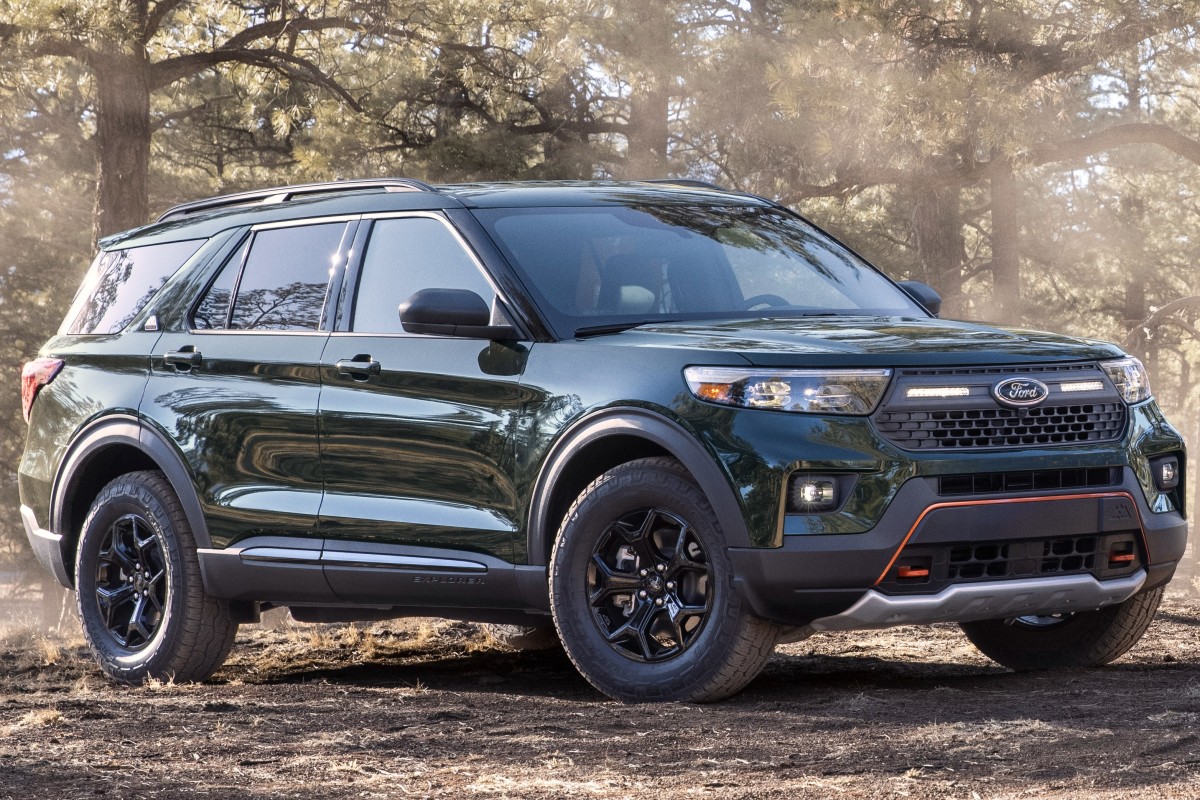
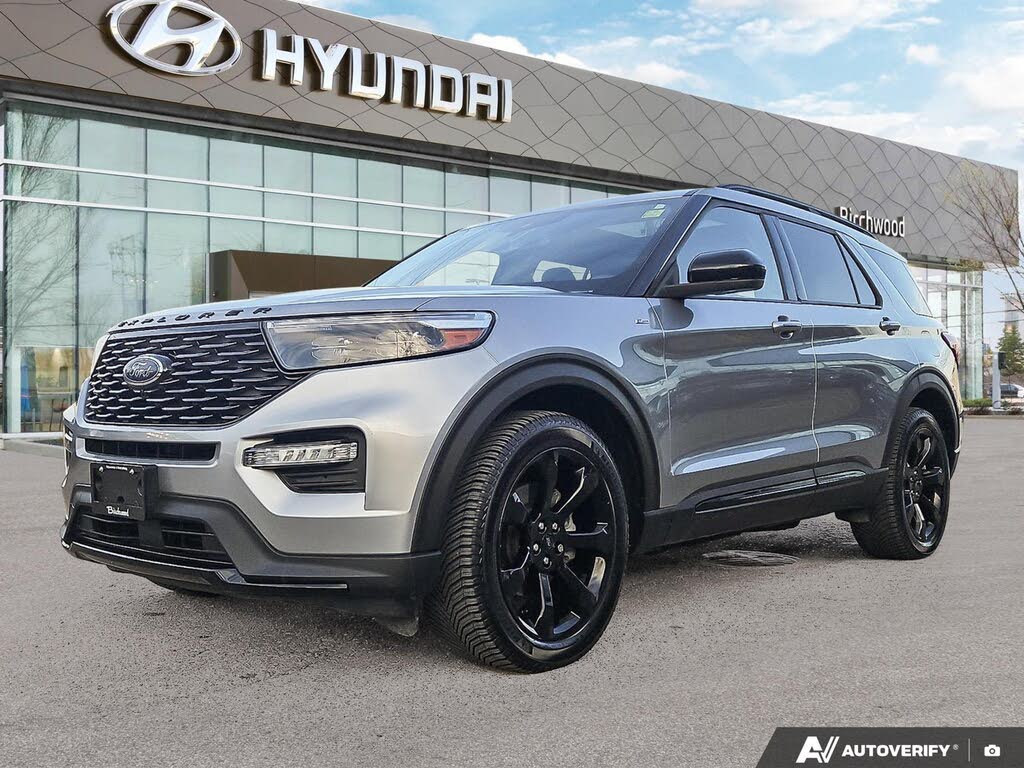
The 2025 Ford Explorer continued to build on its previous redesign, which had shifted the SUV from a front-wheel-drive to a rear-wheel-drive platform. This change had already given the Explorer a more balanced and sleek appearance, and the 2025 refresh further enhanced its aesthetic appeal. The front end was restyled to appear wider and more ruggedly handsome, while new LED taillights and a strip of trim connecting them added a modern touch. Inside, the Explorer saw significant improvements in terms of materials and design, making it more competitive in its segment. The trim levels were streamlined to four, with prices ranging from $52,830 to $71,430, including destination charges.
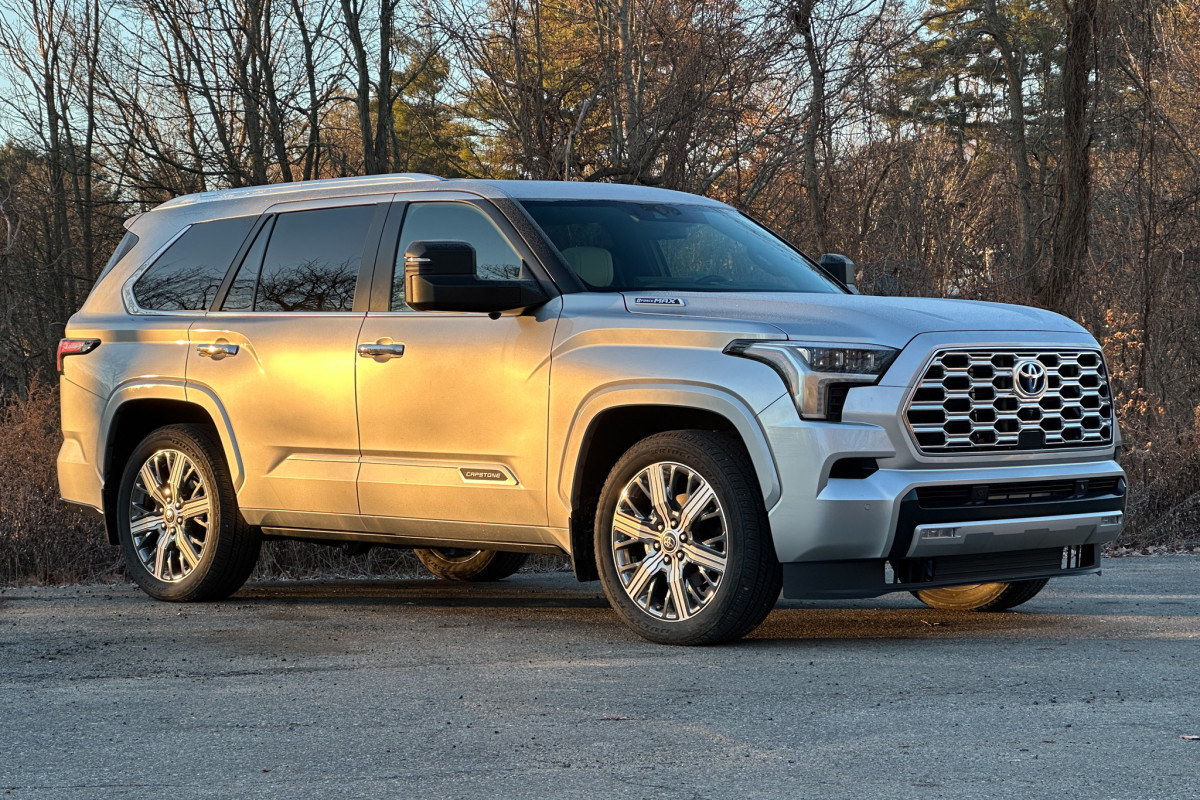
In contrast, the 2025 Toyota Sequoia, particularly in its 1794 Edition, offered a distinct look with dark grey painted wheels and less chrome. The Canadian lineup included trims like the SR5 TRD Off-road and the luxurious Capstone, with prices from $87,174 to $106,175. The Sequoia's exterior, especially in Lunar Rock paint, drew attention despite its familiarity on the road. However, the interior was a mix of premium leather and typical Toyota-grade plastic, which was less impressive. The Sequoia's design choices, such as the solid rear axle, affected interior space and driving dynamics, making it less comfortable for passengers, especially in the third row.
The 2025 Ford Explorer offered two EcoBoost engine options. Most trims came with a turbocharged 2.3-litre four-cylinder engine producing 300 horsepower and 310 pound-feet of torque. The performance-oriented ST trim featured a twin-turbocharged 3.0-litre V6 engine, delivering 400 horsepower and 415 pound-feet of torque. All Canadian Explorers were equipped with a 10-speed automatic transmission and all-wheel drive. The Explorer's fuel economy ratings were competitive, with the base engine achieving 11.9 L/100 km in the city and 8.7 on the highway. The V6 engine, while more powerful, had slightly higher consumption figures. The Explorer's driving modes and responsive handling made it a versatile choice for various driving conditions.
The 2025 Toyota Sequoia came standard with an i-Force Max hybrid powertrain, combining a twin-turbocharged 3.4-litre V6 engine with an electric motor. This setup produced an impressive 437 horsepower and 583 pound-feet of torque. Despite its muscular performance, the Sequoia's fuel economy was disappointing, averaging 14.5 L/100 km during testing, higher than the expected 11.7 L/100 km. The Sequoia excelled in towing capacity, with a maximum of 4,137 kilograms, but its driving dynamics were compromised by the rear-mounted battery pack and solid rear axle. The ride was jittery, and the steering, while light, lacked feedback. The brakes also left much to be desired, with poor initial bite and fade issues during testing.
The 2025 Ford Explorer offered seating for six in its standard configuration, with an optional second-row bench seat increasing capacity to seven. The interior was comfortable, with heated front seats and a heated steering wheel in the ST-Line trim. The Explorer's cargo space was competitive, with 461 litres behind the third row and a maximum of 2,429 litres with all seats folded. The third row was less comfortable for adults, but overall, the Explorer provided a practical and spacious interior.
The 2025 Toyota Sequoia could accommodate up to eight passengers, but the third row was best suited for shorter individuals. The Platinum and Capstone trims featured comfortable heated and ventilated captain's chairs in the second row. However, the high floor and low roof made accessing the third row awkward for adults. Cargo space was limited, with only 325 litres behind the third row and a maximum of 2,460 litres with all seats folded. The Sequoia's interior space was less generous compared to rivals, and the high floor affected passenger comfort.
The 2025 Ford Explorer featured a 12.3-inch digital instrumentation panel and a new 13.2-inch touchscreen infotainment system called Ford Digital Experience. This system included Google Built-in, Amazon Alexa, wireless Apple CarPlay, and Android Auto. The Explorer's infotainment was user-friendly, with Google Maps integration and a range of apps available through Google Play. The B&O sound systems offered varying levels of audio quality, with the Platinum and ST trims providing a superior experience.
The 2025 Toyota Sequoia came with a 12.3-inch digital instrumentation panel and a 14-inch touchscreen infotainment system starting at the Limited trim. The Toyota Audio Multimedia system offered features like cloud-based navigation and voice recognition, but many required active subscriptions. Wireless Apple CarPlay and Android Auto were standard, and a 14-speaker JBL sound system was available on higher trims. The system's usability was hindered by the lack of a tuning knob, and the voice recognition system had limitations in executing certain commands.
The 2025 Ford Explorer was equipped with Ford CoPilot 360 Assist+, which included adaptive cruise control, lane-centring assist, and other advanced driving assistance systems. The ST-Line trim and above featured BlueCruise, Ford's hands-free highway driving system. While BlueCruise performed well in testing, it occasionally struggled with lane changes near large trucks. The Explorer had not been fully rated by the NHTSA, but it received favourable crash test results from the IIHS, except for the headlights on some trims.
The 2025 Toyota Sequoia came with Toyota Safety Sense 2.5, offering adaptive cruise control, forward collision warning, and other essential safety features. However, the lane assist features were often intrusive, causing false warnings and noticeable steering corrections. Neither the IIHS nor the NHTSA had released crash-test ratings for the Sequoia at the time of publication.
CarGurus highlights
According to CarGurus experts, the overall rating for the 2025 Ford Explorer is 8.0 out of 10, while the 2025 Toyota Sequoia scores 5.5 out of 10. Based on these ratings, the Ford Explorer is the recommended choice, offering a better balance of design, performance, and technology.
Choose the 2025 Ford Explorer if:
- You value a sleek design with a comfortable and spacious interior.
- You want a versatile SUV with competitive fuel economy and responsive handling.
- You prefer user-friendly technology with Google integration and a range of infotainment options.




Choose the 2025 Toyota Sequoia if:
- You need a powerful hybrid powertrain with impressive towing capacity.
- You prioritize a full-size SUV with seating for up to eight passengers.
- You appreciate Toyota's reputation for reliability and safety features.


CarGurus highlights
According to CarGurus experts, the overall rating for the 2025 Ford Explorer is 8.0 out of 10, while the 2025 Toyota Sequoia scores 5.5 out of 10. Based on these ratings, the Ford Explorer is the recommended choice, offering a better balance of design, performance, and technology.
Choose the 2025 Ford Explorer if:
Shop Now- You value a sleek design with a comfortable and spacious interior.
- You want a versatile SUV with competitive fuel economy and responsive handling.
- You prefer user-friendly technology with Google integration and a range of infotainment options.
Choose the 2025 Toyota Sequoia if:
Shop Now- You need a powerful hybrid powertrain with impressive towing capacity.
- You prioritize a full-size SUV with seating for up to eight passengers.
- You appreciate Toyota's reputation for reliability and safety features.

By: CarGurus + AI
At CarGurus, our team of experienced automotive writers remain at the heart of our content operation, conducting hands-on car tests and writing insightful guides that are backed by years of industry experience. To complement this, we are harnessing AI to make our content offering more diverse and more helpful to shoppers than ever. To achieve this, our AI systems are based exclusively on CarGurus content, ratings and data, so that what we produce is both unique to CarGurus, and uniquely helpful to car shoppers.
