2024 Toyota 4Runner vs 2024 Hyundai Kona
Overview | |
Listings248 | Listings36 |
Ratings & Reviews | |
User Reviews | User Reviews |
Expert reviews8.3 out of 10 | Expert reviews4.5 out of 10 |
Pros
Cons
| Pros
Cons
|
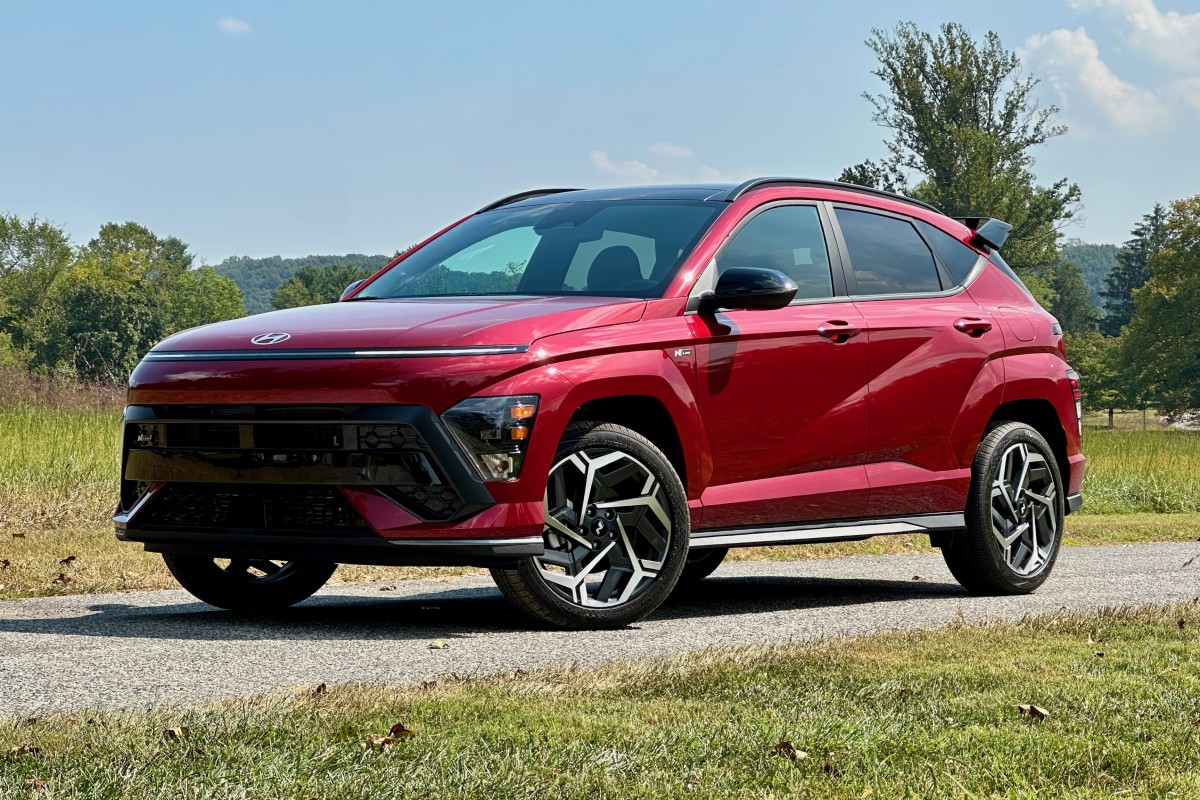
2024 Hyundai Kona Reviews SummaryThe Kona debuted for 2018 and got an electric counterpart when the Kona EV hit the market the following year. Hyundai's subcompact SUV got a refresh for 2022, which also saw the addition of the hot-hatch Kona N to the stable. Now, the Kona kicks off a whole new generation, with a new look, new tech, and, naturally, a new price tag to match. In a crowded segment, do the new features match–or perhaps even exceed–the added cost? | |
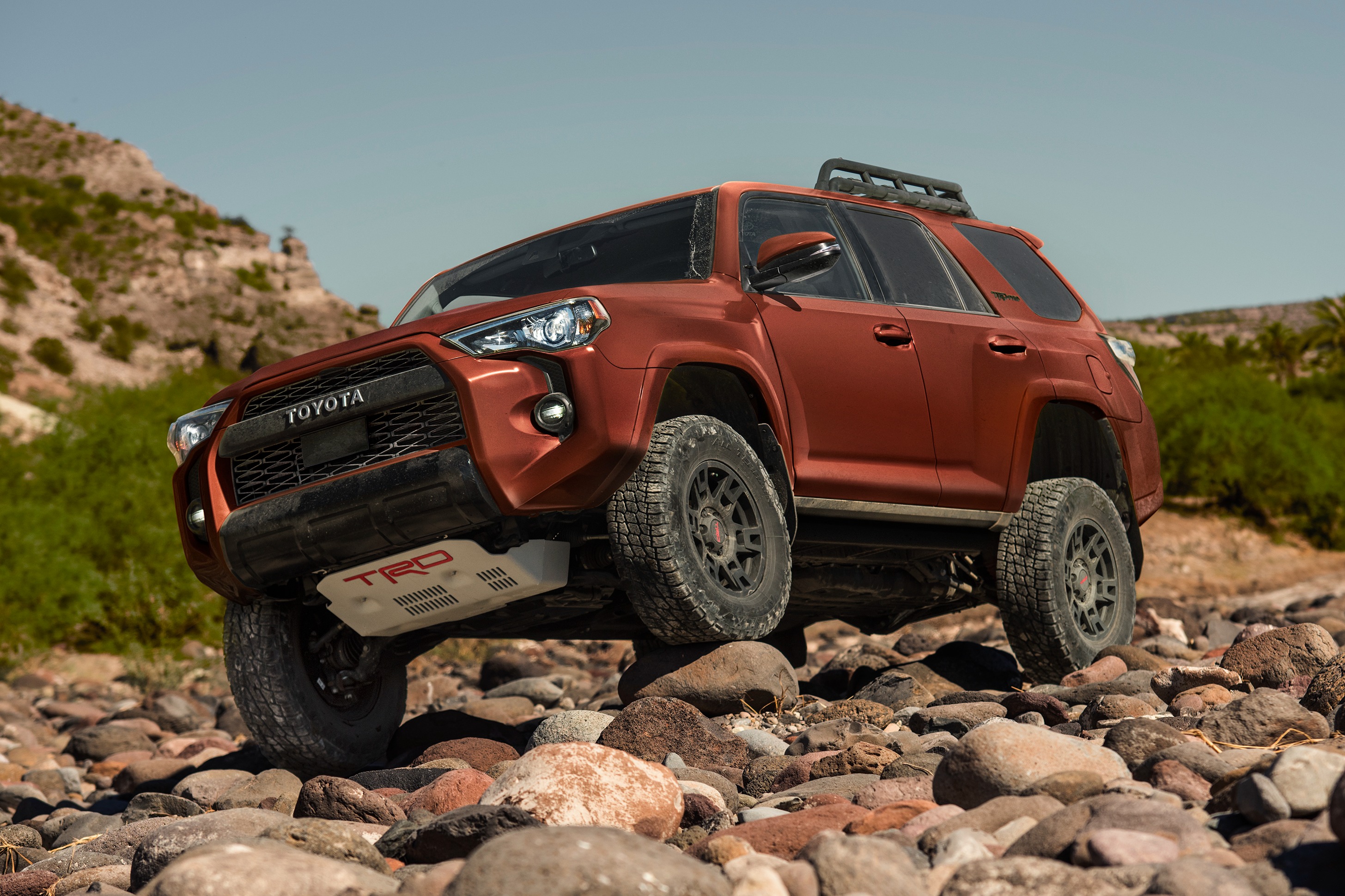
2024 Toyota 4Runner Reviews SummaryVerdict: The Toyota 4Runner remains an accomplished off-road-capable vehicle with a strong reputation for reliability and durability. A new 4Runner is expected, and the current model's aging platform is in desperate need of a full redesign. It trails newer rivals when it comes to technology, safety features, fuel efficiency, and power. The 2024 Toyota 4Runner would be easier to recommend if the price were significantly reduced. | |
Popular Features & Specs | |
Engine2.0L 147 hp I4 | Engine4.0L 270 hp V6 |
DrivetrainFWD | Drivetrain4X2 |
Seating Capacity5 | Seating Capacity7 |
Horsepower147 hp @ 6200 rpm | Horsepower270 hp @ 5600 rpm |
Fuel Economy (City)8.1 L(e)/100 km | Fuel Economy (City)14.7 L(e)/100 km |
Fuel Economy (Highway)6.9 L(e)/100 km | Fuel Economy (Highway)12.4 L(e)/100 km |
Engine | |
Engine Name2.0L 147 hp I4 | Engine Name4.0L 270 hp V6 |
Torque132 lb-ft @ 4500 rpm | Torque278 lb-ft @ 4400 rpm |
Horsepower147 hp @ 6200 rpm | Horsepower270 hp @ 5600 rpm |
DrivetrainFWD | Drivetrain4X2 |
Fuel Economy | |
Fuel Economy (City)8.1 L(e)/100 km | Fuel Economy (City)14.7 L(e)/100 km |
Fuel Economy (Highway)6.9 L(e)/100 km | Fuel Economy (Highway)12.4 L(e)/100 km |
Interior | |
Seating Capacity5 | Seating Capacity7 |
Key Features | |
Navigation SystemStandard | Navigation System |
Safety | |
Front Crash Overall4 | Front Crash Overall4 |
Side Crash Overall5 | Side Crash Overall5 |
Dimensions & Capacity | |
Cargo Space722 L | Cargo Space1337 L |
Curb Weight1363 kg | Curb Weight1996 kg |
Height1580 mm | Height1816 mm |
Length4351 mm | Length4831 mm |
Width1826 mm | Width1925 mm |
Wheelbase2659 mm | Wheelbase2789 mm |
Maximum Payload492 kg | Maximum Payload771 kg |
Number of doors4 | Number of doors4 |
Maximum Towing Capacity | Maximum Towing Capacity2268 kg |
Standard Towing Capacity | Standard Towing Capacity2268 kg |
Overview | ||
Listings | ||
Ratings & Reviews | ||
User reviews | ||
Expert reviews | 8.3 out of 10Read full review | 4.5 out of 10Read full review |
Pros & cons | Pros
Cons
| Pros
Cons
|
Summary | The Kona debuted for 2018 and got an electric counterpart when the Kona EV hit the market the following year. Hyundai's subcompact SUV got a refresh for 2022, which also saw the addition of the hot-hatch Kona N to the stable. Now, the Kona kicks off a whole new generation, with a new look, new tech, and, naturally, a new price tag to match. In a crowded segment, do the new features match–or perhaps even exceed–the added cost? | Verdict: The Toyota 4Runner remains an accomplished off-road-capable vehicle with a strong reputation for reliability and durability. A new 4Runner is expected, and the current model's aging platform is in desperate need of a full redesign. It trails newer rivals when it comes to technology, safety features, fuel efficiency, and power. The 2024 Toyota 4Runner would be easier to recommend if the price were significantly reduced. |
Video | ||
Popular Features & Specs | ||
Engine | 2.0L 147 hp I4 | 4.0L 270 hp V6 |
Drivetrain | FWD | 4X2 |
Seating Capacity | 5 | 7 |
Horsepower | 147 hp @ 6200 rpm | 270 hp @ 5600 rpm |
Fuel Economy (City) | 8.1 L(e)/100 km | 14.7 L(e)/100 km |
Fuel Economy (Highway) | 6.9 L(e)/100 km | 12.4 L(e)/100 km |
Engine | ||
Engine Name | 2.0L 147 hp I4 | 4.0L 270 hp V6 |
Torque | 132 lb-ft @ 4500 rpm | 278 lb-ft @ 4400 rpm |
Horsepower | 147 hp @ 6200 rpm | 270 hp @ 5600 rpm |
Drivetrain | FWD | 4X2 |
Fuel Economy | ||
Fuel Economy (City) | 8.1 L(e)/100 km | 14.7 L(e)/100 km |
Fuel Economy (Highway) | 6.9 L(e)/100 km | 12.4 L(e)/100 km |
Interior | ||
Seating Capacity | 5 | 7 |
Key Features | ||
Navigation System | Standard | |
Safety | ||
Front Crash Overall | 4 | 4 |
Side Crash Overall | 5 | 5 |
Dimensions & Capacity | ||
Cargo Space | 722 L | 1337 L |
Curb Weight | 1363 kg | 1996 kg |
Height | 1580 mm | 1816 mm |
Length | 4351 mm | 4831 mm |
Width | 1826 mm | 1925 mm |
Wheelbase | 2659 mm | 2789 mm |
Maximum Payload | 492 kg | 771 kg |
Number of doors | 4 | 4 |
Maximum Towing Capacity | 2268 kg | |
Standard Towing Capacity | 2268 kg | |
2024 Toyota 4Runner for Sale


2024 Hyundai Kona for Sale


By: CarGurus + AI
At CarGurus, our team of experienced automotive writers remain at the heart of our content operation, conducting hands-on car tests and writing insightful guides that are backed by years of industry experience. To complement this, we are harnessing AI to make our content offering more diverse and more helpful to shoppers than ever. To achieve this, our AI systems are based exclusively on CarGurus content, ratings and data, so that what we produce is both unique to CarGurus, and uniquely helpful to car shoppers.
