2025 Toyota 4Runner vs 2024 Jeep Wrangler 4xe
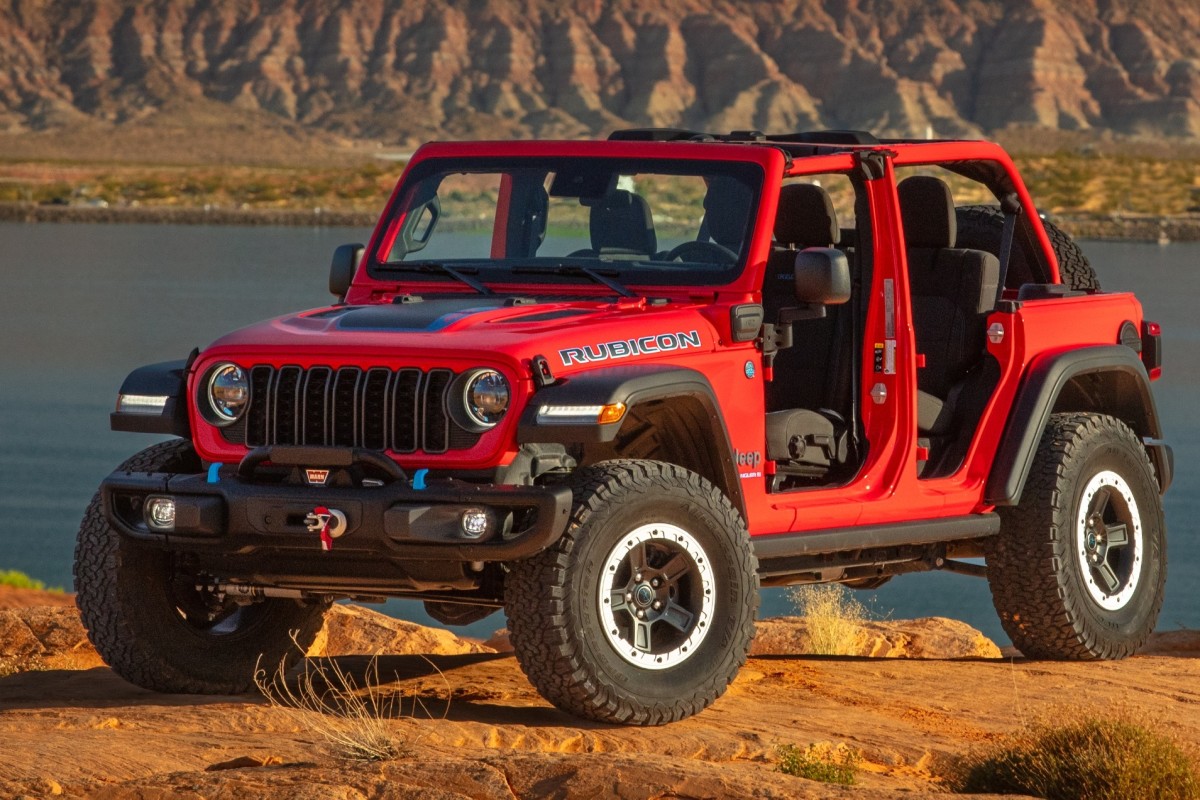
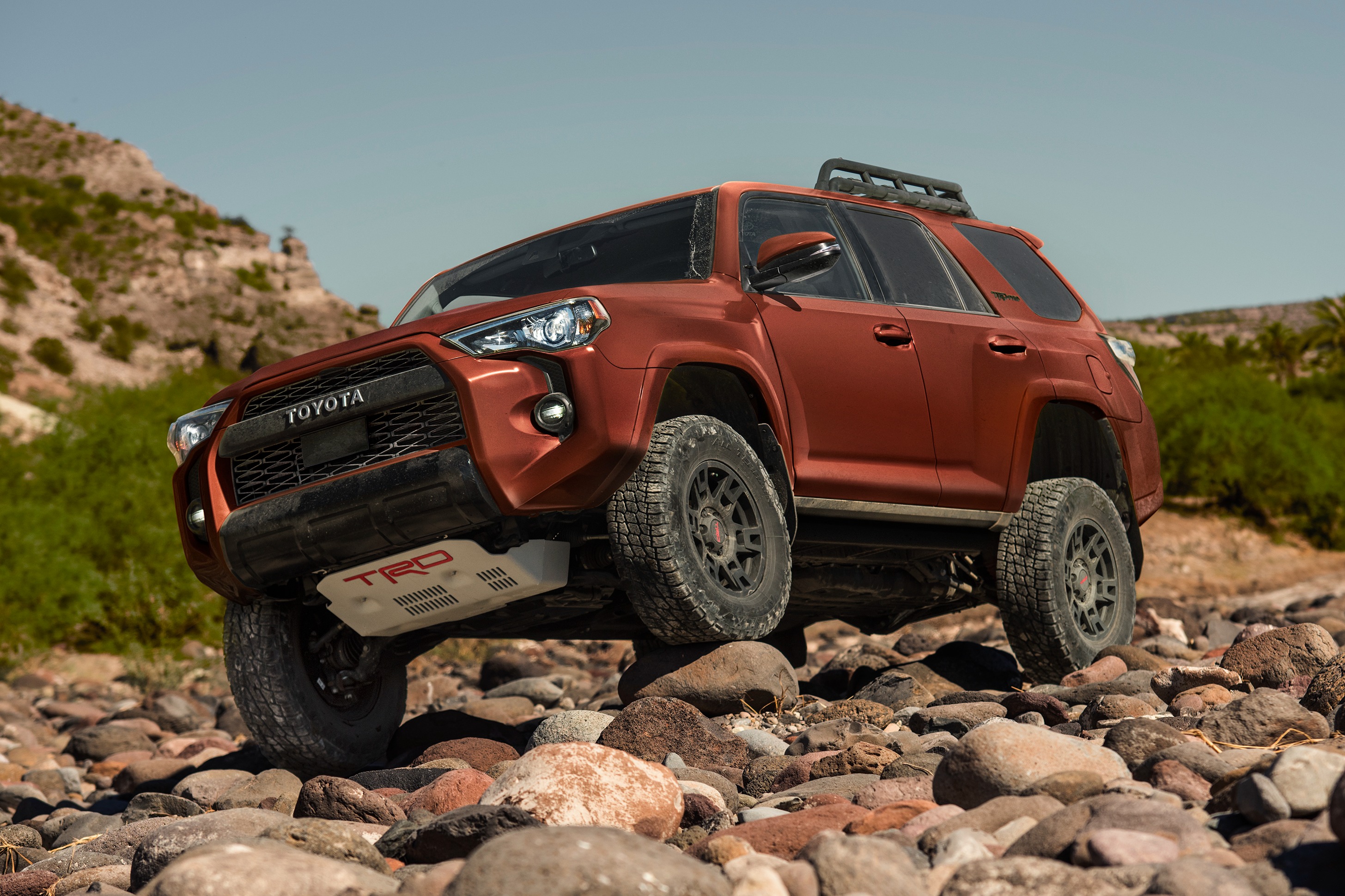
Overview | |
Listings110 | Listings63 |
Ratings & Reviews | |
User Reviews | User Reviews |
Expert reviews | Expert reviews7.7 out of 10 |
Pros
Cons
| |
2024 Jeep Wrangler 4xe Reviews Summary | |
2025 Toyota 4Runner Reviews SummaryAfter a very long 15 years, we’ve finally got a new Toyota 4Runner with more capabilities, power, comfort, and technology. It's also more efficient thanks to a new hybrid option and more composed on pavement, but it remains a solid all-terrain vehicle to extend your adventures further. Verdict: Toyota doesn't throw out the formula with its newly redesigned 4Runner. Instead, the 2025 model keeps many of the features shoppers have loved for over a decade, while also adding a more contemporary selection of four-cylinder powertrains. | |
No video found | |
Popular Features & Specs | |
Engine2.0L 375 hp I4 Hybrid | Engine2.4L 278 hp I4 |
Drivetrain4X4 | Drivetrain4X2 |
Seating Capacity5 | Seating Capacity7 |
Horsepower375 hp @ 5250 rpm | Horsepower278 hp @ 6000 rpm |
EV Battery Capacity17.3 kWh | EV Battery Capacity |
Fuel Economy (City)4.5 L(e)/100 km | Fuel Economy (City)11.8 L(e)/100 km |
Fuel Economy (Highway)5.2 L(e)/100 km | Fuel Economy (Highway)9.0 L(e)/100 km |
Battery Charge Time (120V)17.5 hours | Battery Charge Time (120V) |
Battery Charge Time (240V)2.5 hours | Battery Charge Time (240V) |
Engine | |
Engine Name2.0L 375 hp I4 Hybrid | Engine Name2.4L 278 hp I4 |
Torque470 lb-ft @ 3000 rpm | Torque317 lb-ft @ 1700 rpm |
Horsepower375 hp @ 5250 rpm | Horsepower278 hp @ 6000 rpm |
Battery Charge Time (120V)17.5 hours | Battery Charge Time (120V) |
Battery Charge Time (240V)2.5 hours | Battery Charge Time (240V) |
Drivetrain4X4 | Drivetrain4X2 |
Fuel Economy | |
EV Battery Capacity17.3 kWh | EV Battery Capacity |
Fuel Economy (City)4.5 L(e)/100 km | Fuel Economy (City)11.8 L(e)/100 km |
Fuel Economy (Highway)5.2 L(e)/100 km | Fuel Economy (Highway)9.0 L(e)/100 km |
Interior | |
Seating Capacity5 | Seating Capacity7 |
Safety | |
Front Crash Overall | Front Crash Overall4 |
Side Crash Overall | Side Crash Overall5 |
Dimensions & Capacity | |
Cargo Space784 L | Cargo Space1371 L |
Curb Weight2290 kg | Curb Weight2021 kg |
Height1867 mm | Height1844 mm |
Length4785 mm | Length4950 mm |
Width1877 mm | Width1981 mm |
Wheelbase3007 mm | Wheelbase2850 mm |
Maximum Payload634 kg | Maximum Payload406 kg |
Number of doors4 | Number of doors4 |
Maximum Towing Capacity1588 kg | Maximum Towing Capacity2722 kg |
Standard Towing Capacity | Standard Towing Capacity2722 kg |
Overview | ||
Listings | ||
Ratings & Reviews | ||
User reviews | ||
Expert reviews | 7.7 out of 10Read full review | |
Pros & cons | Pros
Cons
| |
Summary | After a very long 15 years, we’ve finally got a new Toyota 4Runner with more capabilities, power, comfort, and technology. It's also more efficient thanks to a new hybrid option and more composed on pavement, but it remains a solid all-terrain vehicle to extend your adventures further. Verdict: Toyota doesn't throw out the formula with its newly redesigned 4Runner. Instead, the 2025 model keeps many of the features shoppers have loved for over a decade, while also adding a more contemporary selection of four-cylinder powertrains. | |
Video | No video found | |
Popular Features & Specs | ||
Engine | 2.0L 375 hp I4 Hybrid | 2.4L 278 hp I4 |
Drivetrain | 4X4 | 4X2 |
Seating Capacity | 5 | 7 |
Horsepower | 375 hp @ 5250 rpm | 278 hp @ 6000 rpm |
EV Battery Capacity | 17.3 kWh | |
Fuel Economy (City) | 4.5 L(e)/100 km | 11.8 L(e)/100 km |
Fuel Economy (Highway) | 5.2 L(e)/100 km | 9.0 L(e)/100 km |
Battery Charge Time (120V) | 17.5 hours | |
Battery Charge Time (240V) | 2.5 hours | |
Engine | ||
Engine Name | 2.0L 375 hp I4 Hybrid | 2.4L 278 hp I4 |
Torque | 470 lb-ft @ 3000 rpm | 317 lb-ft @ 1700 rpm |
Horsepower | 375 hp @ 5250 rpm | 278 hp @ 6000 rpm |
Battery Charge Time (120V) | 17.5 hours | |
Battery Charge Time (240V) | 2.5 hours | |
Drivetrain | 4X4 | 4X2 |
Fuel Economy | ||
EV Battery Capacity | 17.3 kWh | |
Fuel Economy (City) | 4.5 L(e)/100 km | 11.8 L(e)/100 km |
Fuel Economy (Highway) | 5.2 L(e)/100 km | 9.0 L(e)/100 km |
Interior | ||
Seating Capacity | 5 | 7 |
Safety | ||
Front Crash Overall | 4 | |
Side Crash Overall | 5 | |
Dimensions & Capacity | ||
Cargo Space | 784 L | 1371 L |
Curb Weight | 2290 kg | 2021 kg |
Height | 1867 mm | 1844 mm |
Length | 4785 mm | 4950 mm |
Width | 1877 mm | 1981 mm |
Wheelbase | 3007 mm | 2850 mm |
Maximum Payload | 634 kg | 406 kg |
Number of doors | 4 | 4 |
Maximum Towing Capacity | 1588 kg | 2722 kg |
Standard Towing Capacity | 2722 kg | |
2025 Toyota 4Runner for Sale





2024 Jeep Wrangler 4xe for Sale


By: CarGurus + AI
At CarGurus, our team of experienced automotive writers remain at the heart of our content operation, conducting hands-on car tests and writing insightful guides that are backed by years of industry experience. To complement this, we are harnessing AI to make our content offering more diverse and more helpful to shoppers than ever. To achieve this, our AI systems are based exclusively on CarGurus content, ratings and data, so that what we produce is both unique to CarGurus, and uniquely helpful to car shoppers.
