2025 Toyota 4Runner Reviews, Pricing & Specs

Pros & cons
What we like
Stylish design
Excellent off-road abilities
Relatively fuel efficient
What to consider
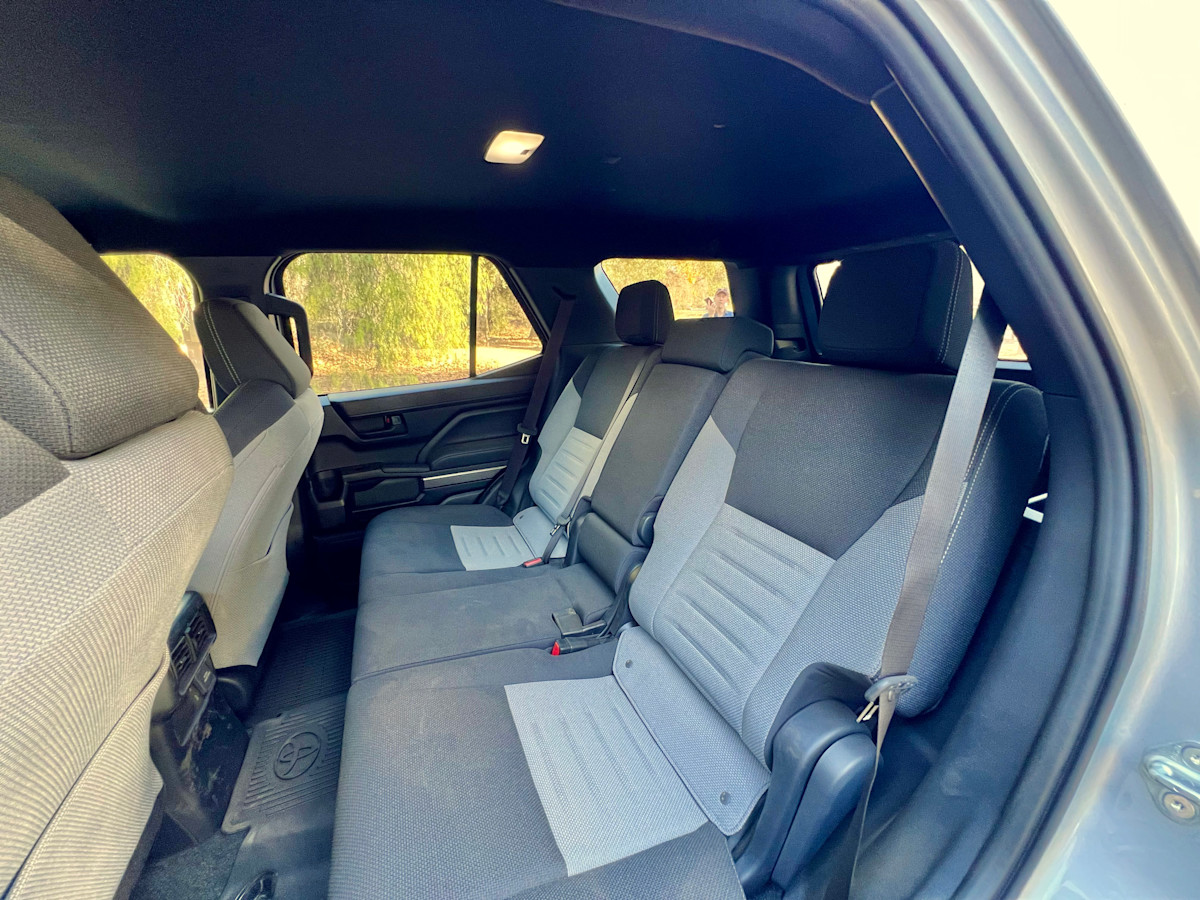
Limited rear-seat space
The CarGurus verdict
The new-for 2025 Toyota 4Runner proves that good things come to those who wait.
After a very long 15 years, we’ve finally got a new Toyota 4Runner with more capabilities, power, comfort, and technology. It's also more efficient thanks to a new hybrid option and more composed on pavement, but it remains a solid all-terrain vehicle to extend your adventures further.
Verdict: Toyota doesn't throw out the formula with its newly redesigned 4Runner. Instead, the 2025 model keeps many of the features shoppers have loved for over a decade, while also adding a more contemporary selection of four-cylinder powertrains.
out of 10 expert review
Look & feel
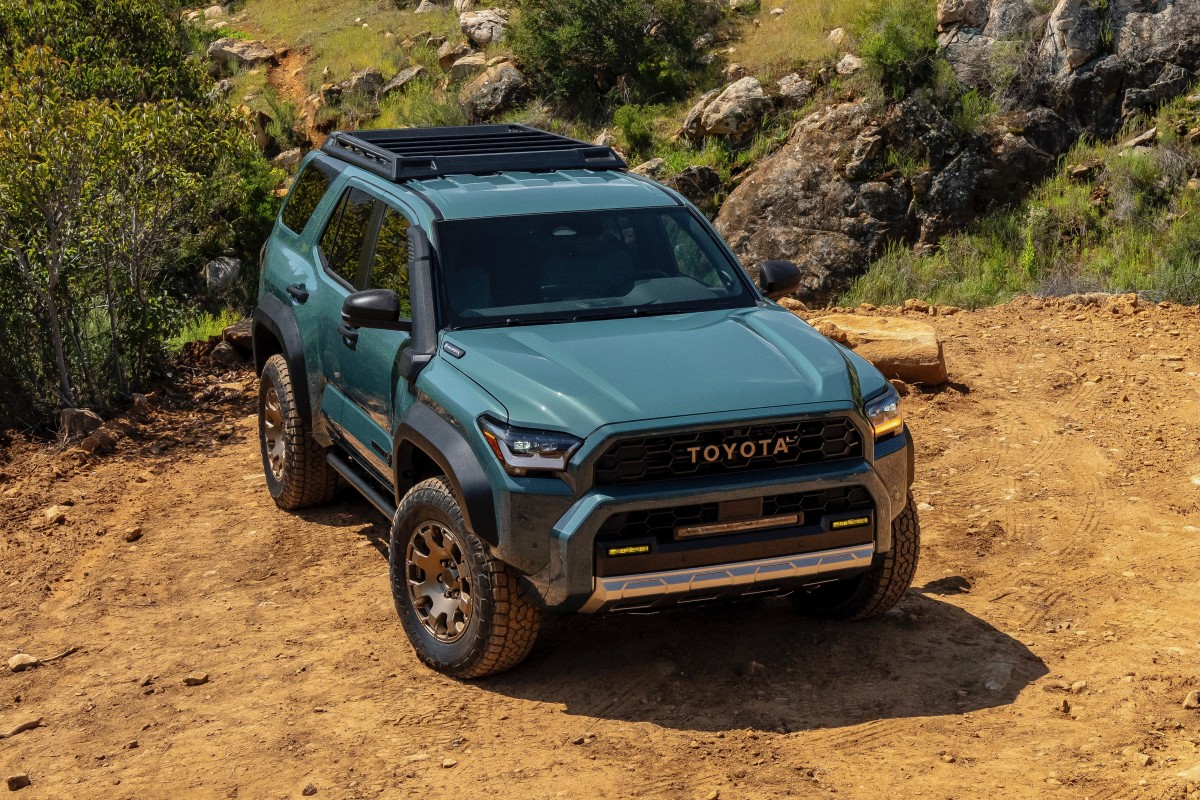
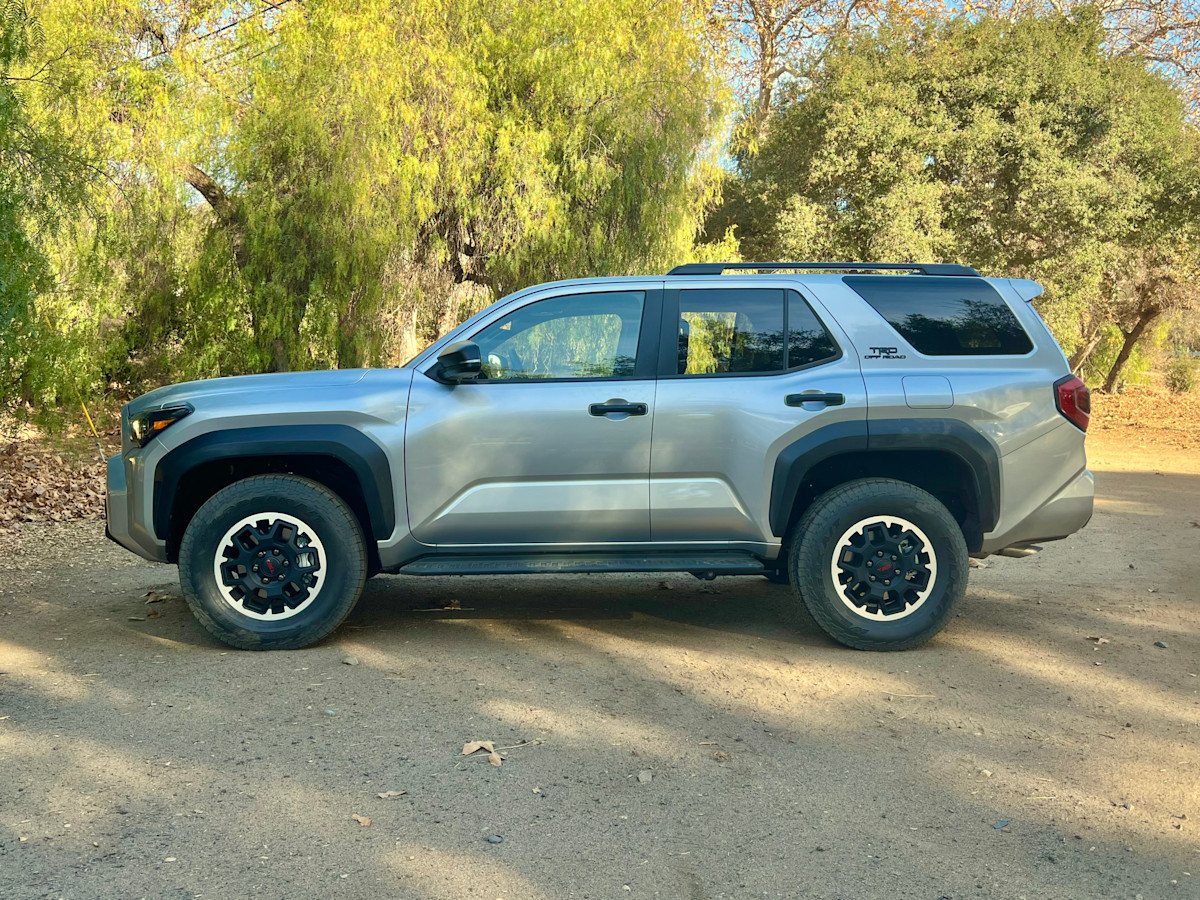
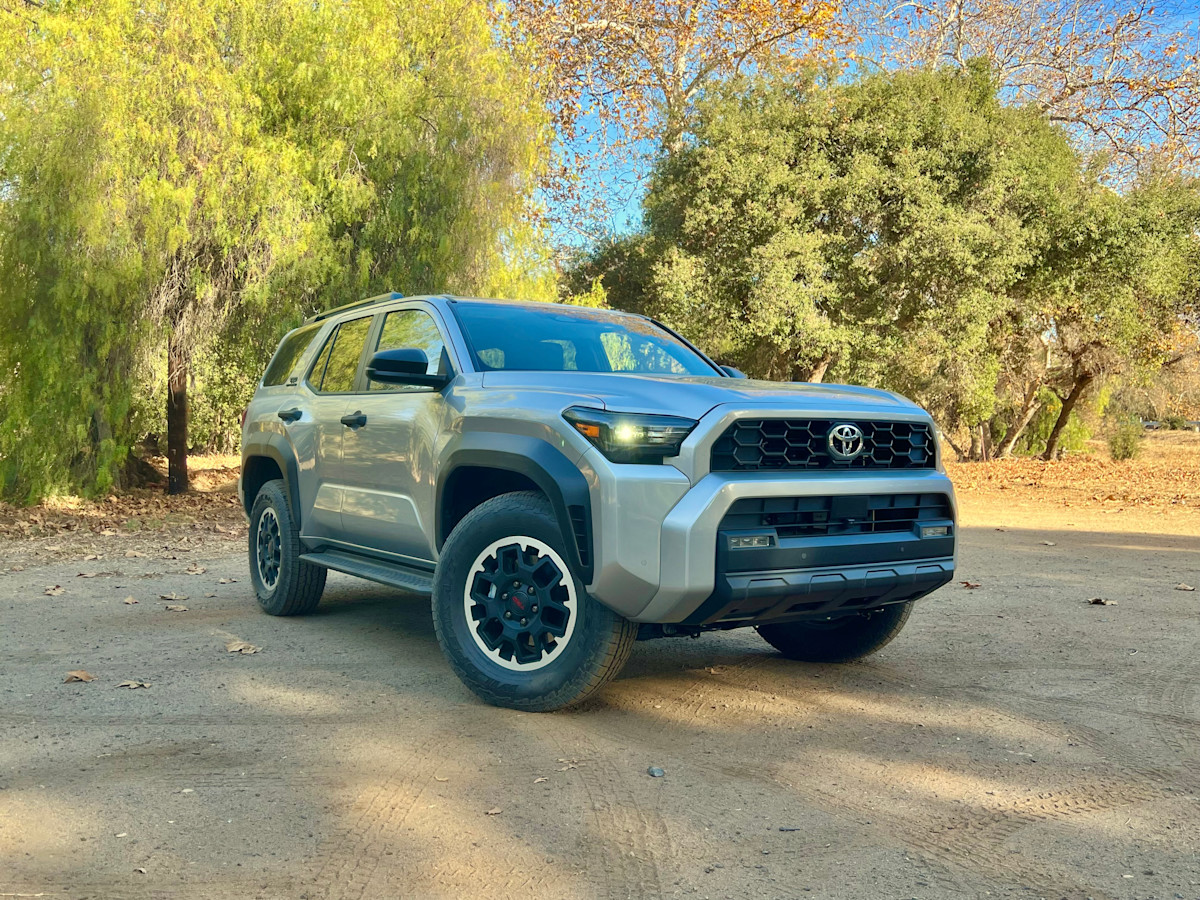
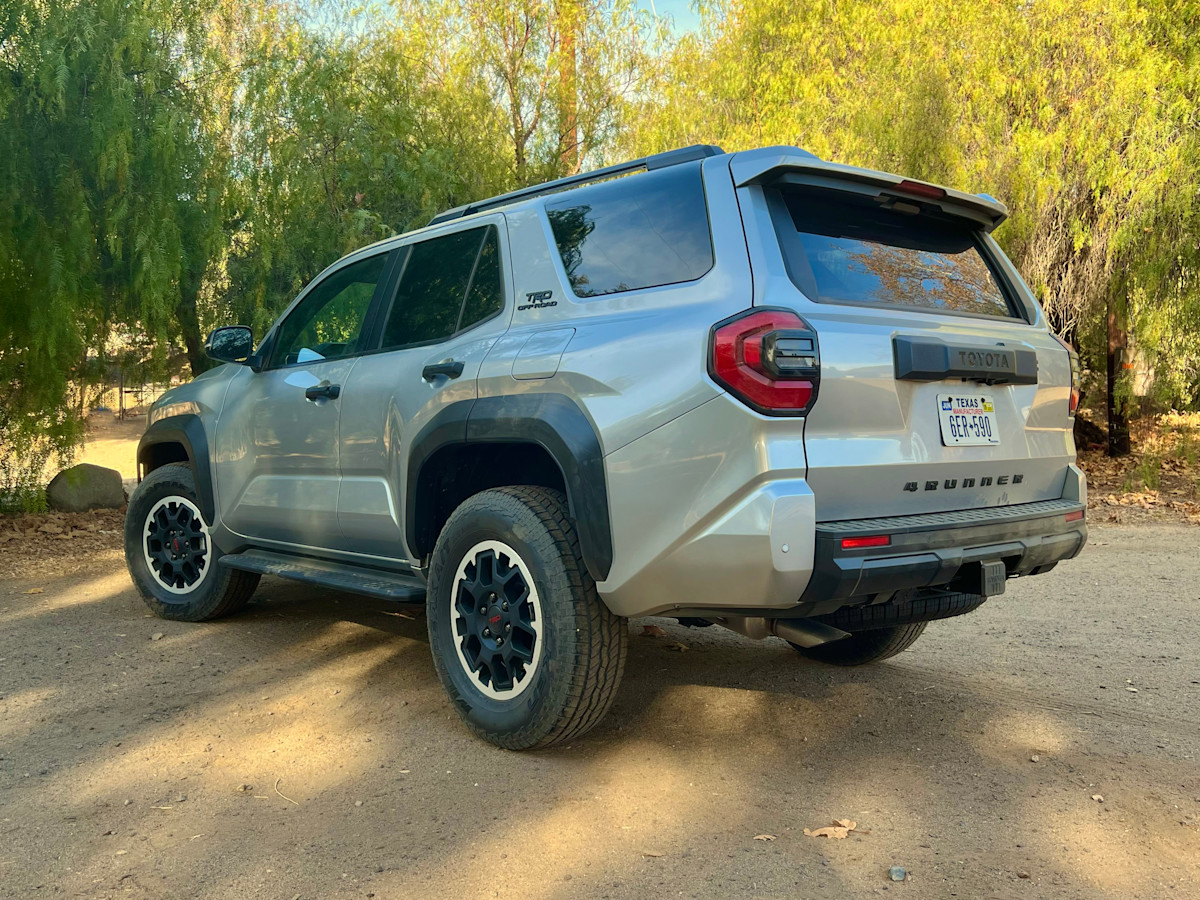
This all-new sixth-generation 4Runner doesn't rewrite the book when it comes to design. It represents more of a significant evolution than an entirely new direction. The last generation's horseshoe-shaped grilles return, though with a bulkier and more industrial personality that defines much of the exterior. The side body panels feature deep beveled creases that blend well with the beveled and flared wheel arches. It all gives the 4Runner a more broad-shouldered stance that is entirely appropriate for this type of off-road SUV.
This new iteration also pays homage to previous generations without being desperate or kitschy about it. The original 4Runner's slanted rearmost window is a prime example, and while the rear hatch doesn't fold downward to give you a handy spot to rest your feet, it retains the sliding rear window that makes cargo access just a little bit easier.
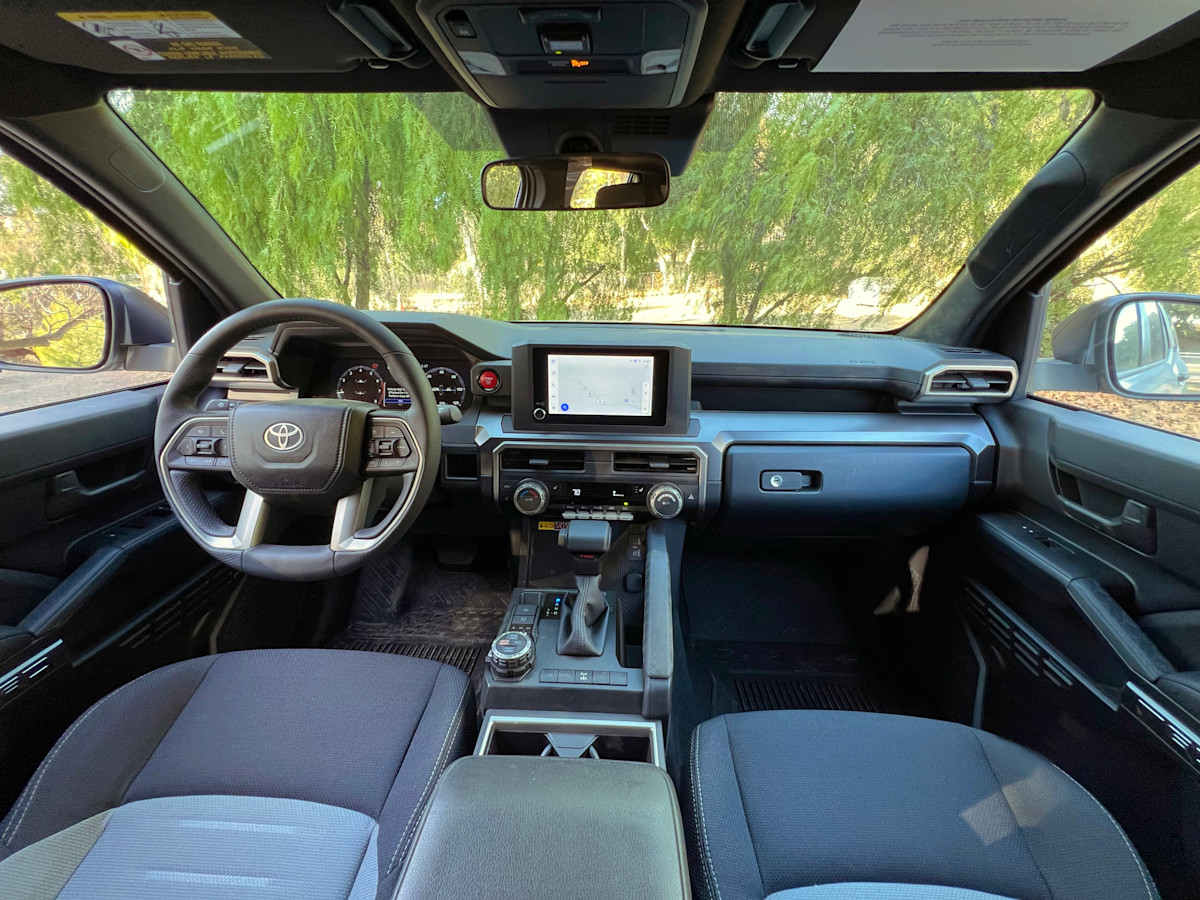
On the inside, the 4Runner is nearly identical to the Tacoma pickup truck on which it's based. The beveled styling motif is echoed throughout the cabin and is just as attractive inside as it is on the exterior. It's purposeful in its execution while also remaining relatively comfortable and refined, at least for the class it's in. There is an abundance of hard plastic to better survive the punishment this 4Runner was designed to endure, but there's light cushioning where you're likely to rest your hands and elbows. Overall, materials quality is noticeably nicer than what you'd get in a Jeep Wrangler or Ford Bronco, but not quite as well crafted as the more expensive Land Rover Defender.
Performance
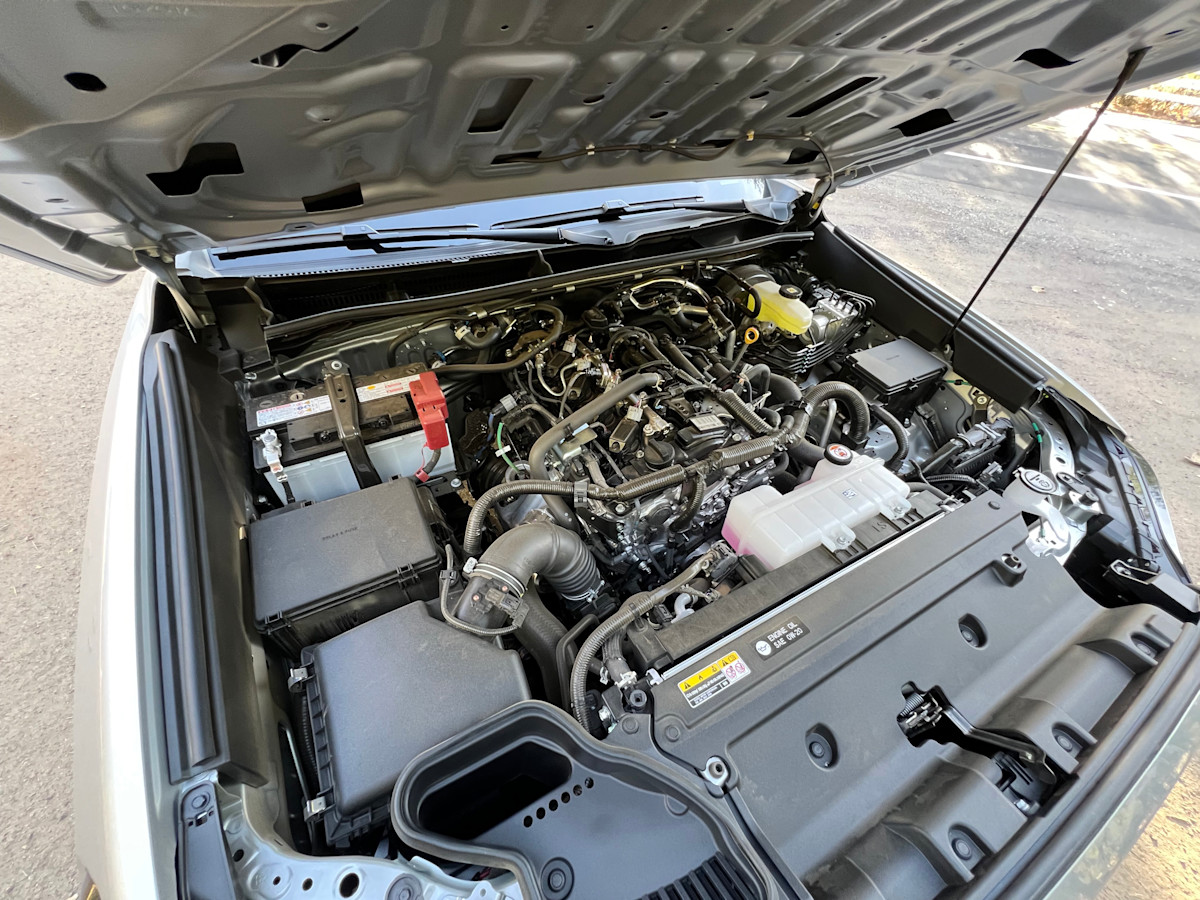
The 2025 Toyota 4Runner is available with the choice of two engines. Entry-level trim levels come standard with a 2.4-litre turbocharged four-cylinder that produces 317 horsepower and 278 pound-feet of torque, making it more powerful than the previous-generation V6. It's paired with an eight-speed automatic transmission, which promises improved acceleration and fuel economy over the previous five-speed unit. In Canada, part-time four-wheel drive (4WD) is standard, while full-time 4WD is available with the Limited and Platinum packages.
Instead of offering a V6 engine upgrade, Toyota introduces a more potent Hybrid i-Force Max powertrain that is based on the same four-cylinder engine. The Hybrid variant pairs the four-cylinder with a 1.87-kWh battery pack under the floor of the cargo area, which in turn powers an electric motor integrated into the transmission. The combined power output is 326 hp and 465 lb-ft of torque. This variant shouldn't be thought of as the typical fuel-sipping hybrid, even though it is estimated to return slightly better fuel economy. Instead, it's a power upgrade with much stronger usable power at lower speeds, a major advantage when off-roading.
The Hybrid i-Force Max is certainly the preferred choice, but the standard engine isn't weak. Acceleration doesn't feel that much slower in the standard four-cylinder than with the hybrid, though you will have to make the engine work much harder. Neither powertrain sounds particularly inspiring when exerted, but considering that the previous V6 sounded as airy as a street sweeper, that's not much of a drawback. On the whole, this new 4Runner is much quieter on the inside, which will reduce driver fatigue on long journeys.
The new Toyota 4Runner is also much more composed on pavement. By comparison, the older generation was overly soft, with plenty of nosedive when braking and lots of body roll when cornering. The new 4Runner feels significantly more confident on a winding road, and the steering track straighter on the highway, too. While there's no mistaking it for a conventional midsize SUV, it drives less truck-like than before.
Even better, none of this added comfort and refinement come at the expense of all-terrain prowess. Within the 4Runner lineup, there are eight distinct packages between the two powertrains with varying levels of off-road abilities. Even the mid-range TRD Off-Road Premium models are impressively capable and can scale challenging obstacles without having to resort to a lower transfer case gearing. Thanks to the improved handling, you can also bomb around the flats with more bravado and glee.
The top TRD Pro and Trailhunter models are the most impressive adventure vehicles in the stable, but they remain civilized in the city and on the highway. It's worth noting that the snorkel on the Trailhunter does produce some added wind noise, which could get tiresome on road trips. Important off-road specs differ depending on trim level. Approach angles vary between 18 and 33 degrees, departure angles range between 22 and 24 degrees, and ground clearance between 20.5 and 25.6 centimetres, with the TRD Pro and Trailhunter trim levels being the most capable.
Form & function
The 2025 4Runner measures nearly 13 centimetres longer from bumper to bumper than the outgoing model, with 6 of those added between the front and rear axles. This longer wheelbase typically results in more passenger space, but in this case, the gains are minimal. There's plenty of room for taller and larger passengers in the front seats, but the middle row isn't nearly as accommodating. There's enough headroom for average-sized adults, but legroom is merely adequate. On the plus side, those seats are elevated and offer an excellent outward view, even out the front glass.
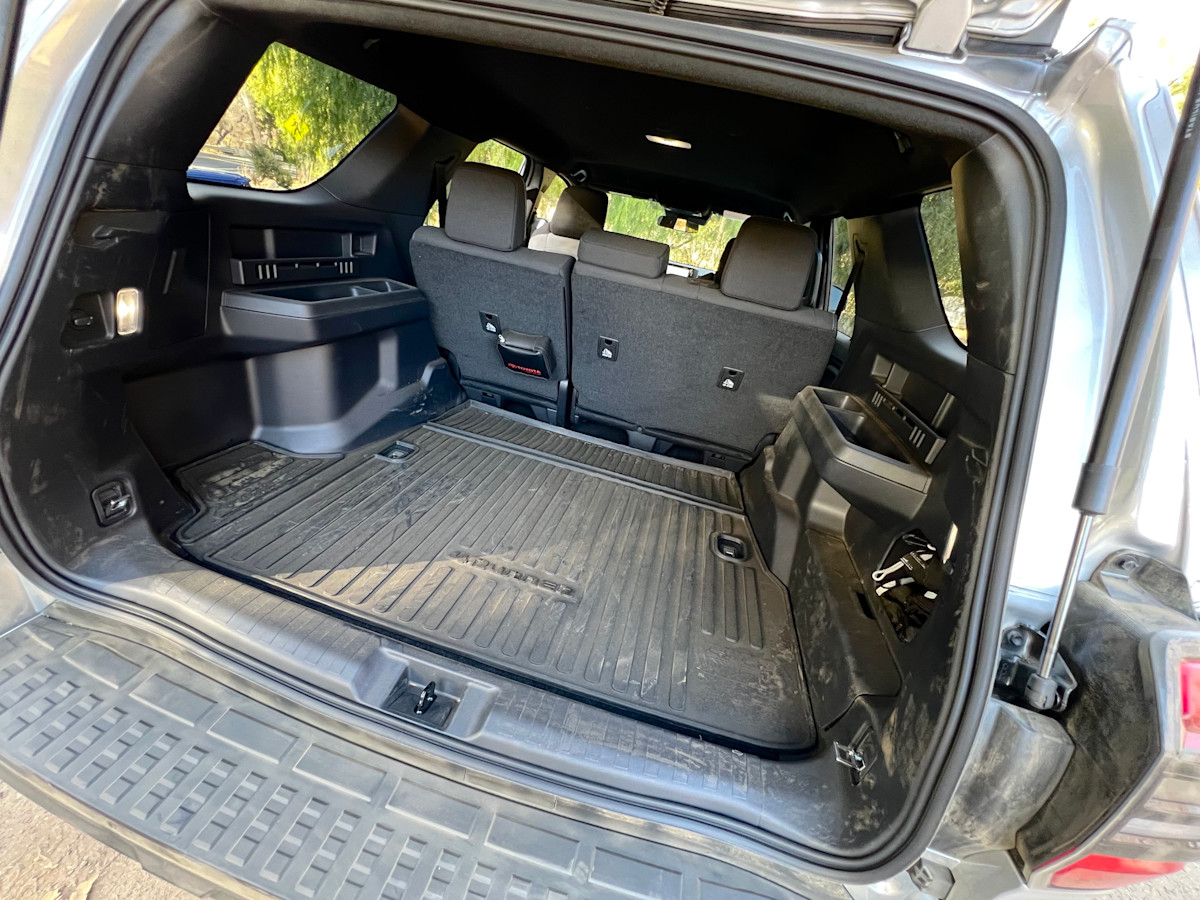
A third row of seats is available on non-hybrid models, but they would be useful only in a pinch. The cushions are mounted right to the floor, forcing passengers to squat with no thigh support. The space is so limited back there we would expect complaints from even small children, but there is still an argument to be made for having the ability to carry more people in some circumstances.
The cockpit is well organized with logically placed controls, and Toyota has certainly been paying attention to how their customers use their vehicles. The climate controls feature oversized knobs with chunky rubber textures that make them easy to adjust if you're wearing thick gloves. The off-road controls on the centre console are grouped together and have plenty of tactile differences to allow for no-look operation.
Another group of controls to the left of the steering wheel offers four buttons for whatever auxiliary lights and equipment you want to add, while manual adjustments for headlight aiming give you more flexibility, regardless of where you drive your 4Runner. Available colour-changing fog lights from Rigid Industries also help you find your way safely under more challenging conditions.
Of course, there are tons of features for off-roading, but not all items are labeled to describe what they do, so you'll want to give the owner's manual a thorough read-through. There are several terrain programs that are intended for specific types of surfaces, as well as for towing. More serious off-road models add more controls that provide myriad camera views to eliminate any guesswork when navigating tough terrain, a locking rear differential, and a stabilizer bar that can be disconnected for improved wheel articulation.
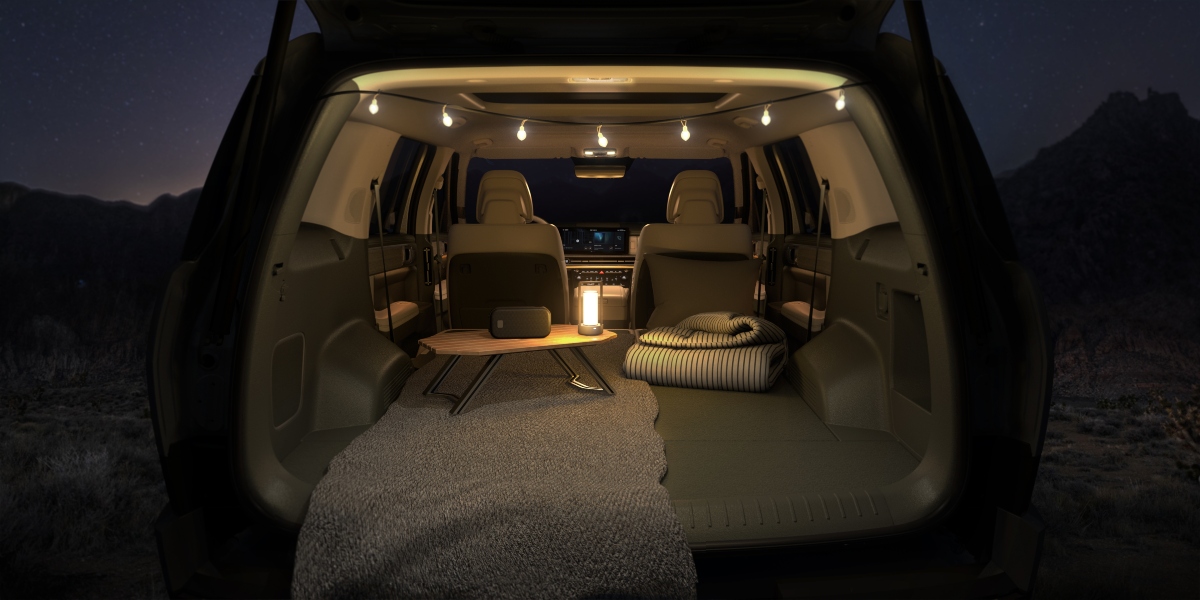
In regard to storage, the front seats have two slatted pockets in the door, a handy tray in the dashboard for the passenger, moderately sized cupholders, and a centre armrest bin. Cargo capacity measures 1,371 litres behind the second row. The Hybrid's batteries further reduce that capacity to 1,206 litres because of the raised floor to enclose the added batteries. A sturdy roof rack can make up for any cargo deficits and can support a static load of 360 kilograms (800 pounds), which is more than enough for an overlanding tent platform.
Technology
The 2025 Toyota 4Runner may be a brute in the wilderness, but it's also got plenty of tech smarts. An 8-inch infotainment touchscreen is standard, while a large 14-inch touchscreen is available. Both are easy to use thanks to logical menus and quick responses. Apple CarPlay and Android Auto are both wireless and a charging pad is also offered. A digital instrument panel is included with all Hybrid variants and is included in most extra-cost packages on the gas models.
More off-road-focused models come with a variety of external camera views that help you place your tires exactly where you want on a trail. An automatic camera activation feature turns them on when the vehicle slows to a crawl, which is especially helpful if you're cresting a hill and all you see out the windshield is blue sky. Other specific on-screen menus deliver more in-depth information on inclination and tilt.
A 14-speaker JBL premium audio system is available along with a portable centre speaker that can double as a Bluetooth speaker (with a battery life of six hours). Remote monitoring and control is available through a smartphone app, as is a digital key function that allows your phone to replace your key fob. These features mark a big step forward for the 4Runner, though most of these features are also available on rivals.
Safety
As of this writing, crash test results are not yet available for the 2025 Toyota 4Runner from either the National Highway Traffic Safety Administration (NHTSA) or the Insurance Institute for Highway Safety (IIHS). It's worth noting that the midsize Tacoma pickup truck on which the 4Runner is based was named a Top Safety Pick by the IIHS, which is the Institute's second-highest honour.
All 4Runner models come standard with the Toyota Safety Sense 3.0 suite of advanced safety features that include frontal collision warning with automatic emergency braking, lane-keep assist, adaptive cruise control, a traffic sign reader, and automatic high beams. It also includes the Proactive Driving Assist feature that automatically slows the vehicle when approaching curves in the road, but the system could be too intrusive for many drivers. Thankfully, you can disable it. In Canada, a blind-spot monitor with rear cross-traffic alert is also standard.
Cost-effectiveness
Canadian prices for the 2025 Toyota 4Runner start at $57,309 (including a $1,930 destination charge plus other fees) for the base SR5 trim. Prices max out at $87,266 for the hybrid with the top-of-the-line Trailhunter package. These are in line with its most direct rivals, the Jeep Wrangler and Ford Bronco, though both offer more extreme all-terrain versions that exceed the Trailhunter's price and capabilities.
The price to upgrade from the standard engine to the Hybrid costs just over $13,000 in their base formats. The standard four-cylinder is estimated to return 12.4 litres per 100 kilometres in the city, 9.6 on the highway, and 11.2 in combined driving. That's a big improvement over the previous V6's 13.8 L/100 km combined estimate. The Hybrid is estimated at 10.3 L/100 km city, 9.5 on the highway, and 9.9 combined. Note the Limited and Platinum trims have slightly higher ratings, as do models equipped with full-time 4WD.
By comparison, the Ford Bronco is estimated at around 13.4 L/100 km combined, with the burly Raptor model lifting that to 15.3 L/100 km. The Jeep Wrangler is rated between 11.5 and 16.8 L/100 km combined, though the 4xe plug-in hybrid can operate under electric-only propulsion for up to 35 kilometres. Outside of those estimates, the 4Runner is more comfortable, has a more refined interior, and is almost as capable as the top rivals, though we wouldn't be surprised if the 4Runner adds a future contender in that category.
Considering all this, plus Toyota's reputation for reliability, the new sixth-generation 4Runner is a standout. It's an accomplished off-roader with fewer compromises that proves it was ultimately worth the wait.
Note: Images and video show a US model.
What owners say
In love with this car, I think the car is fantastic value. Of course, with this being a new drivetrain time will tell if reliability lives up to the previous gens. Outside of that consideration the car is an absolute blast and I love the new 4 cylinder turbo. It feels very dialed in and the power is great, the car just wants to take off and it feels genuinely quick. I just switched from a 2018 F-150 and the suspension was a massive upgrade, the car feels planted and rugged but still soft enough on the bumps you’re comfortable driving. Very impressed with the safety features and tech with this being a base model. The car will let me know via the app when I’ve left something in the backseat or left a window open of door unlocked! As well the screen despite being the “small” screen is still a great size and has the same features as the larger one. The seats are cloth and I love the fabric, design, and feel of them. My car has the grey seats and the look genuinely solid. The interior has a lot of plastic as is to be expected but the design is sleek and looks very premium. Despite the interior having a decent amount of plastic components it feels very well constructed and all of the functions and pieces, whether shifting the car into a different drive mode, open and closing the door, temperature controls, etc. have a very nice feel to it. The speakers are phenomenal, the bass is genuinely crazy and the sound quality is crisp, you would find it hard to believe this is the cheaper sound system! From what my salesman was telling me even the 8 speaker bass system are JBL speakers and while I haven’t verified by reading up on it, the performance of it seems to match for sure! The capability, cargo space, and even leg room in the back are great as well for a car its size and class. As well it feels nimble to drive, has a great turning radius and just looks fantastic. I took the air dam off of mine (that big plastic lip hanging off the front bumper) it took 5 minutes and could be accomplished with a Phillips head or common 10mm socket. If that hanging off the front makes you apprehensive of the new look it’s very easy to remove and the difference is night and day! Fair warning it caused a slight hit to mpg, usually less than 1 mpg from what I’ve heard but I haven’t confirmed myself but it frees up a whole 5 1/2 inches of ground clearance in the front so if you plan to take it off road definitely worth removing. Overall I’m in love with this car and highly recommend it if you’re in the market for a capable off road suv. If reliability holds up as well as previous models as much as I love Ford I would have a very hard time switching back from Toyota!!
April 5, 2025Trims & specs
Base MSRP $41,270 | Seating 7 |
Engine 2.4L 278 hp I4 | Cargo Capacity 48.4 cu ft |
Combined MPG 23 | Drivetrain 4X2 |
Base MSRP $43,270 | Seating 7 |
Engine 2.4L 278 hp I4 | Cargo Capacity 48.4 cu ft |
Combined MPG 22 | Drivetrain 4X4 |
Base MSRP $55,470 | Seating 5 |
Engine 2.4L 278 hp I4 | Cargo Capacity 48.4 cu ft |
Combined MPG 22 | Drivetrain 4X4 |
Base MSRP $53,110 | Seating 5 |
Engine 2.4L 278 hp I4 | Cargo Capacity 48.4 cu ft |
Combined MPG 23 | Drivetrain 4X2 |
Base MSRP $55,110 | Seating 5 |
Engine 2.4L 278 hp I4 | Cargo Capacity 48.4 cu ft |
Combined MPG 22 | Drivetrain 4X4 |
Base MSRP $47,750 | Seating 5 |
Engine 2.4L 278 hp I4 | Cargo Capacity 48.4 cu ft |
Combined MPG 23 | Drivetrain 4X2 |
Base MSRP $49,750 | Seating 5 |
Engine 2.4L 278 hp I4 | Cargo Capacity 48.4 cu ft |
Combined MPG 22 | Drivetrain 4X4 |
Base MSRP $57,900 | Seating 7 |
Engine 2.4L 278 hp I4 | Cargo Capacity 48.4 cu ft |
Combined MPG 23 | Drivetrain AWD |
Base MSRP $55,900 | Seating 7 |
Engine 2.4L 278 hp I4 | Cargo Capacity 48.4 cu ft |
Combined MPG 23 | Drivetrain 4X2 |
Base MSRP $49,690 | Seating 5 |
Engine 2.4L 278 hp I4 | Cargo Capacity 48.4 cu ft |
Combined MPG 22 | Drivetrain 4X4 |