2024 Toyota Sequoia vs 2024 Jeep Wrangler 4xe
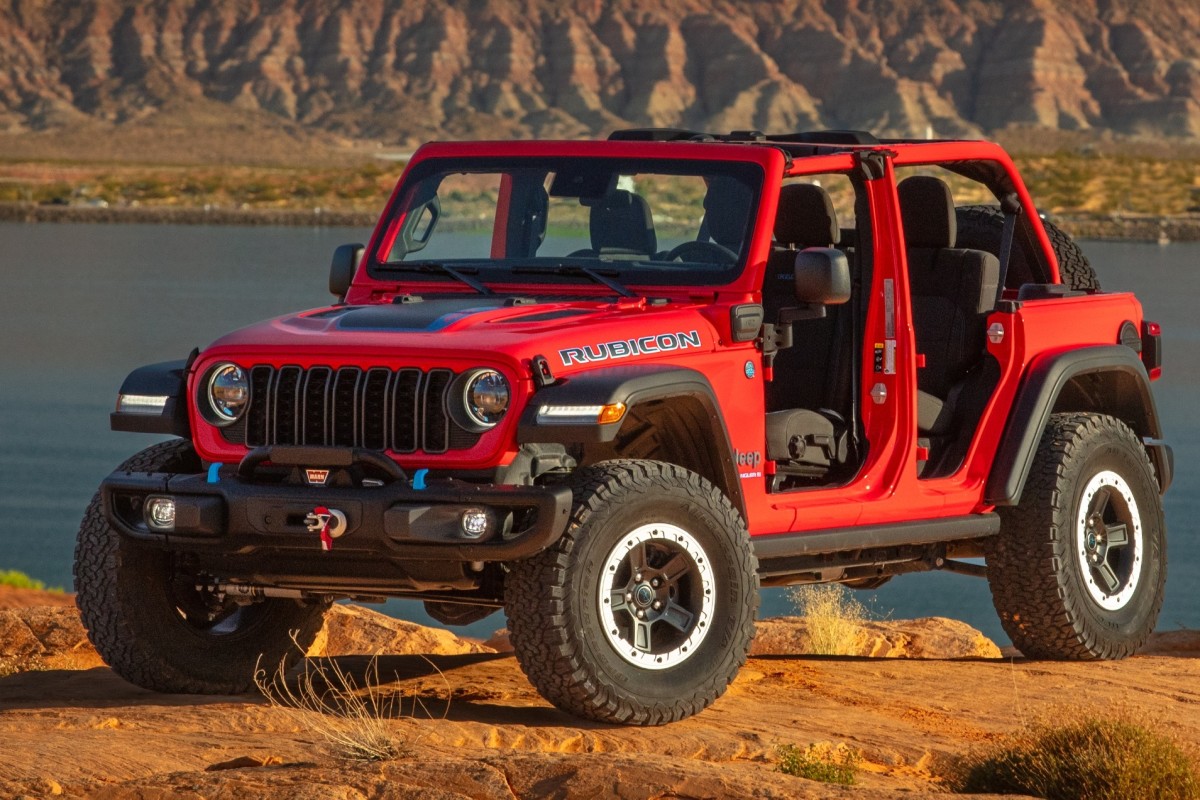
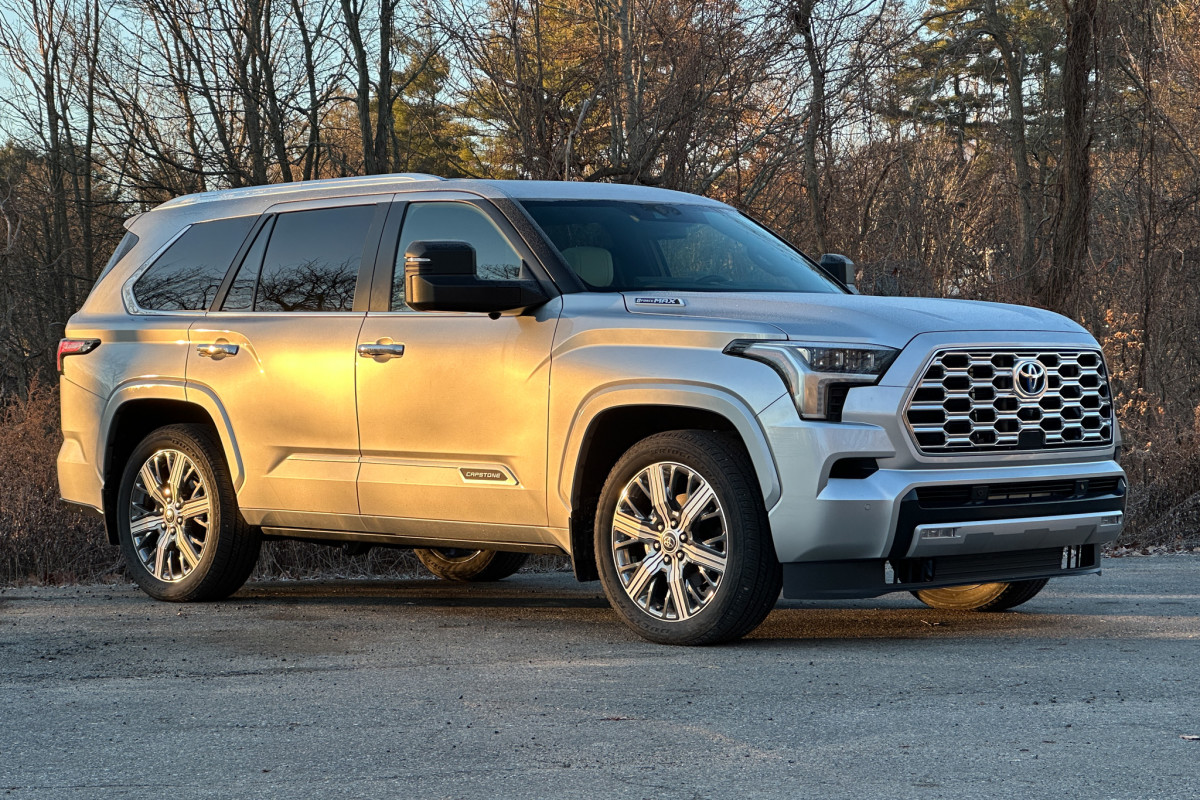
Overview | |
MSRP$50,695 | MSRP$61,275 |
Listings109 | Listings13 |
Ratings & Reviews | |
User Reviews | User Reviews |
Expert reviews | Expert reviews7.7 out of 10 |
Pros
Cons
| |
2024 Jeep Wrangler 4xe Reviews Summary | |
2024 Toyota Sequoia Reviews SummaryThe Toyota Sequoia gained a standard hybrid powertrain when it entered its third generation, just last year. While the tech updates were widely celebrated and the facelift considered unobjectionable even by its harshest critics, the move to hybrid power proved to be something of a mixed bag. Increased towing and hauling power bolstered the obvious advantage of improved fuel economy, but impact was somewhat dampened by the reduction in cargo and third-row space to accommodate the new battery. Verdict: The Sequoia may not be the most capable full-size SUV in the segment, and it’s certainly not the most spacious. It is, however, the only hybrid in its class, and it offers a blend of seating capacity, towing power, and fuel efficiency you won’t find elsewhere—at least, not if you don’t want to go diesel. | |
No video found | |
Popular Features & Specs | |
Engine2.0L 375 hp I4 Hybrid | Engine3.4L 437 hp V6 Hybrid |
Drivetrain4X4 | Drivetrain4X2 |
Seating Capacity5 | Seating Capacity8 |
Horsepower375 hp @ 5250 rpm | Horsepower437 hp @ 5200 rpm |
EV Battery Capacity17.3 kWh | EV Battery Capacity1.9 kWh |
MPG City52 | MPG City21 |
MPG Highway45 | MPG Highway24 |
Battery Charge Time (120V)17.5 hours | Battery Charge Time (120V) |
Battery Charge Time (240V)2.5 hours | Battery Charge Time (240V) |
Engine | |
Engine Name2.0L 375 hp I4 Hybrid | Engine Name3.4L 437 hp V6 Hybrid |
Torque470 lb-ft @ 3000 rpm | Torque583 lb-ft @ 2400 rpm |
Horsepower375 hp @ 5250 rpm | Horsepower437 hp @ 5200 rpm |
Battery Charge Time (120V)17.5 hours | Battery Charge Time (120V) |
Battery Charge Time (240V)2.5 hours | Battery Charge Time (240V) |
Drivetrain4X4 | Drivetrain4X2 |
Fuel Economy | |
EV Battery Capacity17.3 kWh | EV Battery Capacity1.9 kWh |
MPG City52 | MPG City21 |
MPG Highway45 | MPG Highway24 |
Interior | |
Seating Capacity5 | Seating Capacity8 |
Key Features | |
Sunroof/Moonroof | Sunroof/MoonroofStandard |
Dimensions & Capacity | |
Cargo Space27.7 cu ft | Cargo Space22.3 cu ft |
Curb Weight5049 lbs | Curb Weight5620 lbs |
Height73.5 in | Height74.5 in |
Length188.4 in | Length208.1 in |
Width73.9 in | Width79.8 in |
Wheelbase118.4 in | Wheelbase122.0 in |
Maximum Payload1398 lbs | Maximum Payload1730 lbs |
Number of doors4 | Number of doors4 |
Maximum Towing Capacity3500 lbs | Maximum Towing Capacity9520 lbs |
Standard Towing Capacity | Standard Towing Capacity9520 lbs |
Overview | ||
MSRP | $50,695 | $61,275 |
Listings | ||
Ratings & Reviews | ||
User reviews | ||
Expert reviews | 7.7 out of 10Read full review | |
Pros & cons | Pros
Cons
| |
Summary | The Toyota Sequoia gained a standard hybrid powertrain when it entered its third generation, just last year. While the tech updates were widely celebrated and the facelift considered unobjectionable even by its harshest critics, the move to hybrid power proved to be something of a mixed bag. Increased towing and hauling power bolstered the obvious advantage of improved fuel economy, but impact was somewhat dampened by the reduction in cargo and third-row space to accommodate the new battery. Verdict: The Sequoia may not be the most capable full-size SUV in the segment, and it’s certainly not the most spacious. It is, however, the only hybrid in its class, and it offers a blend of seating capacity, towing power, and fuel efficiency you won’t find elsewhere—at least, not if you don’t want to go diesel. | |
Video | No video found | |
Popular Features & Specs | ||
Engine | 2.0L 375 hp I4 Hybrid | 3.4L 437 hp V6 Hybrid |
Drivetrain | 4X4 | 4X2 |
Seating Capacity | 5 | 8 |
Horsepower | 375 hp @ 5250 rpm | 437 hp @ 5200 rpm |
EV Battery Capacity | 17.3 kWh | 1.9 kWh |
MPG City | 52 | 21 |
MPG Highway | 45 | 24 |
Battery Charge Time (120V) | 17.5 hours | |
Battery Charge Time (240V) | 2.5 hours | |
Engine | ||
Engine Name | 2.0L 375 hp I4 Hybrid | 3.4L 437 hp V6 Hybrid |
Torque | 470 lb-ft @ 3000 rpm | 583 lb-ft @ 2400 rpm |
Horsepower | 375 hp @ 5250 rpm | 437 hp @ 5200 rpm |
Battery Charge Time (120V) | 17.5 hours | |
Battery Charge Time (240V) | 2.5 hours | |
Drivetrain | 4X4 | 4X2 |
Fuel Economy | ||
EV Battery Capacity | 17.3 kWh | 1.9 kWh |
MPG City | 52 | 21 |
MPG Highway | 45 | 24 |
Interior | ||
Seating Capacity | 5 | 8 |
Key Features | ||
Sunroof/Moonroof | Standard | |
Dimensions & Capacity | ||
Cargo Space | 27.7 cu ft | 22.3 cu ft |
Curb Weight | 5049 lbs | 5620 lbs |
Height | 73.5 in | 74.5 in |
Length | 188.4 in | 208.1 in |
Width | 73.9 in | 79.8 in |
Wheelbase | 118.4 in | 122.0 in |
Maximum Payload | 1398 lbs | 1730 lbs |
Number of doors | 4 | 4 |
Maximum Towing Capacity | 3500 lbs | 9520 lbs |
Standard Towing Capacity | 9520 lbs | |


By: CarGurus + AI
At CarGurus, our team of experienced automotive writers remain at the heart of our content operation, conducting hands-on car tests and writing insightful guides that are backed by years of industry experience. To complement this, we are harnessing AI to make our content offering more diverse and more helpful to shoppers than ever. To achieve this, our AI systems are based exclusively on CarGurus content, ratings and data, so that what we produce is both unique to CarGurus, and uniquely helpful to car shoppers.
