Volkswagen Atlas vs Hyundai Venue

Overview | |
MSRP$39,310 | MSRP$20,550 |
Listings1394 | Listings1707 |
Ratings & Reviews | |
User Reviews | User Reviews |
Expert reviews6.8 out of 10 | Expert reviews5.3 out of 10 |
Pros
Cons
| Pros
Cons
|
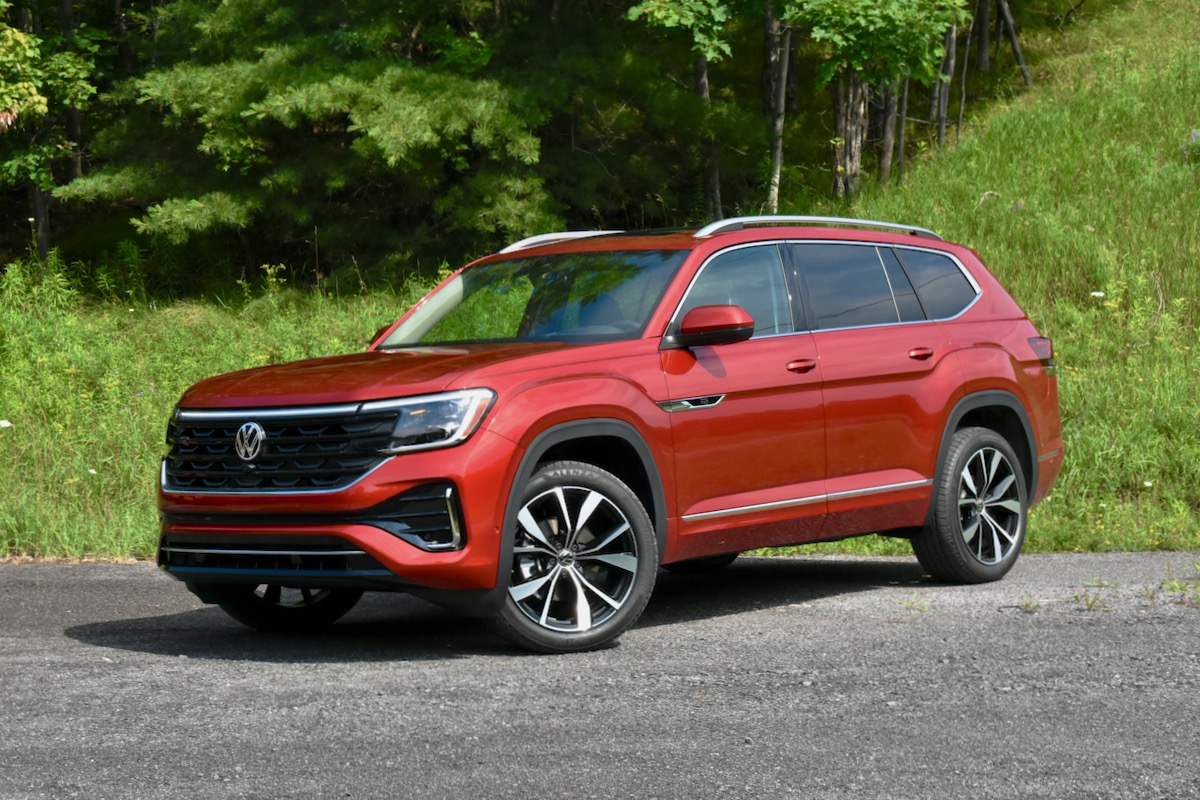
Reviews SummaryThe 2026 Volkswagen Atlas continues as VW’s North American-market three-row SUV (a two-row Atlas Cross Sport is also available, but we’ll cover that separately), and it’s largely unchanged from its substantial 2024 refresh. What remains, however, is a vehicle that impresses with its upscale appearance and genuinely spacious interior. A stiff ride and poorly executed technology will fight and frustrate you every step of the way, but the Atlas will nonetheless make you look good. Verdict: The 2026 Volkswagen Atlas delivers on its core promise of style and space at a non-luxury price point. If you can tolerate its sub-par ride quality and maddening infotainment system—or if you simply plan to rely on Apple CarPlay and ignore the native tech—this handsome three-row SUV offers compelling value for shoppers prioritizing looks and space. | |
Reviews SummaryAutomakers have traditionally had a hard time making money on entry-level subcompact cars because they have low profit margins. But North America has largely moved away from cars to crossover SUVs — and higher prices. That allows car companies to offer an entry-level subcompact SUV for thousands more than a similar sedan or hatchback. Such is the case with the Hyundai Venue, which costs more than its predecessor, the subcompact Accent that was dropped in Canada after the 2020 model year. While the price is higher, the advantage for buyers is a vehicle that generally has more cargo space and is more practical. We recently drove the 2026 Hyundai Venue to find out if a subcompact crossover is a better buy than a cheaper subcompact car. Verdict: The Hyundai Venue sacrifices refinement for a price point that isn’t as low as a comparable subcompact car. We’d be tempted to spend a little more for a slightly larger compact car with more power, features, and refinement. | |
No video found | No video found |
Popular Features & Specs | |
Engine2.0L 269 hp I4 | Engine1.6L 121 hp I4 |
DrivetrainFWD | DrivetrainFWD |
Seating Capacity7 | Seating Capacity5 |
Horsepower | Horsepower121 hp @ 6300 rpm |
MPG City20 | MPG City29 |
MPG Highway27 | MPG Highway33 |
Engine | |
Engine Name2.0L 269 hp I4 | Engine Name1.6L 121 hp I4 |
Torque | Torque113 lb-ft @ 4500 rpm |
Horsepower | Horsepower121 hp @ 6300 rpm |
DrivetrainFWD | DrivetrainFWD |
Fuel Economy | |
MPG City20 | MPG City29 |
MPG Highway27 | MPG Highway33 |
Interior | |
Seating Capacity7 | Seating Capacity5 |
Safety | |
Front Crash Overall4 | Front Crash Overall4 |
Side Crash Overall5 | Side Crash Overall5 |
Dimensions & Capacity | |
Cargo Space20.6 cu ft | Cargo Space18.7 cu ft |
Curb Weight4317 lbs | Curb Weight2612 lbs |
Height70.4 in | Height61.6 in |
Length200.7 in | Length159.1 in |
Width88.5 in | Width69.7 in |
Wheelbase117.3 in | Wheelbase99.2 in |
Maximum Payload1102 lbs | Maximum Payload1158 lbs |
Number of doors4 | Number of doors4 |
Maximum Towing Capacity2000 lbs | Maximum Towing Capacity |
Overview | ||
MSRP | $39,310 | $20,550 |
Listings | ||
Ratings & Reviews | ||
User reviews | ||
Expert reviews | 6.8 out of 10Read full review | 5.3 out of 10Read full review |
Pros & cons | Pros
Cons
| Pros
Cons
|
Summary | The 2026 Volkswagen Atlas continues as VW’s North American-market three-row SUV (a two-row Atlas Cross Sport is also available, but we’ll cover that separately), and it’s largely unchanged from its substantial 2024 refresh. What remains, however, is a vehicle that impresses with its upscale appearance and genuinely spacious interior. A stiff ride and poorly executed technology will fight and frustrate you every step of the way, but the Atlas will nonetheless make you look good. Verdict: The 2026 Volkswagen Atlas delivers on its core promise of style and space at a non-luxury price point. If you can tolerate its sub-par ride quality and maddening infotainment system—or if you simply plan to rely on Apple CarPlay and ignore the native tech—this handsome three-row SUV offers compelling value for shoppers prioritizing looks and space. | Automakers have traditionally had a hard time making money on entry-level subcompact cars because they have low profit margins. But North America has largely moved away from cars to crossover SUVs — and higher prices. That allows car companies to offer an entry-level subcompact SUV for thousands more than a similar sedan or hatchback. Such is the case with the Hyundai Venue, which costs more than its predecessor, the subcompact Accent that was dropped in Canada after the 2020 model year. While the price is higher, the advantage for buyers is a vehicle that generally has more cargo space and is more practical. We recently drove the 2026 Hyundai Venue to find out if a subcompact crossover is a better buy than a cheaper subcompact car. Verdict: The Hyundai Venue sacrifices refinement for a price point that isn’t as low as a comparable subcompact car. We’d be tempted to spend a little more for a slightly larger compact car with more power, features, and refinement. |
Video | No video found | No video found |
Popular Features & Specs | ||
Engine | 2.0L 269 hp I4 | 1.6L 121 hp I4 |
Drivetrain | FWD | FWD |
Seating Capacity | 7 | 5 |
Horsepower | 121 hp @ 6300 rpm | |
MPG City | 20 | 29 |
MPG Highway | 27 | 33 |
Engine | ||
Engine Name | 2.0L 269 hp I4 | 1.6L 121 hp I4 |
Torque | 113 lb-ft @ 4500 rpm | |
Horsepower | 121 hp @ 6300 rpm | |
Drivetrain | FWD | FWD |
Fuel Economy | ||
MPG City | 20 | 29 |
MPG Highway | 27 | 33 |
Interior | ||
Seating Capacity | 7 | 5 |
Safety | ||
Front Crash Overall | 4 | 4 |
Side Crash Overall | 5 | 5 |
Dimensions & Capacity | ||
Cargo Space | 20.6 cu ft | 18.7 cu ft |
Curb Weight | 4317 lbs | 2612 lbs |
Height | 70.4 in | 61.6 in |
Length | 200.7 in | 159.1 in |
Width | 88.5 in | 69.7 in |
Wheelbase | 117.3 in | 99.2 in |
Maximum Payload | 1102 lbs | 1158 lbs |
Number of doors | 4 | 4 |
Maximum Towing Capacity | 2000 lbs | |


By: CarGurus + AI
At CarGurus, our team of experienced automotive writers remain at the heart of our content operation, conducting hands-on car tests and writing insightful guides that are backed by years of industry experience. To complement this, we are harnessing AI to make our content offering more diverse and more helpful to shoppers than ever. To achieve this, our AI systems are based exclusively on CarGurus content, ratings and data, so that what we produce is both unique to CarGurus, and uniquely helpful to car shoppers.
