BMW X7 vs Hyundai VENUE

Overview | |
Listings268 | Listings2325 |
Ratings & Reviews | |
User Reviews | User Reviews |
Expert reviews7.3 out of 10 | Expert reviews5.3 out of 10 |
Pros
Cons
| Pros
Cons
|
Reviews SummaryThe X7 is BMW’s flagship SUV, providing more space, luxury, and seats for new car buyers looking for a big utility vehicle but wanting to stay in the BMW fold. It arrived for the 2019 model year, received a substantial update for 2023, and continues into the 2025 model year without major changes. Its diverse competitive set includes the Cadillac Escalade, the Lincoln Navigator, the Land Rover Range Rover, the Lexus LX, the Infiniti QX80, and the Mercedes-Benz GLS. Verdict: BMW loyalists will find more of what they love about the brand, while the X7’s superb driving dynamics and reasonable pricing (for this high-end segment, that is) should give customers of rival brands something to think about. | |
Reviews SummaryAutomakers have traditionally had a hard time making money on entry-level subcompact cars because they have low profit margins. But North America has largely moved away from cars to crossover SUVs — and higher prices. That allows car companies to offer an entry-level subcompact SUV for thousands more than a similar sedan or hatchback. Such is the case with the Hyundai Venue, which costs more than its predecessor, the subcompact Accent that was dropped in Canada after the 2020 model year. While the price is higher, the advantage for buyers is a vehicle that generally has more cargo space and is more practical. We recently drove the 2026 Hyundai Venue to find out if a subcompact crossover is a better buy than a cheaper subcompact car. Verdict: The Hyundai Venue sacrifices refinement for a price point that isn’t as low as a comparable subcompact car. We’d be tempted to spend a little more for a slightly larger compact car with more power, features, and refinement. | |
No video found | No video found |
Popular Features & Specs | |
Engine3.0L 375 hp I6 | Engine |
DrivetrainAWD | Drivetrain |
Seating Capacity7 | Seating Capacity5 |
Horsepower375 hp @ 5500 rpm | Horsepower |
Fuel Economy (City)11.8 L(e)/100 km | Fuel Economy (City) |
Fuel Economy (Highway)9.8 L(e)/100 km | Fuel Economy (Highway) |
Engine | |
Engine Name3.0L 375 hp I6 | Engine Name |
Torque398 lb-ft @ 1500 rpm | Torque |
Horsepower375 hp @ 5500 rpm | Horsepower |
DrivetrainAWD | Drivetrain |
Fuel Economy | |
Fuel Economy (City)11.8 L(e)/100 km | Fuel Economy (City) |
Fuel Economy (Highway)9.8 L(e)/100 km | Fuel Economy (Highway) |
Interior | |
Seating Capacity7 | Seating Capacity5 |
Key Features | |
Navigation SystemStandard | Navigation System |
Sunroof/MoonroofStandard | Sunroof/Moonroof |
Safety | |
Front Crash Overall | Front Crash Overall4 |
Side Crash Overall | Side Crash Overall5 |
Dimensions & Capacity | |
Cargo Space362 L | Cargo Space530 L |
Curb Weight2473 kg | Curb Weight1185 kg |
Height1834 mm | Height1565 mm |
Length5171 mm | Length4041 mm |
Width2217 mm | Width1770 mm |
Wheelbase3104 mm | Wheelbase2520 mm |
Maximum Payload597 kg | Maximum Payload525 kg |
Number of doors4 | Number of doors4 |
Maximum Towing Capacity3402 kg | Maximum Towing Capacity |
Overview | ||
Listings | ||
Ratings & Reviews | ||
User reviews | ||
Expert reviews | 7.3 out of 10Read full review | 5.3 out of 10Read full review |
Pros & cons | Pros
Cons
| Pros
Cons
|
Summary | The X7 is BMW’s flagship SUV, providing more space, luxury, and seats for new car buyers looking for a big utility vehicle but wanting to stay in the BMW fold. It arrived for the 2019 model year, received a substantial update for 2023, and continues into the 2025 model year without major changes. Its diverse competitive set includes the Cadillac Escalade, the Lincoln Navigator, the Land Rover Range Rover, the Lexus LX, the Infiniti QX80, and the Mercedes-Benz GLS. Verdict: BMW loyalists will find more of what they love about the brand, while the X7’s superb driving dynamics and reasonable pricing (for this high-end segment, that is) should give customers of rival brands something to think about. | Automakers have traditionally had a hard time making money on entry-level subcompact cars because they have low profit margins. But North America has largely moved away from cars to crossover SUVs — and higher prices. That allows car companies to offer an entry-level subcompact SUV for thousands more than a similar sedan or hatchback. Such is the case with the Hyundai Venue, which costs more than its predecessor, the subcompact Accent that was dropped in Canada after the 2020 model year. While the price is higher, the advantage for buyers is a vehicle that generally has more cargo space and is more practical. We recently drove the 2026 Hyundai Venue to find out if a subcompact crossover is a better buy than a cheaper subcompact car. Verdict: The Hyundai Venue sacrifices refinement for a price point that isn’t as low as a comparable subcompact car. We’d be tempted to spend a little more for a slightly larger compact car with more power, features, and refinement. |
Video | No video found | No video found |
Popular Features & Specs | ||
Engine | 3.0L 375 hp I6 | |
Drivetrain | AWD | |
Seating Capacity | 7 | 5 |
Horsepower | 375 hp @ 5500 rpm | |
Fuel Economy (City) | 11.8 L(e)/100 km | |
Fuel Economy (Highway) | 9.8 L(e)/100 km | |
Engine | ||
Engine Name | 3.0L 375 hp I6 | |
Torque | 398 lb-ft @ 1500 rpm | |
Horsepower | 375 hp @ 5500 rpm | |
Drivetrain | AWD | |
Fuel Economy | ||
Fuel Economy (City) | 11.8 L(e)/100 km | |
Fuel Economy (Highway) | 9.8 L(e)/100 km | |
Interior | ||
Seating Capacity | 7 | 5 |
Key Features | ||
Navigation System | Standard | |
Sunroof/Moonroof | Standard | |
Safety | ||
Front Crash Overall | 4 | |
Side Crash Overall | 5 | |
Dimensions & Capacity | ||
Cargo Space | 362 L | 530 L |
Curb Weight | 2473 kg | 1185 kg |
Height | 1834 mm | 1565 mm |
Length | 5171 mm | 4041 mm |
Width | 2217 mm | 1770 mm |
Wheelbase | 3104 mm | 2520 mm |
Maximum Payload | 597 kg | 525 kg |
Number of doors | 4 | 4 |
Maximum Towing Capacity | 3402 kg | |
The 2025 BMW X7 exuded a commanding presence, appealing to those seeking a full-size luxury SUV with a bold design. Despite its size, it was not as massive as some of its competitors, yet it maintained a distinctive swagger. The 2023 facelift introduced stacked quad headlights and an illuminated grille, enhancing its unique appearance. The X7's exterior was further accentuated by large wheels and sporty design elements, particularly with the M Sport Package. Inside, the cabin offered a mix of luxurious and flashy features, though some optional extras seemed more suited for later owners. The interior design was generally pleasant, but the combination of materials and optional features sometimes clashed, leaving a less cohesive impression.
The 2026 Hyundai Venue, classified as a crossover SUV, presented a compact and practical design. Its appearance leaned more towards a tall hatchback, with a small and narrow profile reminiscent of European runabouts. The Venue's design included SUV-like elements such as a bluff nose, roof rails, and black wheel flares. Inside, the Venue offered a simple and functional layout, with a digital instrument cluster and a small touchscreen. The interior featured body-colour trim accents, adding a touch of flair to the otherwise straightforward design. Despite its modest size, the Venue provided a comfortable and practical driving experience, suitable for urban environments.


The 2025 BMW X7 offered a range of powerful engine options, all equipped with xDrive all-wheel drive and an eight-speed automatic transmission. The xDrive40i model featured a turbocharged 3.0-litre inline-six engine, delivering 375 horsepower and 398 pound-feet of torque, achieving 0-100 km/h in 5.8 seconds. The M60i xDrive variant boasted a twin-turbo 4.4-litre V8 engine, producing 523 horsepower and 553 pound-feet of torque, with a 0-100 km/h time of 4.7 seconds. For those seeking even more performance, the Alpina XB7 offered an upgraded V8 engine with 631 horsepower and 590 pound-feet of torque, reaching 100 km/h in just 4.2 seconds. The X7's sophisticated chassis technology, including rear-wheel steering and adaptive air suspension, contributed to its nimble handling and comfortable ride, making it a versatile luxury SUV.
In contrast, the 2026 Hyundai Venue was powered by a modest 1.6-litre four-cylinder engine, producing 121 horsepower and 113 pound-feet of torque. This engine was paired with a continuously variable transmission (CVT) and front-wheel drive. The Venue's performance was not its strong suit, with a 0-100 km/h time ranging from 8.5 to 8.8 seconds. However, its lightweight construction allowed for peppy city driving, though highway acceleration required more planning. The Venue's handling benefited from its compact size and low weight, making it easy to manoeuvre in urban settings. Despite its modest power, the Venue provided a comfortable ride, although the engine noise was noticeable during heavy acceleration.
The 2025 BMW X7 offered a spacious interior with six or seven-seat configurations, providing ample headroom across all rows. While rivals generally offered more legroom, the X7 excelled in cargo space, with 1,376 litres behind the second row and 2,560 litres with the second and third rows folded. The split tailgate design added practicality, and the air suspension's ability to lower the vehicle made loading easier. The X7's towing capacity of 3,400 kilograms was competitive, though not class-leading. The semi-automated park assist system and Maneuver Assistant added convenience for parking and tight spaces.
The 2026 Hyundai Venue featured comfortable cloth and synthetic leather seats with manual adjustments. While headroom was plentiful, legroom was limited for taller occupants. The rear seat accommodated two adults comfortably, but three would be a tight fit. The Venue offered 528 litres of cargo space with the rear seats folded and 902 litres with them up, which was modest compared to larger crossovers. The Venue's interior materials reflected its budget-friendly nature, with hard plastics dominating the cabin. Despite this, the Venue provided a practical and functional interior for everyday use.
The 2025 BMW X7 was equipped with a Curved Display setup, featuring a 12.3-inch digital instrument cluster and a 14.9-inch touchscreen. The iDrive infotainment system, based on version 8.5, offered a user-friendly interface with a rotary controller and shortcut buttons. Standard wireless Apple CarPlay and Android Auto, along with steering wheel controls, enhanced usability. The X7 also included digital-key functionality and augmented reality navigation. However, the voice recognition system struggled to pick up commands, and the gesture control feature was more trouble than it was worth.
The 2026 Hyundai Venue came with an 8-inch touchscreen for basic infotainment functions. While lacking some advanced features like navigation and a Wi-Fi hotspot, it offered wireless Apple CarPlay and Android Auto. The Venue's digital instrument cluster displayed limited information, and the audio system was a simple six-speaker unit. Despite its simplicity, the Venue included a wireless charging pad, a premium feature at its price point.
The 2025 BMW X7 included standard safety features such as forward collision warning, automatic emergency braking, blind-spot monitoring, park assist, and lane-keep assist. The Advanced Driver Assistance package added adaptive cruise control, traffic jam assist, and Highway Assistant. However, the Highway Assistant system was not as advanced as Cadillac's Super Cruise. Safety ratings from the IIHS and NHTSA were unavailable at the time of writing.
The 2026 Hyundai Venue offered a good set of standard safety features, including forward collision warning, automatic emergency braking, lane keep assist, and a driver attention monitor. Higher trims added blind spot monitoring and rear cross-traffic alert. The Venue received a four-star safety rating from the NHTSA, with some areas still unrated by the IIHS. The driver attention monitor was overly sensitive, occasionally issuing unnecessary warnings.
CarGurus highlights
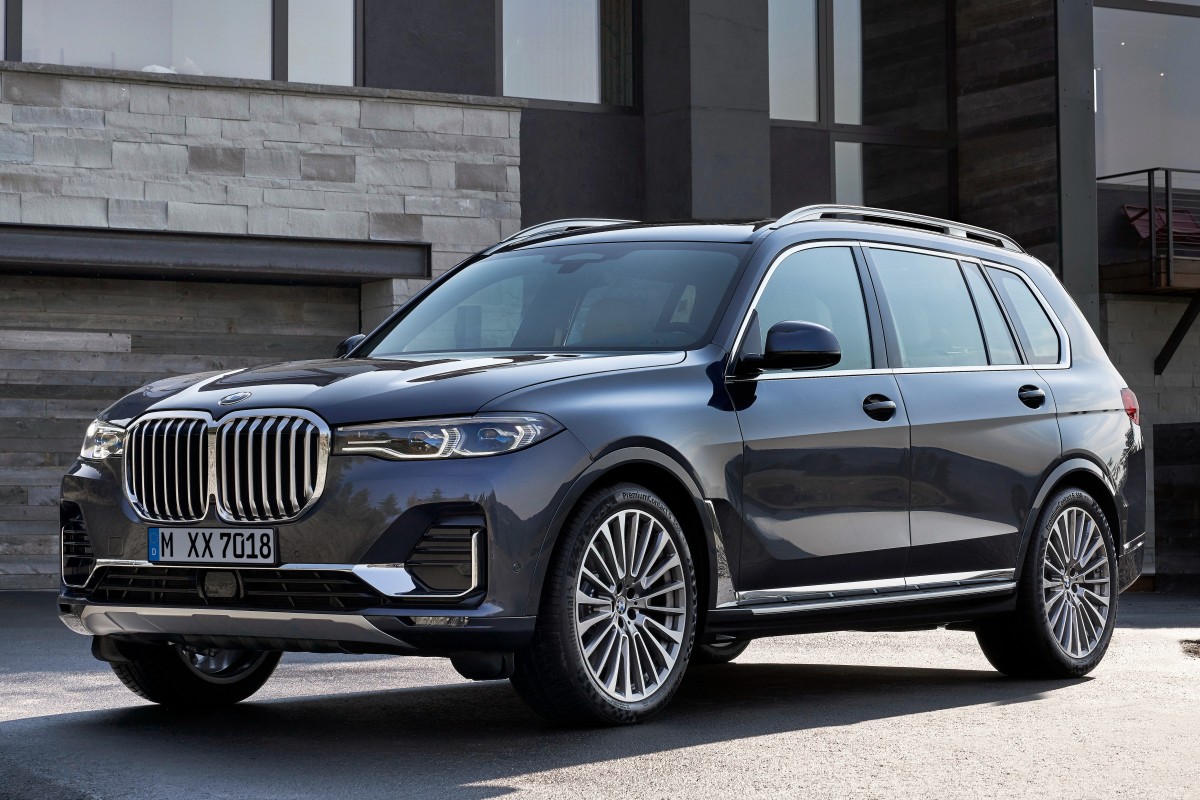
According to CarGurus experts, the overall rating for the 2025 BMW X7 is 7.3 out of 10, while the 2026 Hyundai Venue scores 5.3 out of 10. Based on these ratings, the BMW X7 is the recommended choice for those seeking a luxury SUV with superior performance, technology, and interior space.
Choose the 2025 BMW X7 if:
- You desire a luxury SUV with powerful engine options and advanced chassis technology.
- You need a spacious interior with flexible seating and ample cargo capacity.
- You appreciate a high-tech infotainment system with a large display and user-friendly controls.


Choose the 2026 Hyundai VENUE if:
- You are looking for a budget-friendly vehicle with practical urban manoeuvrability.
- You prioritize standard safety features and wireless smartphone integration.
- You want a compact crossover with a simple yet functional interior design.


CarGurus highlights
According to CarGurus experts, the overall rating for the 2025 BMW X7 is 7.3 out of 10, while the 2026 Hyundai Venue scores 5.3 out of 10. Based on these ratings, the BMW X7 is the recommended choice for those seeking a luxury SUV with superior performance, technology, and interior space.
Choose the 2025 BMW X7 if:
Shop Now- You desire a luxury SUV with powerful engine options and advanced chassis technology.
- You need a spacious interior with flexible seating and ample cargo capacity.
- You appreciate a high-tech infotainment system with a large display and user-friendly controls.
Choose the 2026 Hyundai VENUE if:
Shop Now- You are looking for a budget-friendly vehicle with practical urban manoeuvrability.
- You prioritize standard safety features and wireless smartphone integration.
- You want a compact crossover with a simple yet functional interior design.

By: CarGurus + AI
At CarGurus, our team of experienced automotive writers remain at the heart of our content operation, conducting hands-on car tests and writing insightful guides that are backed by years of industry experience. To complement this, we are harnessing AI to make our content offering more diverse and more helpful to shoppers than ever. To achieve this, our AI systems are based exclusively on CarGurus content, ratings and data, so that what we produce is both unique to CarGurus, and uniquely helpful to car shoppers.
