2024 Hyundai Kona vs 2025 Lincoln Aviator
Overview | |
MSRP$24,250 | MSRP$57,830 |
Listings228 | Listings46 |
Ratings & Reviews | |
User Reviews | User Reviews |
Expert reviews8.3 out of 10 | Expert reviews7.8 out of 10 |
Pros
Cons
| Pros
Cons
|
2024 Hyundai Kona Reviews SummaryThe Kona debuted for 2018 and got an electric counterpart when the Kona EV hit the market the following year. Hyundai's subcompact SUV got a refresh for 2022, which also saw the addition of the hot-hatch Kona N to the stable. Now, the Kona kicks off a whole new generation, with a new look, new tech, and, naturally, a new price tag to match. In a crowded segment, do the new features match–or perhaps even exceed–the added cost? | |
2025 Lincoln Aviator Reviews SummaryIn the midsize three-row luxury SUV segment, the 2025 Aviator embraces the mid-century modern cues of the past while delivering a calm, unhurried sanctuary for the present. Yet starting in 2025, this Lincoln simultaneously contains some of the most advanced technology in its segment. Fresh styling and new thematic packages are also available. However, the previously offered plug-in hybrid model has not been reintroduced to the lineup, leaving a twin-turbocharged V6 as the sole engine option. Verdict: Distinctive without resorting to polarization, the 2025 Lincoln Aviator is a compelling choice for people seeking a powerful, quiet, and comfortable luxury SUV. It’s been around since 2019, yet you can’t consider this Lincoln to be a relic thanks to its undeniable technological sophistication. | |
No video found | |
Popular Features & Specs | |
Engine2.0L 147 hp I4 | Engine3.0L 400 hp V6 |
DrivetrainFWD | DrivetrainRWD |
Seating Capacity5 | Seating Capacity7 |
Horsepower147 hp @ 6200 rpm | Horsepower |
MPG City29 | MPG City18 |
MPG Highway34 | MPG Highway25 |
Engine | |
Engine Name2.0L 147 hp I4 | Engine Name3.0L 400 hp V6 |
Torque132 lb-ft @ 4500 rpm | Torque |
Horsepower147 hp @ 6200 rpm | Horsepower |
DrivetrainFWD | DrivetrainRWD |
Fuel Economy | |
MPG City29 | MPG City18 |
MPG Highway34 | MPG Highway25 |
Interior | |
Seating Capacity5 | Seating Capacity7 |
Key Features | |
Navigation SystemStandard | Navigation SystemStandard |
Sunroof/Moonroof | Sunroof/MoonroofStandard |
Safety | |
Front Crash Overall4 | Front Crash Overall5 |
Side Crash Overall5 | Side Crash Overall5 |
Dimensions & Capacity | |
Cargo Space25.5 cu ft | Cargo Space16.5 cu ft |
Curb Weight3005 lbs | Curb Weight4745 lbs |
Height62.2 in | Height69.2 in |
Length171.3 in | Length199.7 in |
Width71.9 in | Width89.9 in |
Wheelbase104.7 in | Wheelbase119.1 in |
Maximum Payload1085 lbs | Maximum Payload1615 lbs |
Number of doors4 | Number of doors4 |
Maximum Towing Capacity | Maximum Towing Capacity5000 lbs |
Overview | ||
MSRP | $24,250 | $57,830 |
Listings | ||
Ratings & Reviews | ||
User reviews | ||
Expert reviews | 8.3 out of 10Read full review | 7.8 out of 10Read full review |
Pros & cons | Pros
Cons
| Pros
Cons
|
Summary | The Kona debuted for 2018 and got an electric counterpart when the Kona EV hit the market the following year. Hyundai's subcompact SUV got a refresh for 2022, which also saw the addition of the hot-hatch Kona N to the stable. Now, the Kona kicks off a whole new generation, with a new look, new tech, and, naturally, a new price tag to match. In a crowded segment, do the new features match–or perhaps even exceed–the added cost? | In the midsize three-row luxury SUV segment, the 2025 Aviator embraces the mid-century modern cues of the past while delivering a calm, unhurried sanctuary for the present. Yet starting in 2025, this Lincoln simultaneously contains some of the most advanced technology in its segment. Fresh styling and new thematic packages are also available. However, the previously offered plug-in hybrid model has not been reintroduced to the lineup, leaving a twin-turbocharged V6 as the sole engine option. Verdict: Distinctive without resorting to polarization, the 2025 Lincoln Aviator is a compelling choice for people seeking a powerful, quiet, and comfortable luxury SUV. It’s been around since 2019, yet you can’t consider this Lincoln to be a relic thanks to its undeniable technological sophistication. |
Video | No video found | |
Popular Features & Specs | ||
Engine | 2.0L 147 hp I4 | 3.0L 400 hp V6 |
Drivetrain | FWD | RWD |
Seating Capacity | 5 | 7 |
Horsepower | 147 hp @ 6200 rpm | |
MPG City | 29 | 18 |
MPG Highway | 34 | 25 |
Engine | ||
Engine Name | 2.0L 147 hp I4 | 3.0L 400 hp V6 |
Torque | 132 lb-ft @ 4500 rpm | |
Horsepower | 147 hp @ 6200 rpm | |
Drivetrain | FWD | RWD |
Fuel Economy | ||
MPG City | 29 | 18 |
MPG Highway | 34 | 25 |
Interior | ||
Seating Capacity | 5 | 7 |
Key Features | ||
Navigation System | Standard | Standard |
Sunroof/Moonroof | Standard | |
Safety | ||
Front Crash Overall | 4 | 5 |
Side Crash Overall | 5 | 5 |
Dimensions & Capacity | ||
Cargo Space | 25.5 cu ft | 16.5 cu ft |
Curb Weight | 3005 lbs | 4745 lbs |
Height | 62.2 in | 69.2 in |
Length | 171.3 in | 199.7 in |
Width | 71.9 in | 89.9 in |
Wheelbase | 104.7 in | 119.1 in |
Maximum Payload | 1085 lbs | 1615 lbs |
Number of doors | 4 | 4 |
Maximum Towing Capacity | 5000 lbs | |
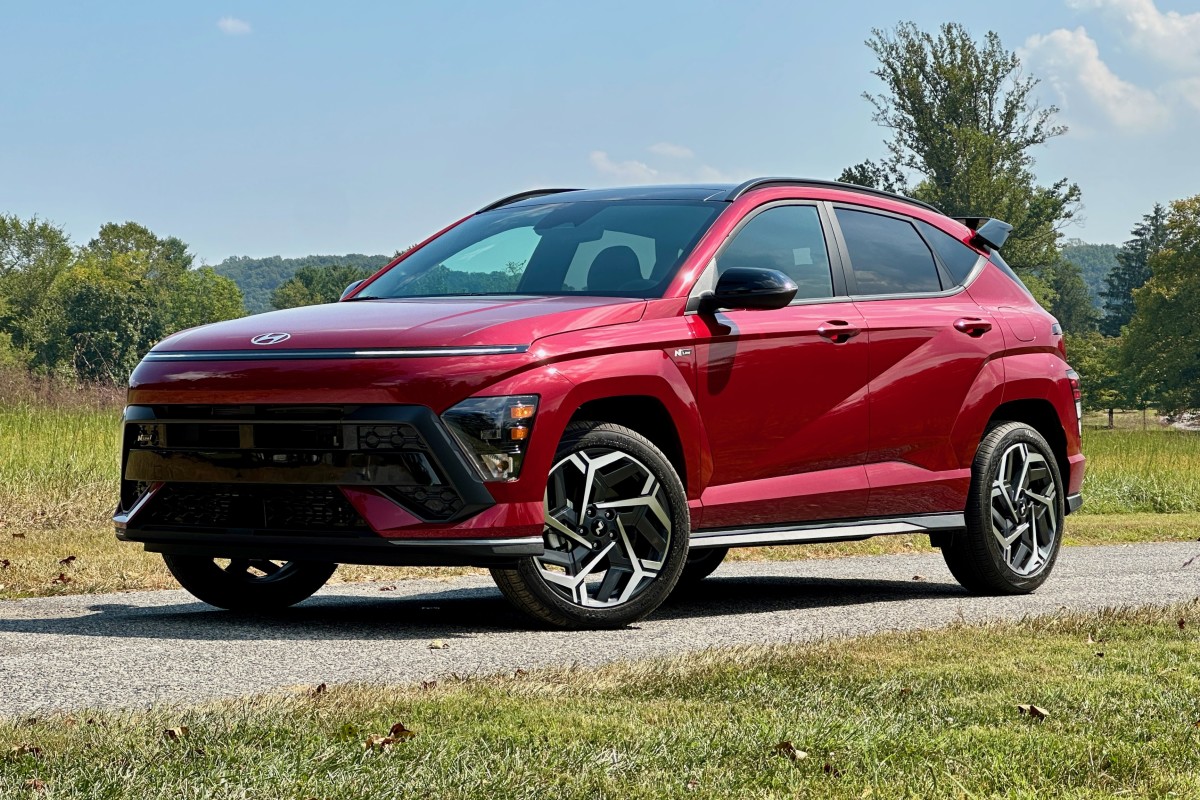
The 2024 Hyundai Kona was designed with an electric vehicle (EV) aesthetic in mind, evident in its sleek, modern appearance. The front grille closely resembled that of the Ioniq 5, featuring a single-piece design that has become synonymous with electric powertrains. The Kona's front end was dominated by a single skinny LED headlight, part of the "seamless horizon" treatment also seen on the new Sonata. Despite its increased size, the Kona maintained a recognizable silhouette, with new design elements like the creased "parametric surface" on the doors and more substantial black body cladding on the Essential and Preferred trims. The N Line trim, however, featured body-coloured wheel arches, adding a sporty touch.
Inside, the Kona's cabin received significant updates, including a driver-oriented centre stack and a relocated gear shift to a stalk on the steering column, creating more storage space. The most noticeable change was the curved display housing both the driver-information and infotainment screens. The interior also featured revised vents, controls, and dash, enhancing the overall refinement. Standard LED headlights, taillights, and daytime running lights were included across the lineup, with the seamless horizon design reappearing at the rear. Wheel sizes varied from 17-inch on the base model to 19-inch on the N Line.
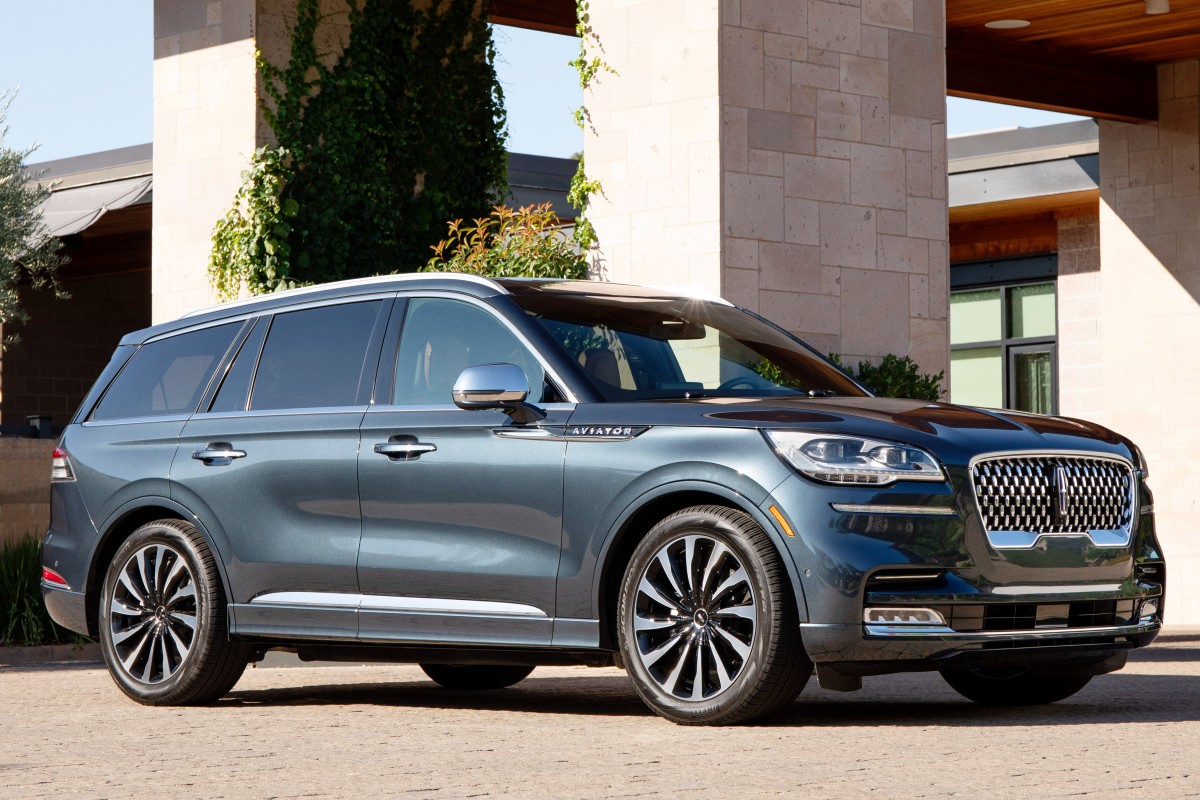
The 2025 Lincoln Aviator, built on a rear-wheel-drive platform shared with the Ford Explorer, boasted classic design proportions. It featured a blunt nose, short front overhang, and an appealing dash-to-axle ratio, with a tapered roofline that created an alluring silhouette, albeit at the expense of third-row passenger room. The Aviator's design leaned more towards a sports wagon than a traditional SUV, though the 2025 styling was considered less elegant and more generic, especially with the optional Jet Appearance Package.
Inside, the Aviator offered a plush interior with a classic architectural sensibility. Unlike the Lincoln Nautilus or Navigator, it didn't rely heavily on screens, yet remained technologically advanced. The Perfect Position front seats provided exceptional comfort with 30-way adjustability, heating, ventilation, and massage functions. The second-row captain's chairs were roomy and supportive, though the third-row seats were less accommodating for adults. Storage space was excellent, with a well-organized centre console and deep door panel storage pockets. Cargo capacity was generous, with 466 litres behind the third row and up to 2,149 litres with all seats folded.


The 2024 Hyundai Kona retained its predecessor's engine lineup, featuring a naturally aspirated 2.0-litre four-cylinder engine for the Essential and Preferred trims, and a turbocharged 1.6-litre four-cylinder for the N Line trims. The base engine produced 147 horsepower and 132 lb-ft of torque, paired with a continuously variable transmission (CVT). The turbo engine delivered 190 horsepower and 195 lb-ft of torque, now mated to an 8-speed automatic transmission. Paddle shifters were included with the N Line. Front-wheel drive was standard, with all-wheel drive available for an additional fee on the Essential and Preferred trims, and standard on the N Line. Fuel economy varied, with the N Line AWD consuming 9.7 L/100 km in the city, 8.3 on the highway, and 9.1 combined.
The 2025 Lincoln Aviator was powered by a twin-turbocharged 3.0-litre V6 engine, producing 400 horsepower and 415 lb-ft of torque, delivered through a 10-speed automatic transmission. Drivers could choose from various driving modes, including Excite, Conserve, Normal, Slippery, and Deep Conditions. The optional adaptive air suspension firmed up in Excite mode, though the Aviator was more focused on comfort than excitement. The V6 provided ample power for acceleration and passing, though fuel economy was less impressive, with an observed 13.3 L/100 km on a mountainous testing loop. The Aviator offered clear sightlines and a 360-degree camera view for urban driving, though the ride quality was affected by the 22-inch wheels and thin tires on rough roads.
The 2024 Hyundai Kona's increased length significantly improved rear-seat legroom, offering 970 millimetres, and cargo capacity, which expanded to 723 litres with the rear seats up and 1,803 litres with them folded down. The cabin featured a handy shelf on the passenger's side of the dash and a "guardrail" on the wireless charging pad. Seating options included cloth for Essential and Preferred trims, leatherette with the Preferred Trend package, and a leather/suede combination for N Line. Ventilated front seats were available on the N Line with the Ultimate package, a first for the Kona.
The 2025 Lincoln Aviator's Perfect Position front seats offered unparalleled comfort with 30-way adjustability, heating, ventilation, and massage functions. The second-row captain's chairs were roomy and supportive, though the third-row seats were less accommodating for adults. Storage space was excellent, with a well-organized centre console and deep door panel storage pockets. Cargo capacity was generous, with 466 litres behind the third row and up to 2,149 litres with all seats folded.
The 2024 Hyundai Kona featured a 12.3-inch touchscreen infotainment display as standard, with wireless Apple CarPlay and Android Auto on all trims except the N Line with the Ultimate package. The upgraded stereo system in the N Line's Ultimate package was provided by Bose. Dual 12.3-inch displays created a panoramic view in the N Line, and Hyundai's Bluelink connected services were standard across the lineup. A digital key feature was introduced in Canada, allowing users to transfer vehicle access via an app.
The 2025 Lincoln Aviator's 12.4-inch digital instrument cluster and 13.2-inch touchscreen infotainment system were powered by Lincoln Digital Experience, featuring Google Built-in and Alexa Built-in, along with wireless Apple CarPlay and Android Auto. However, the Google Assistant struggled with voice prompts in the test vehicle. The 28-speaker Revel Ultima 3D sound system provided excellent audio quality, and the head-up display offered a widescreen presentation of data, including lane departure warnings and blind-spot alerts.
The 2024 Hyundai Kona came equipped with standard advanced driver-assistance features, including Safe Exit Warning, blind-spot collision avoidance, and rear cross-traffic collision avoidance. High-beam assist and adaptive cruise control were standard from the Preferred trim, while the N Line's Ultimate package included Surround View Monitor and blind-spot view monitor. Hyundai's Highway Driving Assist suite impressed with its smooth lane-keep assist.
The 2025 Lincoln Aviator featured the Lincoln Co-Pilot360 Drive 2.0 suite, including active blind-spot monitoring with trailer coverage, intersection assist, evasive steering assist, and reverse braking assist. BlueCruise, a hands-free driving assistance system, was standard, offering a four-year subscription. The Aviator earned five-star ratings from the U.S. National Highway Traffic Safety Administration and Good ratings from the Insurance Institute for Highway Safety.
CarGurus highlights
According to CarGurus experts, the overall rating for the 2024 Hyundai Kona is 8.3 out of 10, while the 2025 Lincoln Aviator scores 7.8 out of 10. Based on these ratings, the 2024 Hyundai Kona is the recommended choice for those seeking a well-rounded, efficient, and technologically advanced compact SUV.
Choose the 2024 Hyundai Kona if:
- You prioritize fuel efficiency and a lower starting price.
- You value advanced safety features as standard across all trims.
- You need a compact SUV with ample cargo space and rear-seat legroom.


Choose the 2025 Lincoln Aviator if:
- You desire a luxury SUV with a powerful engine and smooth ride.
- You appreciate advanced technology and a high-end audio system.
- You require a spacious interior with comfortable seating for long journeys.


CarGurus highlights
According to CarGurus experts, the overall rating for the 2024 Hyundai Kona is 8.3 out of 10, while the 2025 Lincoln Aviator scores 7.8 out of 10. Based on these ratings, the 2024 Hyundai Kona is the recommended choice for those seeking a well-rounded, efficient, and technologically advanced compact SUV.
Choose the 2024 Hyundai Kona if:
Shop Now- You prioritize fuel efficiency and a lower starting price.
- You value advanced safety features as standard across all trims.
- You need a compact SUV with ample cargo space and rear-seat legroom.
Choose the 2025 Lincoln Aviator if:
Shop Now- You desire a luxury SUV with a powerful engine and smooth ride.
- You appreciate advanced technology and a high-end audio system.
- You require a spacious interior with comfortable seating for long journeys.

By: CarGurus + AI
At CarGurus, our team of experienced automotive writers remain at the heart of our content operation, conducting hands-on car tests and writing insightful guides that are backed by years of industry experience. To complement this, we are harnessing AI to make our content offering more diverse and more helpful to shoppers than ever. To achieve this, our AI systems are based exclusively on CarGurus content, ratings and data, so that what we produce is both unique to CarGurus, and uniquely helpful to car shoppers.
