2021 Toyota Camry vs 2021 BMW 3 Series
Overview | |
MSRP$41,250 | MSRP$25,045 |
Listings223 | Listings234 |
Ratings & Reviews | |
User Reviews | User Reviews |
Expert reviews6.8 out of 10 | Expert reviews7.8 out of 10 |
Pros
Cons
| Pros
Cons
|
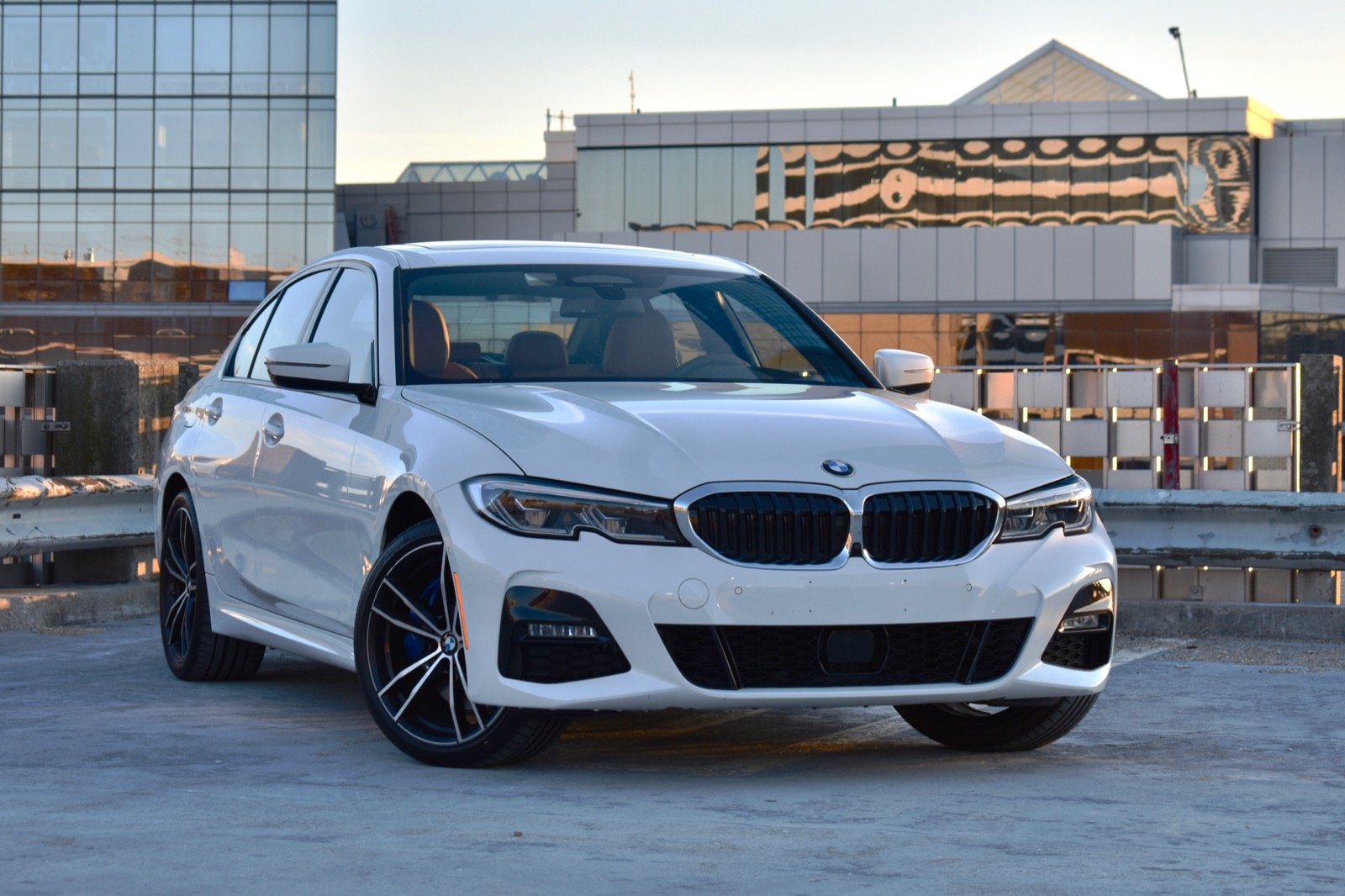
2021 BMW 3 Series Reviews SummaryEarly generations of the BMW 3 Series redefined what a luxury car could be, justifying their prestige badge with sporty driving dynamics and impeccable engineering. BMW changed the luxury-car paradigm, proving that nimble sports sedans could be just as desirable as wood-encrusted land yachts. The 3 Series spawned a number of imitators, including the Audi A4, Mercedes-Benz C-Class, and Lexus IS. Those sedans, along with the Acura TLX, Alfa Romeo Giulia, Cadillac CT4, and Infiniti Q50 (which wear more recently-introduced nameplates) still form the 3 Series’ competitive set, but the car itself has changed. Introduced for the 2019 model year, the current-generation 3 Series (codenamed G20) feels more like a traditional luxury sedan, with a greater emphasis on comfort and convenience than previous generations. The manual transmission is gone, as are the wagon and 3 Series GT hatchback body styles. The 3 Series coupe and convertible were re-badged as the 4 Series beginning with the 2014 model year. The biggest change for the 2021 BMW 3 Series is the addition of the 330e plug-in hybrid model to the lineup, so that’s what we test drove for this review. BMW also offers 330i and M340i versions, and there’s an M3 performance model on the way. | |
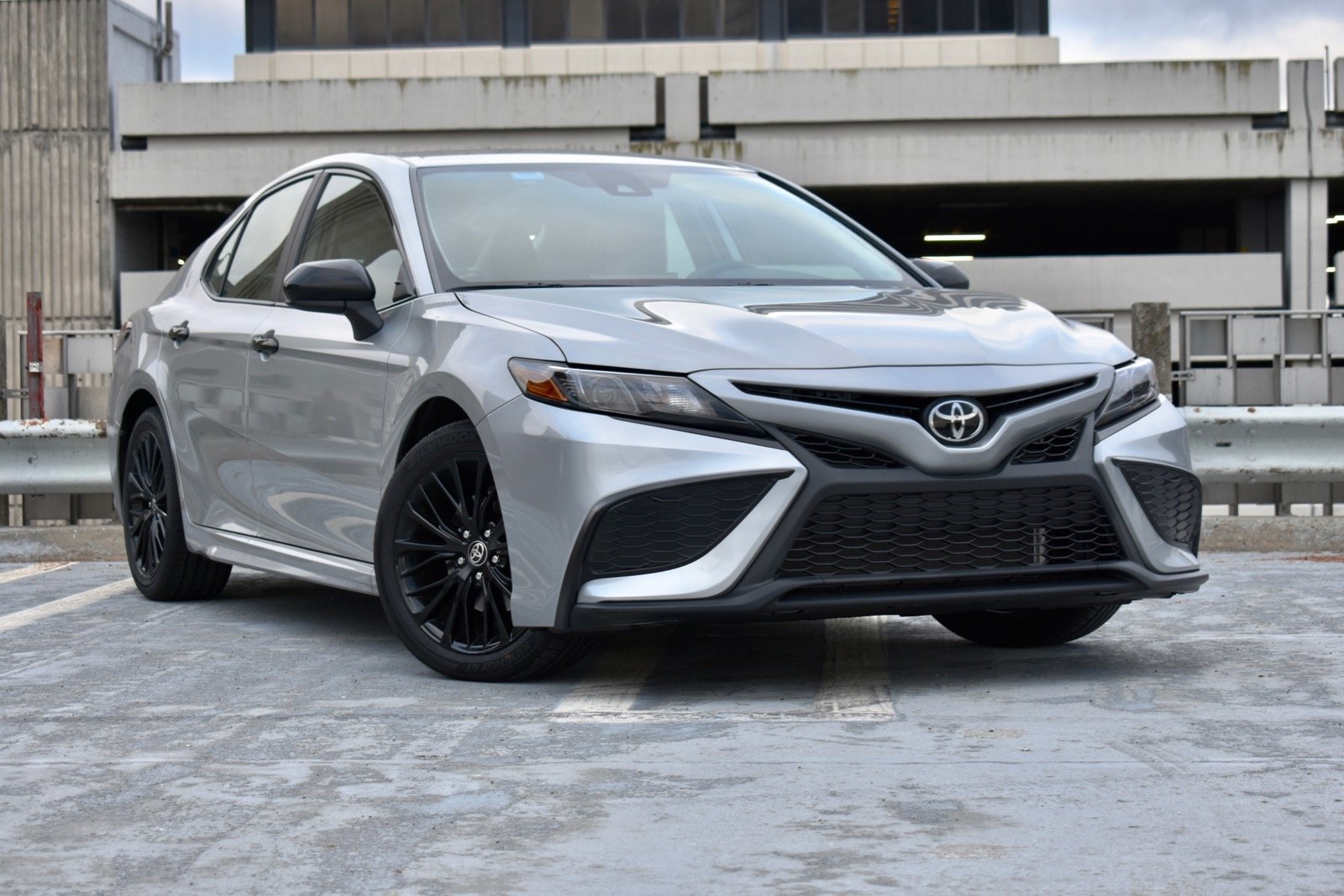
2021 Toyota Camry Reviews SummaryThe Toyota Camry has long been many new-car buyers’ default choice—but not because it’s interesting. Reliability and practicality have traditionally been the Camry’s strengths, not sportiness or style. Toyota tried to change that for the 2018 model year, when the Camry was last redesigned. The current-generation Camry adopted more extroverted styling, and engineers tried to make the driving experience more exciting, too. While Toyota’s approach has changed, the Camry still competes against the same array of midsize sedans, including the Honda Accord, Hyundai Sonata, Mazda 6, Nissan Altima, Subaru Legacy, and Volkswagen Passat. Changes for the 2021 model year include subtle styling tweaks, new infotainment displays, an upgrade to the Toyota Safety Sense 2.5+ (TSS 2.5+) package of driver aids, some changes to the dashboard trim, and the discontinuation of the Camry L trim level. That leaves the Camry LE as the new base trim level. The Camry offers buyers more choices than many rivals, encompassing three powertrains (inline-four, V6, and hybrid), six trim levels (LE, XLE, SE, SE Nightshade Edition, XSE, and TRD), and the choice of front-wheel drive (FWD) or all-wheel drive (AWD). Our test car was an AWD SE Nightshade Edition, positioned close to the middle of the lineup. | |
No video found | No video found |
Popular Features & Specs | |
Engine2.0L 255 hp I4 | Engine2.5L 203 hp I4 |
Drive TrainRWD | Drive TrainFWD |
Seating Capacity5 | Seating Capacity5 |
Horsepower255 hp @ 5000 rpm | Horsepower |
MPG City26 | MPG City28 |
MPG Highway36 | MPG Highway39 |
Engine | |
Engine Name2.0L 255 hp I4 | Engine Name2.5L 203 hp I4 |
Torque295 lb-ft @ 1450 rpm | Torque |
Horsepower255 hp @ 5000 rpm | Horsepower |
DrivetrainRWD | DrivetrainFWD |
Fuel Economy | |
MPG City26 | MPG City28 |
MPG Highway36 | MPG Highway39 |
Interior | |
Seating Capacity5 | Seating Capacity5 |
Key Features | |
Navigation SystemStandard | Navigation System |
Sunroof/MoonroofStandard | Sunroof/Moonroof |
Safety | |
Front Crash Overall5 | Front Crash Overall5 |
Side Crash Overall5 | Side Crash Overall5 |
Dimensions & Capacity | |
Cargo Space13.0 cu ft | Cargo Space15.1 cu ft |
Curb Weight3589 lbs | Curb Weight3310 lbs |
Height56.8 in | Height56.9 in |
Length185.7 in | Length192.1 in |
Width81.4 in | Width72.4 in |
Wheelbase112.2 in | Wheelbase111.2 in |
Maximum Payload | Maximum Payload925 lbs |
Number of doors4 | Number of doors4 |
Overview | ||
MSRP | $41,250 | $25,045 |
Listings | ||
Ratings & Reviews | ||
User reviews | ||
Expert reviews | 6.8 out of 10Read full review | 7.8 out of 10Read full review |
Pros & cons | Pros
Cons
| Pros
Cons
|
Summary | Early generations of the BMW 3 Series redefined what a luxury car could be, justifying their prestige badge with sporty driving dynamics and impeccable engineering. BMW changed the luxury-car paradigm, proving that nimble sports sedans could be just as desirable as wood-encrusted land yachts. The 3 Series spawned a number of imitators, including the Audi A4, Mercedes-Benz C-Class, and Lexus IS. Those sedans, along with the Acura TLX, Alfa Romeo Giulia, Cadillac CT4, and Infiniti Q50 (which wear more recently-introduced nameplates) still form the 3 Series’ competitive set, but the car itself has changed. Introduced for the 2019 model year, the current-generation 3 Series (codenamed G20) feels more like a traditional luxury sedan, with a greater emphasis on comfort and convenience than previous generations. The manual transmission is gone, as are the wagon and 3 Series GT hatchback body styles. The 3 Series coupe and convertible were re-badged as the 4 Series beginning with the 2014 model year. The biggest change for the 2021 BMW 3 Series is the addition of the 330e plug-in hybrid model to the lineup, so that’s what we test drove for this review. BMW also offers 330i and M340i versions, and there’s an M3 performance model on the way. | The Toyota Camry has long been many new-car buyers’ default choice—but not because it’s interesting. Reliability and practicality have traditionally been the Camry’s strengths, not sportiness or style. Toyota tried to change that for the 2018 model year, when the Camry was last redesigned. The current-generation Camry adopted more extroverted styling, and engineers tried to make the driving experience more exciting, too. While Toyota’s approach has changed, the Camry still competes against the same array of midsize sedans, including the Honda Accord, Hyundai Sonata, Mazda 6, Nissan Altima, Subaru Legacy, and Volkswagen Passat. Changes for the 2021 model year include subtle styling tweaks, new infotainment displays, an upgrade to the Toyota Safety Sense 2.5+ (TSS 2.5+) package of driver aids, some changes to the dashboard trim, and the discontinuation of the Camry L trim level. That leaves the Camry LE as the new base trim level. The Camry offers buyers more choices than many rivals, encompassing three powertrains (inline-four, V6, and hybrid), six trim levels (LE, XLE, SE, SE Nightshade Edition, XSE, and TRD), and the choice of front-wheel drive (FWD) or all-wheel drive (AWD). Our test car was an AWD SE Nightshade Edition, positioned close to the middle of the lineup. |
Video | No video found | No video found |
Popular Features & Specs | ||
Engine | 2.0L 255 hp I4 | 2.5L 203 hp I4 |
Drive Train | RWD | FWD |
Seating Capacity | 5 | 5 |
Horsepower | 255 hp @ 5000 rpm | |
MPG City | 26 | 28 |
MPG Highway | 36 | 39 |
Engine | ||
Engine Name | 2.0L 255 hp I4 | 2.5L 203 hp I4 |
Torque | 295 lb-ft @ 1450 rpm | |
Horsepower | 255 hp @ 5000 rpm | |
Drivetrain | RWD | FWD |
Fuel Economy | ||
MPG City | 26 | 28 |
MPG Highway | 36 | 39 |
Interior | ||
Seating Capacity | 5 | 5 |
Key Features | ||
Navigation System | Standard | |
Sunroof/Moonroof | Standard | |
Safety | ||
Front Crash Overall | 5 | 5 |
Side Crash Overall | 5 | 5 |
Dimensions & Capacity | ||
Cargo Space | 13.0 cu ft | 15.1 cu ft |
Curb Weight | 3589 lbs | 3310 lbs |
Height | 56.8 in | 56.9 in |
Length | 185.7 in | 192.1 in |
Width | 81.4 in | 72.4 in |
Wheelbase | 112.2 in | 111.2 in |
Maximum Payload | 925 lbs | |
Number of doors | 4 | 4 |
In the 2021 model year, BMW chose a conservative route for the 3 Series, echoing the aesthetic of its larger siblings in the sedan lineup. This move, reminiscent of the brand's iconic E30, aimed to propagate a uniform familial look across the series. The G20 3 Series, while echoing the larger 5 and 7 Series sedans, didn't quite capture the design magic of its predecessors. Its dominating grille seemed disproportionate, fitting better on larger models but appearing somewhat misplaced on the smaller 3 Series. The attempt to jazz it up with M Sport trim options like 19-inch wheels and blue-painted brake calipers added some flair, yet the overall impression was undermined by liberal use of plastic in the cabin, detracting from the luxury ethos typically associated with BMW.
Contrastingly, Toyota took an aggressive approach with the 2021 Camry, attempting to shrug off the model's previously understated image. The design included pronounced wheel arches and slim lighting that visually broadened the vehicle's stance, although added elements like faux vents on certain trims contributed to a somewhat cluttered appearance. The Camry's interior mirrored this busy exteriors aesthetic, with a variety of textures and materials that felt disjointed. While the car offered substantial interior space and the SE Nightshade Edition featured appealing blacked-out accents, the overall execution seemed to prioritize style over sophistication, which might appeal to those seeking a more daring design in a typically conservative segment.


The 2021 BMW 3 Series lineup offered robust engine options aimed at premium sedan enthusiasts. The base 330i packed a 2.0-liter turbocharged four-cylinder engine with 255 horsepower and 295 pound-feet of torque. More impressive was the M340i, which featured a turbocharged inline-six delivering 382 horsepower and achieving a quick 0 to 60 mph sprint in just over 4 seconds. Despite the allure of power, the 330e hybrid variant, with its combined 288 horsepower, exhibited a less satisfying drive with rough transitions between electric and gasoline power. Although the 3 Series maintained its reputation for a solid ride and capable handling, the excitement factor in driving dynamics ironically seemed muted compared to earlier models.
Toyota's approach with the Camry favored a broader engine selection tailored to a range of driving preferences. The base models were equipped with a 2.5-liter Dynamic Force engine, surprisingly spirited for its class with up to 206 horsepower in certain trims. The V6 option escalated this to 301 horsepower, providng a robust alternative in a field often dominated by turbocharged engines. On the roads, even the base engine with AWD provided a lively and enjoyable drive, surprisingly nimble in handling with a well-calibrated chassis that balanced comfort with responsiveness. This made the Camry not just a practical everyday car but one that could provide unexpected driving pleasure, even if it didn't reach the athletic peaks of competitors like the Mazda 6.
Interior space within the 3 Series was commendable for its class with a best-in-segment rear headroom and a reasonable front headroom. Practicality extended to cargo with a plentiful 17 cubic feet for the gasoline models, though the hybrid's battery reduced this to 13.2 cubic feet. The thoughtful interior design focused on driver ease, with a well-placed touchscreen and effective outward visibility enhancing the driving experience. However, the somewhat cramped rear legroom could pose comfort issues during longer journeys.
Conversely, the Camry offered ample room in the rear but compromised slightly on front headroom and legroom. Cargo capacity stood at 15.1 cubic feet, trailing slightly behind sector leader Honda Accord. Despite these figures, the Camry excelled in ergonomic layout with intuitive control placements and a mix of analog and digital interfaces that enhanced user interaction without overwhelming with complexity. The overall cabin arrangement was functional, with a clear bias towards ensuring a relaxed driving environment.
BMW's iDrive system in the 3 Series was a standout, offering a mix of modern features and user-friendly interfaces. This included an optional Live Cockpit Professional that enhanced the already competent base setup. The various input methods, such as voice control and gesture commands, although sometimes perceived as gimmicks, provided a layered interaction flexibility, setting a premium standard in vehicular infotainment.
Toyota's system in the Camry, while fully functional and easier to navigate, lacked the sophisticated flair of BMW's offering. Standard features included a 7-inch touchscreen, with a larger 9-inch option available on higher trims, along with comprehensive smartphone integration and optional JBL audio which enhanced the overall media experience. However, it didn't quite reach the intuitive or luxurious feel of its German rival.
The 3 Series achieved a Top Safety Pick from IIHS and incorporated an optional Active Driving Assistant Professional for enhanced driving aid, though this came at an extra cost. BMW's inclusion of basic driver-assist features set a baseline of safety, supplemented by more advanced options for those willing to invest.
The Camry not only matched but exceeded this with a Top Safety Pick+ from IIHS and a full five stars from NHTSA. It offered a comprehensive suite of driver aids as standard, indicating Toyota's prioritization of safety across all trims, which added significant value and peace of mind to the ownership experience.
CarGurus highlights
According to CarGurus experts, the overall rating for 2021 BMW 3 Series is 6.8 out of 10, while the 2021 Toyota Camry scores 7.8 out of 10. The Toyota Camry emerges as the more compelling choice for most consumers, offering a blend of safety, performance, and value that edges out the more premium-oriented BMW 3 Series. If you seek a well-rounded sedan that scores high on both functionality and everyday usability, the Camry warrants serious consideration.
Choose the 2021 Toyota Camry if:
- You prioritize comprehensive safety features available as standard across all trims.
- A balance of performance and handling with surprising agility in a family sedan is desired.
- Value for money and a bold exterior design appeal to your aesthetic preferences.


Choose the 2021 BMW 3 Series if:
- You value a sedan with robust engine performance and a prestigious brand image.
- Premium interior technology and flexible user interfaces are a priority.
- Cargo space is a significant consideration in your decision.


CarGurus highlights
According to CarGurus experts, the overall rating for 2021 BMW 3 Series is 6.8 out of 10, while the 2021 Toyota Camry scores 7.8 out of 10. The Toyota Camry emerges as the more compelling choice for most consumers, offering a blend of safety, performance, and value that edges out the more premium-oriented BMW 3 Series. If you seek a well-rounded sedan that scores high on both functionality and everyday usability, the Camry warrants serious consideration.
Choose the 2021 Toyota Camry if:
Shop Now- You prioritize comprehensive safety features available as standard across all trims.
- A balance of performance and handling with surprising agility in a family sedan is desired.
- Value for money and a bold exterior design appeal to your aesthetic preferences.
Choose the 2021 BMW 3 Series if:
Shop Now- You value a sedan with robust engine performance and a prestigious brand image.
- Premium interior technology and flexible user interfaces are a priority.
- Cargo space is a significant consideration in your decision.

By: CarGurus + AI
At CarGurus, our team of experienced automotive writers remain at the heart of our content operation, conducting hands-on car tests and writing insightful guides that are backed by years of industry experience. To complement this, we are harnessing AI to make our content offering more diverse and more helpful to shoppers than ever. To achieve this, our AI systems are based exclusively on CarGurus content, ratings and data, so that what we produce is both unique to CarGurus, and uniquely helpful to car shoppers.

