Toyota Prius vs Hyundai Sonata Hybrid
Overview | |
MSRP$28,350 | MSRP$30,800 |
Listings165 | Listings443 |
Ratings & Reviews | |
User Reviews | User Reviews |
Expert reviews6.7 out of 10 | Expert reviews8.5 out of 10 |
Pros
Cons
| Pros
Cons
|
Reviews SummaryDecades ago, few cars were anywhere near as fuel efficient as the Toyota Prius. Today, the 2025 Prius remains a fuel economy champion, but numerous alternatives are close. Some even offer more interior room at a lower price. That reality, coupled with the cramped interior, limited trunk space, and general weirdness of the Prius, means hybrid car buyers have options. Verdict: The point of the 2025 Toyota Prius is fuel economy, but our test car averaged 6.0 litres per 100 kilometres, falling significantly short of the Natural Resources Canada estimate of 4.8 L/100 km in combined driving. That certainly isn’t superior to roomier hybrid cars from Honda, Hyundai, or from within Toyota’s own lineup. | |
Reviews SummaryIt’s easy to discount the value of a family sedan with so many crossovers on the road. But the fact is that this body style makes a lot of sense for a lot of families. The more manageable and maneuverable the vehicle, the better for teaching budding young drivers. Lighter weight also translates to better fuel economy, not to be sneered at when there are mouths to feed and tuitions to pay. And your typical midsize sedan is plenty spacious for four. Fortunately, automakers have not forgotten about the venerable family sedan, keeping one another on their toes with updates, and it’s consumers who stand to benefit from that sort of healthy competition. Now, it’s the 2024 Hyundai Sonata’s turn for a mid-generation refresh. Verdict: We already liked the Sonata, and this refresh only improves it. The styling update and generous standard feature set make it a compelling choice. | |
No video found | |
Popular Features & Specs | |
Engine2.0L 194 hp I4 Hybrid | Engine2.0L 192 hp I4 Hybrid |
DrivetrainFWD | DrivetrainFWD |
Seating Capacity5 | Seating Capacity5 |
EV Battery Capacity0.9 kWh | EV Battery Capacity1.6 kWh |
MPG City57 | MPG City44 |
MPG Highway56 | MPG Highway51 |
Engine | |
Engine Name2.0L 194 hp I4 Hybrid | Engine Name2.0L 192 hp I4 Hybrid |
DrivetrainFWD | DrivetrainFWD |
Fuel Economy | |
EV Battery Capacity0.9 kWh | EV Battery Capacity1.6 kWh |
MPG City57 | MPG City44 |
MPG Highway56 | MPG Highway51 |
Interior | |
Seating Capacity5 | Seating Capacity5 |
Key Features | |
Navigation System | Navigation SystemStandard |
Safety | |
Front Crash Overall5 | Front Crash Overall4 |
Side Crash Overall5 | Side Crash Overall5 |
Dimensions & Capacity | |
Cargo Space23.8 cu ft | Cargo Space16.0 cu ft |
Curb Weight3097 lbs | Curb Weight3439 lbs |
Height55.9 in | Height56.9 in |
Length181.1 in | Length193.3 in |
Width70.2 in | Width73.2 in |
Wheelbase108.3 in | Wheelbase111.8 in |
Maximum Payload860 lbs | Maximum Payload1136 lbs |
Number of doors4 | Number of doors4 |
Overview | ||
MSRP | $28,350 | $30,800 |
Listings | ||
Ratings & Reviews | ||
User reviews | ||
Expert reviews | 6.7 out of 10Read full review | 8.5 out of 10Read full review |
Pros & cons | Pros
Cons
| Pros
Cons
|
Summary | Decades ago, few cars were anywhere near as fuel efficient as the Toyota Prius. Today, the 2025 Prius remains a fuel economy champion, but numerous alternatives are close. Some even offer more interior room at a lower price. That reality, coupled with the cramped interior, limited trunk space, and general weirdness of the Prius, means hybrid car buyers have options. Verdict: The point of the 2025 Toyota Prius is fuel economy, but our test car averaged 6.0 litres per 100 kilometres, falling significantly short of the Natural Resources Canada estimate of 4.8 L/100 km in combined driving. That certainly isn’t superior to roomier hybrid cars from Honda, Hyundai, or from within Toyota’s own lineup. | It’s easy to discount the value of a family sedan with so many crossovers on the road. But the fact is that this body style makes a lot of sense for a lot of families. The more manageable and maneuverable the vehicle, the better for teaching budding young drivers. Lighter weight also translates to better fuel economy, not to be sneered at when there are mouths to feed and tuitions to pay. And your typical midsize sedan is plenty spacious for four. Fortunately, automakers have not forgotten about the venerable family sedan, keeping one another on their toes with updates, and it’s consumers who stand to benefit from that sort of healthy competition. Now, it’s the 2024 Hyundai Sonata’s turn for a mid-generation refresh. Verdict: We already liked the Sonata, and this refresh only improves it. The styling update and generous standard feature set make it a compelling choice. |
Video | No video found | |
Popular Features & Specs | ||
Engine | 2.0L 194 hp I4 Hybrid | 2.0L 192 hp I4 Hybrid |
Drivetrain | FWD | FWD |
Seating Capacity | 5 | 5 |
EV Battery Capacity | 0.9 kWh | 1.6 kWh |
MPG City | 57 | 44 |
MPG Highway | 56 | 51 |
Engine | ||
Engine Name | 2.0L 194 hp I4 Hybrid | 2.0L 192 hp I4 Hybrid |
Drivetrain | FWD | FWD |
Fuel Economy | ||
EV Battery Capacity | 0.9 kWh | 1.6 kWh |
MPG City | 57 | 44 |
MPG Highway | 56 | 51 |
Interior | ||
Seating Capacity | 5 | 5 |
Key Features | ||
Navigation System | Standard | |
Safety | ||
Front Crash Overall | 5 | 4 |
Side Crash Overall | 5 | 5 |
Dimensions & Capacity | ||
Cargo Space | 23.8 cu ft | 16.0 cu ft |
Curb Weight | 3097 lbs | 3439 lbs |
Height | 55.9 in | 56.9 in |
Length | 181.1 in | 193.3 in |
Width | 70.2 in | 73.2 in |
Wheelbase | 108.3 in | 111.8 in |
Maximum Payload | 860 lbs | 1136 lbs |
Number of doors | 4 | 4 |
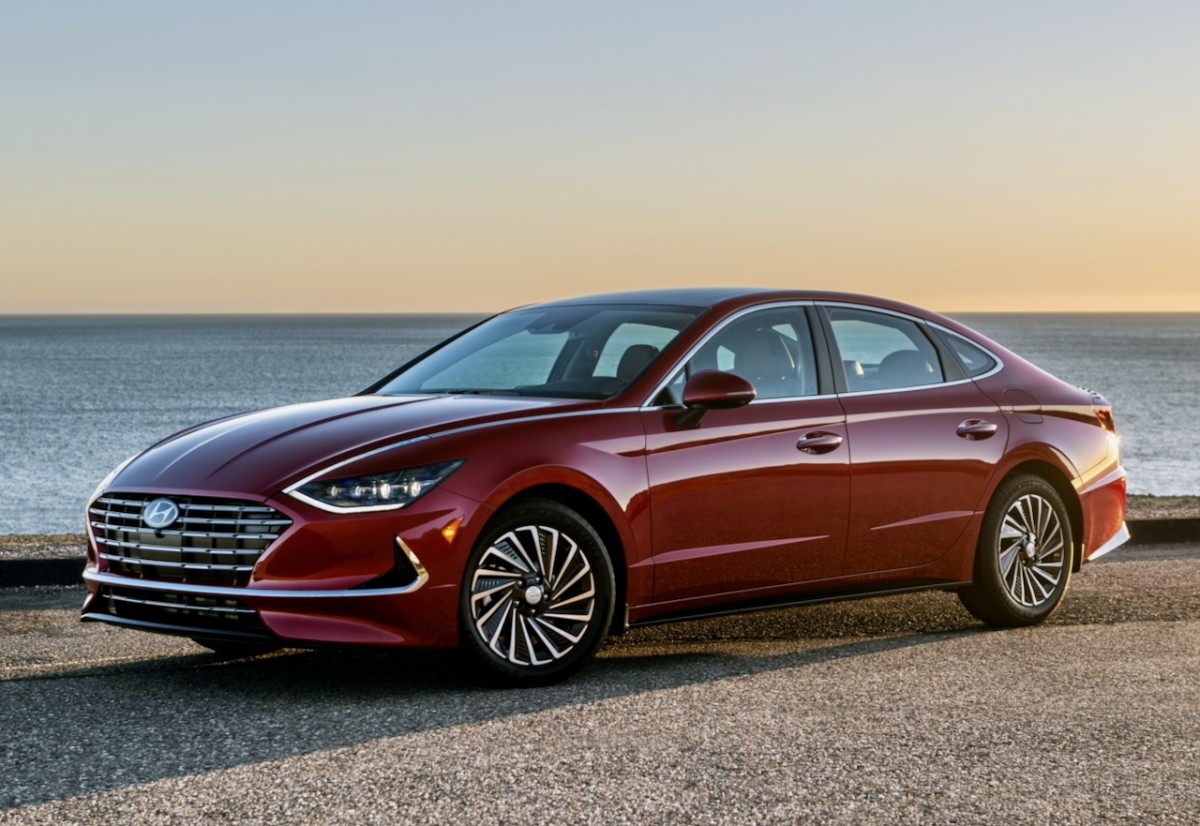
The 2024 Hyundai Sonata Hybrid showcased a significant evolution in its design, with a modernized front fascia featuring a sleek lightbar known as the “seamless horizon lamp.” This design choice gave the sedan a contemporary edge, while the repositioned badge and independent headlights added to its distinctiveness. The rear end, with its wide “H” shaped taillights, drew inspiration from the Hyundai Santa Fe, enhancing its familial resemblance to the Ioniq 6 without adopting its more controversial elements. Despite these updates, the side profile remained largely unchanged from the 2023 model. Inside, the Sonata Hybrid retained its seating design but introduced a revamped dashboard with extended vents and a redesigned steering wheel, now featuring a T-shape and Morse code-inspired logo. The gear shifter's relocation to the steering column was another notable change, enhancing the interior's modernity.
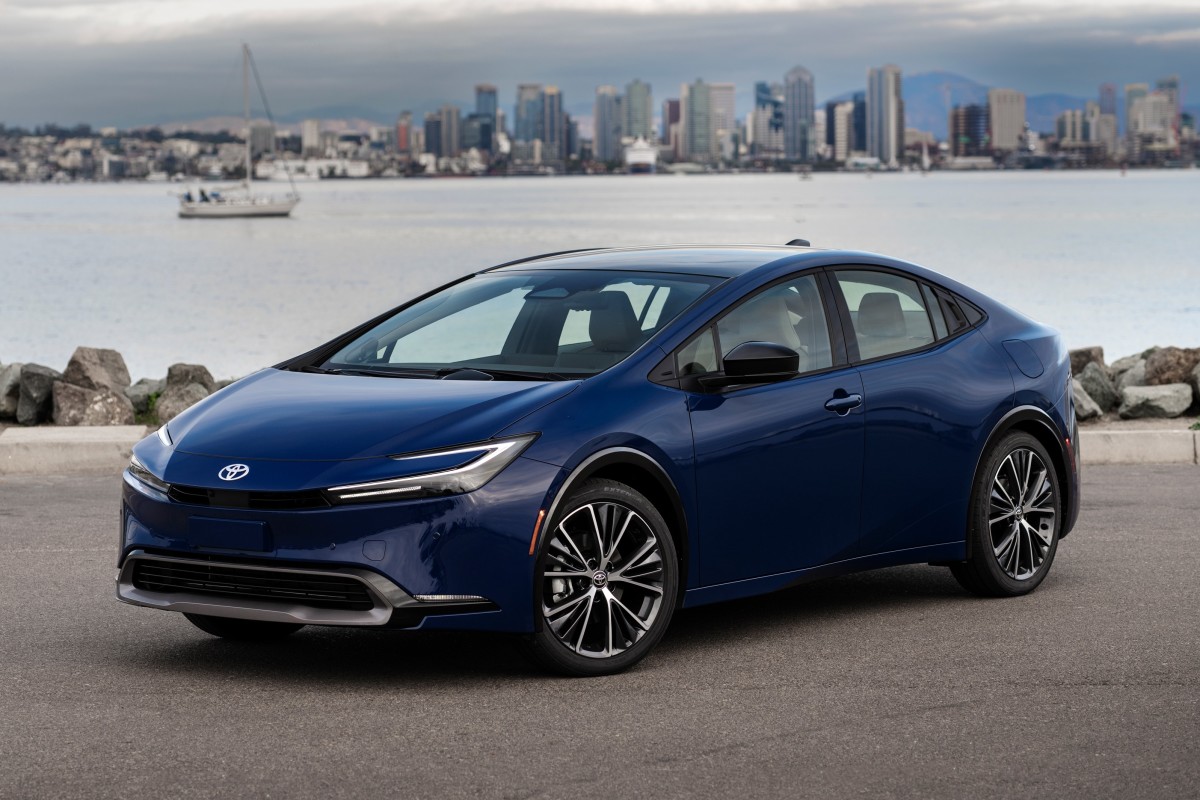
In contrast, the 2025 Toyota Prius embraced a futuristic and aerodynamic design while maintaining its iconic boomerang-shaped profile. Available in XLE and Limited trims in Canada, the Prius offered a range of pricing and features, including a plug-in hybrid variant with significant electric-only driving capability. The Prius's low stance, at 1,430 millimetres tall, contributed to its sporty feel, though it posed challenges for entry and exit. Inside, the Prius featured a spacious dashboard with a distant 7-inch digital gauge cluster, while the rearview mirror's visibility was somewhat obstructed by cargo-area panels. The interior materials combined hard plastics with Toyota's SofTex artificial leather, and ambient lighting added a touch of vibrancy. The Limited trim boasted a 12.3-inch touchscreen infotainment system, enhancing the minimalist cabin's appeal.
The 2024 Hyundai Sonata Hybrid introduced an all-wheel-drive (AWD) system for the first time, available on the Preferred-Trend trim for an additional $2,000. The Preferred-Trend trim featured a naturally aspirated 2.5-litre four-cylinder engine, delivering 191 horsepower and 181 pound-feet of torque through an eight-speed automatic transmission. The N Line trim, however, remained front-wheel-drive (FWD) only, boasting a turbocharged version of the same engine with 290 hp and 311 lb-ft of torque, available from 1,650 to 4,000 rpm. This power was managed by an 8-speed wet-clutch dual-clutch transmission (DCT). The Sonata's steering and handling were praised for their responsiveness, and the configurable driver-information display added to the driving experience.
The 2025 Toyota Prius, built on the Toyota New Global Architecture (TNGA), featured a 2.0-litre four-cylinder gas engine paired with an 83-kilowatt electric motor on the front axle and a 30-kW electric motor at the rear, providing AWD traction when needed. This setup resulted in a total net output of 196 hp. The Prius's performance was lively, with the hybrid system offering enough power to navigate traffic and accelerate to highway speeds with ease. The ride and handling were commendable, with the 19-inch wheels providing good grip on winding roads. However, wind noise was noticeable at highway speeds, and visibility challenges were present in urban settings. The Prius's fuel economy, rated at 4.8 L/100 km by NRCan, fell short during testing, averaging 6.0 L/100 km on a mountainous route.
The 2024 Hyundai Sonata Hybrid offered competitive interior space, with 975 millimetres of front-seat headroom, slightly surpassing the Honda Accord and Toyota Camry. Rear-seat headroom was also competitive at 950 mm. The Sonata prioritized front-row legroom with 1,170 mm, while rear passengers received 885 mm. Heated and ventilated front seats were standard in the Preferred-Trend trim, though ventilation was omitted in the N Line's sport seats. The steering wheel's slimmer rim was appreciated for its comfort, and the trunk close button added a touch of convenience.
The 2025 Toyota Prius, with its dual-panel glass roof in the Limited trim, offered a sense of openness to the otherwise cramped interior. The eight-way power-adjustable driver's seat, heated front seats, and heated steering wheel contributed to comfort, though entry and exit were challenging due to the car's low stance. The rear seat was snug, with limited headroom and no rear climate-control vents. Storage options included slots in all four door armrests and a two-tiered bin in front of the cupholders. The Prius provided 575 litres of cargo space behind the rear seat, though this measurement seemed optimistic. The 60/40-split folding rear seat allowed for increased cargo capacity.
The 2024 Hyundai Sonata Hybrid featured a versatile driver's side front USB-C port, allowing users to switch between data-transmitting and charging-only modes. Wireless Apple CarPlay and Android Auto were standard across all trims, with the infotainment system's curved display combining the touchscreen and driver-information display into a single panel. The N Line trim boasted dual 12.3-inch screens, while the Preferred-Trend trim had a smaller digital instrument cluster. The N Line also included navigation and a 12-speaker Bose premium audio system, while a six-speaker sound system was standard.
The 2025 Toyota Prius came equipped with the Toyota Audio Multimedia (TAM) infotainment system, featuring an 8-inch touchscreen on the XLE trim and a 12.3-inch touchscreen on the Limited trim. Both systems included wireless Apple CarPlay and Android Auto, SiriusXM satellite radio, and access to connected services plans. The TAM system worked best with an active Drive Connect subscription, offering native navigation, a digital voice assistant, and more. However, the six-speaker stereo in the XLE trim was underwhelming.
The 2024 Hyundai Sonata Hybrid included standard safety features such as blind-spot collision warning, rear cross-traffic collision-avoidance assist, forward collision-avoidance assist, and adaptive cruise control with stop-and-go functionality. Hyundai's infotainment system made it easy to access and manage these safety features, with clear graphics and intuitive controls.
The 2025 Toyota Prius featured Toyota Safety Sense 3.0 (TSS 3.0) as standard, offering forward collision warning, automatic emergency braking, lane departure warning, and more. Blind-spot monitoring and rear cross-traffic alert were also standard, with a surround-view camera system available on the Limited trim. The Prius earned a Top Safety Pick+ rating from the IIHS and five-star ratings from the NHTSA, confirming its status as a safe vehicle.
CarGurus highlights
According to CarGurus experts, the overall rating for the 2024 Hyundai Sonata Hybrid is 8.5 out of 10, while the 2025 Toyota Prius scores 6.7 out of 10. Based on these ratings, the 2024 Hyundai Sonata Hybrid is the recommended choice, offering a superior blend of design, performance, and technology features.
Choose the 2024 Hyundai Sonata Hybrid if:
- You value a modern design with a sleek front fascia and contemporary interior updates.
- You prefer a vehicle with competitive interior space and flexible seating options.
- You appreciate advanced technology features, including a versatile USB-C port and a premium audio system.


Choose the 2025 Toyota Prius if:
- You seek a hybrid with a futuristic design and aerodynamic profile.
- You prioritize a lively driving experience with AWD capability and responsive handling.
- You value comprehensive safety features and top safety ratings from reputable organizations.


CarGurus highlights
According to CarGurus experts, the overall rating for the 2024 Hyundai Sonata Hybrid is 8.5 out of 10, while the 2025 Toyota Prius scores 6.7 out of 10. Based on these ratings, the 2024 Hyundai Sonata Hybrid is the recommended choice, offering a superior blend of design, performance, and technology features.
Choose the 2024 Hyundai Sonata Hybrid if:
Shop Now- You value a modern design with a sleek front fascia and contemporary interior updates.
- You prefer a vehicle with competitive interior space and flexible seating options.
- You appreciate advanced technology features, including a versatile USB-C port and a premium audio system.
Choose the 2025 Toyota Prius if:
Shop Now- You seek a hybrid with a futuristic design and aerodynamic profile.
- You prioritize a lively driving experience with AWD capability and responsive handling.
- You value comprehensive safety features and top safety ratings from reputable organizations.

By: CarGurus + AI
At CarGurus, our team of experienced automotive writers remain at the heart of our content operation, conducting hands-on car tests and writing insightful guides that are backed by years of industry experience. To complement this, we are harnessing AI to make our content offering more diverse and more helpful to shoppers than ever. To achieve this, our AI systems are based exclusively on CarGurus content, ratings and data, so that what we produce is both unique to CarGurus, and uniquely helpful to car shoppers.
