Lincoln Nautilus vs Hyundai VENUE

Overview | |
Listings1049 | Listings2334 |
Ratings & Reviews | |
User Reviews | User Reviews |
Expert reviews7.8 out of 10 | Expert reviews5.3 out of 10 |
Pros
Cons
| Pros
Cons
|
Reviews SummaryMost premium automakers pursue power and sportiness. Luxury is Lincoln's only consideration, and the 2026 Nautilus is a perfect example. It offers dashing good looks, smooth power delivery, and a new take on interior technology — but most of all it’s about opulence. Verdict: The 2026 Lincoln Nautilus is for the buyer for whom comfort, luxury, and technology are more important than outright power and sporty handling. Its take on technology splashes the interior with screens, which some will find overwhelming. But the Nautilus is also roomy, and its hybrid powertrain is the clear choice in the lineup, even though it doesn’t achieve top-notch fuel economy. | |
Reviews SummaryAutomakers have traditionally had a hard time making money on entry-level subcompact cars because they have low profit margins. But North America has largely moved away from cars to crossover SUVs — and higher prices. That allows car companies to offer an entry-level subcompact SUV for thousands more than a similar sedan or hatchback. Such is the case with the Hyundai Venue, which costs more than its predecessor, the subcompact Accent that was dropped in Canada after the 2020 model year. While the price is higher, the advantage for buyers is a vehicle that generally has more cargo space and is more practical. We recently drove the 2026 Hyundai Venue to find out if a subcompact crossover is a better buy than a cheaper subcompact car. Verdict: The Hyundai Venue sacrifices refinement for a price point that isn’t as low as a comparable subcompact car. We’d be tempted to spend a little more for a slightly larger compact car with more power, features, and refinement. | |
No video found | No video found |
Popular Features & Specs | |
Engine2.0L 250 hp I4 | Engine1.6L 121 hp I4 |
DrivetrainAWD | DrivetrainFWD |
Seating Capacity5 | Seating Capacity5 |
Horsepower250 hp @ 5500 rpm | Horsepower121 hp @ 6300 rpm |
Fuel Economy (City)11.2 L(e)/100 km | Fuel Economy (City)8.1 L(e)/100 km |
Fuel Economy (Highway)8.1 L(e)/100 km | Fuel Economy (Highway)7.1 L(e)/100 km |
Engine | |
Engine Name2.0L 250 hp I4 | Engine Name1.6L 121 hp I4 |
Torque280 lb-ft @ 3000 rpm | Torque113 lb-ft @ 4500 rpm |
Horsepower250 hp @ 5500 rpm | Horsepower121 hp @ 6300 rpm |
DrivetrainAWD | DrivetrainFWD |
Fuel Economy | |
Fuel Economy (City)11.2 L(e)/100 km | Fuel Economy (City)8.1 L(e)/100 km |
Fuel Economy (Highway)8.1 L(e)/100 km | Fuel Economy (Highway)7.1 L(e)/100 km |
Interior | |
Seating Capacity5 | Seating Capacity5 |
Key Features | |
Navigation SystemStandard | Navigation System |
Safety | |
Front Crash Overall5 | Front Crash Overall4 |
Side Crash Overall5 | Side Crash Overall5 |
Dimensions & Capacity | |
Cargo Space1031 L | Cargo Space530 L |
Curb Weight1973 kg | Curb Weight1185 kg |
Height1732 mm | Height1565 mm |
Length4907 mm | Length4041 mm |
Width2169 mm | Width1770 mm |
Wheelbase2901 mm | Wheelbase2520 mm |
Maximum Payload | Maximum Payload525 kg |
Number of doors4 | Number of doors4 |
Maximum Towing Capacity794 kg | Maximum Towing Capacity |
Overview | ||
Listings | ||
Ratings & Reviews | ||
User reviews | ||
Expert reviews | 7.8 out of 10Read full review | 5.3 out of 10Read full review |
Pros & cons | Pros
Cons
| Pros
Cons
|
Summary | Most premium automakers pursue power and sportiness. Luxury is Lincoln's only consideration, and the 2026 Nautilus is a perfect example. It offers dashing good looks, smooth power delivery, and a new take on interior technology — but most of all it’s about opulence. Verdict: The 2026 Lincoln Nautilus is for the buyer for whom comfort, luxury, and technology are more important than outright power and sporty handling. Its take on technology splashes the interior with screens, which some will find overwhelming. But the Nautilus is also roomy, and its hybrid powertrain is the clear choice in the lineup, even though it doesn’t achieve top-notch fuel economy. | Automakers have traditionally had a hard time making money on entry-level subcompact cars because they have low profit margins. But North America has largely moved away from cars to crossover SUVs — and higher prices. That allows car companies to offer an entry-level subcompact SUV for thousands more than a similar sedan or hatchback. Such is the case with the Hyundai Venue, which costs more than its predecessor, the subcompact Accent that was dropped in Canada after the 2020 model year. While the price is higher, the advantage for buyers is a vehicle that generally has more cargo space and is more practical. We recently drove the 2026 Hyundai Venue to find out if a subcompact crossover is a better buy than a cheaper subcompact car. Verdict: The Hyundai Venue sacrifices refinement for a price point that isn’t as low as a comparable subcompact car. We’d be tempted to spend a little more for a slightly larger compact car with more power, features, and refinement. |
Video | No video found | No video found |
Popular Features & Specs | ||
Engine | 2.0L 250 hp I4 | 1.6L 121 hp I4 |
Drivetrain | AWD | FWD |
Seating Capacity | 5 | 5 |
Horsepower | 250 hp @ 5500 rpm | 121 hp @ 6300 rpm |
Fuel Economy (City) | 11.2 L(e)/100 km | 8.1 L(e)/100 km |
Fuel Economy (Highway) | 8.1 L(e)/100 km | 7.1 L(e)/100 km |
Engine | ||
Engine Name | 2.0L 250 hp I4 | 1.6L 121 hp I4 |
Torque | 280 lb-ft @ 3000 rpm | 113 lb-ft @ 4500 rpm |
Horsepower | 250 hp @ 5500 rpm | 121 hp @ 6300 rpm |
Drivetrain | AWD | FWD |
Fuel Economy | ||
Fuel Economy (City) | 11.2 L(e)/100 km | 8.1 L(e)/100 km |
Fuel Economy (Highway) | 8.1 L(e)/100 km | 7.1 L(e)/100 km |
Interior | ||
Seating Capacity | 5 | 5 |
Key Features | ||
Navigation System | Standard | |
Safety | ||
Front Crash Overall | 5 | 4 |
Side Crash Overall | 5 | 5 |
Dimensions & Capacity | ||
Cargo Space | 1031 L | 530 L |
Curb Weight | 1973 kg | 1185 kg |
Height | 1732 mm | 1565 mm |
Length | 4907 mm | 4041 mm |
Width | 2169 mm | 1770 mm |
Wheelbase | 2901 mm | 2520 mm |
Maximum Payload | 525 kg | |
Number of doors | 4 | 4 |
Maximum Towing Capacity | 794 kg | |
The 2026 Lincoln Nautilus exuded a stately presence with its distinctive grille, reminiscent of a horse collar, adorned with black mesh and varying trim elements like chrome, copper, or black, depending on the trim level. The large Lincoln logo was prominently displayed at the centre, flanked by sleek, eye-slit headlights featuring winged LED light signatures. The body of the Nautilus sat wide and proud, accentuated by a contrasting black roof and pillars. The integrated door handles were cleverly hidden within the shoulder line, while the slab sides were interrupted by a spear-shaped design element along the upper doors, which included Nautilus lettering. The rear boasted a spoiler and a full-width taillight within a black trim piece, also featuring Lincoln lettering. Standard 19-inch alloy wheels supported the vehicle, with options for 20s, 21s, and 22s. The interior of the Nautilus adopted a unique, high-end look, highlighted by a large 48-inch screen at the base of the windshield, necessitating a lowered steering wheel with a flat top. This layout, though functional, was not universally appreciated. The cockpit featured a stepped design, starting with a low-set centre console, moving up to the infotainment touchscreen, and culminating in the wide display screen. The base Premiere trim offered black or grey synthetic leather upholstery, while the Reserve trim upgraded to leather with an additional chocolate brown colour option.
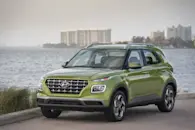
The 2026 Hyundai Venue, classified as a crossover SUV, presented a design that leaned more towards a tall hatchback. Its front-wheel-drive configuration and 17 centimetres of ground clearance positioned it between a car and a typical crossover SUV. The Venue's design was compact and narrow, reminiscent of European runabouts, with an upright windshield and SUV-like cues such as a bluff nose and available roof rails. The high nose was complemented by lower headlights and high-set daytime running lights, while a lower air intake was set within a satin metallic lower fascia. The Venue's profile was defined by roof rails and black rocker panels, with black wheel flares around small 15- or 17-inch wheels adding to its SUV appeal. The rear pillars angled sharply forward, and a two-tone roof option added flair. Inside, the Venue's look was simple and functional, with a digital instrument cluster and a small touchscreen resembling an iPad on the dash. Body-colour trim surrounded the air vents and shifter, bringing some of the exterior feel inside the vehicle.

The 2026 Lincoln Nautilus offered modest power for its price, with a standard turbocharged 2.0-litre four-cylinder engine producing 250 horsepower and 280 pound-feet of torque. This was adequate for a typical midsize SUV, but luxury buyers often expected more, especially given the vehicle's weight of over 2,000 kilograms. The engine was paired with an eight-speed automatic transmission and came standard with all-wheel drive. The hybrid variant, which was tested, featured the same engine with a larger turbo and an electric motor, boosting output to 310 horsepower and 295 pound-feet of torque. This setup used a continuously variable transmission, which was designed to remain unobtrusive. The hybrid's 0-96 km/h time improved to about 7 seconds, though it remained average for a luxury vehicle. The Nautilus prioritized quiet, serene comfort over sportiness, with a MacPherson strut front suspension and a multi-link rear suspension. The Reserve trim added adaptive dampers, which varied from soft to softer. The Nautilus offered several drive modes, including Normal, Conserve, Excite, Slippery, and Deep Conditions, with the latter two for adverse weather. The ride was smooth, even with the largest 22-inch wheels, though the dampers were too soft to quell secondary motions on rippled surfaces.
The 2026 Hyundai Venue was one of the least powerful vehicles on the market, with a naturally aspirated 1.6-litre four-cylinder engine producing just 121 horsepower and 113 pound-feet of torque. Power was delivered through a continuously variable transmission to the front wheels, with no all-wheel-drive option. The Venue's 0-100 km/h time ranged from 8.5 to 8.8 seconds, better than expected given its power, thanks to its lightweight of 1,251 kilograms. The engine felt peppy from a stop, making it easy to keep up with city traffic, but highway speeds required planning for passing due to the transmission's slow response and limited torque. The transmission was unobtrusive in city driving but noticeable under heavy throttle, with slurred shifts and engine drone. Sport mode raised the rev range for more accessible power but increased noise. The Venue's small size and low weight benefited handling, making it easy to manoeuvre in traffic and fit into tight parking spots. The 17 cm of ground clearance allowed for some lean in corners, but the steering was stable and direct. The ride was generally comfortable, though a solid rear axle made it jiggly on broken pavement.
The 2026 Lincoln Nautilus emphasized comfort for both front and rear passengers. It came standard with power-adjustable heated front seats, dual-zone automatic climate control, a heated steering wheel, active noise cancellation, ambient lighting, and a power tilt/telescoping steering column. Optional features included ventilated front seats, 24-way power front seats with a massage function, and heated rear seats. The second row offered excellent space for two adults or three in a pinch, with 1,095 millimetres of legroom. The rear seats folded down via power releases in the cargo area, providing 1,030 litres of cargo space with the seats upright and 2,020 litres when folded flat. A power liftgate was standard, with a hands-free version available.
The 2026 Hyundai Venue featured cloth and synthetic leather seats with black upholstery and white contrast stitching, providing a sporty appearance. The seats were comfortable, with six-way manual adjustments allowing most drivers to find a natural driving position. Standard front seat heating was a welcome amenity. Headroom was plentiful, but legroom was limited for taller individuals. The rear seat accommodated average-sized adults, but taller passengers would struggle for legroom. The rear seat folded flat in a 60/40 split, offering 528 litres of cargo space, which was modest compared to typical compact crossovers. With the rear seats up, cargo capacity was 902 litres. The Venue's rear cargo floor lifted to access the compact spare tire, revealing cost-cutting measures like the lack of sound deadening.
The 2026 Lincoln Nautilus featured a full-width, 48-inch screen at the base of the windshield, displaying essential information such as maps, weather, fuel level, and more. An 11.1-inch lower touchscreen handled typical infotainment controls, including navigation, climate settings, and phone mirroring via standard wireless Apple CarPlay and Android Auto. Other standard features included a 5G Wi-Fi hotspot, a digital key, satellite radio, remote start, and a wireless smartphone charger. The audio system started with 10 speakers, with options for a 14-speaker Revel system and a 28-speaker Revel Ultima 3D unit. Lincoln Rejuvenate offered relaxation programs using scent, seating position, and more, with calming images displayed on the 48-inch screen.
The 2026 Hyundai Venue was equipped with a simple 8-inch touchscreen for basic infotainment features. While it lacked some features like navigation and a Wi-Fi hotspot, it offered wireless Apple CarPlay and Android Auto. The digital instrument cluster displayed limited information and was not programmable. A wireless charging pad was standard in Canada, adding a premium touch. The audio system was a basic six-speaker unit, with no premium option available.
The 2026 Lincoln Nautilus came loaded with standard safety features, including a surround-view camera system, adaptive cruise control, lane centring steering, lane keep assist, lane departure warning, high beam assist, blind spot monitoring, rear cross-traffic alert, rear parking sensors, forward collision warning with pedestrian detection and intersection assist, and automatic emergency braking. Lincoln BlueCruise, a hands-free driving system, was also standard for four years. The Nautilus scored well in crash tests, earning five stars from the U.S. National Highway Traffic Safety Administration and a Top Safety Pick rating from the Insurance Institute for Highway Safety.
The 2026 Hyundai Venue offered a good set of standard safety features, including forward collision warning, automatic emergency braking, lane keep assist, and a driver attention monitor. Blind spot monitoring and rear cross-traffic alert were available on all but the base trim. The Venue received four out of five stars from the U.S. National Highway Traffic Safety Administration, with some safety ratings from the Insurance Institute for Highway Safety still pending.
CarGurus highlights

According to CarGurus experts, the overall rating for the 2026 Lincoln Nautilus is 7.8 out of 10, while the 2026 Hyundai Venue scores 5.3 out of 10. Based on these ratings, the Lincoln Nautilus is the recommended choice for those seeking a more luxurious and feature-rich vehicle.
Choose the 2026 Lincoln Nautilus if:
- You prioritize a luxurious and comfortable interior with advanced seating options.
- You value a comprehensive suite of standard safety features and high safety ratings.
- You appreciate cutting-edge technology, including a full-width display and advanced infotainment options.


Choose the 2026 Hyundai VENUE if:
- You are looking for a budget-friendly vehicle with essential safety features.
- You prefer a compact and manoeuvrable vehicle for city driving.
- You want a vehicle with wireless Apple CarPlay and Android Auto at an affordable price.


CarGurus highlights
According to CarGurus experts, the overall rating for the 2026 Lincoln Nautilus is 7.8 out of 10, while the 2026 Hyundai Venue scores 5.3 out of 10. Based on these ratings, the Lincoln Nautilus is the recommended choice for those seeking a more luxurious and feature-rich vehicle.
Choose the 2026 Lincoln Nautilus if:
Shop Now- You prioritize a luxurious and comfortable interior with advanced seating options.
- You value a comprehensive suite of standard safety features and high safety ratings.
- You appreciate cutting-edge technology, including a full-width display and advanced infotainment options.
Choose the 2026 Hyundai VENUE if:
Shop Now- You are looking for a budget-friendly vehicle with essential safety features.
- You prefer a compact and manoeuvrable vehicle for city driving.
- You want a vehicle with wireless Apple CarPlay and Android Auto at an affordable price.

By: CarGurus + AI
At CarGurus, our team of experienced automotive writers remain at the heart of our content operation, conducting hands-on car tests and writing insightful guides that are backed by years of industry experience. To complement this, we are harnessing AI to make our content offering more diverse and more helpful to shoppers than ever. To achieve this, our AI systems are based exclusively on CarGurus content, ratings and data, so that what we produce is both unique to CarGurus, and uniquely helpful to car shoppers.
