Hyundai IONIQ 5 vs Genesis GV60

Overview | |
Listings446 | Listings10 |
Ratings & Reviews | |
User Reviews | User Reviews |
Expert reviews9.0 out of 10 | Expert reviews7.8 out of 10 |
Pros
Cons
| |
Reviews SummaryThe Hyundai Ioniq 5 is the automaker’s debut electric vehicle from its new sub-brand that focuses solely on battery electric-powered and eco-friendly mobility. The all-new Ioniq 5 is chock full of battery technology, smart car connectivity, advanced safety, and unique design all at a price point that appeals to the masses. | |
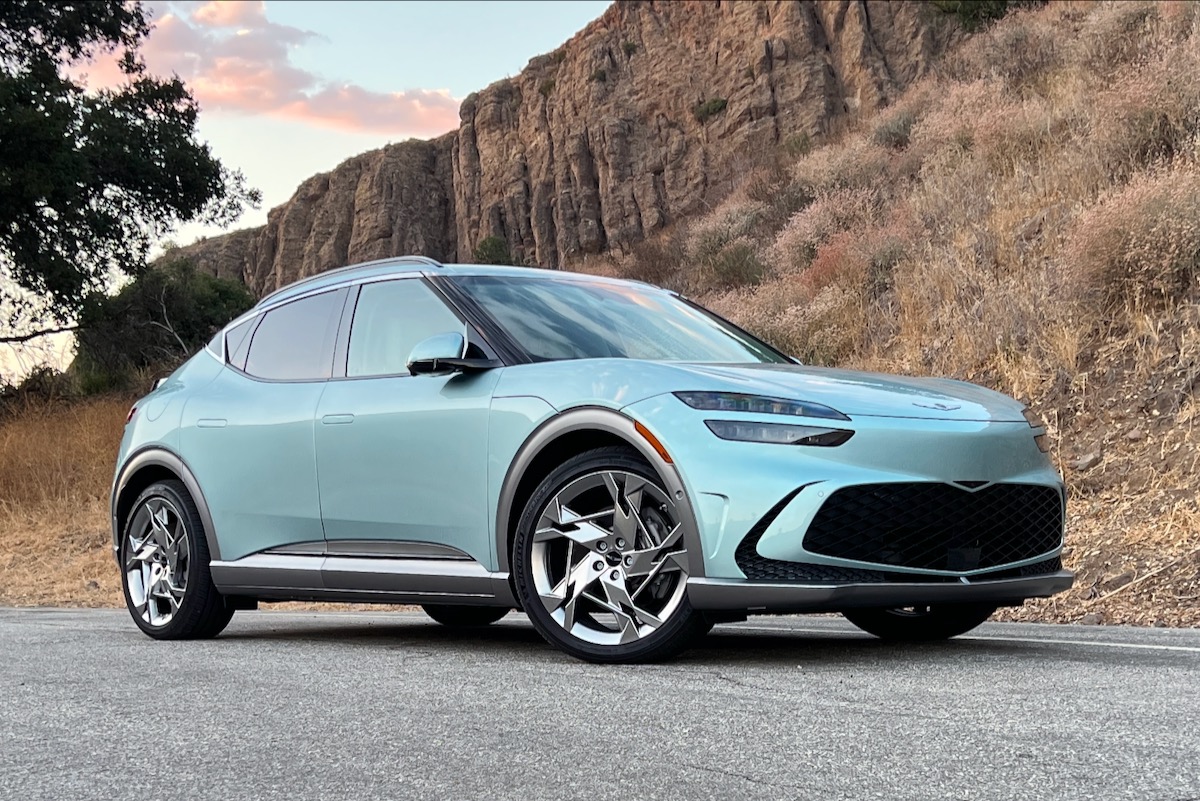
Reviews SummaryTesla has long dominated the electric vehicle market, but Hyundai Motor Group is poised to seriously threaten that position. Through its three brands—Genesis, Hyundai, and Kia—Hyundai is embarking on an aggressive EV push during the middle part of this decade, rolling out new electric cars across a range of prices, sizes, and purposes. The new 2023 Genesis GV60 is the first one from Hyundai’s luxury brand, and after spending a week with this compact crossover SUV, we think the future looks bright for the Korean automaker. It might even steal some of Tesla’s luster along the way. | |
No video found | |
Popular Features & Specs | |
Engine168 hp Electric | Engine314 hp Electric |
DrivetrainRWD | DrivetrainAWD |
Seating Capacity5 | Seating Capacity5 |
EV Battery Capacity58 kWh | EV Battery Capacity77.4 kWh |
Fuel Economy (City)1.9 L(e)/100 km | Fuel Economy (City)2.3 L(e)/100 km |
Fuel Economy (Highway)2.5 L(e)/100 km | Fuel Economy (Highway)2.7 L(e)/100 km |
Battery Charge Time (120V) | Battery Charge Time (120V)68 hours |
Battery Charge Time (240V) | Battery Charge Time (240V)7 hours |
Engine | |
Engine Name168 hp Electric | Engine Name314 hp Electric |
Battery Charge Time (120V) | Battery Charge Time (120V)68 hours |
Battery Charge Time (240V) | Battery Charge Time (240V)7 hours |
DrivetrainRWD | DrivetrainAWD |
Fuel Economy | |
EV Battery Capacity58 kWh | EV Battery Capacity77.4 kWh |
Fuel Economy (City)1.9 L(e)/100 km | Fuel Economy (City)2.3 L(e)/100 km |
Fuel Economy (Highway)2.5 L(e)/100 km | Fuel Economy (Highway)2.7 L(e)/100 km |
Interior | |
Seating Capacity5 | Seating Capacity5 |
Key Features | |
Navigation SystemStandard | Navigation SystemStandard |
Sunroof/Moonroof | Sunroof/MoonroofStandard |
Safety | |
Front Crash Overall4 | Front Crash Overall |
Side Crash Overall5 | Side Crash Overall |
Dimensions & Capacity | |
Cargo Space770 L | Cargo Space680 L |
Curb Weight1905 kg | Curb Weight2130 kg |
Height1600 mm | Height1585 mm |
Length4636 mm | Length4516 mm |
Width1890 mm | Width1890 mm |
Wheelbase3000 mm | Wheelbase2901 mm |
Maximum Payload525 kg | Maximum Payload465 kg |
Number of doors4 | Number of doors4 |
Maximum Towing Capacity | Maximum Towing Capacity907 kg |
Overview | ||
Listings | ||
Ratings & Reviews | ||
User reviews | ||
Expert reviews | 9.0 out of 10Read full review | 7.8 out of 10Read full review |
Pros & cons | Pros
Cons
| |
Summary | The Hyundai Ioniq 5 is the automaker’s debut electric vehicle from its new sub-brand that focuses solely on battery electric-powered and eco-friendly mobility. The all-new Ioniq 5 is chock full of battery technology, smart car connectivity, advanced safety, and unique design all at a price point that appeals to the masses. | Tesla has long dominated the electric vehicle market, but Hyundai Motor Group is poised to seriously threaten that position. Through its three brands—Genesis, Hyundai, and Kia—Hyundai is embarking on an aggressive EV push during the middle part of this decade, rolling out new electric cars across a range of prices, sizes, and purposes. The new 2023 Genesis GV60 is the first one from Hyundai’s luxury brand, and after spending a week with this compact crossover SUV, we think the future looks bright for the Korean automaker. It might even steal some of Tesla’s luster along the way. |
Video | No video found | |
Popular Features & Specs | ||
Engine | 168 hp Electric | 314 hp Electric |
Drivetrain | RWD | AWD |
Seating Capacity | 5 | 5 |
EV Battery Capacity | 58 kWh | 77.4 kWh |
Fuel Economy (City) | 1.9 L(e)/100 km | 2.3 L(e)/100 km |
Fuel Economy (Highway) | 2.5 L(e)/100 km | 2.7 L(e)/100 km |
Battery Charge Time (120V) | 68 hours | |
Battery Charge Time (240V) | 7 hours | |
Engine | ||
Engine Name | 168 hp Electric | 314 hp Electric |
Battery Charge Time (120V) | 68 hours | |
Battery Charge Time (240V) | 7 hours | |
Drivetrain | RWD | AWD |
Fuel Economy | ||
EV Battery Capacity | 58 kWh | 77.4 kWh |
Fuel Economy (City) | 1.9 L(e)/100 km | 2.3 L(e)/100 km |
Fuel Economy (Highway) | 2.5 L(e)/100 km | 2.7 L(e)/100 km |
Interior | ||
Seating Capacity | 5 | 5 |
Key Features | ||
Navigation System | Standard | Standard |
Sunroof/Moonroof | Standard | |
Safety | ||
Front Crash Overall | 4 | |
Side Crash Overall | 5 | |
Dimensions & Capacity | ||
Cargo Space | 770 L | 680 L |
Curb Weight | 1905 kg | 2130 kg |
Height | 1600 mm | 1585 mm |
Length | 4636 mm | 4516 mm |
Width | 1890 mm | 1890 mm |
Wheelbase | 3000 mm | 2901 mm |
Maximum Payload | 525 kg | 465 kg |
Number of doors | 4 | 4 |
Maximum Towing Capacity | 907 kg | |
2023 Genesis GV60 for Sale


2022 Hyundai IONIQ 5 for Sale


By: CarGurus + AI
At CarGurus, our team of experienced automotive writers remain at the heart of our content operation, conducting hands-on car tests and writing insightful guides that are backed by years of industry experience. To complement this, we are harnessing AI to make our content offering more diverse and more helpful to shoppers than ever. To achieve this, our AI systems are based exclusively on CarGurus content, ratings and data, so that what we produce is both unique to CarGurus, and uniquely helpful to car shoppers.
