BMW X7 vs Hyundai IONIQ 5
Overview | |
Listings268 | Listings490 |
Ratings & Reviews | |
User Reviews | User Reviews |
Expert reviews7.3 out of 10 | Expert reviews8.0 out of 10 |
Pros
Cons
| Pros
Cons
|
Reviews SummaryThe X7 is BMW’s flagship SUV, providing more space, luxury, and seats for new car buyers looking for a big utility vehicle but wanting to stay in the BMW fold. It arrived for the 2019 model year, received a substantial update for 2023, and continues into the 2025 model year without major changes. Its diverse competitive set includes the Cadillac Escalade, the Lincoln Navigator, the Land Rover Range Rover, the Lexus LX, the Infiniti QX80, and the Mercedes-Benz GLS. Verdict: BMW loyalists will find more of what they love about the brand, while the X7’s superb driving dynamics and reasonable pricing (for this high-end segment, that is) should give customers of rival brands something to think about. | |
Reviews SummaryMany automakers have had a tough time launching electric vehicles. Teething problems have resulted in build quality issues, gremlins, and production delays. Hyundai, however, got it right from the start with the Ioniq 5. Not only did this compact crossover nail the basics, it has also struck a chord for its stylish looks, fast charging capability, good range, and practicality. Verdict: Five years into its run, the Ioniq 5 is still the electric vehicle we would recommend to most EV buyers. | |
No video found | No video found |
Popular Features & Specs | |
Engine3.0L 375 hp I6 | Engine168 hp Electric |
DrivetrainAWD | DrivetrainRWD |
Seating Capacity7 | Seating Capacity5 |
Horsepower375 hp @ 5500 rpm | Horsepower |
EV Battery Capacity | EV Battery Capacity63 kWh |
Fuel Economy (City)11.8 L(e)/100 km | Fuel Economy (City)1.8 L(e)/100 km |
Fuel Economy (Highway)9.8 L(e)/100 km | Fuel Economy (Highway)2.4 L(e)/100 km |
Battery Charge Time (120V) | Battery Charge Time (120V)54 hours |
Battery Charge Time (240V) | Battery Charge Time (240V)5.7 hours |
Engine | |
Engine Name3.0L 375 hp I6 | Engine Name168 hp Electric |
Torque398 lb-ft @ 1500 rpm | Torque |
Horsepower375 hp @ 5500 rpm | Horsepower |
Battery Charge Time (120V) | Battery Charge Time (120V)54 hours |
Battery Charge Time (240V) | Battery Charge Time (240V)5.7 hours |
DrivetrainAWD | DrivetrainRWD |
Fuel Economy | |
EV Battery Capacity | EV Battery Capacity63 kWh |
Fuel Economy (City)11.8 L(e)/100 km | Fuel Economy (City)1.8 L(e)/100 km |
Fuel Economy (Highway)9.8 L(e)/100 km | Fuel Economy (Highway)2.4 L(e)/100 km |
Interior | |
Seating Capacity7 | Seating Capacity5 |
Key Features | |
Navigation SystemStandard | Navigation SystemStandard |
Sunroof/MoonroofStandard | Sunroof/Moonroof |
Safety | |
Front Crash Overall | Front Crash Overall4 |
Side Crash Overall | Side Crash Overall5 |
Dimensions & Capacity | |
Cargo Space362 L | Cargo Space745 L |
Curb Weight2473 kg | Curb Weight1880 kg |
Height1834 mm | Height1600 mm |
Length5171 mm | Length4656 mm |
Width2217 mm | Width1890 mm |
Wheelbase3104 mm | Wheelbase3000 mm |
Maximum Payload597 kg | Maximum Payload490 kg |
Number of doors4 | Number of doors4 |
Maximum Towing Capacity3402 kg | Maximum Towing Capacity |
Overview | ||
Listings | ||
Ratings & Reviews | ||
User reviews | ||
Expert reviews | 7.3 out of 10Read full review | 8.0 out of 10Read full review |
Pros & cons | Pros
Cons
| Pros
Cons
|
Summary | The X7 is BMW’s flagship SUV, providing more space, luxury, and seats for new car buyers looking for a big utility vehicle but wanting to stay in the BMW fold. It arrived for the 2019 model year, received a substantial update for 2023, and continues into the 2025 model year without major changes. Its diverse competitive set includes the Cadillac Escalade, the Lincoln Navigator, the Land Rover Range Rover, the Lexus LX, the Infiniti QX80, and the Mercedes-Benz GLS. Verdict: BMW loyalists will find more of what they love about the brand, while the X7’s superb driving dynamics and reasonable pricing (for this high-end segment, that is) should give customers of rival brands something to think about. | Many automakers have had a tough time launching electric vehicles. Teething problems have resulted in build quality issues, gremlins, and production delays. Hyundai, however, got it right from the start with the Ioniq 5. Not only did this compact crossover nail the basics, it has also struck a chord for its stylish looks, fast charging capability, good range, and practicality. Verdict: Five years into its run, the Ioniq 5 is still the electric vehicle we would recommend to most EV buyers. |
Video | No video found | No video found |
Popular Features & Specs | ||
Engine | 3.0L 375 hp I6 | 168 hp Electric |
Drivetrain | AWD | RWD |
Seating Capacity | 7 | 5 |
Horsepower | 375 hp @ 5500 rpm | |
EV Battery Capacity | 63 kWh | |
Fuel Economy (City) | 11.8 L(e)/100 km | 1.8 L(e)/100 km |
Fuel Economy (Highway) | 9.8 L(e)/100 km | 2.4 L(e)/100 km |
Battery Charge Time (120V) | 54 hours | |
Battery Charge Time (240V) | 5.7 hours | |
Engine | ||
Engine Name | 3.0L 375 hp I6 | 168 hp Electric |
Torque | 398 lb-ft @ 1500 rpm | |
Horsepower | 375 hp @ 5500 rpm | |
Battery Charge Time (120V) | 54 hours | |
Battery Charge Time (240V) | 5.7 hours | |
Drivetrain | AWD | RWD |
Fuel Economy | ||
EV Battery Capacity | 63 kWh | |
Fuel Economy (City) | 11.8 L(e)/100 km | 1.8 L(e)/100 km |
Fuel Economy (Highway) | 9.8 L(e)/100 km | 2.4 L(e)/100 km |
Interior | ||
Seating Capacity | 7 | 5 |
Key Features | ||
Navigation System | Standard | Standard |
Sunroof/Moonroof | Standard | |
Safety | ||
Front Crash Overall | 4 | |
Side Crash Overall | 5 | |
Dimensions & Capacity | ||
Cargo Space | 362 L | 745 L |
Curb Weight | 2473 kg | 1880 kg |
Height | 1834 mm | 1600 mm |
Length | 5171 mm | 4656 mm |
Width | 2217 mm | 1890 mm |
Wheelbase | 3104 mm | 3000 mm |
Maximum Payload | 597 kg | 490 kg |
Number of doors | 4 | 4 |
Maximum Towing Capacity | 3402 kg | |
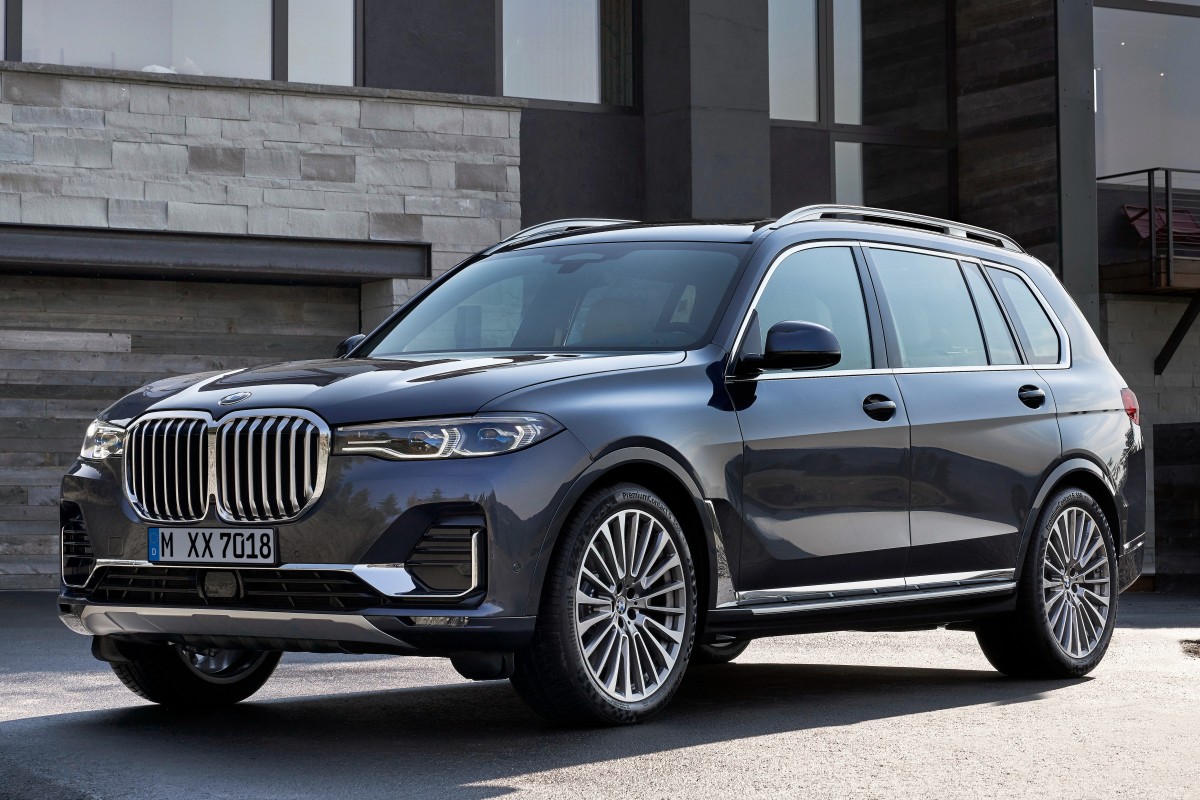
The 2025 BMW X7 exuded a bold presence, appealing to those who appreciated the grandeur of full-size luxury SUVs. Despite its imposing size, it was not as massive as some of its competitors like the Cadillac Escalade. The X7's design, especially after its 2023 facelift, was characterized by its distinctive stacked quad headlights and an illuminated, oversized twin-kidney grille. The vehicle's exterior was further accentuated by large wheels, with options up to 23 inches, and sporty design elements from the M Sport Package. Inside, the X7 offered a mix of luxurious and flashy features, such as carbon fibre trim and a crystal shift toggle, though some of these were optional extras. The interior design aimed to convey opulence, but the reliance on optional features meant that the base model might not feel as premium.
The 2026 Hyundai IONIQ 5 combined retro hatchback aesthetics with modern crossover elements, resulting in a unique and appealing design. Its angular lines and triangular profile, complemented by dark cladding, gave it a distinctive look. The front featured a visor slit with rectangular headlights, while the rear boasted an integrated spoiler and darkened panels. Inside, the IONIQ 5 prioritized functionality with a utilitarian design, offering cloth upholstery as standard and synthetic leather in higher trims. The cabin was equipped with advanced technology, including dual 12.3-inch screens, but maintained a somewhat sterile appearance typical of modern EVs. The IONIQ 5's design cleverly masked its size, making it appear smaller than it was.


The 2025 BMW X7 offered a range of powertrains, all equipped with xDrive all-wheel drive and a 48-volt mild-hybrid system. The xDrive40i model featured a turbocharged 3.0-litre inline-six engine, delivering 375 horsepower and 398 lb-ft of torque, achieving 0-100 km/h in 5.8 seconds. The M60i xDrive variant boasted a twin-turbo 4.4-litre V8, producing 523 hp and 553 lb-ft, with a 0-100 km/h time of 4.7 seconds. For those seeking more performance, the Alpina XB7 offered 631 hp and 590 lb-ft, reaching 100 km/h in 4.2 seconds. The X7's sophisticated chassis technology, including rear-wheel steering and adaptive air suspension, contributed to its nimble handling and comfortable ride, making it a versatile luxury SUV.
The 2026 Hyundai IONIQ 5 provided a choice between a single-motor rear-wheel-drive setup with 225 hp and 258 lb-ft, and a dual-motor all-wheel-drive configuration with 320 hp and 446 lb-ft. The IONIQ 5 N performance model pushed the envelope with 641 hp and 568 lb-ft. During testing, the dual-motor powertrain impressed with its quiet and robust power delivery, achieving 0-100 km/h in an estimated 5.3 seconds. The IONIQ 5 offered five regenerative braking settings, allowing drivers to tailor the driving experience. While the steering was direct, it lacked feedback, and the handling was pleasant but not overly agile, with some body lean in corners due to its weight.
The 2025 BMW X7 offered flexible seating configurations, accommodating six or seven passengers. It provided ample headroom across all rows, surpassing many competitors. Cargo space was generous, with 1,376 litres behind the second row and 2,560 litres with the second and third rows folded. However, the 362 litres behind the third row was relatively limited. The split tailgate design was practical, and the air suspension's ability to lower the vehicle aided loading. The X7's towing capacity of 3,400 kilograms was respectable, though not class-leading. Advanced parking assist features further enhanced its practicality.
The 2026 Hyundai IONIQ 5 featured spacious front seats with standard eight-way power adjustments for the driver. The Ultimate Package added ventilated front seats, heated rear seats, and a "Relaxation" seat for the driver. Rear legroom was generous at 1,002 millimetres, accommodating two adults comfortably. Cargo space was slightly smaller than average for compact crossovers, with 745 litres behind the rear seats and 1,655 litres with them folded. The 24-litre front trunk provided additional storage. While not as capacious as some gas-powered rivals, the IONIQ 5 offered practical cargo solutions.
The 2025 BMW X7 featured a Curved Display setup with a 12.3-inch digital instrument cluster and a 14.9-inch touchscreen. The iDrive infotainment system, based on version 8.5, was user-friendly, with a rotary controller and shortcut buttons. Standard wireless Apple CarPlay and Android Auto, along with steering wheel controls, enhanced usability. However, the voice recognition system struggled with accuracy. The X7 also offered digital-key functionality and augmented reality navigation, though gesture control proved cumbersome.
The 2026 Hyundai IONIQ 5 boasted a 12.3-inch digital instrument cluster and a 12.3-inch infotainment touchscreen. Standard features included wireless Apple CarPlay and Android Auto, built-in navigation, and MyHyundai app functionality. The Ultimate Package added a wireless smartphone charger, head-up display, and Bose audio system. The infotainment system was intuitive, with voice commands and separate climate controls. The IONIQ 5's technology package was comprehensive and user-friendly.
The 2025 BMW X7 came with standard safety features like forward collision warning, automatic emergency braking, and blind-spot monitoring. Additional features, such as adaptive cruise control and BMW's Highway Assistant, were part of the Advanced Driver Assistance package. While Highway Assistant offered useful functionality, it wasn't as advanced as Cadillac's Super Cruise. Safety ratings from IIHS and NHTSA were unavailable.
The 2026 Hyundai IONIQ 5 offered a robust suite of standard safety features, including blind spot monitoring, forward collision warning, and adaptive cruise control. The Ultimate Package added advanced features like a surround-view camera system and Highway Driving Assist 2. The IONIQ 5 earned a Top Safety Pick+ from IIHS, though NHTSA ratings were not available. Its safety systems were well-regarded, with effective lane keep assist and blind spot cameras.
CarGurus highlights

According to CarGurus experts, the overall rating for the 2025 BMW X7 is 7.3 out of 10, while the 2026 Hyundai IONIQ 5 scores 8.0 out of 10. Based on these ratings, the Hyundai IONIQ 5 is the recommended choice, offering a compelling blend of design, technology, and safety features in an electric package.
Choose the 2025 BMW X7 if:
- You prioritize a luxurious and spacious interior with flexible seating configurations.
- You seek a powerful and versatile SUV with advanced chassis technology for a comfortable ride.
- You value a distinctive design with bold styling elements and premium features.


Choose the 2026 Hyundai IONIQ 5 if:
- You prefer an electric vehicle with a unique design and modern technology.
- You want a spacious and practical interior with advanced safety features.
- You appreciate a user-friendly infotainment system with comprehensive connectivity options.


CarGurus highlights
According to CarGurus experts, the overall rating for the 2025 BMW X7 is 7.3 out of 10, while the 2026 Hyundai IONIQ 5 scores 8.0 out of 10. Based on these ratings, the Hyundai IONIQ 5 is the recommended choice, offering a compelling blend of design, technology, and safety features in an electric package.
Choose the 2025 BMW X7 if:
Shop Now- You prioritize a luxurious and spacious interior with flexible seating configurations.
- You seek a powerful and versatile SUV with advanced chassis technology for a comfortable ride.
- You value a distinctive design with bold styling elements and premium features.
Choose the 2026 Hyundai IONIQ 5 if:
Shop Now- You prefer an electric vehicle with a unique design and modern technology.
- You want a spacious and practical interior with advanced safety features.
- You appreciate a user-friendly infotainment system with comprehensive connectivity options.

By: CarGurus + AI
At CarGurus, our team of experienced automotive writers remain at the heart of our content operation, conducting hands-on car tests and writing insightful guides that are backed by years of industry experience. To complement this, we are harnessing AI to make our content offering more diverse and more helpful to shoppers than ever. To achieve this, our AI systems are based exclusively on CarGurus content, ratings and data, so that what we produce is both unique to CarGurus, and uniquely helpful to car shoppers.
