Honda HR-V vs Chevrolet Bolt
Overview | |
MSRP$26,500 | MSRP$27,600 |
Listings2629 | Listings1382 |
Ratings & Reviews | |
User Reviews | User Reviews |
Expert reviews5.3 out of 10 | Expert reviews6.3 out of 10 |
Pros
Cons
| Pros
Cons
|
Reviews SummaryAvailable in three trim levels equipped with an underpowered engine and optional all-wheel drive (AWD), the HR-V is an unremarkable subcompact SUV. A refresh for the 2026 model year adds an improved standard infotainment system and minor styling and interior modifications, but nothing that addresses this model’s primary shortcomings. The changes include a larger touchscreen with faster response times, wireless Apple CarPlay and Android Auto, and wireless smartphone charging. Verdict: Simply put, the 2026 Honda HR-V is not one of the best subcompact SUVs. It is dreadfully slow and disappointingly inefficient, and it barely meets the minimum technological expectations of the young people who might want to buy it. Plus, it demonstrates none of the innovation seen in the original HR-V and in some competitors in the small SUV segment. | |
Reviews SummaryWith more range, more power, and improved technology, the Chevrolet Bolt EV returns after a three-year hiatus. It’s also one of the most affordable EVs in Canada, but it’s due to remain in production only until mid-2027. Verdict: The 2027 Chevrolet Bolt EV is an excellent choice for shoppers seeking an electric vehicle that won't break the bank. It may not be all that fancy or refined, but it gets the basics right when it comes to range and capabilities. | |
No video found | No video found |
Popular Features & Specs | |
Engine2.0L 158 hp I4 | Engine |
DrivetrainFWD | Drivetrain |
Seating Capacity5 | Seating Capacity5 |
Horsepower158 hp @ 6500 rpm | Horsepower |
EV Battery Capacity | EV Battery Capacity65 kWh |
MPG City26 | MPG City |
MPG Highway32 | MPG Highway |
Battery Charge Time (120V) | Battery Charge Time (120V)64 hours |
Battery Charge Time (240V) | Battery Charge Time (240V)9.8 hours |
Engine | |
Engine Name2.0L 158 hp I4 | Engine Name210 hp Electric |
Torque138 lb-ft @ 4200 rpm | Torque |
Horsepower158 hp @ 6500 rpm | Horsepower |
Battery Charge Time (120V) | Battery Charge Time (120V)64 hours |
Battery Charge Time (240V) | Battery Charge Time (240V)9.8 hours |
DrivetrainFWD | DrivetrainFWD |
Fuel Economy | |
EV Battery Capacity | EV Battery Capacity65 kWh |
MPG City26 | MPG City |
MPG Highway32 | MPG Highway |
Interior | |
Seating Capacity5 | Seating Capacity5 |
Key Features | |
Navigation System | Navigation SystemStandard |
Safety | |
Front Crash Overall5 | Front Crash Overall |
Side Crash Overall5 | Side Crash Overall |
Dimensions & Capacity | |
Cargo Space24.4 cu ft | Cargo Space16.2 cu ft |
Curb Weight3159 lbs | Curb Weight3776 lbs |
Height63.4 in | Height63.9 in |
Length179.8 in | Length169.6 in |
Width72.4 in | Width80.1 in |
Wheelbase104.5 in | Wheelbase105.3 in |
Maximum Payload1051 lbs | Maximum Payload873 lbs |
Number of doors4 | Number of doors4 |
Overview | ||
MSRP | $26,500 | $27,600 |
Listings | ||
Ratings & Reviews | ||
User reviews | ||
Expert reviews | 5.3 out of 10Read full review | 6.3 out of 10Read full review |
Pros & cons | Pros
Cons
| Pros
Cons
|
Summary | Available in three trim levels equipped with an underpowered engine and optional all-wheel drive (AWD), the HR-V is an unremarkable subcompact SUV. A refresh for the 2026 model year adds an improved standard infotainment system and minor styling and interior modifications, but nothing that addresses this model’s primary shortcomings. The changes include a larger touchscreen with faster response times, wireless Apple CarPlay and Android Auto, and wireless smartphone charging. Verdict: Simply put, the 2026 Honda HR-V is not one of the best subcompact SUVs. It is dreadfully slow and disappointingly inefficient, and it barely meets the minimum technological expectations of the young people who might want to buy it. Plus, it demonstrates none of the innovation seen in the original HR-V and in some competitors in the small SUV segment. | With more range, more power, and improved technology, the Chevrolet Bolt EV returns after a three-year hiatus. It’s also one of the most affordable EVs in Canada, but it’s due to remain in production only until mid-2027. Verdict: The 2027 Chevrolet Bolt EV is an excellent choice for shoppers seeking an electric vehicle that won't break the bank. It may not be all that fancy or refined, but it gets the basics right when it comes to range and capabilities. |
Video | No video found | No video found |
Popular Features & Specs | ||
Engine | 2.0L 158 hp I4 | |
Drivetrain | FWD | |
Seating Capacity | 5 | 5 |
Horsepower | 158 hp @ 6500 rpm | |
EV Battery Capacity | 65 kWh | |
MPG City | 26 | |
MPG Highway | 32 | |
Battery Charge Time (120V) | 64 hours | |
Battery Charge Time (240V) | 9.8 hours | |
Engine | ||
Engine Name | 2.0L 158 hp I4 | 210 hp Electric |
Torque | 138 lb-ft @ 4200 rpm | |
Horsepower | 158 hp @ 6500 rpm | |
Battery Charge Time (120V) | 64 hours | |
Battery Charge Time (240V) | 9.8 hours | |
Drivetrain | FWD | FWD |
Fuel Economy | ||
EV Battery Capacity | 65 kWh | |
MPG City | 26 | |
MPG Highway | 32 | |
Interior | ||
Seating Capacity | 5 | 5 |
Key Features | ||
Navigation System | Standard | |
Safety | ||
Front Crash Overall | 5 | |
Side Crash Overall | 5 | |
Dimensions & Capacity | ||
Cargo Space | 24.4 cu ft | 16.2 cu ft |
Curb Weight | 3159 lbs | 3776 lbs |
Height | 63.4 in | 63.9 in |
Length | 179.8 in | 169.6 in |
Width | 72.4 in | 80.1 in |
Wheelbase | 104.5 in | 105.3 in |
Maximum Payload | 1051 lbs | 873 lbs |
Number of doors | 4 | 4 |
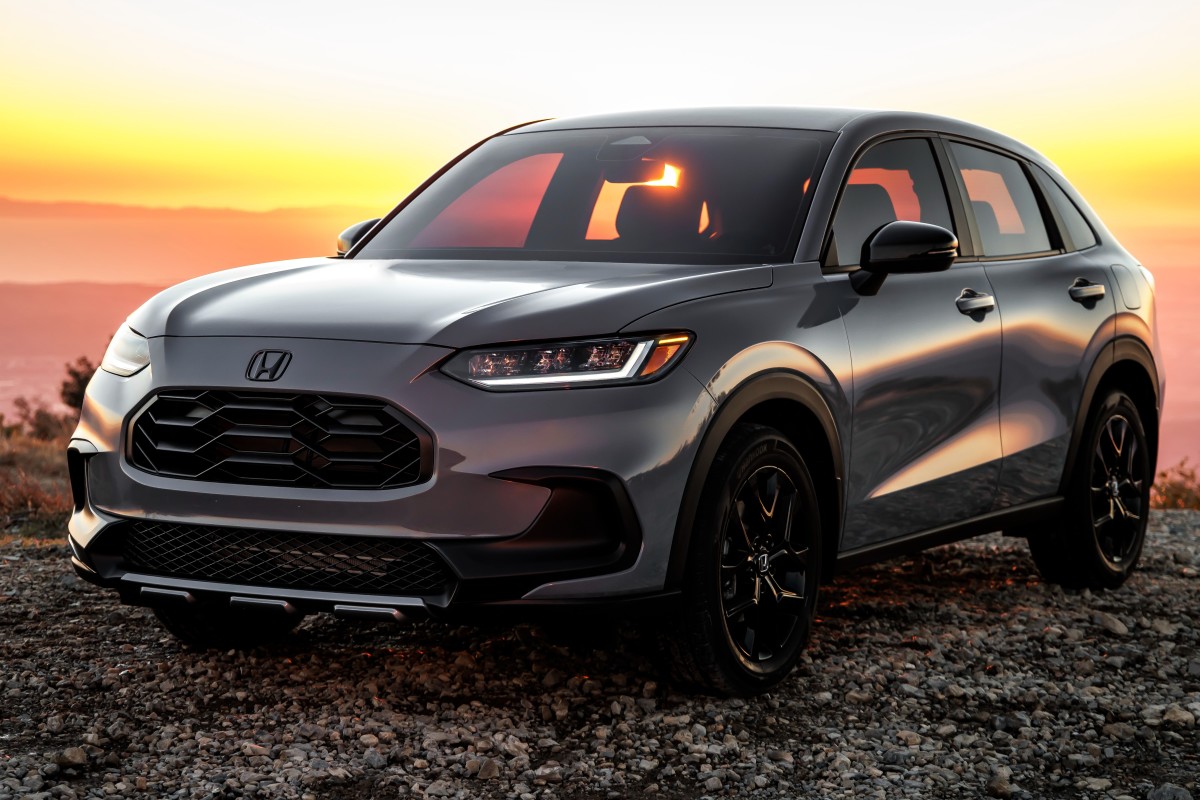
The 2026 Honda HR-V was available in three trim levels: LX, Sport, and EX-L, with prices in Canada ranging from $33,446 to $41,846, including a $2,000 destination charge and other fees. The EX-L trim, which we tested, featured a Nordic Forest Pearl paint and had an MSRP of $42,246. The HR-V's design was not universally appealing, with its blobby grille and unusual profile, but the green paint and 18-inch alloy wheels under gloss-black wheel arches enhanced its appearance. The 2026 model introduced new wheel designs across all trims and added new paint colours like Boost Blue and Solar Silver. Inside, the HR-V's cabin was more attractive, especially with the grey upholstery available only in the EX-L trim. The EX-L also boasted genuine leather seats with Z-pattern stitching and upgraded cabin lighting, adding a touch of luxury to the interior.
The 2027 Chevrolet Bolt retained a familiar look, with slight styling changes that made its front end resemble a conventional gas-powered car. The 2027 model continued with the EUV body style, offering a tall and narrow stance that prioritized utility and interior space. The RS model added gloss black exterior trim for a subtle enhancement. Inside, the Bolt underwent a more significant makeover, featuring a larger digital instrument panel and infotainment touchscreen. The push-button gear selector was moved to the steering column, freeing up storage space in the centre console. Despite the hard plastic surfaces, the cabin offered some padded touchpoints, and the RS trim upgraded to Evotex synthetic leather with red stitching. The rear seating area, however, lacked padding for the door armrests.

The 2026 Honda HR-V was powered by a 2.0-litre four-cylinder engine producing 158 horsepower at 6,500 rpm and 138 pound-feet of torque at 4,200 rpm. Weighing up to 1,510 kilograms, the HR-V's engine worked hard, especially when paired with the continuously variable transmission (CVT). While the CVT performed well in urban settings, the HR-V struggled with acceleration on highways and steep grades. Despite its modest power, the HR-V's fuel economy was not particularly impressive, averaging 9.5 L/100 km on our test loop. The HR-V's dynamic tuning, however, was commendable, with a multi-link rear suspension and Agile Handling Assist providing a lively driving experience. The EX-L's 18-inch wheels offered good grip, and the 18.5 centimetres of ground clearance allowed for some off-road capability.
The 2027 Chevrolet Bolt featured a new 65-kilowatt-hour lithium-iron phosphate battery pack and a motor from Chevy's Equinox EV, delivering 210 horsepower and 169 pound-feet of torque to the front wheels. The Bolt's acceleration was quick, with a 0-100 km/h time in the low seven-second range. One-pedal driving was available, with adjustable brake regeneration levels. The Bolt's ride was firm but not overly stiff, and its low centre of gravity contributed to agile handling on curvy roads. On a full charge, the Bolt offered an estimated range of 422 kilometres, an improvement over previous models. The Bolt also featured a Tesla-derived North American Charging Standard (NACS) charge port, with increased charging speed allowing for a quick recharge from 10% to 80% in 25 minutes.
The 2026 Honda HR-V's interior space was less innovative than its predecessors, lacking features like the original "Magic Seat." The rear seats folded flat, but the HR-V did not offer a fold-flat front passenger seat or a 40/20/40 split-folding rear seat. The cargo area provided 691 litres of space behind the rear seats, with a total of 1,559 litres when folded. The driver and front passenger enjoyed reasonable storage, though the surfaces were plastic. The back seat offered adequate space but lacked comfort features like a centre armrest and cupholders. The HR-V's practicality was enhanced by its boxier roofline, but it missed out on features like rear climate control vents and USB charging ports.
The 2027 Chevrolet Bolt offered an upright driving position with ample space for larger occupants. The rear seats provided good headroom and thigh support, with a flat floor reducing discomfort for centre-seat passengers. The Bolt's cargo capacity was 459 litres behind the rear seats, with a large bin underneath the floor for additional storage. The rear seatbacks folded flat with the cargo floor, and the release latches were easily accessible. While the Bolt lacked a frunk, it offered ample storage for personal items, including a large bin with dividers, a floor tray, and a deep centre armrest bin. The Bolt's interior storage solutions were practical and well-designed.
The 2026 Honda HR-V featured a 9-inch touchscreen with a faster processor, wireless Apple CarPlay and Android Auto, and a wireless smartphone charger. However, it lacked built-in navigation and SiriusXM satellite radio. The base LX had four speakers, while the Sport and EX-L trims had six and eight speakers, respectively. The infotainment system was user-friendly, and the EX-L's audio system delivered good sound quality. The HR-V's tech was simple but effective, though it lagged behind competitors like the Hyundai Kona in terms of features.
The 2027 Chevrolet Bolt came with an 11-inch digital instrument panel and an 11.3-inch centre touchscreen, running on a Google-based operating system. Apple CarPlay and standalone Android Auto were not supported, but the system offered some built-in features. The optional Technology package added a surround-view camera system, a digital rear-view mirror, and a wireless charging pad. The infotainment system was intuitive, with sharp graphics and quick responses. The Bolt's navigation system helped locate charging stations and preconditioned the battery for optimal charging. The Bolt also offered vehicle-to-load charging, allowing it to serve as a backup power source for a home.
The 2026 Honda HR-V was equipped with Honda Sensing, which included forward-collision warning, automatic emergency braking, lane-departure warning, lane-keep assist, lane-centring assist, adaptive cruise control, traffic-jam assist, and automatic high-beam headlights. In Canada, blind-spot monitors and rear cross-traffic alert were standard. The EX-L trim added front and rear parking sensors with low-speed automatic braking. While Honda Sensing was generally unobtrusive, the adaptive cruise control occasionally failed to perform as expected, requiring driver intervention. The HR-V received favourable safety ratings from the NHTSA and a Top Safety Pick+ rating from the IIHS for the 2025 model year.
The 2027 Chevrolet Bolt's crash test results were not available at the time of writing, but it was expected to achieve high scores based on its platform. Standard safety features included forward-collision warning with automatic emergency braking, adaptive cruise control, lane-keep assist, blind-spot monitors with active steering assist, and a safety alert seat. The optional Technology package added a surround-view camera system, a digital rear-view mirror, rain-sensing wipers, rear pedestrian alert, and traffic-sign recognition. The Bolt also offered GM's Super Cruise hands-free automated highway driving system for an additional cost.
CarGurus highlights
According to CarGurus experts, the overall rating for the 2026 Honda HR-V is 5.3 out of 10, while the 2027 Chevrolet Bolt scores 6.3 out of 10. Based on these ratings, the 2027 Chevrolet Bolt is the recommended choice for those seeking a more advanced and efficient vehicle with better technology and safety features.
Choose the 2026 Honda HR-V if:
- You prefer a vehicle with a more traditional gasoline engine and are not concerned about acceleration performance.
- You value a well-tuned suspension and handling dynamics for a lively driving experience.
- You appreciate a simple and user-friendly infotainment system with wireless smartphone integration.


Choose the 2027 Chevrolet Bolt if:
- You want an electric vehicle with a good range and quick charging capabilities.
- You prioritize advanced technology features, including a large touchscreen and vehicle-to-load charging.
- You seek a budget-friendly EV with agile handling and a spacious interior.


CarGurus highlights
According to CarGurus experts, the overall rating for the 2026 Honda HR-V is 5.3 out of 10, while the 2027 Chevrolet Bolt scores 6.3 out of 10. Based on these ratings, the 2027 Chevrolet Bolt is the recommended choice for those seeking a more advanced and efficient vehicle with better technology and safety features.
Choose the 2026 Honda HR-V if:
Shop Now- You prefer a vehicle with a more traditional gasoline engine and are not concerned about acceleration performance.
- You value a well-tuned suspension and handling dynamics for a lively driving experience.
- You appreciate a simple and user-friendly infotainment system with wireless smartphone integration.
Choose the 2027 Chevrolet Bolt if:
Shop Now- You want an electric vehicle with a good range and quick charging capabilities.
- You prioritize advanced technology features, including a large touchscreen and vehicle-to-load charging.
- You seek a budget-friendly EV with agile handling and a spacious interior.

By: CarGurus + AI
At CarGurus, our team of experienced automotive writers remain at the heart of our content operation, conducting hands-on car tests and writing insightful guides that are backed by years of industry experience. To complement this, we are harnessing AI to make our content offering more diverse and more helpful to shoppers than ever. To achieve this, our AI systems are based exclusively on CarGurus content, ratings and data, so that what we produce is both unique to CarGurus, and uniquely helpful to car shoppers.
