Honda HR-V vs Hyundai Ioniq 9
Overview | |
MSRP$26,500 | MSRP$58,995 |
Listings2481 | Listings154 |
Ratings & Reviews | |
User Reviews | User Reviews |
Expert reviews5.3 out of 10 | Expert reviews7.3 out of 10 |
Pros
Cons
| Pros
Cons
|
Reviews SummaryAvailable in three trim levels equipped with an underpowered engine and optional all-wheel drive (AWD), the HR-V is an unremarkable subcompact SUV. A refresh for the 2026 model year adds an improved standard infotainment system and minor styling and interior modifications, but nothing that addresses this model’s primary shortcomings. The changes include a larger touchscreen with faster response times, wireless Apple CarPlay and Android Auto, and wireless smartphone charging. Verdict: Simply put, the 2026 Honda HR-V is not one of the best subcompact SUVs. It is dreadfully slow and disappointingly inefficient, and it barely meets the minimum technological expectations of the young people who might want to buy it. Plus, it demonstrates none of the innovation seen in the original HR-V and in some competitors in the small SUV segment. | |
Reviews SummaryAlthough the 2026 Hyundai Ioniq 9 isn’t the first three-row electric SUV through the door, it may be the best choice for most shoppers. With a starting price of $59,999 before fees and qualifying for EV rebates where they still exist, it’s much more affordable than a Tesla Model X or a Rivian R1S. And its standard 110.3-kWh battery pack provides a long range compared to a base-model Kia EV9. Verdict: The Hyundai Ioniq 9 isn’t a perfect vehicle, but it offers terrific passenger space, good tech, and family-friendly features. Shoppers may find its design polarizing — you could easily say the same about the Hyundai Ioniq 5 or the Ioniq 6 — but families interested in electric vehicles will do well to test drive this new option. | |
No video found | |
Popular Features & Specs | |
Engine2.0L 158 hp I4 | Engine215 hp Electric |
DrivetrainFWD | DrivetrainRWD |
Seating Capacity5 | Seating Capacity7 |
Horsepower158 hp @ 6500 rpm | Horsepower |
EV Battery Capacity | EV Battery Capacity110 kWh |
MPG City26 | MPG City103 |
MPG Highway32 | MPG Highway81 |
Battery Charge Time (120V) | Battery Charge Time (120V)93 hours |
Battery Charge Time (240V) | Battery Charge Time (240V)9.7 hours |
Engine | |
Engine Name2.0L 158 hp I4 | Engine Name215 hp Electric |
Torque138 lb-ft @ 4200 rpm | Torque |
Horsepower158 hp @ 6500 rpm | Horsepower |
Battery Charge Time (120V) | Battery Charge Time (120V)93 hours |
Battery Charge Time (240V) | Battery Charge Time (240V)9.7 hours |
DrivetrainFWD | DrivetrainRWD |
Fuel Economy | |
EV Battery Capacity | EV Battery Capacity110 kWh |
MPG City26 | MPG City103 |
MPG Highway32 | MPG Highway81 |
Interior | |
Seating Capacity5 | Seating Capacity7 |
Key Features | |
Navigation System | Navigation SystemStandard |
Safety | |
Front Crash Overall5 | Front Crash Overall5 |
Side Crash Overall5 | Side Crash Overall5 |
Dimensions & Capacity | |
Cargo Space24.4 cu ft | Cargo Space21.9 cu ft |
Curb Weight3159 lbs | Curb Weight5507 lbs |
Height63.4 in | Height70.5 in |
Length179.8 in | Length199.2 in |
Width72.4 in | Width78.0 in |
Wheelbase104.5 in | Wheelbase123.2 in |
Maximum Payload1051 lbs | Maximum Payload1393 lbs |
Number of doors4 | Number of doors4 |
Maximum Towing Capacity | Maximum Towing Capacity3500 lbs |
Overview | ||
MSRP | $26,500 | $58,995 |
Listings | ||
Ratings & Reviews | ||
User reviews | ||
Expert reviews | 5.3 out of 10Read full review | 7.3 out of 10Read full review |
Pros & cons | Pros
Cons
| Pros
Cons
|
Summary | Available in three trim levels equipped with an underpowered engine and optional all-wheel drive (AWD), the HR-V is an unremarkable subcompact SUV. A refresh for the 2026 model year adds an improved standard infotainment system and minor styling and interior modifications, but nothing that addresses this model’s primary shortcomings. The changes include a larger touchscreen with faster response times, wireless Apple CarPlay and Android Auto, and wireless smartphone charging. Verdict: Simply put, the 2026 Honda HR-V is not one of the best subcompact SUVs. It is dreadfully slow and disappointingly inefficient, and it barely meets the minimum technological expectations of the young people who might want to buy it. Plus, it demonstrates none of the innovation seen in the original HR-V and in some competitors in the small SUV segment. | Although the 2026 Hyundai Ioniq 9 isn’t the first three-row electric SUV through the door, it may be the best choice for most shoppers. With a starting price of $59,999 before fees and qualifying for EV rebates where they still exist, it’s much more affordable than a Tesla Model X or a Rivian R1S. And its standard 110.3-kWh battery pack provides a long range compared to a base-model Kia EV9. Verdict: The Hyundai Ioniq 9 isn’t a perfect vehicle, but it offers terrific passenger space, good tech, and family-friendly features. Shoppers may find its design polarizing — you could easily say the same about the Hyundai Ioniq 5 or the Ioniq 6 — but families interested in electric vehicles will do well to test drive this new option. |
Video | No video found | |
Popular Features & Specs | ||
Engine | 2.0L 158 hp I4 | 215 hp Electric |
Drivetrain | FWD | RWD |
Seating Capacity | 5 | 7 |
Horsepower | 158 hp @ 6500 rpm | |
EV Battery Capacity | 110 kWh | |
MPG City | 26 | 103 |
MPG Highway | 32 | 81 |
Battery Charge Time (120V) | 93 hours | |
Battery Charge Time (240V) | 9.7 hours | |
Engine | ||
Engine Name | 2.0L 158 hp I4 | 215 hp Electric |
Torque | 138 lb-ft @ 4200 rpm | |
Horsepower | 158 hp @ 6500 rpm | |
Battery Charge Time (120V) | 93 hours | |
Battery Charge Time (240V) | 9.7 hours | |
Drivetrain | FWD | RWD |
Fuel Economy | ||
EV Battery Capacity | 110 kWh | |
MPG City | 26 | 103 |
MPG Highway | 32 | 81 |
Interior | ||
Seating Capacity | 5 | 7 |
Key Features | ||
Navigation System | Standard | |
Safety | ||
Front Crash Overall | 5 | 5 |
Side Crash Overall | 5 | 5 |
Dimensions & Capacity | ||
Cargo Space | 24.4 cu ft | 21.9 cu ft |
Curb Weight | 3159 lbs | 5507 lbs |
Height | 63.4 in | 70.5 in |
Length | 179.8 in | 199.2 in |
Width | 72.4 in | 78.0 in |
Wheelbase | 104.5 in | 123.2 in |
Maximum Payload | 1051 lbs | 1393 lbs |
Number of doors | 4 | 4 |
Maximum Towing Capacity | 3500 lbs | |
The 2026 Hyundai Ioniq 9 presented a polarizing design that drew both admiration and criticism. Its unique styling, inspired by smooth pebbles and midcentury modern sofas, aimed to create an aerodynamic shape capable of comfortably seating seven passengers. Measuring 5,060 millimetres in length with a 3,130 mm wheelbase, the Ioniq 9 offered impressive interior volume, comparable to larger SUVs. Despite its size, it achieved a remarkable 0.27 drag coefficient, enhancing its aerodynamic efficiency. However, the design was not universally praised, with some finding the swooping roofline and stubby rear end less appealing. The rear view, with its distinctive LED taillights, was particularly recognizable. The Ioniq 9 was available in seven paint colours, with options varying by trim, and featured wheels ranging from 19 to 21 inches. Inside, the Ioniq 9 boasted a spacious and airy interior, with flat floors and a sliding centre console. While the interior featured high-quality plastic, the seats lacked thigh support, and the dashboard insert felt somewhat underwhelming.
In contrast, the 2026 Honda HR-V, available in LX, Sport, and EX-L trims, offered a more conventional design. The test vehicle, an EX-L with Nordic Forest Pearl paint, featured a blobby grille and a forward-leaning profile. Despite its unremarkable exterior, the HR-V's green paint and 18-inch alloy wheels added a touch of style. The interior was more appealing, with grey upholstery and trim creating an upscale contrast against the black interior. The EX-L trim featured genuine leather seats with perforated surfaces and Z-pattern stitching, along with upgraded cabin lighting and detailing. The HR-V's interior showcased Honda's attention to detail, with metal mesh dashboard trim, padded surfaces, and satisfying control operation. However, the HR-V lacked some features found in competitors, such as a panoramic sunroof and rear climate control vents.

The 2026 Hyundai Ioniq 9 was equipped with a 110.3-kWh battery pack on Hyundai's e-GMP platform. The base Essential trim featured a single rear-mounted 160-kW electric motor, producing 215 horsepower. Other trims had a dual-motor AWD system, with power outputs of 303 hp for the Preferred AWD and 422 hp for the Preferred AWD+. Despite its weight, the Ioniq 9 delivered impressive energy efficiency, often exceeding the estimated 500-kilometre range. The vehicle's soft suspension provided a smooth ride, though it lacked agility in corners. The Ioniq 9 was exceptionally quiet, thanks to active noise cancellation and sound-absorbing features. Towing capacity ranged from 1,587 kilograms for the RWD model to 2,268 kilograms for AWD models. Charging options included Tesla-style NACS superchargers and CCS-port Level 3 chargers, with charging times varying based on the charger type.
The 2026 Honda HR-V featured a 2.0-litre four-cylinder engine producing 158 horsepower and 138 pound-feet of torque. The engine struggled to provide sufficient power, especially during acceleration and overtaking. The continuously variable transmission (CVT) worked well in urban settings but revealed the powertrain's limitations on highways. Fuel economy was disappointing, with the HR-V averaging 9.5 L/100 km, falling short of expectations. The HR-V's dynamic tuning was commendable, with a multi-link rear suspension and Agile Handling Assist providing a lively driving experience. The steering was not particularly quick, but the brakes performed well, and the EX-L's 18-inch wheels offered good grip. The HR-V's ground clearance allowed it to handle minor obstacles with ease.
The 2026 Hyundai Ioniq 9 prioritized family-SUV practicality with its spacious interior. Most configurations seated seven, while the Preferred AWD+ with the Ultimate Calligraphy Package offered seating for six with ventilated captain's chairs. The sliding centre console improved access for middle-row passengers. The Ioniq 9 provided 1,086 millimetres of legroom in the middle row, though the third row felt tight for adults. The rear doors were large, facilitating easy access. Dual-zone climate control, air vents in all rows, and a standard heat pump enhanced comfort. However, the driver's seat lacked adjustability, and the glove compartment's placement was awkward. Cargo space was generous, with 620 litres behind the third row, expanding to 2,462 litres with seats folded.
The 2026 Honda HR-V, once innovative, now lacked standout features. The rear "Magic Seat" was replaced with a standard fold-down design. The HR-V missed opportunities to enhance practicality, lacking a fold-flat front passenger seat and a 40/20/40 split-folding rear seat. The cargo area offered 691 litres of space, comparable to the Honda Civic Hatchback. The HR-V's interior storage was reasonable, though surfaces were prone to scratching. The seats were comfortable, with the EX-L offering an eight-way power-adjustable driver's seat. Heated front seats were standard, but a heated steering wheel required higher trims. The back seat provided adequate space but lacked support and amenities like air conditioning vents and USB ports.
The 2026 Hyundai Ioniq 9 featured a dual curved 12.3-inch display infotainment system, similar to higher-level Hyundai models. The screens offered good visuals but were prone to fingerprints and glare. Standard features included SiriusXM Satellite Radio, wireless Android Auto, and Apple CarPlay. A wireless charging pad was included, though it struggled to keep up with high-demand devices. The Ioniq 9 boasted six USB-C ports, providing ample charging options. The test vehicle's 14-speaker Bose audio system delivered impressive sound quality, rivaling higher-end systems.
For 2026, the Honda HR-V received a larger 9-inch touchscreen with a faster processor. The infotainment system included wireless Apple CarPlay and Android Auto, along with a wireless smartphone charger. However, it lacked built-in navigation and SiriusXM satellite radio. The base LX had four speakers, while the Sport and EX-L had six and eight, respectively. HondaLink offered basic app-based services. The EX-L's eight-speaker audio system performed well, and the 7-inch digital instrumentation panel was user-friendly. The HR-V's technology was straightforward but lagged behind competitors like the Hyundai Kona.
The 2026 Hyundai Ioniq 9 had not yet received crash-test ratings from NHTSA or IIHS. However, it came equipped with a comprehensive suite of advanced driver assistance systems (ADAS). Standard features included collision avoidance, lane-guidance technologies, driver attention warning, safe-exit assist, and Highway Driving Assist 2. The latter combined lane-keeping assist with adaptive cruise control for supervised hands-free driving. Higher trims added a surround-view monitor and blind-spot view monitor, enhancing safety.
The 2026 Honda HR-V featured Honda Sensing, a suite of driver assist features. These included forward-collision warning, automatic emergency braking, lane-departure warning, lane-keep assist, lane-centring assist, adaptive cruise control, traffic-jam assist, and automatic high-beam headlights. In Canada, blind-spot monitors and rear cross-traffic alert were standard. The EX-L trim added front and rear parking sensors with low-speed automatic braking. While Honda Sensing generally performed well, the adaptive cruise control occasionally required driver intervention. The HR-V received favourable safety ratings from NHTSA and a Top Safety Pick+ rating from IIHS for the 2025 model year.
CarGurus highlights
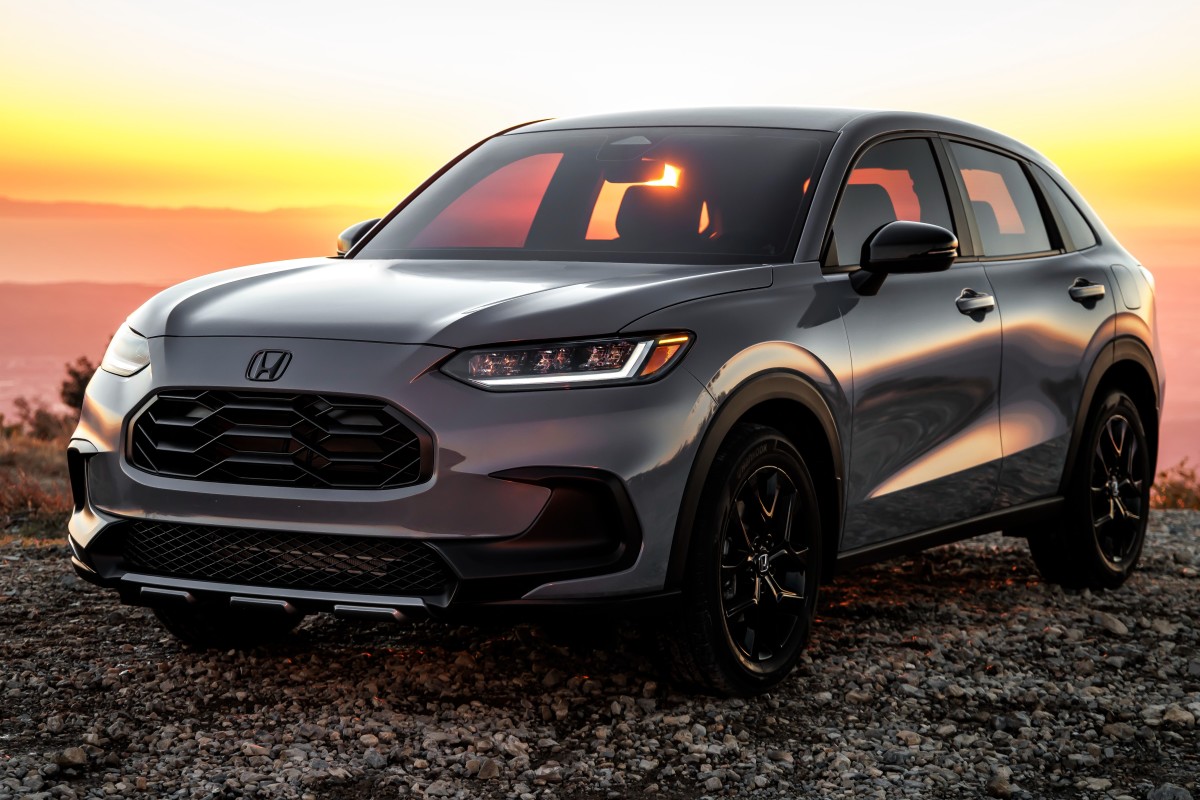
According to CarGurus experts, the overall rating for the 2026 Hyundai Ioniq 9 is 7.3 out of 10, while the 2026 Honda HR-V scores 5.3 out of 10. Based on these ratings, the Hyundai Ioniq 9 is the recommended choice, offering a more advanced and versatile package for consumers seeking a family-friendly electric crossover.
Choose the 2026 Hyundai Ioniq 9 if:
- You prioritize a spacious and versatile interior with ample cargo space.
- You value advanced technology features, including a high-quality audio system and multiple charging options.
- You seek a smooth and quiet ride with impressive energy efficiency and towing capacity.


Choose the 2026 Honda HR-V if:
- You prefer a more traditional crossover design with a focus on practicality.
- You appreciate Honda's attention to detail in interior design and comfort.
- You value a lively driving experience with good handling and braking performance.


CarGurus highlights
According to CarGurus experts, the overall rating for the 2026 Hyundai Ioniq 9 is 7.3 out of 10, while the 2026 Honda HR-V scores 5.3 out of 10. Based on these ratings, the Hyundai Ioniq 9 is the recommended choice, offering a more advanced and versatile package for consumers seeking a family-friendly electric crossover.
Choose the 2026 Hyundai Ioniq 9 if:
Shop Now- You prioritize a spacious and versatile interior with ample cargo space.
- You value advanced technology features, including a high-quality audio system and multiple charging options.
- You seek a smooth and quiet ride with impressive energy efficiency and towing capacity.
Choose the 2026 Honda HR-V if:
Shop Now- You prefer a more traditional crossover design with a focus on practicality.
- You appreciate Honda's attention to detail in interior design and comfort.
- You value a lively driving experience with good handling and braking performance.

By: CarGurus + AI
At CarGurus, our team of experienced automotive writers remain at the heart of our content operation, conducting hands-on car tests and writing insightful guides that are backed by years of industry experience. To complement this, we are harnessing AI to make our content offering more diverse and more helpful to shoppers than ever. To achieve this, our AI systems are based exclusively on CarGurus content, ratings and data, so that what we produce is both unique to CarGurus, and uniquely helpful to car shoppers.
