2020 BMW 3 Series vs 2020 Toyota Camry
Overview | |
MSRP$40,750 | MSRP$24,425 |
Listings53 | Listings49 |
Ratings & Reviews | |
User Reviews | User Reviews |
Expert reviews8.2 out of 10 | Expert reviews7.5 out of 10 |
Pros
Cons
| Pros
Cons
|
2020 BMW 3 Series Reviews SummaryDoes BMW still use “The Ultimate Driving Machine” as its advertising tagline? Yes, it does. And with the arrival of the 2020 BMW M340i, which slots between the existing 330i and the forthcoming BMW M3, the company proves there is substance behind the slogan. | |
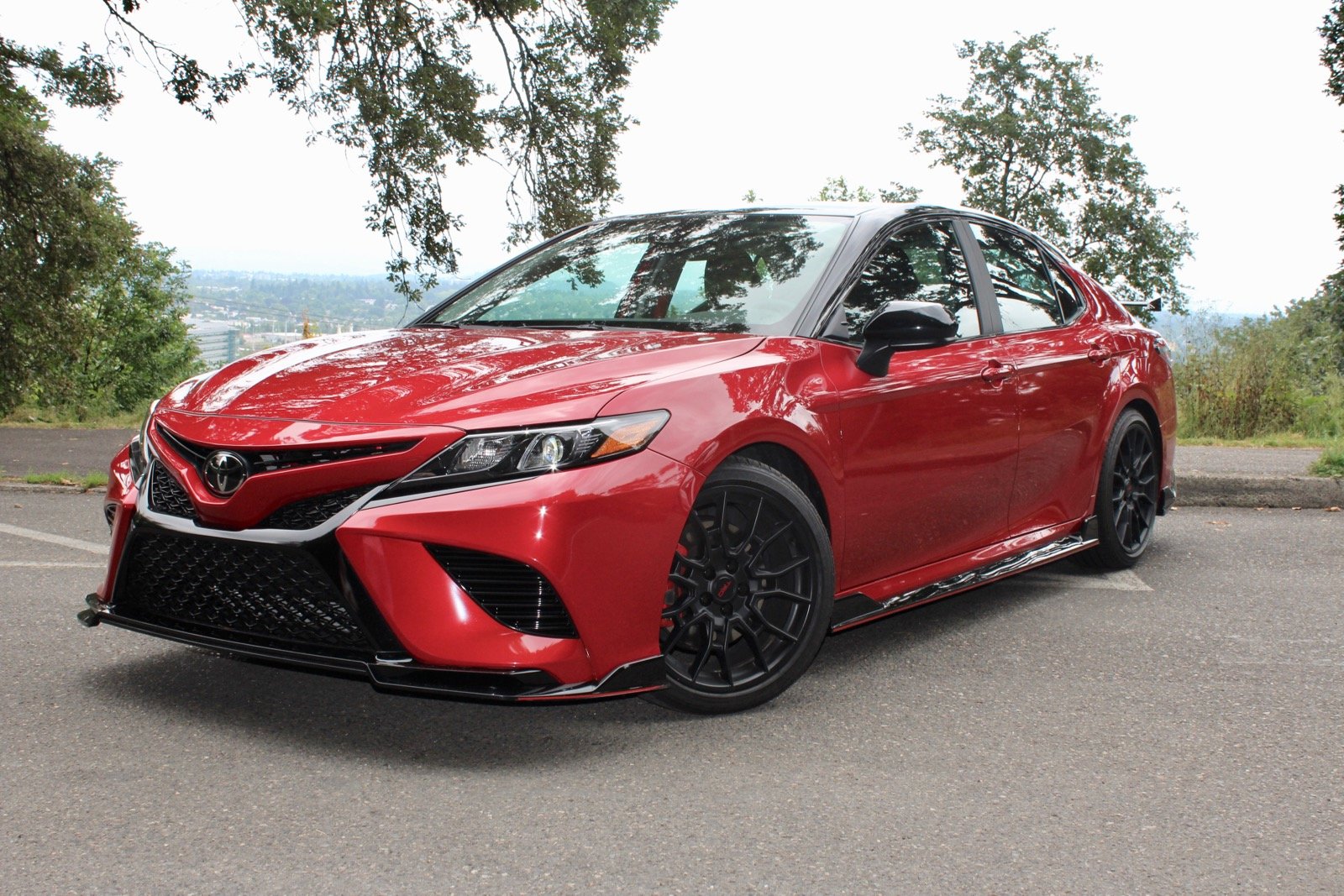
2020 Toyota Camry Reviews SummaryIf you can't beat them, join them. That seems to be Toyota's philosophy in updating the eighth generation of the Camry for the 2020 model year. This latest version debuted in 2017 as a 2018 model. As buyers continue to defect from cars into SUVs like Toyota's own RAV4, Toyota hopes to entice more shoppers to stick with its midsize sedan by offering all-wheel drive on the Camry for the first time since 1991. What's new for 2020 is the Camry TRD option package on the XSE V6, with 301 horsepower that make the case to a buyer who might never have considered a Camry. | |
No video found | |
Popular Features & Specs | |
Engine2.0L 255 hp I4 | Engine2.5L 203 hp I4 |
DrivetrainRWD | DrivetrainFWD |
Seating Capacity5 | Seating Capacity5 |
Horsepower255 hp @ 5000 rpm | Horsepower |
MPG City26 | MPG City29 |
MPG Highway36 | MPG Highway41 |
Engine | |
Engine Name2.0L 255 hp I4 | Engine Name2.5L 203 hp I4 |
Torque295 lb-ft @ 1450 rpm | Torque |
Horsepower255 hp @ 5000 rpm | Horsepower |
DrivetrainRWD | DrivetrainFWD |
Fuel Economy | |
MPG City26 | MPG City29 |
MPG Highway36 | MPG Highway41 |
Interior | |
Seating Capacity5 | Seating Capacity5 |
Key Features | |
Navigation SystemStandard | Navigation System |
Sunroof/MoonroofStandard | Sunroof/Moonroof |
Safety | |
Front Crash Overall | Front Crash Overall5 |
Side Crash Overall | Side Crash Overall5 |
Dimensions & Capacity | |
Cargo Space13.0 cu ft | Cargo Space14.1 cu ft |
Curb Weight3589 lbs | Curb Weight3241 lbs |
Height56.8 in | Height56.9 in |
Length185.7 in | Length192.1 in |
Width81.4 in | Width72.4 in |
Wheelbase112.2 in | Wheelbase111.2 in |
Maximum Payload | Maximum Payload925 lbs |
Number of doors4 | Number of doors4 |
Overview | ||
MSRP | $40,750 | $24,425 |
Listings | ||
Ratings & Reviews | ||
User reviews | ||
Expert reviews | 8.2 out of 10Read full review | 7.5 out of 10Read full review |
Pros & cons | Pros
Cons
| Pros
Cons
|
Summary | Does BMW still use “The Ultimate Driving Machine” as its advertising tagline? Yes, it does. And with the arrival of the 2020 BMW M340i, which slots between the existing 330i and the forthcoming BMW M3, the company proves there is substance behind the slogan. | If you can't beat them, join them. That seems to be Toyota's philosophy in updating the eighth generation of the Camry for the 2020 model year. This latest version debuted in 2017 as a 2018 model. As buyers continue to defect from cars into SUVs like Toyota's own RAV4, Toyota hopes to entice more shoppers to stick with its midsize sedan by offering all-wheel drive on the Camry for the first time since 1991. What's new for 2020 is the Camry TRD option package on the XSE V6, with 301 horsepower that make the case to a buyer who might never have considered a Camry. |
Video | No video found | |
Popular Features & Specs | ||
Engine | 2.0L 255 hp I4 | 2.5L 203 hp I4 |
Drivetrain | RWD | FWD |
Seating Capacity | 5 | 5 |
Horsepower | 255 hp @ 5000 rpm | |
MPG City | 26 | 29 |
MPG Highway | 36 | 41 |
Engine | ||
Engine Name | 2.0L 255 hp I4 | 2.5L 203 hp I4 |
Torque | 295 lb-ft @ 1450 rpm | |
Horsepower | 255 hp @ 5000 rpm | |
Drivetrain | RWD | FWD |
Fuel Economy | ||
MPG City | 26 | 29 |
MPG Highway | 36 | 41 |
Interior | ||
Seating Capacity | 5 | 5 |
Key Features | ||
Navigation System | Standard | |
Sunroof/Moonroof | Standard | |
Safety | ||
Front Crash Overall | 5 | |
Side Crash Overall | 5 | |
Dimensions & Capacity | ||
Cargo Space | 13.0 cu ft | 14.1 cu ft |
Curb Weight | 3589 lbs | 3241 lbs |
Height | 56.8 in | 56.9 in |
Length | 185.7 in | 192.1 in |
Width | 81.4 in | 72.4 in |
Wheelbase | 112.2 in | 111.2 in |
Maximum Payload | 925 lbs | |
Number of doors | 4 | 4 |
The 2020 BMW 3 Series exuded a sense of elegance and power reminiscent of majestic marine life. Its design elements, such as the lidded headlights, curved hood, and oversized grille, gave it an aquatic appearance that was both striking and unique. Despite its high pricing, starting at $49,350 Canadian for the base 330i and reaching $62,100 for the M340i, the driving experience was deemed glorious, especially in the M340i trim. The interior offered a variety of customization options, with high-quality materials and a focus on quality that justified its premium price tag.
In contrast, the 2020 Toyota Camry aimed to reclaim its reputation for quality and reliability with a renewed attention to detail. Its expressive styling, with a bold front fascia and taut lines, marked it as the sportiest Camry yet. The interior featured nice materials and a driver-focused dashboard, elevating even the lower trim levels. While it didn't quite reach the luxury of a Lexus or the sportiness of a BMW, the Camry offered a compelling package at a starting price of $26,620 Canadian, making it a strong contender in the mainstream sedan market.


The 2020 BMW 3 Series was praised for its sporty handling, thanks to significant structural and suspension changes. The M340i trim, with its 3.0-litre turbo inline six-cylinder engine producing 382 horsepower and 369 pound-feet of torque, delivered exhilarating performance. The car's rear-biased xDrive AWD drivetrain, M Sport differential, and massive M Sport brakes contributed to its dynamic driving experience. Despite the absence of a manual transmission, the eight-speed automatic was well-calibrated, offering a launch-controlled 0-100 km/h time of 4.3 seconds.
The 2020 Toyota Camry offered a range of powertrains, including a 3.5-litre V6 with 301 horsepower and a 2.5-litre four-cylinder engine with 203 horsepower (206 in XSE trim). The V6 provided smooth and powerful performance, while the four-cylinder engine offered a lighter and more agile driving experience. The Camry's AWD system, similar to that of the RAV4, enhanced traction in slippery conditions without significantly impacting fuel efficiency. The front-drive Camry achieved a combined fuel consumption rating of 7.6 litres per 100 kilometres, while the AWD version rated at 8.4 L/100 km.
The 2020 BMW 3 Series featured simple and supportive front seats, high-quality leather, and a heated steering wheel, making it comfortable for long drives. However, rear-seat entry and exit were somewhat awkward, and the trunk, while officially measuring 479 litres, appeared narrow and less spacious than expected. The infotainment system was well-integrated, with a widescreen display and intuitive controls, although some traditional BMW controls were cryptic.
The 2020 Toyota Camry offered easy entry and intuitive controls, with increased legroom and hip room in the front seats. However, rear-seat legroom and overall passenger volume were slightly reduced compared to competitors. The trunk, at 428 litres, was smaller than some rivals, but the addition of AWD did not further compromise space. The centre console was well-organized, with cupholders, a cell phone tray, and storage bin.
The 2020 BMW 3 Series boasted an advanced iDrive infotainment system with a touchscreen display, natural voice recognition, and gesture control. The system was intuitive, with multiple ways to interact, although the flat console pad made touch operation less distinct. The "Hey, BMW" voice recognition system was highly effective, and the head-up display was visible even with polarized sunglasses.
The 2020 Toyota Camry introduced Android Auto compatibility alongside Apple CarPlay, enhancing its infotainment system. While the standard system felt dated, the touchscreen was responsive, with hard buttons for major functions. The Camry offered a 7-inch standard screen, with an optional 8-inch upgrade, and included features like Remote Connect for smartphone integration. Higher trims featured a larger multi-information display and an optional 10-inch head-up display.
The 2020 BMW 3 Series offered an Advanced Driver Assistance package, though some features lacked smoothness. The lane-keeping assist system was notably abrupt, emphasizing active driving participation. The 3 Series earned a Top Safety Pick+ rating from the IIHS when equipped with adaptive full LED headlights.
The 2020 Toyota Camry included Toyota Safety Sense, with features like a pre-collision system, adaptive cruise control, and lane-departure warning. Blind-spot monitoring was optional, and higher trims offered Bird's Eye View for enhanced parking safety. The Camry received a five-star rating from the NHTSA and a Top Safety Pick+ from the IIHS. A recall for engine coolant leaks affected some models.
CarGurus highlights

According to CarGurus experts, the overall rating for the 2020 BMW 3 Series is 8.2 out of 10, while the 2020 Toyota Camry scores 7.5 out of 10. Based on these ratings, the BMW 3 Series is recommended for those seeking a more engaging driving experience and advanced technology features. However, the Toyota Camry remains a solid choice for those prioritizing reliability, affordability, and safety.
Choose the 2020 BMW 3 Series if:
- You prioritize a dynamic driving experience with sporty handling and powerful engine options.
- You value a premium interior with customizable options and high-quality materials.
- You seek advanced technology features, including a sophisticated infotainment system and effective voice recognition.


Choose the 2020 Toyota Camry if:
- You want a reliable and affordable sedan with a strong reputation for quality and value.
- You appreciate a comfortable and intuitive interior with user-friendly controls and ample front-seat space.
- You desire a comprehensive suite of safety features and excellent crash test ratings.


CarGurus highlights
According to CarGurus experts, the overall rating for the 2020 BMW 3 Series is 8.2 out of 10, while the 2020 Toyota Camry scores 7.5 out of 10. Based on these ratings, the BMW 3 Series is recommended for those seeking a more engaging driving experience and advanced technology features. However, the Toyota Camry remains a solid choice for those prioritizing reliability, affordability, and safety.
Choose the 2020 BMW 3 Series if:
Shop Now- You prioritize a dynamic driving experience with sporty handling and powerful engine options.
- You value a premium interior with customizable options and high-quality materials.
- You seek advanced technology features, including a sophisticated infotainment system and effective voice recognition.
Choose the 2020 Toyota Camry if:
Shop Now- You want a reliable and affordable sedan with a strong reputation for quality and value.
- You appreciate a comfortable and intuitive interior with user-friendly controls and ample front-seat space.
- You desire a comprehensive suite of safety features and excellent crash test ratings.

By: CarGurus + AI
At CarGurus, our team of experienced automotive writers remain at the heart of our content operation, conducting hands-on car tests and writing insightful guides that are backed by years of industry experience. To complement this, we are harnessing AI to make our content offering more diverse and more helpful to shoppers than ever. To achieve this, our AI systems are based exclusively on CarGurus content, ratings and data, so that what we produce is both unique to CarGurus, and uniquely helpful to car shoppers.
