2019 Toyota RAV4 vs 2020 Toyota 4Runner

Overview | |
MSRP$25,650 | MSRP$36,120 |
Listings116 | Listings39 |
Ratings & Reviews | |
User Reviews | User Reviews |
Expert reviews8.0 out of 10 | Expert reviews6.8 out of 10 |
Pros
Cons
| Pros
Cons
|
2019 Toyota RAV4 Reviews SummaryThere’s a reason small SUVs like the 2019 Toyota RAV4 are among the most popular vehicles on the new car market. Consider the RAV4 and its rivals, the Honda CR-V, the Mazda CX-5, and the Ford Escape—what do they have in common? To put it simply, these vehicles are asked to do it all. Daily commuter car? Check. Family-hauler to school, practice, and the mall? Check, check, and check. Road-trip vehicle? Yeah, that too. On top of it all, these vehicles have to be affordable, efficient, and reliable. Sales of traditional sedans have been dwindling, but if sedans could do as much as crossovers can, they would still be popular vehicles. The RAV4 is one of the oldest vehicles in the segment, and its story tells us how these small SUVs became so popular. The previous RAV4 was an extremely competent vehicle for Toyota, covering all the things we ask of compact SUVs. But the new 2019 RAV4 goes a few steps further. It has standout Tonka-truck styling, a surprisingly upscale interior, and something that it had lost since debuting more than two decades ago: a bit of off-road ability. We’ll see whether this makes it better than the RAV4 it replaces, and if it allows the 2019 RAV4 to stand out in a crowded small SUV market. | |
2020 Toyota 4Runner Reviews SummaryEven with its expensive Limited package, the Toyota 4Runner remains clearly purpose-built for tackling terrain. Whether on a dusty cow path or snowy mountain road, the 4Runner looks most in its element when its outside the typical car’s comfort zone. For 2020, Toyota keeps enough chrome and leather available to market the 4Runner as a rough-and-tumble luxury alternative, but shoppers considering one had better have a real need for 4-wheel drive. | |
No video found | |
Popular Features & Specs | |
Engine2.5L 203 hp I4 | Engine4.0L 270 hp V6 |
Drive TrainFWD | Drive Train4X2 |
Seating Capacity5 | Seating Capacity7 |
Horsepower203 hp @ 6000 rpm | Horsepower270 hp @ 5600 rpm |
MPG City26 | MPG City16 |
MPG Highway35 | MPG Highway19 |
Engine | |
Engine Name2.5L 203 hp I4 | Engine Name4.0L 270 hp V6 |
Torque184 lb-ft @ 5000 rpm | Torque278 lb-ft @ 4400 rpm |
Horsepower203 hp @ 6000 rpm | Horsepower270 hp @ 5600 rpm |
DrivetrainFWD | Drivetrain4X2 |
Fuel Economy | |
MPG City26 | MPG City16 |
MPG Highway35 | MPG Highway19 |
Interior | |
Seating Capacity5 | Seating Capacity7 |
Safety | |
Front Crash Overall4 | Front Crash Overall4 |
Side Crash Overall5 | Side Crash Overall5 |
Dimensions & Capacity | |
Cargo Space37.6 cu ft | Cargo Space47.2 cu ft |
Curb Weight3370 lbs | Curb Weight4400 lbs |
Height67.0 in | Height71.5 in |
Length180.9 in | Length190.2 in |
Width73.0 in | Width75.8 in |
Wheelbase105.9 in | Wheelbase109.8 in |
Maximum Payload1240 lbs | Maximum Payload1700 lbs |
Number of doors4 | Number of doors4 |
Maximum Towing Capacity1500 lbs | Maximum Towing Capacity5000 lbs |
Standard Towing Capacity | Standard Towing Capacity5000 lbs |
Overview | ||
MSRP | $25,650 | $36,120 |
Listings | ||
Ratings & Reviews | ||
User reviews | ||
Expert reviews | 8.0 out of 10Read full review | 6.8 out of 10Read full review |
Pros & cons | Pros
Cons
| Pros
Cons
|
Summary | There’s a reason small SUVs like the 2019 Toyota RAV4 are among the most popular vehicles on the new car market. Consider the RAV4 and its rivals, the Honda CR-V, the Mazda CX-5, and the Ford Escape—what do they have in common? To put it simply, these vehicles are asked to do it all. Daily commuter car? Check. Family-hauler to school, practice, and the mall? Check, check, and check. Road-trip vehicle? Yeah, that too. On top of it all, these vehicles have to be affordable, efficient, and reliable. Sales of traditional sedans have been dwindling, but if sedans could do as much as crossovers can, they would still be popular vehicles. The RAV4 is one of the oldest vehicles in the segment, and its story tells us how these small SUVs became so popular. The previous RAV4 was an extremely competent vehicle for Toyota, covering all the things we ask of compact SUVs. But the new 2019 RAV4 goes a few steps further. It has standout Tonka-truck styling, a surprisingly upscale interior, and something that it had lost since debuting more than two decades ago: a bit of off-road ability. We’ll see whether this makes it better than the RAV4 it replaces, and if it allows the 2019 RAV4 to stand out in a crowded small SUV market. | Even with its expensive Limited package, the Toyota 4Runner remains clearly purpose-built for tackling terrain. Whether on a dusty cow path or snowy mountain road, the 4Runner looks most in its element when its outside the typical car’s comfort zone. For 2020, Toyota keeps enough chrome and leather available to market the 4Runner as a rough-and-tumble luxury alternative, but shoppers considering one had better have a real need for 4-wheel drive. |
Video | No video found | |
Popular Features & Specs | ||
Engine | 2.5L 203 hp I4 | 4.0L 270 hp V6 |
Drive Train | FWD | 4X2 |
Seating Capacity | 5 | 7 |
Horsepower | 203 hp @ 6000 rpm | 270 hp @ 5600 rpm |
MPG City | 26 | 16 |
MPG Highway | 35 | 19 |
Engine | ||
Engine Name | 2.5L 203 hp I4 | 4.0L 270 hp V6 |
Torque | 184 lb-ft @ 5000 rpm | 278 lb-ft @ 4400 rpm |
Horsepower | 203 hp @ 6000 rpm | 270 hp @ 5600 rpm |
Drivetrain | FWD | 4X2 |
Fuel Economy | ||
MPG City | 26 | 16 |
MPG Highway | 35 | 19 |
Interior | ||
Seating Capacity | 5 | 7 |
Safety | ||
Front Crash Overall | 4 | 4 |
Side Crash Overall | 5 | 5 |
Dimensions & Capacity | ||
Cargo Space | 37.6 cu ft | 47.2 cu ft |
Curb Weight | 3370 lbs | 4400 lbs |
Height | 67.0 in | 71.5 in |
Length | 180.9 in | 190.2 in |
Width | 73.0 in | 75.8 in |
Wheelbase | 105.9 in | 109.8 in |
Maximum Payload | 1240 lbs | 1700 lbs |
Number of doors | 4 | 4 |
Maximum Towing Capacity | 1500 lbs | 5000 lbs |
Standard Towing Capacity | 5000 lbs | |
The 2019 Toyota RAV4 presented a bold and aggressive exterior design, drawing inspiration from the Toyota Tacoma pickup. Its chunky build and sharp edges conveyed a sense of strength and modernity, with taillights reminiscent of Toyota's luxury brand, Lexus. The design included a character line on the rear C-pillar, which was more functional in two-tone colour options but appeared as unnecessary clutter in monotone schemes. Inside, the RAV4's cabin was surprisingly simple and elegant, featuring a floating touchscreen and a well-organized control pod. The Canadian trims ranged from the base LE to the upscale Limited, with the XLE trim offering a balanced mix of features like alloy wheels, a power moonroof, and dual-zone climate control. The Trail trim added rugged elements, while the Limited trim focused on luxury.
In contrast, the 2020 Toyota 4Runner maintained a timeless, utilitarian design with tall slab sides, a high beltline, and short overhangs, reminiscent of the XJ Jeep Cherokee. Its flared wheel wells accommodated off-road tires, and the hood scoop, though non-functional, signified its off-road focus. The 4Runner's lineup in Canada was based on the SR5 trim, with packages like TRD Off-Road and Limited offering varying levels of comfort and capability. The Limited package, which we tested, prioritized comfort with leather upholstery and an 8-inch touchscreen. Despite its chrome and leather touches, the 4Runner's utilitarian roots were evident, with a seating position designed for trails rather than highways.


The 2019 Toyota RAV4 was equipped with a 2.5-litre four-cylinder engine producing 203 horsepower and 184 pound-feet of torque, paired with an eight-speed automatic transmission. It offered both front-wheel drive and two types of all-wheel drive (AWD), with the more advanced torque-vectoring AWD available on the Trail and Limited trims. This system could distribute power to the wheels in real-time, enhancing off-road capability. The RAV4's engine performed adequately on highways but struggled with low-end power in stop-and-go traffic. The ride quality was generally comfortable, though the steering felt twitchy, and there was noticeable body roll. Fuel efficiency was a strong point, with the AWD model achieving a combined consumption of 8.0 L/100 km.
The 2020 Toyota 4Runner featured a 4-litre V6 engine with 270 horsepower and 278 pound-feet of torque, managed by a five-speed automatic transmission. This engine was not designed for efficiency but for durability and off-road prowess, offering a towing capacity of up to 2,268 kilograms. Fuel consumption was high, with a combined rating of 13.8 L/100 km. The 4Runner excelled off-road, thanks to its body-on-frame construction and advanced traction systems like crawl control and Multi-Terrain Select. On-road, it exhibited significant body roll and vague steering, making it less suited for precise navigation.
The 2019 RAV4's cabin was both practical and upscale, with ample cargo space and seating for passengers. The centre stack featured climate controls, a large tray, and a compact shifter, maximizing space. With the rear seats up, it offered 1,064 litres of cargo space, expanding to 1,976 litres with the seats folded. The RAV4 provided numerous storage options, including deep bins and trays, making it highly functional.
The 2020 4Runner prioritized visibility and off-road capability, with a tall seating position and a tight turning radius. The dashboard featured large, easy-to-use knobs for HVAC and stereo controls, though the steering-wheel controls lacked illumination. The 4Runner offered an optional third row of seats, but these were best for short, occasional use due to limited legroom and comfort. The power-retractable running boards on the Limited trim aided entry and exit, but the high seating position could be challenging for shorter individuals.
The 2019 RAV4 came with a 7-inch touchscreen running Toyota's Entune 3.0 infotainment system, offering Apple CarPlay but not Android Auto. The XLE trim added multiple USB ports, while the Trail and Limited trims featured larger screens and optional premium audio. The system was user-friendly, with real dials for volume and tuning, a rarity in modern vehicles.
The 2020 4Runner received a much-needed technology update with an 8-inch touchscreen supporting Apple CarPlay and Android Auto. While Toyota's system was straightforward, the onboard navigation was less intuitive than smartphone apps. The 4Runner included Bluetooth, a USB port, and subscription services like Sirius XM. Despite these updates, it lagged behind competitors in terms of features and usability, with the most advanced technology found in its off-road systems.
The 2019 RAV4 was equipped with a comprehensive suite of safety features, including Toyota Safety Sense 2.0, which offered forward-collision warning, emergency braking, lane-departure warning, and adaptive cruise control. Blind-spot monitoring and rear cross-traffic alert were also standard, making it a leader in standard driver-assistance features.
The 2020 4Runner benefited from Toyota Safety Sense P, which included adaptive cruise control, lane-departure warning, and a pre-collision system with pedestrian detection. It also had eight standard airbags. The NHTSA awarded it four out of five stars overall, with a lower score in the rollover test. The IIHS rated it well in most crash tests, except for the small overlap front: driver-side test, where it scored Marginal.
CarGurus highlights
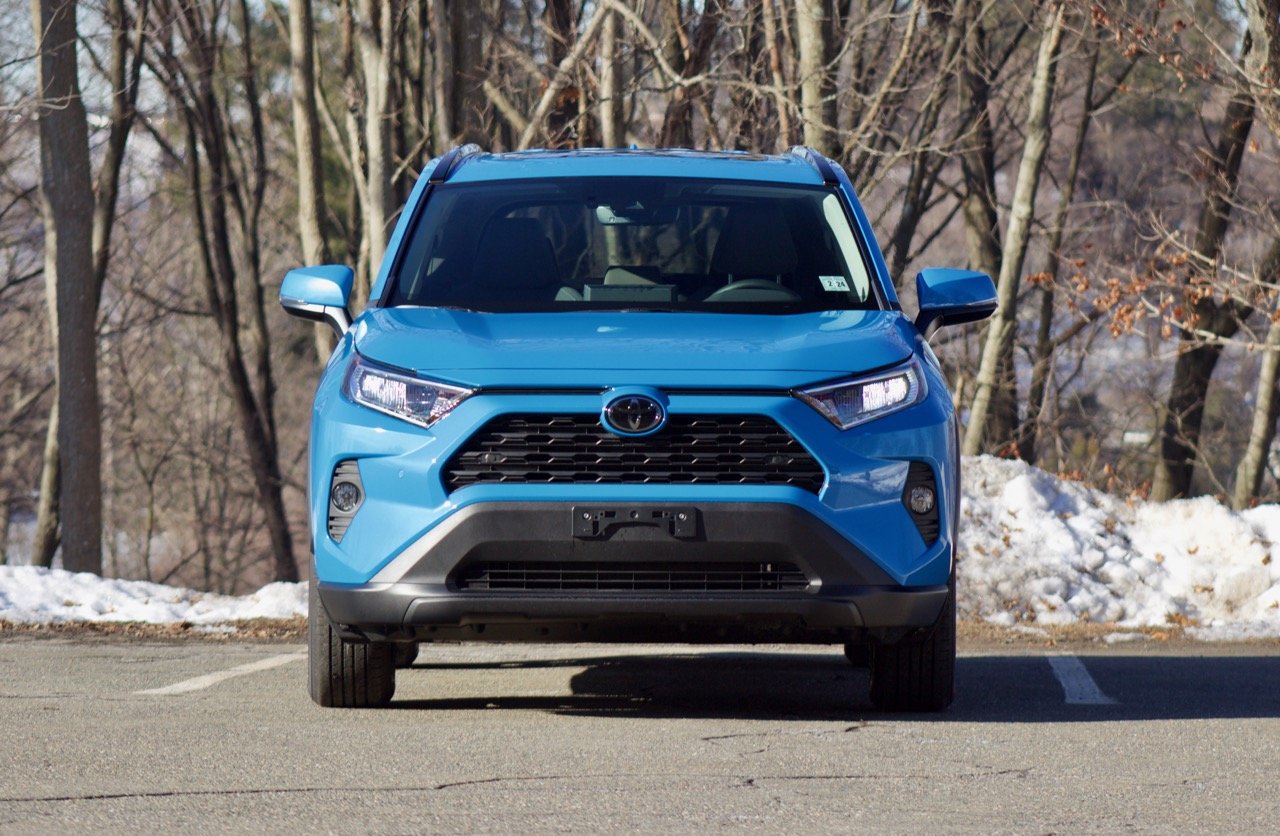
According to CarGurus experts, the overall rating for the 2019 Toyota RAV4 is 8.0 out of 10, while the 2020 Toyota 4Runner scores 6.8 out of 10. Based on these ratings, the 2019 Toyota RAV4 is the recommended choice for most consumers, offering a better balance of comfort, technology, and safety features for everyday use.
Choose the 2019 Toyota RAV4 if:
- You prioritize fuel efficiency and a comfortable ride for daily commuting.
- You want a vehicle with advanced safety features and driver-assistance technologies.
- You need a practical and spacious interior with ample cargo space.


Choose the 2020 Toyota 4Runner if:
- You require a vehicle with exceptional off-road capabilities and durability.
- You value a commanding driving position and robust towing capacity.
- You prefer a traditional SUV design with a focus on ruggedness and reliability.


CarGurus highlights
According to CarGurus experts, the overall rating for the 2019 Toyota RAV4 is 8.0 out of 10, while the 2020 Toyota 4Runner scores 6.8 out of 10. Based on these ratings, the 2019 Toyota RAV4 is the recommended choice for most consumers, offering a better balance of comfort, technology, and safety features for everyday use.
Choose the 2019 Toyota RAV4 if:
Shop Now- You prioritize fuel efficiency and a comfortable ride for daily commuting.
- You want a vehicle with advanced safety features and driver-assistance technologies.
- You need a practical and spacious interior with ample cargo space.


Choose the 2020 Toyota 4Runner if:
Shop Now- You require a vehicle with exceptional off-road capabilities and durability.
- You value a commanding driving position and robust towing capacity.
- You prefer a traditional SUV design with a focus on ruggedness and reliability.


By: CarGurus + AI
At CarGurus, our team of experienced automotive writers remain at the heart of our content operation, conducting hands-on car tests and writing insightful guides that are backed by years of industry experience. To complement this, we are harnessing AI to make our content offering more diverse and more helpful to shoppers than ever. To achieve this, our AI systems are based exclusively on CarGurus content, ratings and data, so that what we produce is both unique to CarGurus, and uniquely helpful to car shoppers.

