2019 Toyota RAV4 Reviews, Pricing & Specs



Pros & cons
What we like
Standard advanced safety features
Stylish design
What to consider
Fairly pedestrian performance
Poor handling
Expert review
The Toyota RAV4 is one of the cornerstones of the small SUV market. For 2019, it gets bold new styling, new tech, and even a bit of off-road cred.
There’s a reason small SUVs like the 2019 Toyota RAV4 are among the most popular vehicles on the new car market. Consider the RAV4 and its rivals, the Honda CR-V, the Mazda CX-5, and the Ford Escape—what do they have in common? To put it simply, these vehicles are asked to do it all. Daily commuter car? Check. Family-hauler to school, practice, and the mall? Check, check, and check. Road-trip vehicle? Yeah, that too. On top of it all, these vehicles have to be affordable, efficient, and reliable. Sales of traditional sedans have been dwindling, but if sedans could do as much as crossovers can, they would still be popular vehicles.
The RAV4 is one of the oldest vehicles in the segment, and its story tells us how these small SUVs became so popular. The previous RAV4 was an extremely competent vehicle for Toyota, covering all the things we ask of compact SUVs. But the new 2019 RAV4 goes a few steps further. It has standout Tonka-truck styling, a surprisingly upscale interior, and something that it had lost since debuting more than two decades ago: a bit of off-road ability. We’ll see whether this makes it better than the RAV4 it replaces, and if it allows the 2019 RAV4 to stand out in a crowded small SUV market.
out of 10 expert review
Look & feel
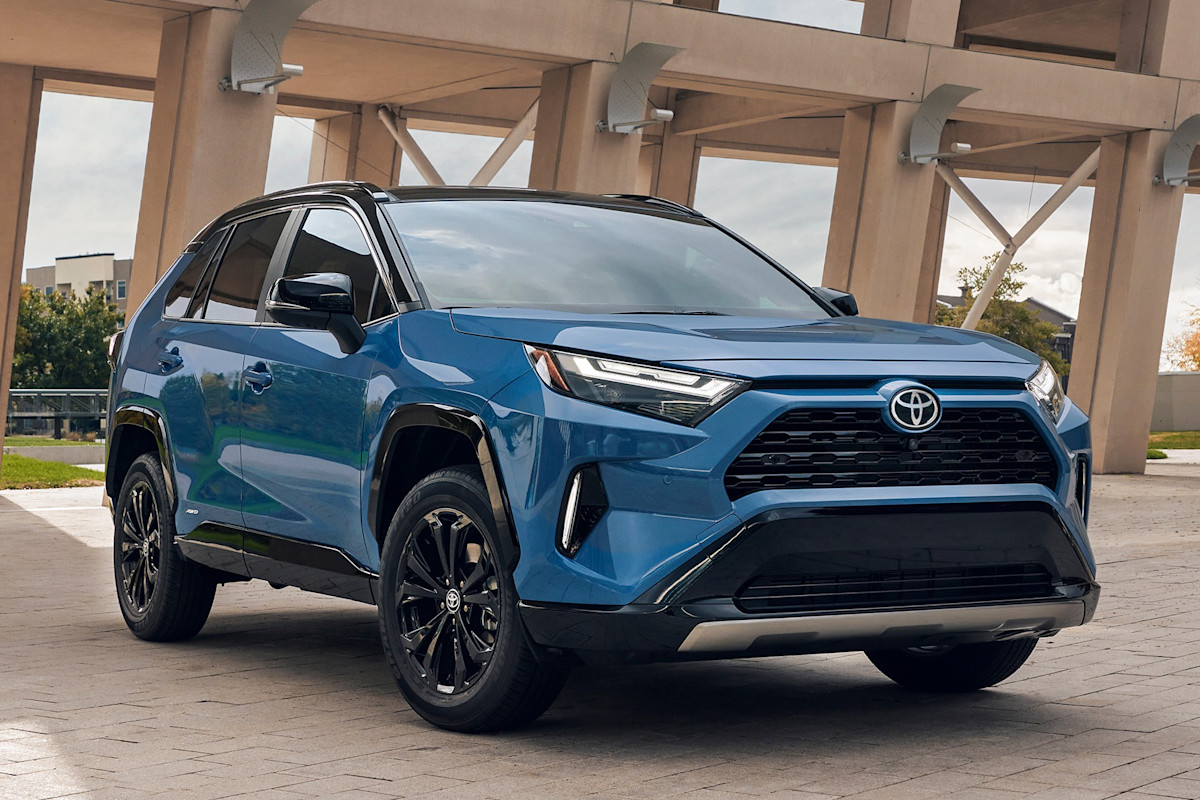
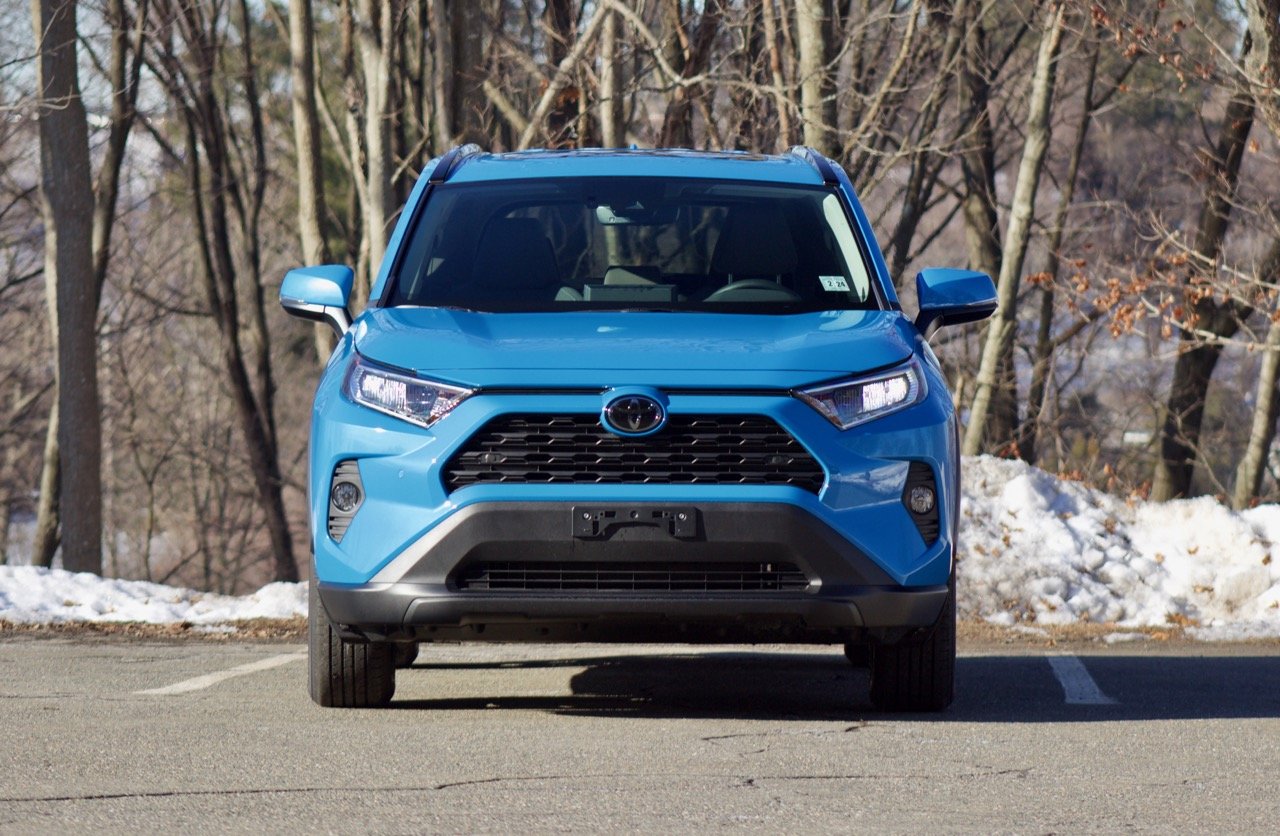
The first thing you’ll notice about the new RAV4 is the way it looks. The big, chunky design and sharp edges clearly take inspiration from the Toyota Tacoma pickup. It’s aggressive and futuristic and conveys a certain strength. This is consistent along the side-profile styling and even out to the back, where the taillights seem inspired by Toyota’s luxury brand, Lexus.
The 2019 RAV4 also has a character line breaking up the rear C-pillar. This is a common design trait among new vehicles, though we can’t say it’s all that visually appealing in most applications—the RAV4 included. About half of the RAV4's colour options match the body to the roof, but several options have a contrasting-colour roof. For the two-tone options, this black strip across the rear pillar makes sense, but for the monotone colour schemes, it just comes off as unnecessary design clutter.
While the exterior is chunky, aggressive, and at times a bit busy, the cabin of the RAV4 is surprisingly simple and elegant. Many features are now found in the new floating touch screen, while the rest of the controls are packaged into a “pod” that spans from the centre of the dash to the cupholders.
In Canada, trims for the RAV4 are LE, XLE, Trail, and Limited. LE and XLE come with a standard front-wheel drive (FWD) or available all-wheel drive (AWD) drivetrain, while AWD is standard on higher trims. Standard features on the LE FWD include steel 17-inch wheels with plastic covers, heated front seats, LED headlights, daytime running lights and taillights, automatic high beams, power heated side mirrors, low-profile black roof rails, and privacy-tinted side and rear windows (not always a given on base trims).
CarGurus recommends the XLE trim, which is what we drove for a week. It adds 17-inch five-spoke alloy wheels, an eight-way power-adjustable driver’s seat, a leather-wrapped steering wheel and shift lever, integrated fog lights, and colour-keyed side mirrors with integrated turn-signal indicators. It also adds a power moonroof, push-button start, a power liftgate, and dual-zone climate control. By adding a package, the XLE AWD can be upgraded to 19-inch alloy wheels, soft-touch materials on the dash, and upgrades the seats from cloth upholstery to SofTex leatherette. Some features, like the leather shift knob and power-adjustable driver’s seat, require this package to access when AWD is equipped.
The Trail trim is where the new RAV4 starts to take things in a more rugged direction. It’s only offered with AWD, and it has unique 19-inch wheels with matte accents, heated and ventilated front seats, a unique split-bar front grille, black fender cladding, upgraded roof rails, active grille shutters, and orange-accented interior touches for the doors, dash, and seats. (In the US, the Trail trim is badged as the Toyota RAV4 Adventure.)
The Limited is the range-topping trim and goes for a more upscale take than the sporty Trail trim. It features 19-inch chrome-finished alloy wheels, a unique grille design, puddle approach lights, chrome door handles with passive entry, dark brown interior accents, ambient interior lighting, heated rear seats, and navigation.

Performance
No matter which trim you select, the 2019 RAV4 comes equipped with a 2.5-litre four-cylinder engine. It makes power specs of 203 horsepower and 184 pound-feet of torque, while the powertrain is completed with an eight-speed automatic transmission routing power to the front wheels or to available all-wheel drive (AWD). There are actually two flavours of AWD: the base offering, found on the two lower trims, and the new torque-vectoring AWD, which is standard in the Trail and Limited trims. Our XLE test model had the base AWD setup, but it still provided Snow, Sand & Mud, and Rock & Dirt drive modes. In this sense, Toyota is trying to re-capture some of the rugged capability that it has lost over the years.
The torque-vectoring AWD takes things a step further and can actually divide the engine's power and send it to the wheels that need it in real time. It’s more advanced and more capable than your typical, car-based AWD setup and, while we didn’t drive it, we can say that it should give the RAV4 the ability to get a little more off the beaten path. Upgrading to the torque-vectoring AWD swaps out the terrain-selection buttons for a drive-mode dial with similar Mud & Sand and Rock & Dirt modes, as well as buttons for Snow Mode and hill-descent control.
As for the 2.5-litre engine, it gets up to highway speed at a decent clip, and you still have a bit of reserve power for overtaking. But get into stop-and-go traffic, and you'll start to see the engine’s weak points. It lacks low-end power, and as a result, it feels a bit sluggish off the line. Whether or not you are taking off from a standstill or passing on the highway, this engine makes a ton of noise.
The ride quality is generally pretty good but still has some blemishes. It’s comfortable and soaks up bumps in the road, but the steering feels a bit twitchy, and there’s a good amount of body roll. Combine this with the fact that the RAV4 feels heavy in the rear, and you have the makings of an awkward experience—especially through fast corners. If you want something more refined, check out the Honda CR-V, and if you want a somewhat athletic small SUV, check out the Ford Escape and Mazda CX-5.
These other vehicles have put the work into on-road handling, and the too-bad part is that the RAV4 used to have similar driving dynamics as the CR-V, but that’s all gone now. Of course, those rivals have all but given up their off-road capability, which makes sense—how often are you going to take your family commuter car off-roading? But the vehicles that originally made this segment popular, like the first-generation RAV4, actually had a bit of decent off-road running gear. The Trail trim and the torque-vectoring AWD actually give the RAV4 some off-road chops in a segment largely devoid of it.
Ask most people if they need their car to have off-road abilities, and they might chuckle. But think about activities like driving on a cottage road, getting to a remote campsite, or driving on a snowy highway. A Jeep Wrangler can get out to all these places, but it gives up something in road manners to be that capable. It’s not unreasonable to ask a more road-compliant crossover to occasionally perform these duties. But more and more crossovers these days just don’t cut it. The RAV4 at least makes the effort.
The FWD RAV4 has a fuel consumption of 8.8 litres per 100 kilometres in the city, 6.7 on the highway, and 7.8 combined. Our AWD test car burns 9.2 L/100 km city and 7.1 highway. In a week of combined city and highway driving, we observed a combined fuel consumption of 8.0 L/100 km—pretty impressively fuel efficient. Natural Resources Canada does not note a difference in fuel consumption between the two types of AWD.

Form & function
The cabin of the RAV4 goes for a clean, upscale look that’s still immensely practical, with plenty of cargo space and spacious seating in both rows. Running from top to bottom, the centre stack pod contains climate controls, a large tray for wallet/keys/phone, drive-mode controls, and the shifter. The shifter design itself is short and stocky, minimizing the space it takes up within the dash. If you need more space for small items, there’s a deep centre console bin and a tray built into the passenger portion of the dash.
With the rear seats up, the RAV4 has 1,064 litres of cargo space. Fold the rear bench, and that number grows to 1,976 litres. That’s actually down a couple from 2018, but it's still better than rivals like the Mazda CX-5 and the Jeep Cherokee. The Honda CR-V beats it, though, boasting around 1,110 litres of cargo space.
But the Toyota RAV4 is plenty functional. The front row has plenty of places to put things, including deep centre-console trays and deep bins in the doors. The thin tray above the glove box is a hidden-in-plain-sight feature. Our test model had a fold-out rear armrest with cupholders as well.

Technology
The 2019 Toyota RAV4 LE comes standard with a 7-inch touchscreen that runs the latest form of Toyota’s infotainment, called Entune 3.0. It is very easy to use and provides Apple CarPlay (but not Android Auto). Other features on the LE include Bluetooth connectivity and a USB port. The XLE has five USB ports—one in the front tray, two in the centre console bin, and another two for the second row. The Trail gets an upgraded 7-inch instrument panel display and a larger 8-inch Entune infotainment screen (optional on XLE AWD), and the Limited trim offers an optional JBL premium audio system.
Regardless of the screen size, the new infotainment system’s layout is fantastically simple. The floating screen has easy menu navigation, and there are hard dials on either side for all the major functions like Home, Menu, Audio, Map, Seek, Track, Phone, and Apps.
The interface also has real dials for the volume and tuner—which are becoming endangered species as automakers try to force their proprietary controller systems like MazdaConnect and Lexus Enform. Ideally, an infotainment system will blend hard dials and buttons for volume, tuning, and climate controls with touchscreen functions for everything else.
Previous versions of this infotainment setup have been just as easy to use. The big update for 2019 is the addition of Apple CarPlay to many of its new models. For whatever reason, Toyota has been one of the last high-volume automakers to come to market with CarPlay. But Android Auto users will still have to wait: This feature isn’t available… yet.

Safety
Standard safety features for the 2019 RAV4 include a full array of front- and side-impact airbags, a backup camera, traction control, and a tire-pressure monitoring system. Also standard is Toyota Safety Sense 2.0, a comprehensive suite of safety technologies including forward-collision warning and emergency braking, lane-departure warning, automatic high-beams, and adaptive cruise control. Blind-spot monitoring and rear cross-traffic alert are also standard equipment.
Toyota might have been behind the 8-ball with Apple CarPlay, but it has been a leader in making driver-assistance features standard equipment, starting in 2017. A few select rivals have finally caught on, but Toyota keeps moving the goalposts—this second generation of Toyota Safety Sense also adds Lane-Tracing Assist, which keeps the vehicle centred in the lane.

Cost-effectiveness
The 2019 Toyota RAV4 LE trim level comes well equipped and with a base MSRP of $27,990 with FWD and $30,690 with AWD. The Toyota RAV4 XLE trim starts at $31,590 with FWD, while the XLE with AWD that CarGurus recommends starts at $33,690. Rounding out the trim lineup, the Trail starts at $38,690, and the range-topping Toyota RAV4 Limited comes in at $40,690. These prices do not include the destination charge of $1,815.
The previous-generation RAV4 had great driving dynamics. Between that and the well-made interior, the older RAV4 had a certain unassuming refinement. This is not to say that the new RAV4 lacks that interior refinement—in fact, the cabin quality has been consistent. No, it’s the driving dynamics that have fallen off. This won’t be a deal-breaker for most buyers, but it’s noticeable.
Toyota knows where its bread is buttered when it comes to SUVs: lots of cargo room, plenty of space for you and your gear, and the right blend of fuel economy, price, and features. The fact that you can get a RAV4 off the beaten path occasionally is a value-add that tilts the scales for anyone in the market for a capable small SUV.
Note: Images show a US model.


What owners say
"Overall, drivers generally appreciate the 2019 Toyota RAV4 for its great value, smooth ride, spacious interior, and modern features. However, some have expressed concerns about the engine power being underwhelming and the feeling that cheapened parts diminish its overall quality. While many celebrate its safety features and adaptability for outdoor use, a few note it might be too small for certain needs and miss features like heated steering or generous storage options from the previous model."
We are excited to own a Toyota RAV 4. It was a good deal with low mileage. So far we are very happy!
August 15, 2025This car was unkept by previous owner immaculately. It was at an amazing price & I was searching this make & model for several months so I know what the price ranges are & should be for year & mileage. Looking forward to driving it every day.
May 14, 2026Great value for the car. Drives well and is very gas efficient.
November 2, 2023What owners say
We are excited to own a Toyota RAV 4. It was a good deal with low mileage. So far we are very happy!
August 15, 2025This car was unkept by previous owner immaculately. It was at an amazing price & I was searching this make & model for several months so I know what the price ranges are & should be for year & mileage. Looking forward to driving it every day.
May 14, 2026Great value for the car. Drives well and is very gas efficient.
November 2, 2023I’Ve had my car for 2 weeks now and I am so happy , it’s a really nice drive, I feel so empowered when driving it, sitting to high and very nice SUV for a decent price that I was able to afford. Glad to be part of the RAV4 family.
May 13, 2022I own one with over 200k kilometres and the car is doing very well - it is the older version 2009 limited and it’s simply a great car
March 7, 2022Good little car, I just wish there was a little more horsepower.
August 12, 2021i just got my 2019 Rav and i am IN LOVE Ride is SO smooth, interior has just enough tech to make you feel like your in a luxury vehicle but not enough to be overwhelming. I have no kids but there is SO much cargo space for my two BIG fur babies! LOVE LOVE LOVE!!!
October 29, 2020I love mine Needs windshield wiper help, being able to control the speeds better then the two speeds offered.
January 11, 2023So far I’m very happy with the vehicle, best suv I’ve own.
December 16, 2022Overall great SUV! It does everything very well, and is a pleasure to drive!
April 9, 2022Trims & specs
Base MSRP N/A | Seating N/A |
Engine N/A | Cargo Capacity N/A |
Combined MPG N/A | Drivetrain N/A |
Base MSRP $27,450 | Seating 5 |
Engine 2.5L 203 hp I4 | Cargo Capacity 37.5 cu ft |
Combined MPG 30 | Drivetrain FWD |
Base MSRP $28,850 | Seating 5 |
Engine 2.5L 203 hp I4 | Cargo Capacity 37.5 cu ft |
Combined MPG 29 | Drivetrain AWD |
Base MSRP $31,050 | Seating 5 |
Engine 2.5L 203 hp I4 | Cargo Capacity 37.5 cu ft |
Combined MPG 29 | Drivetrain AWD |
Base MSRP $29,650 | Seating 5 |
Engine 2.5L 203 hp I4 | Cargo Capacity 37.5 cu ft |
Combined MPG 30 | Drivetrain FWD |
Base MSRP $33,650 | Seating 5 |
Engine 2.5L 203 hp I4 | Cargo Capacity 37.5 cu ft |
Combined MPG 30 | Drivetrain FWD |
Base MSRP $33,050 | Seating 5 |
Engine 2.5L 203 hp I4 | Cargo Capacity 37.5 cu ft |
Combined MPG 29 | Drivetrain AWD |
Base MSRP $35,050 | Seating 5 |
Engine 2.5L 203 hp I4 | Cargo Capacity 37.5 cu ft |
Combined MPG 29 | Drivetrain AWD |
Base MSRP $27,050 | Seating 5 |
Engine 2.5L 203 hp I4 | Cargo Capacity 37.5 cu ft |
Combined MPG 29 | Drivetrain AWD |
Base MSRP $25,650 | Seating 5 |
Engine 2.5L 203 hp I4 | Cargo Capacity 37.5 cu ft |
Combined MPG 30 | Drivetrain FWD |


Pricing trends
MSRP range
$25,650 - $35,050
Current avg. market price
$26,676
Trending up by 0.1% this month
May 2026 - October 2026