2021 Toyota 4Runner vs 2020 Honda CR-V
Overview | |
MSRP$25,150 | MSRP$36,765 |
Listings224 | Listings77 |
Ratings & Reviews | |
User Reviews | User Reviews |
Expert reviews7.5 out of 10 | Expert reviews6.2 out of 10 |
Pros
Cons
| |
2020 Honda CR-V Reviews SummaryHonda’s compact SUV has been satisfying buyers for more than two decades, with more than five million CR-V’s sold. Such a legacy means the CR-V has long had its wrinkles smoothed out into a comfortable and capable crossover package that’s only downside may be its sheer inoffensiveness. The 2020 model year saw engine and safety upgrades, which improve fuel efficiency and help to make Honda’s bestseller an even better value. | |
2021 Toyota 4Runner Reviews SummaryDespite its design age, poor fuel efficiency, rough ride, iffy handling, and marginal safety ratings, the current-generation Toyota 4Runner remains a popular choice in a midsize SUV. Why? Its reputation for reliability and resale value, coupled with its undeniable utility, rugged image, and go-anywhere and do-anything capability, are the selling points. And if that's why you want a 2021 Toyota 4Runner, it won't disappoint you as long as you accept its shortcomings. | |
No video found | No video found |
Popular Features & Specs | |
Engine1.5L 190 hp I4 | Engine4.0L 270 hp V6 |
Drive TrainFWD | Drive Train4X2 |
Seating Capacity5 | Seating Capacity7 |
Horsepower190 hp @ 5600 rpm | Horsepower270 hp @ 5600 rpm |
MPG City28 | MPG City16 |
MPG Highway34 | MPG Highway19 |
Engine | |
Engine Name1.5L 190 hp I4 | Engine Name4.0L 270 hp V6 |
Torque179 lb-ft @ 2000 rpm | Torque278 lb-ft @ 4400 rpm |
Horsepower190 hp @ 5600 rpm | Horsepower270 hp @ 5600 rpm |
DrivetrainFWD | Drivetrain4X2 |
Fuel Economy | |
MPG City28 | MPG City16 |
MPG Highway34 | MPG Highway19 |
Interior | |
Seating Capacity5 | Seating Capacity7 |
Safety | |
Front Crash Overall5 | Front Crash Overall4 |
Side Crash Overall5 | Side Crash Overall5 |
Dimensions & Capacity | |
Cargo Space39.2 cu ft | Cargo Space47.2 cu ft |
Curb Weight3337 lbs | Curb Weight4400 lbs |
Height66.1 in | Height71.5 in |
Length182.1 in | Length190.2 in |
Width73.0 in | Width75.8 in |
Wheelbase104.8 in | Wheelbase109.8 in |
Maximum Payload1358 lbs | Maximum Payload1700 lbs |
Number of doors4 | Number of doors4 |
Maximum Towing Capacity1500 lbs | Maximum Towing Capacity5000 lbs |
Standard Towing Capacity | Standard Towing Capacity5000 lbs |
Overview | ||
MSRP | $25,150 | $36,765 |
Listings | ||
Ratings & Reviews | ||
User reviews | ||
Expert reviews | 7.5 out of 10Read full review | 6.2 out of 10Read full review |
Pros & cons | Pros
Cons
| |
Summary | Honda’s compact SUV has been satisfying buyers for more than two decades, with more than five million CR-V’s sold. Such a legacy means the CR-V has long had its wrinkles smoothed out into a comfortable and capable crossover package that’s only downside may be its sheer inoffensiveness. The 2020 model year saw engine and safety upgrades, which improve fuel efficiency and help to make Honda’s bestseller an even better value. | Despite its design age, poor fuel efficiency, rough ride, iffy handling, and marginal safety ratings, the current-generation Toyota 4Runner remains a popular choice in a midsize SUV. Why? Its reputation for reliability and resale value, coupled with its undeniable utility, rugged image, and go-anywhere and do-anything capability, are the selling points. And if that's why you want a 2021 Toyota 4Runner, it won't disappoint you as long as you accept its shortcomings. |
Video | No video found | No video found |
Popular Features & Specs | ||
Engine | 1.5L 190 hp I4 | 4.0L 270 hp V6 |
Drive Train | FWD | 4X2 |
Seating Capacity | 5 | 7 |
Horsepower | 190 hp @ 5600 rpm | 270 hp @ 5600 rpm |
MPG City | 28 | 16 |
MPG Highway | 34 | 19 |
Engine | ||
Engine Name | 1.5L 190 hp I4 | 4.0L 270 hp V6 |
Torque | 179 lb-ft @ 2000 rpm | 278 lb-ft @ 4400 rpm |
Horsepower | 190 hp @ 5600 rpm | 270 hp @ 5600 rpm |
Drivetrain | FWD | 4X2 |
Fuel Economy | ||
MPG City | 28 | 16 |
MPG Highway | 34 | 19 |
Interior | ||
Seating Capacity | 5 | 7 |
Safety | ||
Front Crash Overall | 5 | 4 |
Side Crash Overall | 5 | 5 |
Dimensions & Capacity | ||
Cargo Space | 39.2 cu ft | 47.2 cu ft |
Curb Weight | 3337 lbs | 4400 lbs |
Height | 66.1 in | 71.5 in |
Length | 182.1 in | 190.2 in |
Width | 73.0 in | 75.8 in |
Wheelbase | 104.8 in | 109.8 in |
Maximum Payload | 1358 lbs | 1700 lbs |
Number of doors | 4 | 4 |
Maximum Towing Capacity | 1500 lbs | 5000 lbs |
Standard Towing Capacity | 5000 lbs | |
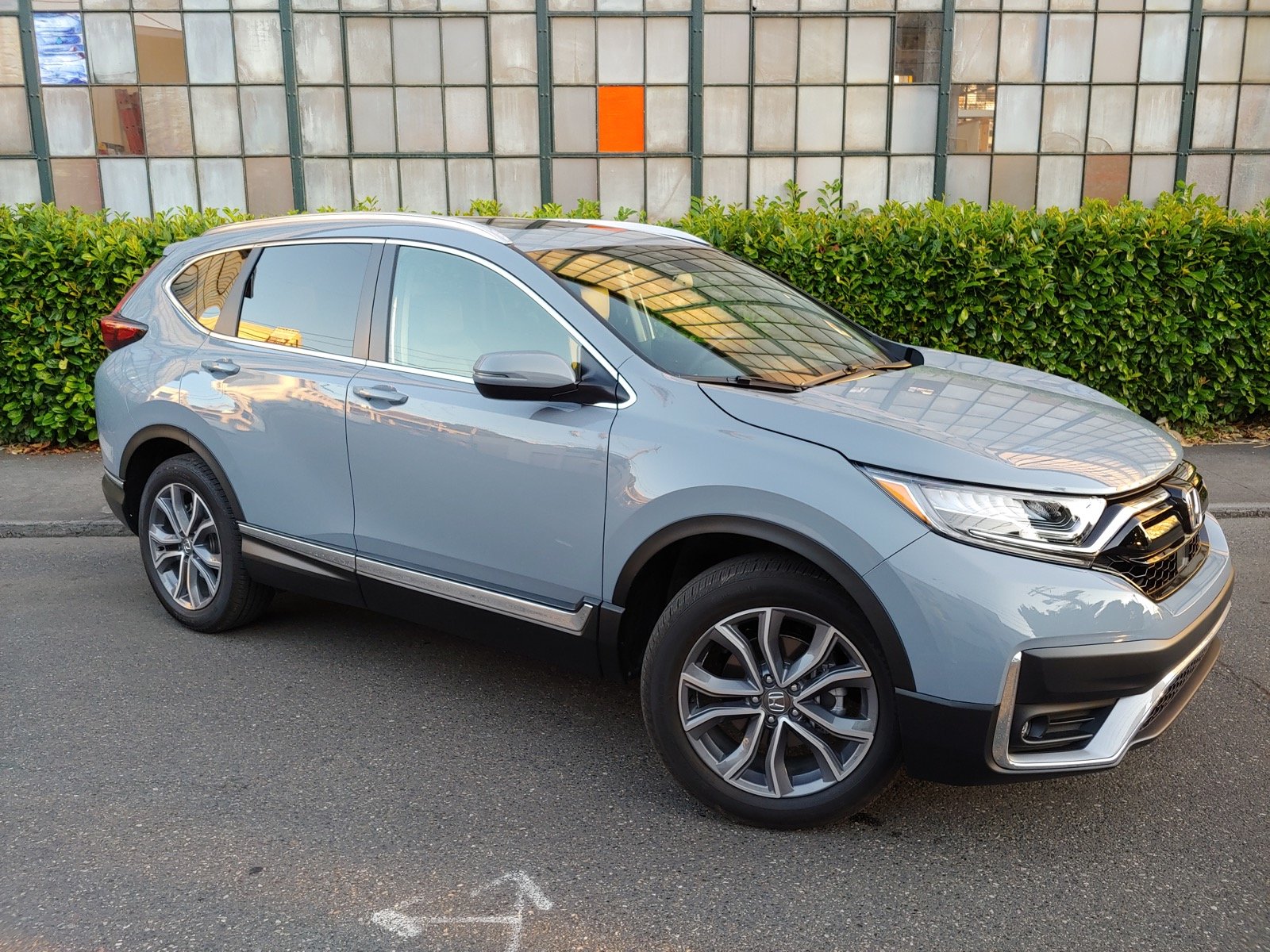
The 2020 Honda CR-V, part of Honda's fifth-generation compact crossover lineup, had a design that was both familiar and enjoyable. Its exterior styling was characterized by soft, curvy lines that gave it a car-like appearance, closely resembling Honda's sedan lineup. The CR-V's design leaned more towards a station wagon than a traditional SUV, setting a standard for modern family transportation. However, the interior was a mix of textures and materials, with upscale touches like wood-look trim and leather upholstery clashing with lower-quality plastics, reminding drivers that even the pricier CR-V models were upgrades of a commodity car rather than premium products.
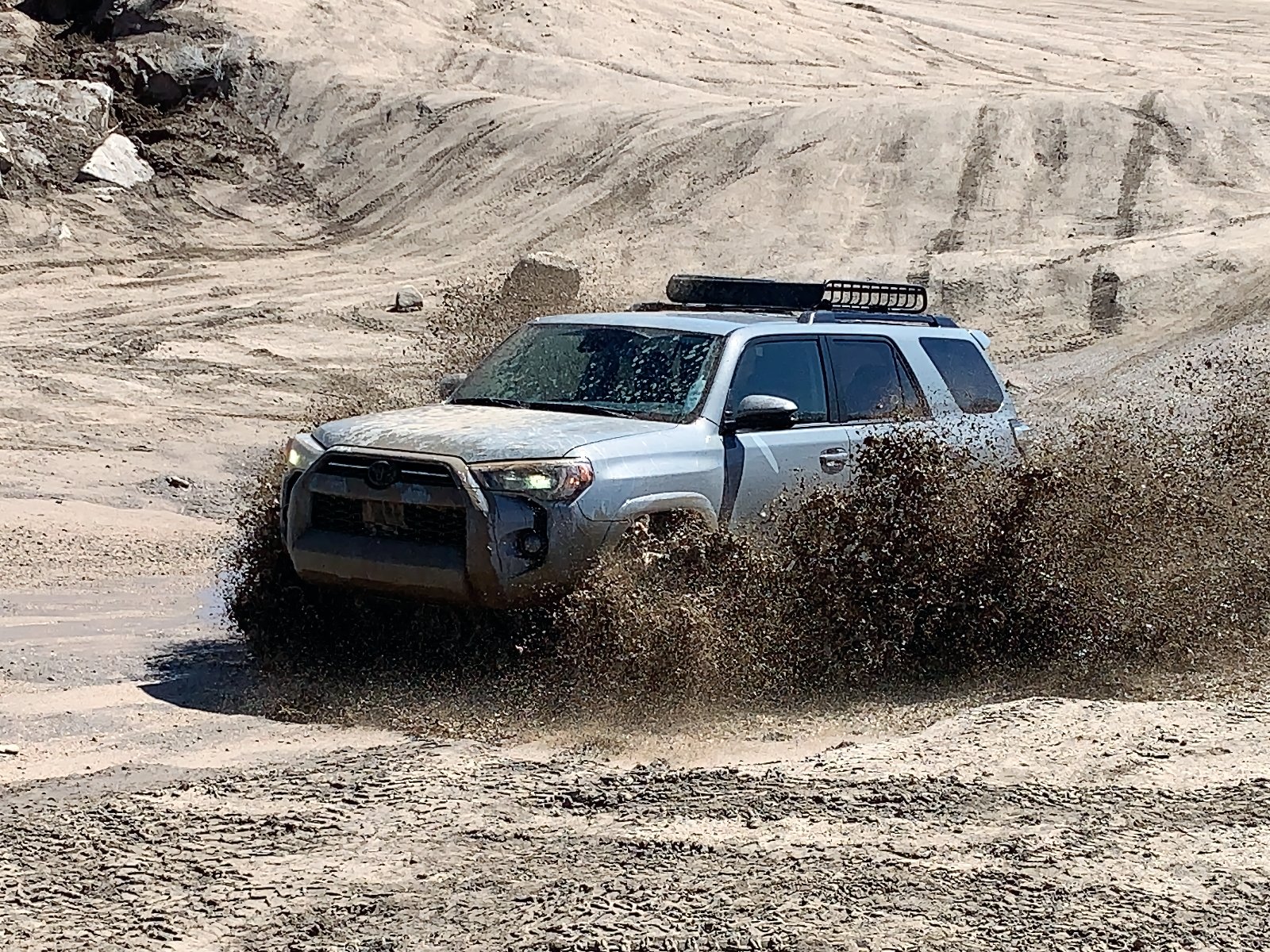
In contrast, the 2021 Toyota 4Runner had not seen a major redesign in over a decade, yet its design aged well, maintaining a timeless and utilitarian appeal. The 4Runner's two-box body, flared fenders, and trapezoidal wheel arches gave it balanced proportions and undeniable utility. While not conventionally attractive, the 4Runner's design was functional, much like a reliable tool that doesn't require frequent updates. The 4Runner's rugged appearance and practical design made it a favourite among those seeking a durable and capable SUV.


The 2020 Honda CR-V was equipped with a 1.5-litre turbocharged engine across all trims, producing 190 horsepower and 179 pound-feet of torque. Paired with a continuously variable automatic transmission (CVT), this powertrain offered a well-matched driving experience. Despite the CVT's reputation for sluggishness, Honda's implementation was commendable, providing a responsive and fuel-efficient drive. The CR-V's car-like handling, nimble steering, and minimal body roll contributed to its excellent road manners. With a curb weight ranging from 1,521 kg to 1,641 kg, the CR-V was among the lightest in its class, enhancing its acceleration, handling, and fuel efficiency. The FWD models achieved a combined fuel consumption rating of 7.7 litres per 100 kilometres, while AWD models managed 8.1, making the CR-V a top performer in its class for non-hybrid models.
The 2021 Toyota 4Runner, on the other hand, was powered by a 4.0-litre V6 engine, delivering 270 horsepower and 278 pound-feet of torque. This engine was paired with a five-speed automatic transmission, offering a maximum towing capacity of 2,268 kilograms. While the 4Runner excelled off-road, thanks to features like A-Trac, Multi-Terrain Select, and Crawl Control, its on-road performance was less impressive. The SUV felt slow, heavy, and clunky, with truck-like driving characteristics that were part of its charm. However, its fuel consumption was high, with a combined rating of 13.8 litres per 100 kilometres, and an average range of about 620 kilometres with its 87-litre fuel tank.
The 2020 Honda CR-V was praised for its masterful packaging, offering a spacious cabin comparable to the Volkswagen Tiguan without feeling oversized. The CR-V provided excellent head- and legroom, thanks to its optimal seating position and low cowl, enhancing front visibility. The cargo compartment was roomy, with a two-position load floor allowing for flexible storage options. With the rear seats folded, the CR-V offered up to 1,110 litres of cargo space, making it easy to accommodate various needs. Clever storage solutions, such as a deep centre console and large door pockets, added to the CR-V's practicality.
The 2021 Toyota 4Runner, with its high ground clearance, required some effort to climb aboard, especially for shorter individuals. However, once inside, the 4Runner offered comfortable seating with ample legroom and good visibility. The rear seat featured air conditioning vents and USB charging ports, enhancing passenger comfort. The 4Runner's cargo space was generous, with up to 1,337 litres behind the back seat and 2,540 litres with the rear seat folded. The SUV's back bumper served as a convenient spot for various activities, adding to its versatility.
The 2020 Honda CR-V's infotainment system showed its age, with a standard 7-inch touchscreen that felt small compared to competitors. The system lacked hard buttons, making it challenging to operate, even with Apple CarPlay and Android Auto integration. However, the CR-V offered plenty of USB ports, with two in the front and two high-powered ones in the backseat. The Touring and Black Edition trims included a wireless phone charger, enhancing convenience for tech-savvy users.
In contrast, the 2021 Toyota 4Runner featured a standard 8-inch touchscreen infotainment system with Bluetooth, Apple CarPlay, Android Auto, and SiriusXM satellite radio. The system was user-friendly, with physical shortcut buttons and knobs that were easy to operate, even with gloves. The 4Runner's infotainment system included off-road trail maps, adding to its functionality. While the screen size was modest, the system's features and ease of use compensated for it.
The 2020 Honda CR-V came equipped with the "Honda Sensing" suite of safety features as standard, including forward-collision warning, automatic emergency braking, lane departure warning, and adaptive cruise control. The CR-V earned a five-star rating from the NHTSA and a Top Safety Pick designation from the IIHS, with some caveats for lower trims. However, only the Touring and Black Edition models featured LED headlights, which improved nighttime visibility.
The 2021 Toyota 4Runner included Toyota Safety Sense P (TSS-P) as standard, offering adaptive cruise control, forward-collision warning, automatic emergency braking, and lane departure warning. However, it lacked blind-spot monitoring and rear cross-traffic warning, which were notable omissions. The 4Runner received a three-star rollover resistance rating from the NHTSA and a "Good" roof crush strength rating from the IIHS. However, its protection in small overlap frontal-impact collisions was rated as Marginal, reflecting its age and design limitations.
CarGurus highlights
According to CarGurus experts, the overall rating for the 2020 Honda CR-V is 7.5 out of 10, while the 2021 Toyota 4Runner scores 6.2 out of 10. Based on these ratings, the 2020 Honda CR-V is the recommended choice for those seeking a well-rounded and efficient compact crossover with excellent safety features and practicality.
Choose the 2021 Toyota 4Runner if:
- You need a rugged and capable SUV for off-road adventures and challenging terrains.
- You appreciate a timeless and utilitarian design with a high ground clearance.
- You require generous cargo space and versatile seating arrangements for various activities.


Choose the 2020 Honda CR-V if:
- You prioritize fuel efficiency and excellent road manners in a compact crossover.
- You value a spacious and well-packaged interior with clever storage solutions.
- You seek a vehicle with a comprehensive suite of standard safety features and high safety ratings.


CarGurus highlights
According to CarGurus experts, the overall rating for the 2020 Honda CR-V is 7.5 out of 10, while the 2021 Toyota 4Runner scores 6.2 out of 10. Based on these ratings, the 2020 Honda CR-V is the recommended choice for those seeking a well-rounded and efficient compact crossover with excellent safety features and practicality.
Choose the 2021 Toyota 4Runner if:
Shop Now- You need a rugged and capable SUV for off-road adventures and challenging terrains.
- You appreciate a timeless and utilitarian design with a high ground clearance.
- You require generous cargo space and versatile seating arrangements for various activities.



Choose the 2020 Honda CR-V if:
Shop Now- You prioritize fuel efficiency and excellent road manners in a compact crossover.
- You value a spacious and well-packaged interior with clever storage solutions.
- You seek a vehicle with a comprehensive suite of standard safety features and high safety ratings.


By: CarGurus + AI
At CarGurus, our team of experienced automotive writers remain at the heart of our content operation, conducting hands-on car tests and writing insightful guides that are backed by years of industry experience. To complement this, we are harnessing AI to make our content offering more diverse and more helpful to shoppers than ever. To achieve this, our AI systems are based exclusively on CarGurus content, ratings and data, so that what we produce is both unique to CarGurus, and uniquely helpful to car shoppers.

