If you’re a Canadian and you’re not buying a truck, you’re probably buying an SUV. Those two body styles now make up more than 85% of new vehicle purchases in this country, yet SUVs have historically been among the thirstiest vehicles on the road. As affordability concerns rise and gas prices remain volatile, fuel economy is becoming a pressing issue.
The good news is that hybrid powertrains are becoming more common in SUVs, especially in the compact SUV segment Canadians tend to prefer. Today, you’ll find plenty of fuel-efficient and family-friendly SUV options from brands such as Toyota, Lexus, Honda, Kia, and even untraditional players in this space such as Jeep and Subaru.
In this article, we’ll highlight the most fuel-efficient SUVs in Canada in 2026. Our top 10 list is entirely made up of hybrids, which reliability experts like J.D. Power and Consumer Reports have identified as the most reliable powertrain type on the market. We’ve also mentioned the most fuel-efficient non-hybrid SUVs in case that happens to be important to you, and highlighted the three-row SUV with the best fuel economy in 2026—the Toyota Highlander Hybrid. Every hybrid listed has a combined fuel consumption average of less than 7.0 litres per 100 kilometres.
Prices shown include the manufacturer’s suggested retail price (MSRP) as well as destination charges but not dealer fees, options, or sales taxes. While current at the time of publication, prices are subject to change.
The Most Fuel-efficient SUVs in Canada in 2026
- 2026 Kia Niro Hybrid (4.4 L/100 km combined)
- 2026 Toyota RAV4 (5.5 L/100 km combined)
- 2026 Toyota Corolla Cross Hybrid (5.6 L/100 km combined)
- 2026 Lexus UX 300h (5.6 L/100 km combined)
- 2026 Lexus NX 350h (6.0 L/100 km combined)
- 2026 Toyota Crown Signia (6.2 L/100 km combined)
- 2026 Jeep Cherokee (6.3 L/100 km combined)
- 2026 Honda CR-V Hybrid (6.4 L/100 km combined)
- 2026 Subaru Crosstrek Hybrid (6.5 L/100 km combined)
- 2026 Lexus RX 350h (6.5 L/100 km combined)
- Most Fuel-Efficient Three-Row SUV: Toyota Highlander Hybrid (6.7 L/100 km combined)
- Also Consider
- Frequently Asked Questions

2026 Kia Niro Hybrid (4.4 L/100 km combined)
Eco-minded shoppers who are happy with a small SUV will appreciate that the Kia Niro Hybrid is engineered around efficiency. Its Natural Resources Canada (NRCan) fuel consumption ratings are 4.5 L/100 km in the city, 4.4 on the highway, and 4.4 combined in all but the top SX trim. This makes the Niro Hybrid not only the most efficient SUV available in Canada but the most efficient vehicle outright that doesn’t require a plug.
The Niro’s hybrid powertrain pairs a 1.6-litre four-cylinder engine with an electric motor to generate 139 hp and 195 lb-ft of torque. It’s matched with a six-speed dual-clutch transmission, which can feel fussy at times compared with more conventional automatic transmissions, and front-wheel drive (FWD) by default. It's also practical for a subcompact crossover, with 646 litres of cargo space behind the rear seats and 1,805 litres with them folded, plus an updated cabin that leans into sustainable materials without feeling gimmicky.
Standard comfort and driver assistance tech is extensive, including blind-spot monitors, rear cross-traffic alert, automatic emergency braking with pedestrian detection, heated front seats, and Apple CarPlay and Android Auto. Higher trims add features such as a heated steering wheel, wireless phone charging, adaptive cruise control, and front and rear parking sensors.
The 2026 Kia Niro Hybrid has a starting price in Canada of $32,880.

2026 Toyota RAV4 (5.5 L/100 km combined)
Toyota's redesigned 2026 RAV4 leans hard into efficiency by making a hybrid powertrain standard across the lineup. NRCan lists four different sets of ratings for the RAV4’s new configurations: 5.1 L/100 km city, 6.0 highway, and 5.5 combined for the LE trim; 5.2/6.1/5.7 for the XLE, 5.4/6.3/5.8 for the XSE and Limited, and 5.7/6.7/6.2 for the more rugged Woodland version with its all-terrain tires and bridge-style roof rails. If we treated each of these trims separately, these figures would be good enough to allow all of them to fall within this top 10 list.
The RAV4’s hybrid setup also brings a useful bump in everyday power. In Canada, all-wheel drive (AWD) is standard and matches a 2.5-litre four-cylinder with three electric motors for a combined system output of 236 hp. This gives the RAV4 quick low-speed responses in traffic without demanding much at the pump.
For families looking for efficient SUVs, the RAV4 keeps its familiar footprint and passenger space, but it's still easy to live with thanks to smart storage and a square cargo area rated at 1,070 litres with the rear seats up and 1,994 litres with them folded. Tech also gets a meaningful refresh with a standard 12.3-inch digital instrument cluster, wireless Apple CarPlay and Android Auto, and Toyota's quicker Arene operating system. Safety is another strong point because Toyota's Safety Sense 4.0 package is standard, and includes upgraded automatic emergency braking and lane-keep assist.
The 2026 Toyota RAV4 Hybrid is assembled in Canada at Toyota Motor Manufacturing Canada’s facilities in Cambridge and Woodstock, Ontario. Pricing starts at $39,430.

2026 Toyota Corolla Cross Hybrid (5.6 L/100 km combined)
The subcompact Toyota Corolla Cross is smaller than the compact RAV4 despite having a similar starting price when equipped with its optional hybrid powertrain. The Corolla Cross Hybrid is also slightly less fuel efficient than the base RAV4 at 5.2 L/100 km city, 6.1 on the highway, and 5.6 combined. AWD is also standard here, and the base SE trim comes with a couple more features than the RAV4 LE, such as a heated steering wheel and paddle shifters. Overall, though, the RAV4 provides better all-around value.
In everyday use, the Corolla Cross Hybrid is tuned more for comfort than excitement. It can get loud under acceleration because its continuously variable transmission (CVT) doesn't shift like a traditional geared transmission.
Space is good up front and the controls are straightforward, but cargo room is modest for the class at 609 litres behind the rear seats, and the rear window angle can make bulky items tricky to load. Tech is simple and easy to operate, and includes a 10.5-inch infotainment system with wireless Apple CarPlay and Android Auto. Every model comes with Toyota Safety Sense 3.0 as well as blind-spot monitors.
Pricing for the 2026 Toyota Corolla Cross Hybrid starts at $38,090 in Canada.
If you’re looking for the most efficient SUV without any electrification, the standard non-hybrid powertrain in the 2026 Toyota Corolla Cross has a combined fuel economy rating of 7.4 litres per 100 kilometres. This puts it in a four-way tie for the most fuel-efficient non-electrified SUV in Canada, a title it shares with the Nissan Kicks, the Nissan Rogue, and the Volkswagen Taos. Other non-hybrid subcompacts worth considering include the Hyundai Kona, the Kia Seltos, and the Chevrolet Trailblazer.

2026 Lexus UX 300h (5.6 L/100 km combined)
Although the subcompact Lexus UX and Toyota Corolla Cross appear similar on paper, the UX came first and has a more hatchback-like body. True to form for Toyota’s luxury brand, it’s also more upmarket and refined, though it hasn’t functionally changed much since it launched for the 2019 model year.
NRCan rates the 2026 Lexus UX 300h and its standard hybrid powertrain at 5.3 L/100 km in the city, 5.9 on the highway, and 5.6 combined. Every UX Hybrid comes standard with AWD, and the quiet cabin and composed ride make it an easy daily commuter when your priorities are comfort and fuel economy.
Combined power output from the 2.0-litre four-cylinder engine and hybrid drive is a modest 181 hp. This is paired with an electronically controlled CVT that can make the engine sound busy under acceleration. Cargo space is tight at 487 litres, and rear seat space is limited behind tall front occupants.
On the tech side, an 8-inch infotainment screen with wireless Apple CarPlay and Android Auto is standard, while a 12.3-inch screen is available. Key safety features are also standard, including the Lexus Safety System+ 3.0 as well as blind-spot monitors. All buyers also receive heated and ventilated front seats, a heated steering wheel, and heated exterior mirrors.
In Canada, pricing for the 2026 Lexus UX 300h starts at $47,250.

2026 Lexus NX 350h (6.0 L/100 km combined)
The Lexus NX is the compact SUV from Toyota’s luxury brand. Like the Toyota RAV4, the Lexus NX Hybrid is assembled in Canada at Toyota Motor Manufacturing Canada’s facility in Cambridge, Ontario. In its NX 350h conventional hybrid format, it has NRCan fuel consumption ratings of 5.7 L/100 km in the city, 6.4 on the highway, and 6.0 combined.
Power comes from a 2.5-litre four-cylinder paired with three electric motors to power the standard AWD, and Lexus quotes a total system output of 240 hp. It's responsive enough for everyday traffic, but those looking for a more performance-oriented drive should check out the NX 450h+ plug-in hybrid (PHEV), which is not built in Canada. The F Sport packages add adaptive dampers and a firmer tune, but it's more controlled than genuinely sporty.
The advanced cabin features a 9.8-inch touchscreen infotainment system with an available 14-inch display, wireless Apple CarPlay and Android Auto, heated and ventilated front seats, a heated steering wheel, and power-folding heated side mirrors. Cargo room trails most rivals at 643 litres behind the rear seats and 1,328 litres with them folded. Safety is a strong suit, too; the NX earned an Insurance Institute for Highway Safety (IIHS) Top Safety Pick+ award and includes the Lexus Safety System+ 3.0 with features such as adaptive cruise control and automatic emergency braking plus blind-spot monitors and rear cross-traffic alert.
Canadian pricing for the 2026 Lexus NX 350h starts at $60,230.

2026 Toyota Crown Signia (6.2 L/100 km combined)
When it launched for the 2025 model year, the Toyota Crown Signia became the brand’s flagship SUV. It offers a Lexus-like drive with a Toyota badge, and features a standard hybrid powertrain and standard AWD.
The 2.5-litre four-cylinder engine combines with hybrid drive to produce a total system output of 240 hp, and is matched with a CVT. On-road feel is designed for smooth, quiet commuting rather than sporty responses. NRCan rates fuel consumption for the Crown Signia at 6.1 L/100 km in the city, 6.3 on the highway, and 6.2 combined.
Available in a single Limited trim in Canada, the Crown Signia features standard leather upholstery, heated and ventilated front seats, heated outboard rear seats, and a heated steering wheel. Cargo room is on the small side for a two-row midsize SUV with 702 litres behind the rear seats. Tech is modern and straightforward with dual 12.3-inch displays plus wireless Apple CarPlay and Android Auto and a wireless charging pad.
The Toyota Safety Sense 3.0 suite of driver assistance technologies includes features such as adaptive cruise control, lane-keep assist, automatic emergency braking, high-beam assist, blind-spot monitors, and a safe exit assist feature are also included.
In Canada, pricing on the 2026 Toyota Crown Signia starts at $60,485.
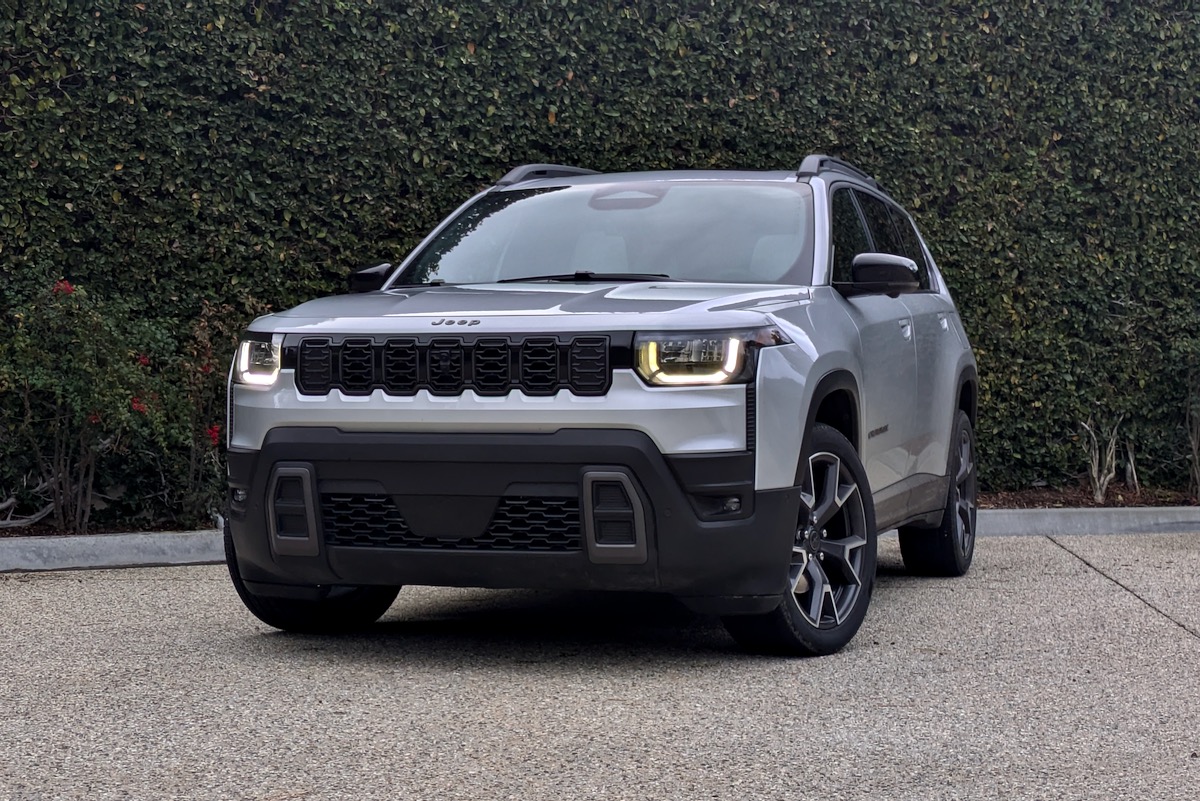
2026 Jeep Cherokee (6.3 L/100 km combined)
The sixth-generation Jeep Cherokee arrives with big news: it now comes with a standard hybrid powertrain in addition to standard AWD. NRCan places its fuel efficiency estimates at 6.1 L/100 km city, 6.7 highway, and 6.3 combined, which is a massive leap over the previous Cherokee and right in line with many hybrid compact SUV rivals.
Power comes from a 1.6-litre turbocharged four-cylinder engine and a two-motor hybrid system for a total system output of 210 hp and 230 lb-ft of torque. It’s worth noting, though, that the transmission is a CVT and Jeep Active Drive is an automated AWD system, neither of which are intended for the kind of serious off-roading Jeep owners may be used to.
The new Cherokee includes comfortable seating for five and accessible tech such as a standard 12.3-inch touchscreen with wireless Apple CarPlay and Android Auto. Cargo space trails some competitors at 951 litres behind the rear seats and 1,934 litres with them folded, but it claws back some practicality with a 1,587-kilogram (3,500-pound) towing capacity, which is impressive for a hybrid compact SUV. The cabin also has a smart mix of screen-based features and a few key physical controls, though some settings can feel unnecessarily complicated.
Pricing for the 2026 Jeep Cherokee starts at $42,290 in Canada.
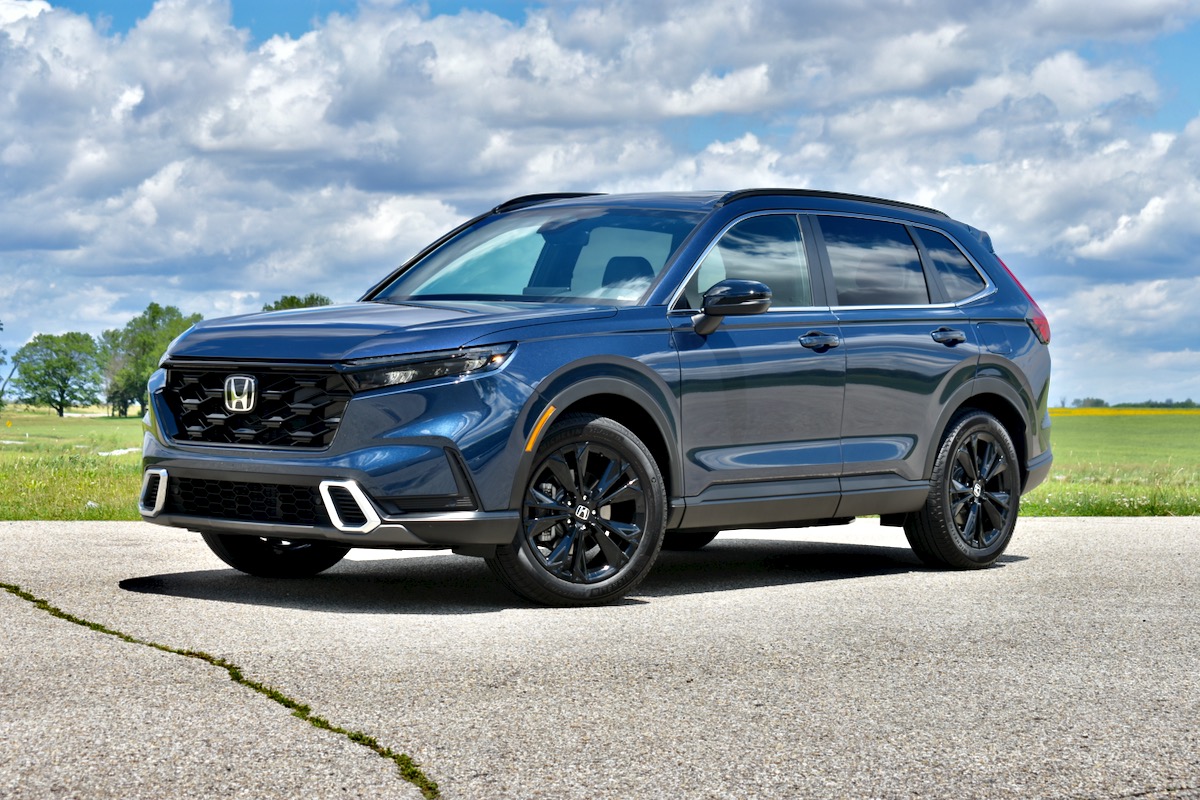
2026 Honda CR-V Hybrid (6.4 L/100 km combined)
The Honda CR-V Hybrid made waves when it first arrived in Canada for the 2023 model year. It joined the gas-powered CR-V as a Canadian-built vehicle assembled at Honda of Canada in Alliston, Ontario.
Its 2.0-litre Atkinson-cycle engine and two-motor hybrid system make a combined 204 hp and 247 lb-ft of torque, and are matched with a CVT and standard AWD. Fuel economy is 6.0 L/100 km in the city, 6.9 on the highway, and 6.4 combined in most trims, while the new CR-V Hybrid TrailSport rates slightly higher at 6.3/7.2/6.7 due to features such as all-terrain tires. Honda’s hybrid system offers adjustable regenerative braking, which is an unusual feature in a conventional hybrid.
At 1,028 litres of cargo space with the rear seats upright and 2,030 litres with them folded, the CR-V Hybrid’s cargo capacity isn’t as much as in the gas-only CR-V but is still impressive for the class. For 2026, Honda makes a 9-inch touchscreen standard across the lineup with wireless Apple CarPlay and Android Auto.
In Canada, pricing for the 2026 Honda CR-V Hybrid starts at $48,000.

2026 Subaru Crosstrek Hybrid (6.5 L/100 km combined)
The 2026 model year introduced a hybrid powertrain to the Subaru Crosstrek for the first time in current third generation's run. In Canada, the Crosstrek Hybrid is sold in a single trim that sits at the top of the Crosstrek line-up.
All Subaru Crosstreks come standard with all-wheel drive (AWD) and a continuously variable transmission (CVT). With a 2.5-litre four-cylinder boxer engine and a 118-hp traction motor, the total system output of 194 hp makes the hybrid the “fastest Crosstrek of all time,” according to Subaru. NRCan rates it at 6.5 L/100 km across the board.
Subaru’s dual-function X-Mode traction management system, which is standard on the Crosstrek Hybrid, offers specific dirt/snow and deep snow/mud drive settings, as well as hill descent control.
Cargo volume behind the rear seatbacks measures 527 litres, and the total capacity is 1,433 litres when the second row is folded. Like all Crosstreks, the Hybrid offers a good amount of rear seat space with 926 millimetres of legroom. That’s significantly more than the Corolla Cross Hybrid, which offers only 813 mm.
A 11.6-inch touchscreen is standard and includes wireless Apple CarPlay and Android Auto plus a Harman Kardon audio system and a configurable 12.3-inch digital instrument cluster. As the top model in the Crosstrek range, the hybrid includes the full suite of its EyeSight advanced driver assistance systems (ADAS), including adaptive cruise control, lane-keep assist, pre-collision braking, and automatic emergency braking. A surround-view camera system, the DriverFocus driver distraction mitigation system and reverse automatic braking are also included.
Pricing in Canada for the 2026 Subaru Crosstrek Hybrid is set at $42,890. If you’d prefer a slightly larger Subaru, then the Forester Hybrid is another great option.

2026 Lexus RX 350h (6.5 L/100 km combined)
The Canadian-built 2026 Lexus RX midsize SUV comes with four powertrain choices: gas only, hybrid, performance hybrid, and plug-in hybrid. If it’s outright efficiency you’re after, the 2026 Lexus RX 350h hybrid is the one to go for. This version of the Lexus RX delivers fuel efficiency ratings of 6.3 L/100 km in the city, 6.8 on the highway, and 6.5 combined.
Here, a 2.5-litre four-cylinder engine combines with hybrid drive for a total system output of 246 hp, sent through a CVT to standard AWD. Unlike the more advanced Direct4 AWD with torque vectoring offered in the RX 500h, the AWD in the 350h is a more basic system.
Behind the hands-free power liftgate, the RX Hybrid has 838 litres of cargo space. Buttons in the cargo area allow you to fold down the second row to create 1,308 litres of cargo volume. Standard features include a 9.8-inch infotainment system with wireless Apple CarPlay and Android Auto, a 12.3-inch digital instrument cluster, a wireless charging pad, 19-inch alloy wheels, and heated and ventilated front seats with leather upholstery. The Lexus Safety System+ 3.0 is also included, along with blind-spot monitors and rear cross-traffic alert.
The 2026 Lexus RX 350h has a Canadian starting price of $65,850 and four feature packages are available: F Sport Design, Luxury, Ultra Luxury, and Executive.

Most Fuel-Efficient Three-Row SUV: Toyota Highlander Hybrid (6.7 L/100 km combined)
If you’re looking for the most efficient SUV with seven or eight seats, look no further than the 2026 Toyota Highlander Hybrid. This three-row crossover has been a fuel economy leader throughout its run, and currently has an average combined fuel consumption rating of 6.7 L/100 km regardless of trim level.
The 2.5-litre four-cylinder engine and Toyota’s hybrid drive combine for a total system output of 243 hp, routed through an electronically controlled CVT to standard AWD. Standard features include synthetic leather upholstery, power-adjustable and heated front seats, a heated steering wheel, three-zone climate control, a power moonroof, and a hands-free power liftgate. Toyota Safety Sense 2.5+ is the standard fare here, which covers the basics such as automatic emergency braking, adaptive cruise control, lane departure alert, lane-keep assist, and high-beam assist.
In base XLE trim, the 2026 Toyota Highlander Hybrid has a bench in the second row and can seat up to eight passengers. In the top Limited trim, the bench is replaced with captain’s chairs and seating is reduced to 7.
Pricing on the 2026 Toyota Highlander Hybrid in Canada starts at $56,765.
There are two important things to note about the 2026 Highlander Hybrid. For one, this is the final model year where it will be offered as a hybrid, as the Highlander is entering a new generation for 2027 when it will become a battery electric SUV. The second point is that the Highlander is one of the smaller three-row SUVs out there, so you may find its third row isn’t quite spacious enough. For larger fuel-efficient three-row SUV options, consider the Toyota Grand Highlander Hybrid or the Hyundai Palisade Hybrid.
Also Consider
The Hyundai Tucson Hybrid and Kia Sportage Hybrid, as well as the larger Hyundai Santa Fe Hybrid and Kia Sorento Hybrid, are not efficient enough to make this list of the top 10 most efficient SUVs in Canada. However, they’re all more fuel-efficient choices than their gas-only counterparts, and come with traditional geared automatic transmissions instead of CVTs, which improves the driving experience.
The Ford Escape Hybrid is another solid choice among hybrid compact SUVs. Though it was recently discontinued, you will likely be able to find relatively new units available on CarGurus.ca.
Frequently Asked Questions
Which SUV gets the best fuel economy in Canada in 2026?
Among vehicles that don’t require a plug, the Kia Niro Hybrid is the most efficient SUV and the most fuel-efficient vehicle outright with a combined fuel economy rating of 4.4 L/100 km. The Niro Hybrid is a subcompact SUV, so if you need something larger, the 2026 Toyota RAV4 is the most efficient compact SUV at 5.5 L/100 km combined in its base LE trim.
Do I have to choose between fuel efficiency and cargo space?
Some hybrid models have the same cargo space as their gas-only equivalents, while others lose some capacity to hybrid components, though the difference is often negligible. For example, the Honda CR-V has 1,113 litres of cargo space behind its second row of seats, while the CR-V Hybrid has 1,028 litres. The Subaru Crosstrek has 564 litres of space behind the rear seats versus the 527 litres at the back of the Crosstrek Hybrid. However, the Lexus NX has 643 litres of cargo capacity regardless of powertrain.
Does choosing all-wheel drive significantly hurt fuel economy in a hybrid SUV?
It does, though few hybrid models sold in Canada today offer both FWD and AWD options. Typically, you’ll be shopping either for an FWD-only model, such as the Kia Niro Hybrid, versus cars such as the Subaru Crosstrek Hybrid or the Toyota Corolla Cross Hybrid that come only with AWD. All hybrid crossovers are more fuel-efficient than their gas-only counterparts, so we recommend focusing on the one that best meets your needs all around.
Are these hybrid SUVs more expensive to buy than non-hybrid versions?
Hybrid versions of SUVs typically carry a price premium over their non-hybrid counterparts. When deciding which one to buy, it’s important to consider what style of driving you do most often and how far you typically drive in a year. This information will help you understand how long it will take for your fuel savings to offset the hybrid’s higher up-front cost.