Toyota Sienna vs Porsche Cayenne
Overview | |
MSRP$39,485 | MSRP$84,700 |
Listings758 | Listings398 |
Ratings & Reviews | |
User Reviews | User Reviews |
Expert reviews6.3 out of 10 | Expert reviews8.0 out of 10 |
Pros
Cons
| Pros
Cons
|
Reviews SummaryIn addition to promising 6.6–6.8 litres per 100 kilometres in combined driving, the 2025 Sienna distinguishes itself in several ways. It offers an available all-wheel-drive (AWD) system for extra traction. And while its maximum cargo capacity measurement falls short of rivals, you never need to remove the second-row seats to use it. Verdict: Saving money on gas, making life simpler, and the option of AWD are all good things in a minivan. They make the Toyota Sienna worth considering if you’re also looking at cars such as the Chrysler Pacifica, Honda Odyssey, and Kia Carnival. | |
Reviews SummaryVerdict: Even the base model Cayenne delivers an agile driving experience, but those willing to dig deep into their bank account for one of Porsche’s more expensive Cayenne models are rewarded with a spirited drive like no other. The competition here is stiff, in the form of other German SUVs like the Audi Q8, BMW X5, and Mercedes-Benz GLE, and their performance variants. However, the Cayenne is not here to lose. | |
No video found | No video found |
Popular Features & Specs | |
Engine2.5L 245 hp I4 Hybrid | Engine3.0L 348 hp V6 |
Drive TrainFWD | Drive TrainAWD |
Seating Capacity8 | Seating Capacity5 |
Horsepower | Horsepower348 hp @ 5400 rpm |
EV Battery Capacity1.9 kWh | EV Battery Capacity |
MPG City36 | MPG City17 |
MPG Highway36 | MPG Highway23 |
Engine | |
Engine Name2.5L 245 hp I4 Hybrid | Engine Name3.0L 348 hp V6 |
Torque | Torque368 lb-ft @ 1450 rpm |
Horsepower | Horsepower348 hp @ 5400 rpm |
DrivetrainFWD | DrivetrainAWD |
Fuel Economy | |
EV Battery Capacity1.9 kWh | EV Battery Capacity |
MPG City36 | MPG City17 |
MPG Highway36 | MPG Highway23 |
Interior | |
Seating Capacity8 | Seating Capacity5 |
Key Features | |
Navigation System | Navigation SystemStandard |
Safety | |
Front Crash Overall4 | Front Crash Overall |
Side Crash Overall5 | Side Crash Overall |
Dimensions & Capacity | |
Cargo Space33.5 cu ft | Cargo Space27.2 cu ft |
Curb Weight4610 lbs | Curb Weight4678 lbs |
Height68.5 in | Height66.9 in |
Length203.7 in | Length194.1 in |
Width78.5 in | Width86.4 in |
Wheelbase120.5 in | Wheelbase114.0 in |
Maximum Payload1560 lbs | Maximum Payload1572 lbs |
Number of doors4 | Number of doors4 |
Maximum Towing Capacity3500 lbs | Maximum Towing Capacity7716 lbs |
Overview | ||
MSRP | $39,485 | $84,700 |
Listings | ||
Ratings & Reviews | ||
User reviews | ||
Expert reviews | 6.3 out of 10Read full review | 8.0 out of 10Read full review |
Pros & cons | Pros
Cons
| Pros
Cons
|
Summary | In addition to promising 6.6–6.8 litres per 100 kilometres in combined driving, the 2025 Sienna distinguishes itself in several ways. It offers an available all-wheel-drive (AWD) system for extra traction. And while its maximum cargo capacity measurement falls short of rivals, you never need to remove the second-row seats to use it. Verdict: Saving money on gas, making life simpler, and the option of AWD are all good things in a minivan. They make the Toyota Sienna worth considering if you’re also looking at cars such as the Chrysler Pacifica, Honda Odyssey, and Kia Carnival. | Verdict: Even the base model Cayenne delivers an agile driving experience, but those willing to dig deep into their bank account for one of Porsche’s more expensive Cayenne models are rewarded with a spirited drive like no other. The competition here is stiff, in the form of other German SUVs like the Audi Q8, BMW X5, and Mercedes-Benz GLE, and their performance variants. However, the Cayenne is not here to lose. |
Video | No video found | No video found |
Popular Features & Specs | ||
Engine | 2.5L 245 hp I4 Hybrid | 3.0L 348 hp V6 |
Drive Train | FWD | AWD |
Seating Capacity | 8 | 5 |
Horsepower | 348 hp @ 5400 rpm | |
EV Battery Capacity | 1.9 kWh | |
MPG City | 36 | 17 |
MPG Highway | 36 | 23 |
Engine | ||
Engine Name | 2.5L 245 hp I4 Hybrid | 3.0L 348 hp V6 |
Torque | 368 lb-ft @ 1450 rpm | |
Horsepower | 348 hp @ 5400 rpm | |
Drivetrain | FWD | AWD |
Fuel Economy | ||
EV Battery Capacity | 1.9 kWh | |
MPG City | 36 | 17 |
MPG Highway | 36 | 23 |
Interior | ||
Seating Capacity | 8 | 5 |
Key Features | ||
Navigation System | Standard | |
Safety | ||
Front Crash Overall | 4 | |
Side Crash Overall | 5 | |
Dimensions & Capacity | ||
Cargo Space | 33.5 cu ft | 27.2 cu ft |
Curb Weight | 4610 lbs | 4678 lbs |
Height | 68.5 in | 66.9 in |
Length | 203.7 in | 194.1 in |
Width | 78.5 in | 86.4 in |
Wheelbase | 120.5 in | 114.0 in |
Maximum Payload | 1560 lbs | 1572 lbs |
Number of doors | 4 | 4 |
Maximum Towing Capacity | 3500 lbs | 7716 lbs |
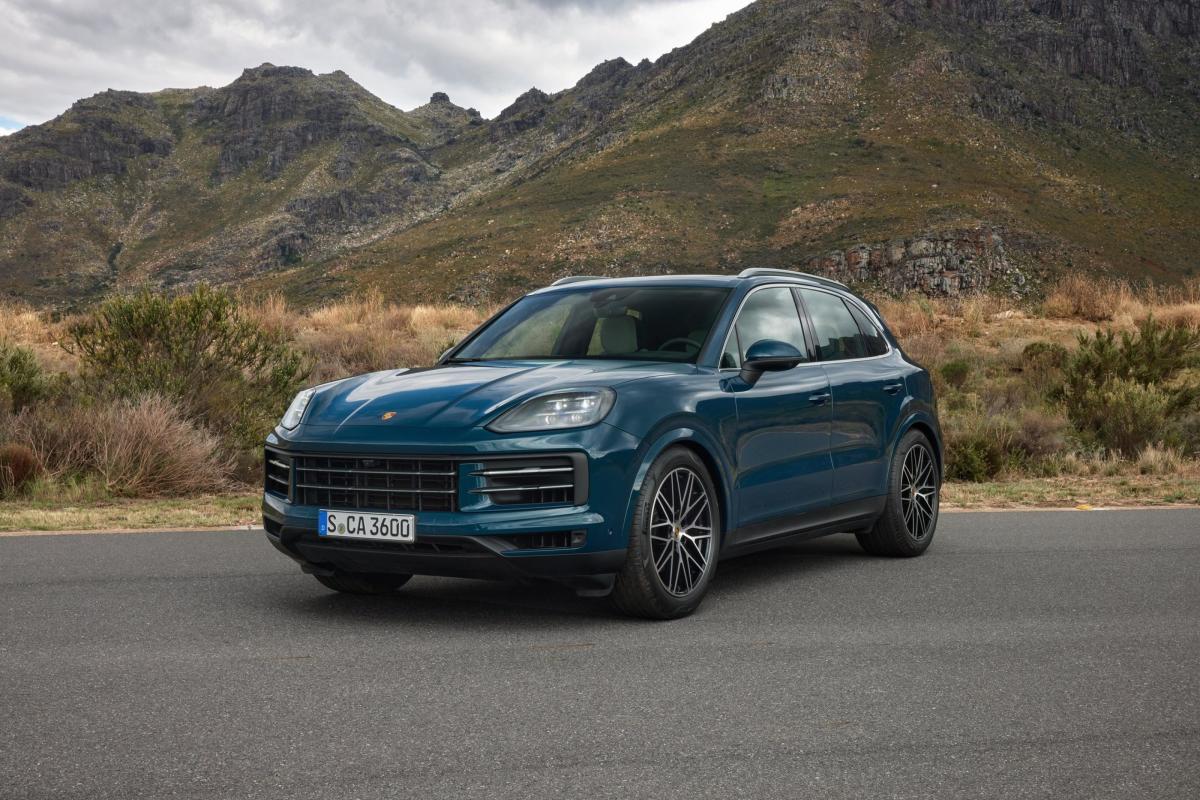
The 2025 Porsche Cayenne presented itself as a versatile SUV, available in both a standard model with a squared-off rear end and a sporty Cayenne Coupe. The lineup ranged from the base Cayenne to the high-performance Cayenne Turbo E-Hybrid, each with unique exterior features. The GTS trim, which was the focus of our review, boasted high gloss black trim, a distinctive front fascia with larger air intakes, and tinted headlights. Red brake calipers were visible through 21-inch anthracite grey wheels, and the Cayenne Coupe featured an adaptive rear spoiler. Inside, the Cayenne offered extensive customization options, from colour choices like Carmine Red to various trim and seat belt options. While the pricing could escalate with customizations, the Cayenne promised a unique and personalized driving experience.
The interior of the Cayenne was well-appointed with numerous screens, yet retained mechanical controls for essential functions like HVAC and volume. The layout was thoughtfully designed, with the shifter toggle mounted on the dashboard to free up storage space. However, the sliding centre console, which sometimes moved with slight pressure, was a minor drawback in an otherwise well-executed cabin. Overall, the Cayenne combined luxury with practicality, offering a comfortable and customizable environment for drivers and passengers alike.
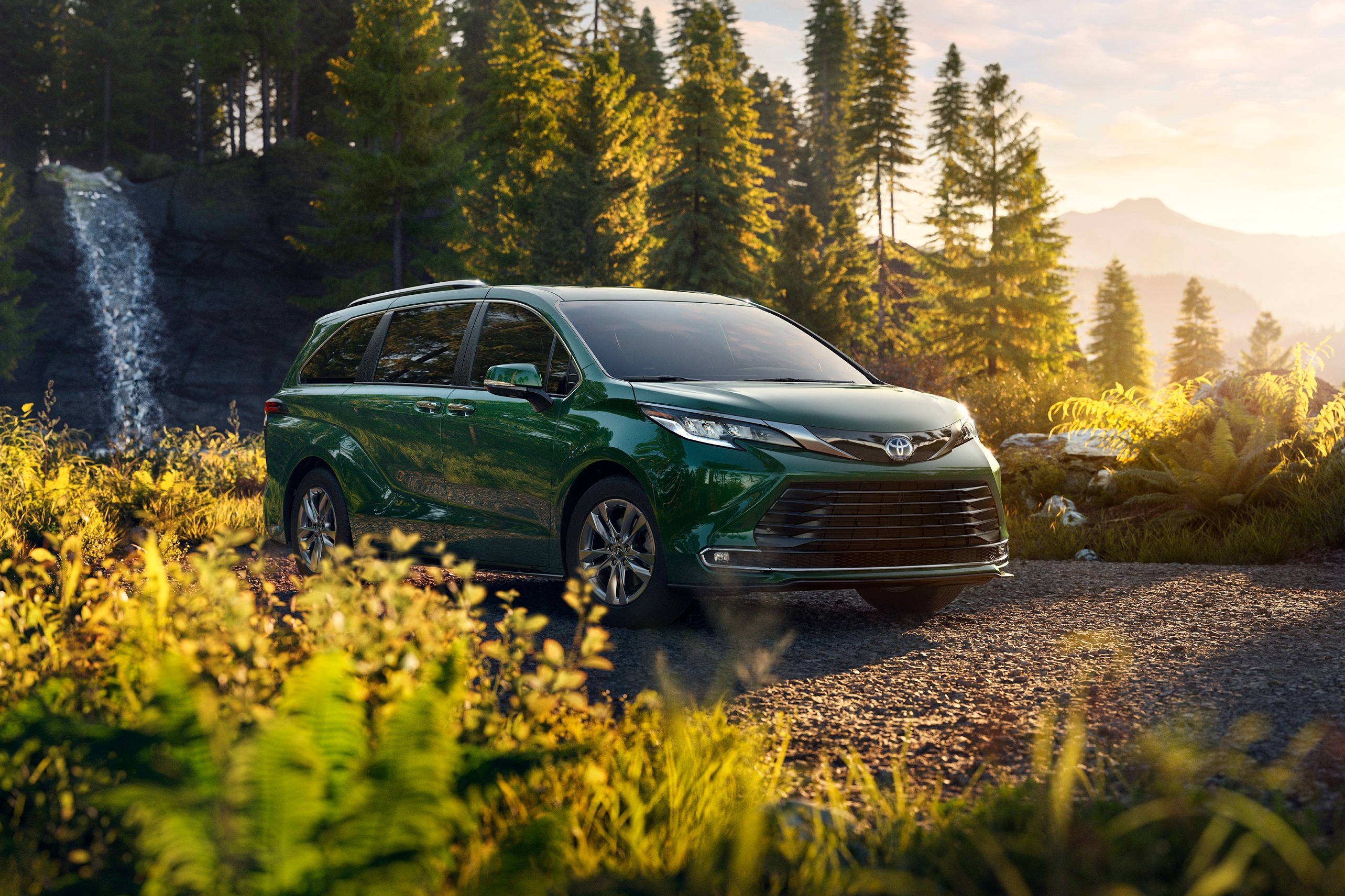
The 2025 Toyota Sienna, on the other hand, embraced its minivan identity with a design that maximized interior space. Despite efforts to add style, such as upswept body lines and hidden sliding door tracks, the Sienna retained its boxy silhouette. The trapezoidal grille and narrow taillights added a touch of flair, while the Platinum package introduced new flower-petal wheel designs. The Sienna Limited with the Platinum package, finished in Magnetic Grey, topped the Canadian lineup, which included LE, XLE, and XSE trims. Prices ranged from $51,219 to $73,753, including destination charges and fees.
Inside, the Sienna's interior received updates for 2025, with the Platinum package featuring a new woodgrain finish. However, opinions on the interior were mixed, with a 17-year-old passenger describing the woodgrain as "chopped." Despite this, the Sienna's interior was considered an improvement over previous models. The minivan offered practicality with seating for up to eight and a focus on functionality, making it a suitable choice for families seeking ample space and comfort.

The 2025 Porsche Cayenne offered a range of engine options, each delivering impressive performance. The base model featured a 3.0-litre V6 engine producing 348 horsepower and 368 pound-feet of torque, providing ample power for most drivers. For those seeking more performance, the Cayenne S offered a V8 engine with 468 horsepower, while the Turbo GT boasted 650 horsepower, though it was only available as a coupe. Plug-in hybrid options were also available, with up to 729 horsepower for those desiring peak performance. The GTS trim, with its twin-turbo 4.0-litre V8 engine, delivered 493 horsepower and 486 lb-ft of torque, making it a formidable performer.
The Cayenne GTS excelled in handling, with components borrowed from the Turbo GT, including increased negative camber for precise turn-in. The SUV was 10 millimetres lower than the previous model, enhancing its agility. Equipped with Pirelli P Zero tires, stiffer roll bars, and an active suspension, the Cayenne GTS offered a dynamic driving experience. The optional carbon ceramic brakes provided ample stopping power, though they required some adjustment. In Sport and Sport Plus modes, the Cayenne GTS delivered exhilarating performance, while Normal mode transformed it into a comfortable commuter. The Cayenne's versatility allowed it to excel in both sporty and everyday driving scenarios.
The 2025 Toyota Sienna featured a hybrid powertrain with a 2.5-litre four-cylinder engine and a continuously variable transmission (CVT). The standard front-wheel drive (FWD) could be upgraded to an all-wheel-drive (AWD) system with an additional rear-mounted electric motor. The hybrid system produced a net horsepower of 245, which, while modest, was sufficient for city driving and highway cruising. The electric assist motor provided immediate torque, preventing the Sienna from feeling sluggish, even with four passengers on board. However, the CVT emitted a noticeable moan during hard acceleration.
The Sienna's hybrid powertrain prioritized fuel efficiency, with an official rating of 6.6 litres per 100 kilometres in combined driving for the FWD model. However, during testing, the Sienna averaged 8.9 L/100 km with two occupants. While the Sienna offered predictable handling and a smooth ride, it lacked the engaging driving dynamics of the Cayenne. The steering was not particularly crisp, and the handling became squishy in curves. Despite these shortcomings, the Sienna provided a comfortable and quiet ride, making it a practical choice for families seeking efficiency and comfort.
The 2025 Porsche Cayenne offered a customizable interior with a range of options, though standard features were limited. The base model included eight-way power-adjustable seats, heated but not cooled or massaging, and two-zone climate control. As you moved up the trim line, additional features like a GT Sport steering wheel and Race-Tex headliner became available. The options list was extensive, allowing buyers to personalize their Cayenne with carbon fibre, aluminum, or bronze Neodyme accents. However, the Cayenne could only accommodate five passengers, with no third-row seating option.
In terms of cargo capacity, the standard Cayenne offered 772 litres of space behind the second row, expanding to 1,708 litres with the seats folded down. The coupe version had slightly less space, with 576 litres behind the second row and 1,486 litres overall. The Cayenne Turbo e-hybrid PHEV had reduced cargo space due to the battery, with 621 litres behind the second row and 1,557 litres overall. Despite its limitations, the Cayenne could tow up to 3,500 kilograms and accommodate over 635 kilograms of payload.
The 2025 Toyota Sienna prioritized form and function, offering practical seating and cargo solutions. The front seats were power-adjustable and heated, with ventilated leather upholstery in the Limited with Platinum package. However, the cushions felt hard after extended driving. The second-row captain's chairs with ottoman-style leg rests were popular with passengers, and the third-row seat accommodated adults comfortably. The Sienna's sliding side doors and hands-free power liftgate made loading and unloading easy.
Storage space was generous, with a wide tray under the centre console. However, finding secure places for large water bottles was challenging. The Sienna offered 949 litres of cargo space behind the third-row seat, expanding to 2,129 litres with the seats stowed. Maximum cargo capacity was 2,860 litres, less than rivals due to the non-removable second-row seats. While the Sienna's design limited maximum load space, it provided ample room for everyday use, making it a practical choice for families.
The 2025 Porsche Cayenne impressed with its array of screens and technology. A 12.6-inch digital gauge cluster was standard, offering up to seven views depending on the trim level. The 12.3-inch touchscreen display ran the Porsche Communication Management system, featuring wireless Apple CarPlay, Android Auto, Spotify, Apple Music, satellite radio, and a Wi-Fi hotspot. An optional 10.9-inch passenger screen allowed passengers to control navigation and media, stream videos, or record lap times.
The Cayenne's screens were well-organized and responsive, with voice control options available. A head-up display (HUD) provided essential information, though it appeared dim with polarized sunglasses. The system included night-vision assist, and HD-Matrix Design LED headlamps were standard across all trims. The Cayenne also featured four high-speed USB-C charging ports and a cooled wireless charging area, ensuring devices remained charged and cool.
The 2025 Toyota Sienna offered advanced technology, particularly in higher-spec models. The Limited with Platinum package featured a 12.3-inch digital instrumentation panel and a 12.3-inch touchscreen display for the Toyota Audio Multimedia (TAM) system. The vehicle also included a four-zone automatic climate control system, a 10-inch head-up display (HUD), and a camera-based digital rearview mirror. A rear 11.6-inch display with HDMI input, remote, and wireless headphones was standard on the Limited trim.
The TAM system provided access to four connected services plans, with varying complimentary subscription periods. The digital assistant, part of the Drive Connect plan, responded accurately to commands, enhancing the user experience. The system supported wireless Apple CarPlay and Android Auto, offering alternatives to the native navigation and voice assistant. The Sienna Limited featured a 12-speaker JBL premium audio system, though the sound quality was muddied by excessive bass. The four-zone climate control system and digital rearview camera added convenience, making the Sienna a tech-savvy choice for families.
The 2025 Porsche Cayenne offered standard safety features like parking sensors, forward collision warning, and blind-spot monitoring. However, adaptive cruise control, lane-keeping assist, and lane-departure warning were optional. Porsche's advanced adaptive cruise control system, InnoDrive, was not available for testing. Neither the National Highway Traffic Safety Administration (NHTSA) nor the Insurance Institute for Highway Safety (IIHS) had rated the 2025 Cayenne for safety.
The 2025 Toyota Sienna featured Toyota Safety Sense (TSS) 2.0, an older technology set compared to TSS 3.0. TSS 2.0 included forward collision warning with automatic emergency braking, pedestrian detection, lane departure warning, lane-keeping assist, lane-centring assist, and adaptive cruise control. The Sienna also had automatic high-beam headlights, blind-spot monitoring, and rear cross-traffic alert. The lane-centring assist performed well, though the adaptive cruise control required vigilance in urban areas.
For 2025, the Sienna introduced rear-seat reminder technology, alerting drivers to movement within the cabin after exiting the vehicle. The NHTSA awarded the Sienna a five-star overall rating, though it received four stars for frontal crash protection and three stars for driver protection in a frontal impact. No minivans earned a Top Safety Pick rating from the IIHS, highlighting the importance of safety considerations for family vehicles.
CarGurus highlights

According to CarGurus experts, the overall rating for the 2025 Porsche Cayenne is 8.0 out of 10, while the 2025 Toyota Sienna scores 6.3 out of 10. Based on these ratings, the Porsche Cayenne is the recommended choice for those seeking a high-performance, customizable SUV with a blend of luxury and practicality. While the Toyota Sienna offers practicality and advanced technology for families, the Cayenne's superior performance and customization options make it the preferred option for discerning drivers.
Choose the 2025 Porsche Cayenne if:
- You desire a high-performance SUV with a range of powerful engine options.
- Customization and luxury features are a priority for your driving experience.
- You seek a vehicle that combines sporty handling with everyday comfort.
Choose the 2025 Toyota Sienna if:
- You need a practical and spacious vehicle for family use.
- Advanced technology and infotainment features are important to you.
- Fuel efficiency and hybrid powertrain benefits are a priority.
CarGurus highlights

According to CarGurus experts, the overall rating for the 2025 Porsche Cayenne is 8.0 out of 10, while the 2025 Toyota Sienna scores 6.3 out of 10. Based on these ratings, the Porsche Cayenne is the recommended choice for those seeking a high-performance, customizable SUV with a blend of luxury and practicality. While the Toyota Sienna offers practicality and advanced technology for families, the Cayenne's superior performance and customization options make it the preferred option for discerning drivers.
Choose the 2025 Porsche Cayenne if:
Shop Now- You desire a high-performance SUV with a range of powerful engine options.
- Customization and luxury features are a priority for your driving experience.
- You seek a vehicle that combines sporty handling with everyday comfort.
Choose the 2025 Toyota Sienna if:
Shop Now- You need a practical and spacious vehicle for family use.
- Advanced technology and infotainment features are important to you.
- Fuel efficiency and hybrid powertrain benefits are a priority.

By: CarGurus + AI
At CarGurus, our team of experienced automotive writers remain at the heart of our content operation, conducting hands-on car tests and writing insightful guides that are backed by years of industry experience. To complement this, we are harnessing AI to make our content offering more diverse and more helpful to shoppers than ever. To achieve this, our AI systems are based exclusively on CarGurus content, ratings and data, so that what we produce is both unique to CarGurus, and uniquely helpful to car shoppers.