Jeep Wagoneer vs Chevrolet Blazer
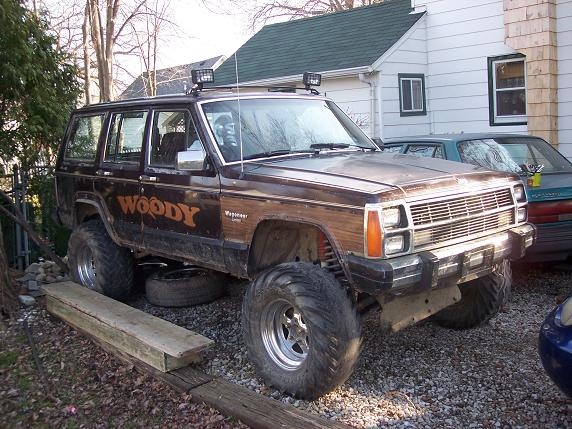
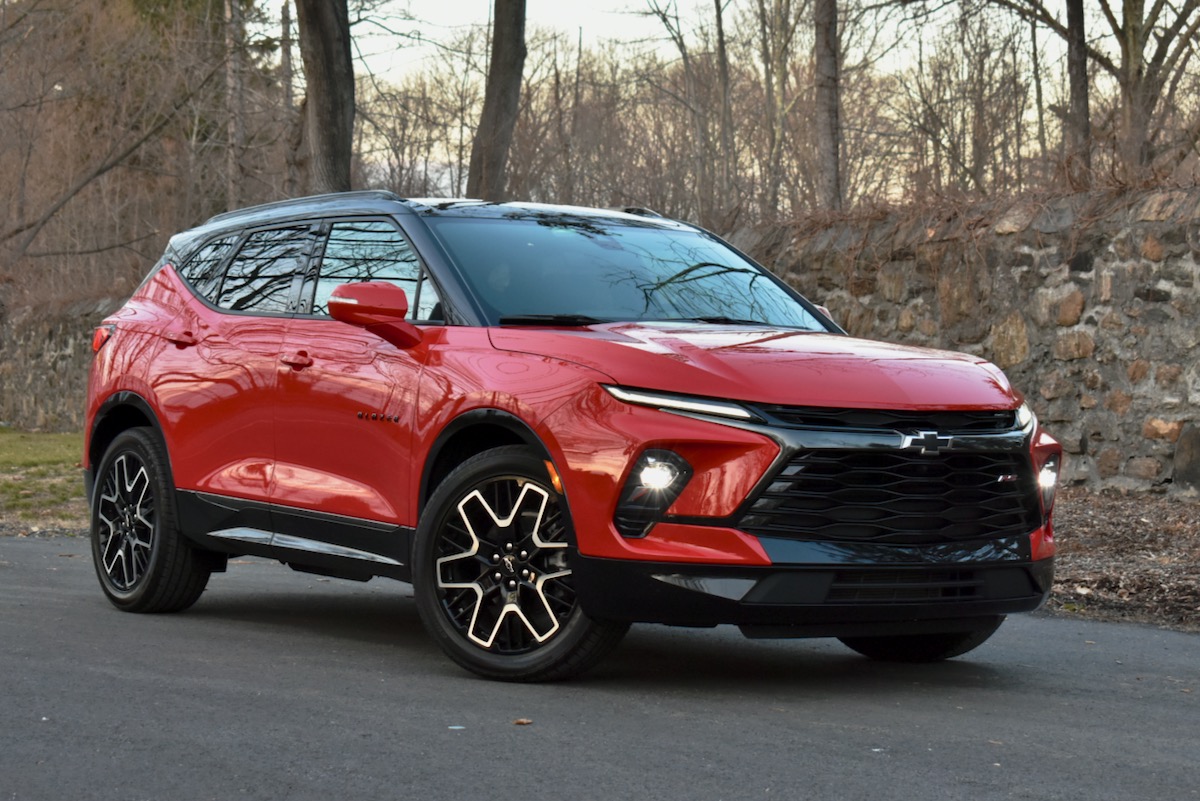
Overview | |
MSRP$58,995 | MSRP$35,100 |
Listings146 | Listings645 |
Ratings & Reviews | |
User Reviews | User Reviews |
Expert reviews6.7 out of 10 | Expert reviews7.2 out of 10 |
Pros
Cons
| |
Reviews SummaryJeep is digging deep into its back catalog for new models. The Stellantis brand (formerly Fiat Chrysler Automobiles) recently resurrected the Jeep Gladiator pickup truck, and now it’s bringing back another name from the past—the Wagoneer. The Jeep Wagoneer was one of the original American SUVs and boasted a 28-year production run, spanning 1963 to 1991. It’s a tough act to follow, then, as demonstrated by Jeep’s last attempt at a full-size SUV, the ill-fated Commander. The Wagoneer returns not just as a new SUV, but as a sub-brand that sits atop the rest of the Jeep lineup in size, price, and prestige. For the 2022 model year, Jeep is launching both the standard Wagoneer and a more luxurious Grand Wagoneer (covered in a separate review). As the lower-tier model, the standard Wagoneer targets full-size SUVs like the Chevrolet Tahoe, Ford Expedition, Nissan Armada, and Toyota Sequoia. The 2022 Wagoneer launches in Series II and Series III trim levels, with a base Wagoneer Series I model scheduled to join the lineup at a later date. Our test vehicle was a Wagoneer Series II, which is the de facto base model until the Series I arrives. | |
Reviews SummaryThe Chevrolet Blazer is one of the oldest SUV nameplates on the market, and while the current version might disappoint fans of the original, it’s very much on-trend with modern times. Chevy launched the Blazer as truck-based off-roader, starting with the original K5 Blazer, and following that it up with a smaller S-10 Blazer based on its compact pickup truck. The Blazer was shelved in the early 2000s, then revived for the 2019 model year as a car-based crossover SUV, eschewing ruggedness for greater efficiency and on-road refinement in a shift that reflected the utility-vehicle market as a whole. The General Motors decision not to go all-in on nostalgia with a new off-road Blazer might seem questionable in the wake of the revived Ford Bronco, but the market for two-row midsize crossovers like the modern Blazer is even stronger, and it's filled with rival offerings like the Ford Edge, Honda Passport, Hyundai Santa Fe, Nissan Murano, Toyota Venza, and Volkswagen Atlas Cross Sport. For 2023, notable changes include a new 10-inch touchscreen display and available wireless charging for all trim levels, some styling changes, and new wheel designs and colour options. In Canada, the lineup consists of LT, True North, Premier, and RS trim levels (we checked out a Blazer RS for this review). A Chevy Blazer EV is also on the way for the 2024 model year, but this will be a completely different vehicle based on GM’s Ultium EV component set. | |
No video found | No video found |
Popular Features & Specs | |
Engine | Engine2.0L 228 hp I4 |
Drive Train | Drive TrainFWD |
Seating Capacity8 | Seating Capacity5 |
Horsepower | Horsepower228 hp @ 5000 rpm |
EV Battery Capacity0.39 kWh | EV Battery Capacity |
MPG City | MPG City22 |
MPG Highway | MPG Highway29 |
Engine | |
Engine Name5.7L 392 hp V8 | Engine Name2.0L 228 hp I4 |
Torque404 lb-ft @ 3950 rpm | Torque258 lb-ft @ 1500 rpm |
Horsepower392 hp @ 5600 rpm | Horsepower228 hp @ 5000 rpm |
Drivetrain4X2 | DrivetrainFWD |
Fuel Economy | |
EV Battery Capacity0.39 kWh | EV Battery Capacity |
MPG City | MPG City22 |
MPG Highway | MPG Highway29 |
Interior | |
Seating Capacity8 | Seating Capacity5 |
Key Features | |
Navigation SystemStandard | Navigation System |
Safety | |
Front Crash Overall | Front Crash Overall5 |
Side Crash Overall | Side Crash Overall5 |
Dimensions & Capacity | |
Cargo Space27.4 cu ft | Cargo Space30.5 cu ft |
Curb Weight5960 lbs | Curb Weight3918 lbs |
Height75.6 in | Height67.0 in |
Length214.7 in | Length191.9 in |
Width94.0 in | Width76.7 in |
Wheelbase123.0 in | Wheelbase112.7 in |
Maximum Payload1510 lbs | Maximum Payload1824 lbs |
Number of doors4 | Number of doors4 |
Maximum Towing Capacity | Maximum Towing Capacity1500 lbs |
Overview | ||
MSRP | $58,995 | $35,100 |
Listings | ||
Ratings & Reviews | ||
User reviews | ||
Expert reviews | 6.7 out of 10Read full review | 7.2 out of 10Read full review |
Pros & cons | Pros
Cons
| |
Summary | Jeep is digging deep into its back catalog for new models. The Stellantis brand (formerly Fiat Chrysler Automobiles) recently resurrected the Jeep Gladiator pickup truck, and now it’s bringing back another name from the past—the Wagoneer. The Jeep Wagoneer was one of the original American SUVs and boasted a 28-year production run, spanning 1963 to 1991. It’s a tough act to follow, then, as demonstrated by Jeep’s last attempt at a full-size SUV, the ill-fated Commander. The Wagoneer returns not just as a new SUV, but as a sub-brand that sits atop the rest of the Jeep lineup in size, price, and prestige. For the 2022 model year, Jeep is launching both the standard Wagoneer and a more luxurious Grand Wagoneer (covered in a separate review). As the lower-tier model, the standard Wagoneer targets full-size SUVs like the Chevrolet Tahoe, Ford Expedition, Nissan Armada, and Toyota Sequoia. The 2022 Wagoneer launches in Series II and Series III trim levels, with a base Wagoneer Series I model scheduled to join the lineup at a later date. Our test vehicle was a Wagoneer Series II, which is the de facto base model until the Series I arrives. | The Chevrolet Blazer is one of the oldest SUV nameplates on the market, and while the current version might disappoint fans of the original, it’s very much on-trend with modern times. Chevy launched the Blazer as truck-based off-roader, starting with the original K5 Blazer, and following that it up with a smaller S-10 Blazer based on its compact pickup truck. The Blazer was shelved in the early 2000s, then revived for the 2019 model year as a car-based crossover SUV, eschewing ruggedness for greater efficiency and on-road refinement in a shift that reflected the utility-vehicle market as a whole. The General Motors decision not to go all-in on nostalgia with a new off-road Blazer might seem questionable in the wake of the revived Ford Bronco, but the market for two-row midsize crossovers like the modern Blazer is even stronger, and it's filled with rival offerings like the Ford Edge, Honda Passport, Hyundai Santa Fe, Nissan Murano, Toyota Venza, and Volkswagen Atlas Cross Sport. For 2023, notable changes include a new 10-inch touchscreen display and available wireless charging for all trim levels, some styling changes, and new wheel designs and colour options. In Canada, the lineup consists of LT, True North, Premier, and RS trim levels (we checked out a Blazer RS for this review). A Chevy Blazer EV is also on the way for the 2024 model year, but this will be a completely different vehicle based on GM’s Ultium EV component set. |
Video | No video found | No video found |
Popular Features & Specs | ||
Engine | 2.0L 228 hp I4 | |
Drive Train | FWD | |
Seating Capacity | 8 | 5 |
Horsepower | 228 hp @ 5000 rpm | |
EV Battery Capacity | 0.39 kWh | |
MPG City | 22 | |
MPG Highway | 29 | |
Engine | ||
Engine Name | 5.7L 392 hp V8 | 2.0L 228 hp I4 |
Torque | 404 lb-ft @ 3950 rpm | 258 lb-ft @ 1500 rpm |
Horsepower | 392 hp @ 5600 rpm | 228 hp @ 5000 rpm |
Drivetrain | 4X2 | FWD |
Fuel Economy | ||
EV Battery Capacity | 0.39 kWh | |
MPG City | 22 | |
MPG Highway | 29 | |
Interior | ||
Seating Capacity | 8 | 5 |
Key Features | ||
Navigation System | Standard | |
Safety | ||
Front Crash Overall | 5 | |
Side Crash Overall | 5 | |
Dimensions & Capacity | ||
Cargo Space | 27.4 cu ft | 30.5 cu ft |
Curb Weight | 5960 lbs | 3918 lbs |
Height | 75.6 in | 67.0 in |
Length | 214.7 in | 191.9 in |
Width | 94.0 in | 76.7 in |
Wheelbase | 123.0 in | 112.7 in |
Maximum Payload | 1510 lbs | 1824 lbs |
Number of doors | 4 | 4 |
Maximum Towing Capacity | 1500 lbs | |




By: CarGurus + AI
At CarGurus, our team of experienced automotive writers remain at the heart of our content operation, conducting hands-on car tests and writing insightful guides that are backed by years of industry experience. To complement this, we are harnessing AI to make our content offering more diverse and more helpful to shoppers than ever. To achieve this, our AI systems are based exclusively on CarGurus content, ratings and data, so that what we produce is both unique to CarGurus, and uniquely helpful to car shoppers.

