Chevrolet Blazer vs Hyundai Ioniq 9
Overview | |
Years produced1969-2005 | Years produced2026-Present |
MSRP$35,100 | MSRP$58,995 |
Listings623 | Listings171 |
Ratings & Reviews | |
User Reviews | User Reviews |
Expert reviews7.2 out of 10 | Expert reviews7.3 out of 10 |
Pros
Cons
| Pros
Cons
|
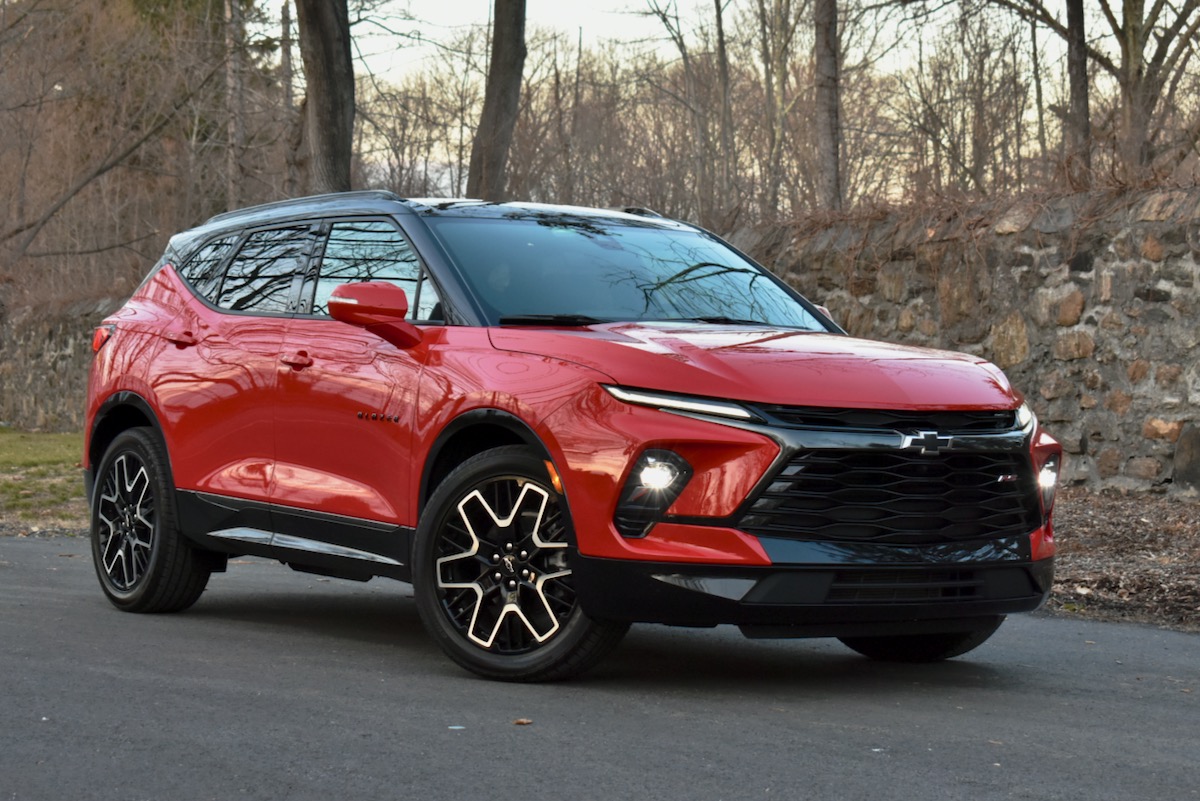
Reviews SummaryThe Chevrolet Blazer is one of the oldest SUV nameplates on the market, and while the current version might disappoint fans of the original, it’s very much on-trend with modern times. Chevy launched the Blazer as truck-based off-roader, starting with the original K5 Blazer, and following that it up with a smaller S-10 Blazer based on its compact pickup truck. The Blazer was shelved in the early 2000s, then revived for the 2019 model year as a car-based crossover SUV, eschewing ruggedness for greater efficiency and on-road refinement in a shift that reflected the utility-vehicle market as a whole. The General Motors decision not to go all-in on nostalgia with a new off-road Blazer might seem questionable in the wake of the revived Ford Bronco, but the market for two-row midsize crossovers like the modern Blazer is even stronger, and it's filled with rival offerings like the Ford Edge, Honda Passport, Hyundai Santa Fe, Nissan Murano, Toyota Venza, and Volkswagen Atlas Cross Sport. For 2023, notable changes include a new 10-inch touchscreen display and available wireless charging for all trim levels, some styling changes, and new wheel designs and colour options. In Canada, the lineup consists of LT, True North, Premier, and RS trim levels (we checked out a Blazer RS for this review). A Chevy Blazer EV is also on the way for the 2024 model year, but this will be a completely different vehicle based on GM’s Ultium EV component set. | |
Reviews SummaryAlthough the 2026 Hyundai Ioniq 9 isn’t the first three-row electric SUV through the door, it may be the best choice for most shoppers. With a starting price of $59,999 before fees and qualifying for EV rebates where they still exist, it’s much more affordable than a Tesla Model X or a Rivian R1S. And its standard 110.3-kWh battery pack provides a long range compared to a base-model Kia EV9. Verdict: The Hyundai Ioniq 9 isn’t a perfect vehicle, but it offers terrific passenger space, good tech, and family-friendly features. Shoppers may find its design polarizing — you could easily say the same about the Hyundai Ioniq 5 or the Ioniq 6 — but families interested in electric vehicles will do well to test drive this new option. | |
No video found | |
Popular Features & Specs | |
Engine2.0L 228 hp I4 | Engine215 hp Electric |
Drive TrainFWD | Drive TrainRWD |
Seating Capacity5 | Seating Capacity7 |
Horsepower228 hp @ 5000 rpm | Horsepower |
EV Battery Capacity | EV Battery Capacity110 kWh |
MPG City22 | MPG City103 |
MPG Highway29 | MPG Highway81 |
Battery Charge Time (120V) | Battery Charge Time (120V)93 hours |
Battery Charge Time (240V) | Battery Charge Time (240V)9.7 hours |
Engine | |
Engine Name2.0L 228 hp I4 | Engine Name215 hp Electric |
Torque258 lb-ft @ 1500 rpm | Torque |
Horsepower228 hp @ 5000 rpm | Horsepower |
Battery Charge Time (120V) | Battery Charge Time (120V)93 hours |
Battery Charge Time (240V) | Battery Charge Time (240V)9.7 hours |
DrivetrainFWD | DrivetrainRWD |
Fuel Economy | |
EV Battery Capacity | EV Battery Capacity110 kWh |
MPG City22 | MPG City103 |
MPG Highway29 | MPG Highway81 |
Interior | |
Seating Capacity5 | Seating Capacity7 |
Key Features | |
Navigation System | Navigation SystemStandard |
Safety | |
Front Crash Overall5 | Front Crash Overall5 |
Side Crash Overall5 | Side Crash Overall5 |
Dimensions & Capacity | |
Cargo Space30.5 cu ft | Cargo Space21.9 cu ft |
Curb Weight3918 lbs | Curb Weight5507 lbs |
Height67.0 in | Height70.5 in |
Length191.9 in | Length199.2 in |
Width76.7 in | Width78.0 in |
Wheelbase112.7 in | Wheelbase123.2 in |
Maximum Payload1824 lbs | Maximum Payload1393 lbs |
Number of doors4 | Number of doors4 |
Maximum Towing Capacity1500 lbs | Maximum Towing Capacity3500 lbs |
Overview | ||
Years produced | 1969-2005 | 2026-Present |
MSRP | $35,100 | $58,995 |
Listings | ||
Ratings & Reviews | ||
User reviews | ||
Expert reviews | 7.2 out of 10Read full review | 7.3 out of 10Read full review |
Pros & cons | Pros
Cons
| Pros
Cons
|
Summary | The Chevrolet Blazer is one of the oldest SUV nameplates on the market, and while the current version might disappoint fans of the original, it’s very much on-trend with modern times. Chevy launched the Blazer as truck-based off-roader, starting with the original K5 Blazer, and following that it up with a smaller S-10 Blazer based on its compact pickup truck. The Blazer was shelved in the early 2000s, then revived for the 2019 model year as a car-based crossover SUV, eschewing ruggedness for greater efficiency and on-road refinement in a shift that reflected the utility-vehicle market as a whole. The General Motors decision not to go all-in on nostalgia with a new off-road Blazer might seem questionable in the wake of the revived Ford Bronco, but the market for two-row midsize crossovers like the modern Blazer is even stronger, and it's filled with rival offerings like the Ford Edge, Honda Passport, Hyundai Santa Fe, Nissan Murano, Toyota Venza, and Volkswagen Atlas Cross Sport. For 2023, notable changes include a new 10-inch touchscreen display and available wireless charging for all trim levels, some styling changes, and new wheel designs and colour options. In Canada, the lineup consists of LT, True North, Premier, and RS trim levels (we checked out a Blazer RS for this review). A Chevy Blazer EV is also on the way for the 2024 model year, but this will be a completely different vehicle based on GM’s Ultium EV component set. | Although the 2026 Hyundai Ioniq 9 isn’t the first three-row electric SUV through the door, it may be the best choice for most shoppers. With a starting price of $59,999 before fees and qualifying for EV rebates where they still exist, it’s much more affordable than a Tesla Model X or a Rivian R1S. And its standard 110.3-kWh battery pack provides a long range compared to a base-model Kia EV9. Verdict: The Hyundai Ioniq 9 isn’t a perfect vehicle, but it offers terrific passenger space, good tech, and family-friendly features. Shoppers may find its design polarizing — you could easily say the same about the Hyundai Ioniq 5 or the Ioniq 6 — but families interested in electric vehicles will do well to test drive this new option. |
Video | No video found | |
Popular Features & Specs | ||
Engine | 2.0L 228 hp I4 | 215 hp Electric |
Drive Train | FWD | RWD |
Seating Capacity | 5 | 7 |
Horsepower | 228 hp @ 5000 rpm | |
EV Battery Capacity | 110 kWh | |
MPG City | 22 | 103 |
MPG Highway | 29 | 81 |
Battery Charge Time (120V) | 93 hours | |
Battery Charge Time (240V) | 9.7 hours | |
Engine | ||
Engine Name | 2.0L 228 hp I4 | 215 hp Electric |
Torque | 258 lb-ft @ 1500 rpm | |
Horsepower | 228 hp @ 5000 rpm | |
Battery Charge Time (120V) | 93 hours | |
Battery Charge Time (240V) | 9.7 hours | |
Drivetrain | FWD | RWD |
Fuel Economy | ||
EV Battery Capacity | 110 kWh | |
MPG City | 22 | 103 |
MPG Highway | 29 | 81 |
Interior | ||
Seating Capacity | 5 | 7 |
Key Features | ||
Navigation System | Standard | |
Safety | ||
Front Crash Overall | 5 | 5 |
Side Crash Overall | 5 | 5 |
Dimensions & Capacity | ||
Cargo Space | 30.5 cu ft | 21.9 cu ft |
Curb Weight | 3918 lbs | 5507 lbs |
Height | 67.0 in | 70.5 in |
Length | 191.9 in | 199.2 in |
Width | 76.7 in | 78.0 in |
Wheelbase | 112.7 in | 123.2 in |
Maximum Payload | 1824 lbs | 1393 lbs |
Number of doors | 4 | 4 |
Maximum Towing Capacity | 1500 lbs | 3500 lbs |


By: CarGurus + AI
At CarGurus, our team of experienced automotive writers remain at the heart of our content operation, conducting hands-on car tests and writing insightful guides that are backed by years of industry experience. To complement this, we are harnessing AI to make our content offering more diverse and more helpful to shoppers than ever. To achieve this, our AI systems are based exclusively on CarGurus content, ratings and data, so that what we produce is both unique to CarGurus, and uniquely helpful to car shoppers.

