2021 Volkswagen Atlas vs 2021 Toyota Highlander

Overview | |
MSRP$31,545 | MSRP$35,085 |
Listings163 | Listings250 |
Ratings & Reviews | |
User Reviews | User Reviews |
Expert reviews6.5 out of 10 | Expert reviews7.5 out of 10 |
Pros
Cons
| Pros
Cons
|
2021 Volkswagen Atlas Reviews SummaryIntroduced for the 2018 model year, the Atlas is Volkswagen's latest attempt to win over American buyers. Built in Chattanooga, Tennessee, the VW Atlas competes in the three-row crossover SUV segment against well-established nameplates like the Ford Explorer, Honda Pilot, and Toyota Highlander. Changes for 2021 are limited to exterior styling tweaks and a reshuffled option list. VW also offers the two-row Atlas Cross Sport. | |
2021 Toyota Highlander Reviews SummaryToyota hardly needs any help selling three-row Highlanders. It already sits close to the top of the sales charts for its segment, and few vehicles carry the name recognition as the Highlander, which enters into its 20th year of production. But the three-row marketplace is a competitive one, and even after a 2020 redesign, Toyota would be foolish to rest on its laurels. As such, the Highlander enters this year with additional safety-feature technology listed as standard equipment. | |
Popular Features & Specs | |
Engine2.0L 235 hp I4 | Engine3.5L 295 hp V6 |
Drive TrainFWD | Drive TrainFWD |
Seating Capacity7 | Seating Capacity8 |
Horsepower | Horsepower295 hp @ 6600 rpm |
MPG City21 | MPG City20 |
MPG Highway24 | MPG Highway28 |
Engine | |
Engine Name2.0L 235 hp I4 | Engine Name3.5L 295 hp V6 |
Torque | Torque263 lb-ft @ 4700 rpm |
Horsepower | Horsepower295 hp @ 6600 rpm |
DrivetrainFWD | DrivetrainFWD |
Fuel Economy | |
MPG City21 | MPG City20 |
MPG Highway24 | MPG Highway28 |
Interior | |
Seating Capacity7 | Seating Capacity8 |
Safety | |
Front Crash Overall4 | Front Crash Overall4 |
Side Crash Overall5 | Side Crash Overall5 |
Dimensions & Capacity | |
Cargo Space20.6 cu ft | Cargo Space16.0 cu ft |
Curb Weight4248 lbs | Curb Weight4145 lbs |
Height70.1 in | Height68.1 in |
Length200.7 in | Length194.9 in |
Width78.4 in | Width76.0 in |
Wheelbase117.3 in | Wheelbase112.2 in |
Maximum Payload1080 lbs | Maximum Payload1685 lbs |
Number of doors4 | Number of doors4 |
Maximum Towing Capacity2000 lbs | Maximum Towing Capacity5000 lbs |
Overview | ||
MSRP | $31,545 | $35,085 |
Listings | ||
Ratings & Reviews | ||
User reviews | ||
Expert reviews | 6.5 out of 10Read full review | 7.5 out of 10Read full review |
Pros & cons | Pros
Cons
| Pros
Cons
|
Summary | Introduced for the 2018 model year, the Atlas is Volkswagen's latest attempt to win over American buyers. Built in Chattanooga, Tennessee, the VW Atlas competes in the three-row crossover SUV segment against well-established nameplates like the Ford Explorer, Honda Pilot, and Toyota Highlander. Changes for 2021 are limited to exterior styling tweaks and a reshuffled option list. VW also offers the two-row Atlas Cross Sport. | Toyota hardly needs any help selling three-row Highlanders. It already sits close to the top of the sales charts for its segment, and few vehicles carry the name recognition as the Highlander, which enters into its 20th year of production. But the three-row marketplace is a competitive one, and even after a 2020 redesign, Toyota would be foolish to rest on its laurels. As such, the Highlander enters this year with additional safety-feature technology listed as standard equipment. |
Video | ||
Popular Features & Specs | ||
Engine | 2.0L 235 hp I4 | 3.5L 295 hp V6 |
Drive Train | FWD | FWD |
Seating Capacity | 7 | 8 |
Horsepower | 295 hp @ 6600 rpm | |
MPG City | 21 | 20 |
MPG Highway | 24 | 28 |
Engine | ||
Engine Name | 2.0L 235 hp I4 | 3.5L 295 hp V6 |
Torque | 263 lb-ft @ 4700 rpm | |
Horsepower | 295 hp @ 6600 rpm | |
Drivetrain | FWD | FWD |
Fuel Economy | ||
MPG City | 21 | 20 |
MPG Highway | 24 | 28 |
Interior | ||
Seating Capacity | 7 | 8 |
Safety | ||
Front Crash Overall | 4 | 4 |
Side Crash Overall | 5 | 5 |
Dimensions & Capacity | ||
Cargo Space | 20.6 cu ft | 16.0 cu ft |
Curb Weight | 4248 lbs | 4145 lbs |
Height | 70.1 in | 68.1 in |
Length | 200.7 in | 194.9 in |
Width | 78.4 in | 76.0 in |
Wheelbase | 117.3 in | 112.2 in |
Maximum Payload | 1080 lbs | 1685 lbs |
Number of doors | 4 | 4 |
Maximum Towing Capacity | 2000 lbs | 5000 lbs |
The 2021 Volkswagen Atlas received a styling refresh that included new front and rear bumpers, standard LED headlights and taillights, and a new grille shared with the two-row Atlas Cross Sport model. These changes added 2.4 inches to the length of the Atlas, giving it a more extroverted look compared to the conservatively-styled 2020 model. The R-Line trim package added sportier-looking front and rear bumpers, as well as side skirts. Despite these cosmetic changes, the Atlas still rode on the same MQB platform as before, which was used by most current VW models. The interior of the Atlas took a minimalist approach, with sensibly laid-out controls and a standard seating configuration of seven seats across three rows. However, the material quality on the mid-level SE with Technology trim was below average, with cheap-feeling plastics and simulated wood and metal trim.
The 2021 Toyota Highlander stood out in a crowd with its wide headlights, long hood, and assertive trapezoidal grille. The character line along the side was reminiscent of the Supra sports car, and the taillights looked like they came off a Lexus model. For 2021, Toyota added the XSE trim level, which featured a more aggressive front end, 20-inch wheels with black accents, and a unique front fascia and lower spoiler. The Limited trim, which sat just below the Platinum trim level, looked upscale with chrome roof rails and accents. The interior of the Limited-trim Highlander featured near-flawless fit and finish, with tan leather seats accented by dark brown trim and wood details. The Highlander thrived when it leaned toward luxury, offering a comfortable and convenient driving experience.


The 2021 Volkswagen Atlas offered two engine options: a standard 2.0-liter turbocharged inline-four producing 235 horsepower and 258 pound-feet of torque, and a 3.6-liter VR6 engine rated at 276 horsepower and 266 pound-feet of torque. Both engines were coupled to an eight-speed automatic transmission, with standard front-wheel drive (FWD) or optional 4Motion all-wheel drive (AWD). The driving experience with the base 2.0-liter engine and AWD was underwhelming, with adequate acceleration but rough shifts and poor ride quality. The Atlas had an Active Control feature with different drive modes, but it lacked a four-wheel drive (4WD) system with low range and had limited off-road capabilities. The VR6 models could tow up to 5,000 pounds, while the four-cylinder models were rated to tow 2,000 pounds. Fuel economy for the Atlas was not impressive, with the 2.0-liter turbo-four getting slightly lower fuel economy than a 3.5-liter V6 Toyota Highlander.
The 2021 Toyota Highlander featured a 3.5-liter V6 engine producing 295 horsepower and 263 pound-feet of torque, mated to an eight-speed automatic transmission with either front-wheel drive or all-wheel drive. The Highlander Hybrid was also available as a separate model. The powertrain offered smooth and predictable operation, with enough power for merging onto highways but not for winning drag races. The Highlander measured up well against its competition, offering similar horsepower and torque levels. The XSE trim added higher-rated springs, retuned shock absorbers, power steering, and a rear stabilizer bar, providing a bit of driving excitement for family-focused shoppers.
The 2021 Volkswagen Atlas offered 96.8 cubic feet of cargo space behind the front seats and 20.6 cubic feet with all seats up. It provided more third-row legroom than most competitors but had the worst second-row legroom in its class. The second-row bench seat was uncomfortable with thin, flat cushions. Folding and raising the second- and third-row seats was straightforward, and third-row access was easy thanks to a sliding second-row bench. The Atlas had a tall driving position, but forward visibility was less than optimal. It featured up to five USB ports, an optional wireless charging pad, and up to 17 cupholders. Ultrasonic parking sensors were standard, with low-speed automatic braking and active park assist available on higher trim levels.
The 2021 Toyota Highlander featured a set of shelves ahead of the front seats, large enough to house even the biggest cell phones, with a small pass-through for charging cords. A wireless charging pad was standard on trims above the LE. Second-row passengers enjoyed plenty of legroom, with seats that moved forward and backward to maximize space. The third row could accommodate adults if the second row moved forward. The rear-seat climate control air vents were positioned on the ceiling, blowing straight down on the middle-row passengers' heads. The Highlander offered 16 cubic feet of cargo space behind the third row, 48.4 cubic feet with the third row folded, and 84.3 cubic feet with both the second- and third-row seats folded.
The 2021 Volkswagen Atlas came with Bluetooth and Apple CarPlay/Android Auto smartphone compatibility. The base S trim level had a 6.5-inch infotainment touchscreen, while other models had an 8-inch screen. Higher trim levels featured Volkswagen’s Digital Cockpit, a 10.3-inch reconfigurable digital display. The Atlas was set to receive VW’s new MIBIII infotainment system later in the 2021 model year, which included multi-phone pairing capability, improved voice recognition, and a redesigned navigation system. The base six-speaker audio system sounded decent, with a 12-speaker Fender audio system available on SEL and higher trim levels. A built-in 4G LTE WiFi hotspot was new for 2021, supporting up to four devices.
The 2021 Toyota Highlander featured an 8-inch touchscreen on trim levels below the Limited trim, with a 12.3-inch touchscreen available as an option on the Limited trim and standard on the Platinum trim level. Both systems were easy to use, with Android Auto and Apple CarPlay standard across the lineup. The 12.3-inch unit in the test car was bright, crisp, and fast, but only showed certain apps on the full width. The JBL audio system sounded good but not overly impressive. Navigation was an optional feature, with the system struggling to locate points of interest that Google Maps handled easily.
The 2021 Volkswagen Atlas received the top “good” rating in all Insurance Institute for Highway Safety (IIHS) crash tests, with a “marginal” rating for child-seat anchors and mixed headlight ratings. The National Highway Traffic Safety Administration (NHTSA) awarded the 2020 model a five-star overall rating. Every 2021 Atlas trim level came with standard automatic emergency braking and blind-spot monitoring. Adaptive cruise control and lane-keep assist were available on higher trim levels, with Travel Assist and Emergency Assist features set to be added later in the model year.
The 2021 Toyota Highlander upgraded its suite of safety features to Toyota Safety Sense 2.5+ (TSS 2.5+), which included automatic emergency braking with pedestrian detection and intersection support. Other features included road-sign assist, adaptive cruise control, lane-departure warning, lane-keeping assist, lane-tracing assist, and automatic high beams. The NHTSA awarded the Highlander five out of five stars, and the IIHS named it a Top Safety Pick+.
CarGurus highlights
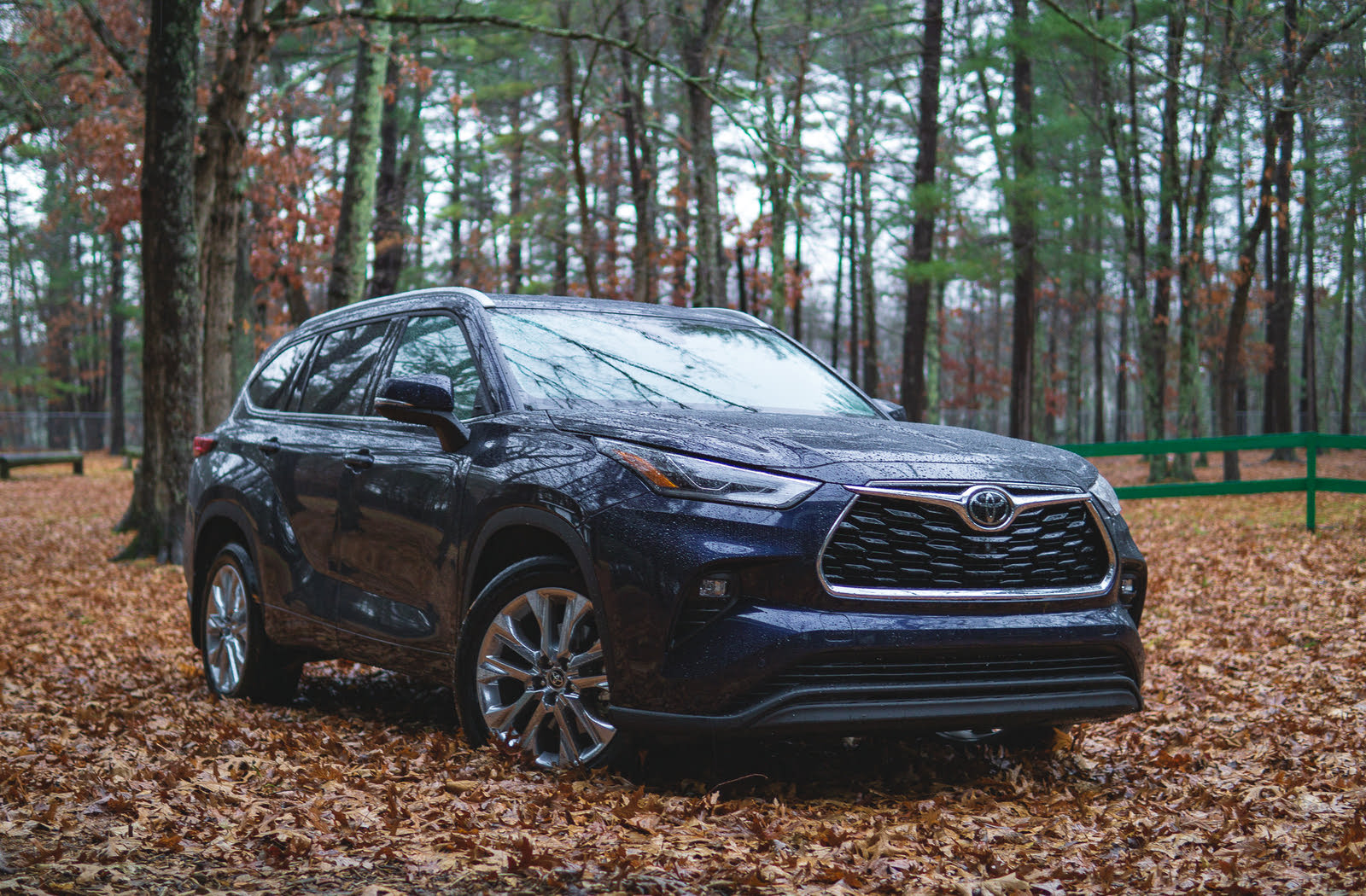
According to CarGurus experts, the overall rating for the 2021 Volkswagen Atlas is 6.5 out of 10, while the 2021 Toyota Highlander scores 7.5 out of 10. Based on these ratings, the 2021 Toyota Highlander is the better choice, offering a more luxurious interior, a comprehensive suite of safety features, and a smoother driving experience.
Choose the 2021 Volkswagen Atlas if:
- You need more third-row legroom for passengers.
- You prefer a minimalist interior design with logically laid-out controls.
- You want a vehicle with a built-in 4G LTE WiFi hotspot.


Choose the 2021 Toyota Highlander if:
- You prioritize a luxurious interior with near-flawless fit and finish.
- You need a vehicle with a comprehensive suite of advanced safety features.
- You want a smooth and predictable driving experience with a reliable powertrain.


CarGurus highlights
According to CarGurus experts, the overall rating for the 2021 Volkswagen Atlas is 6.5 out of 10, while the 2021 Toyota Highlander scores 7.5 out of 10. Based on these ratings, the 2021 Toyota Highlander is the better choice, offering a more luxurious interior, a comprehensive suite of safety features, and a smoother driving experience.
Choose the 2021 Volkswagen Atlas if:
Shop Now- You need more third-row legroom for passengers.
- You prefer a minimalist interior design with logically laid-out controls.
- You want a vehicle with a built-in 4G LTE WiFi hotspot.
Choose the 2021 Toyota Highlander if:
Shop Now- You prioritize a luxurious interior with near-flawless fit and finish.
- You need a vehicle with a comprehensive suite of advanced safety features.
- You want a smooth and predictable driving experience with a reliable powertrain.

By: CarGurus + AI
At CarGurus, our team of experienced automotive writers remain at the heart of our content operation, conducting hands-on car tests and writing insightful guides that are backed by years of industry experience. To complement this, we are harnessing AI to make our content offering more diverse and more helpful to shoppers than ever. To achieve this, our AI systems are based exclusively on CarGurus content, ratings and data, so that what we produce is both unique to CarGurus, and uniquely helpful to car shoppers.

