2021 Toyota 4Runner vs 2021 Toyota Highlander Hybrid
Overview | |
MSRP$36,765 | MSRP$38,735 |
Listings58 | Listings15 |
Ratings & Reviews | |
User Reviews | User Reviews |
Expert reviews6.2 out of 10 | Expert reviews6.7 out of 10 |
2021 Toyota 4Runner Reviews SummaryDespite its design age, poor fuel efficiency, rough ride, iffy handling, and marginal safety ratings, the current-generation Toyota 4Runner remains a popular choice in a midsize SUV. Why? Its reputation for reliability and resale value, coupled with its undeniable utility, rugged image, and go-anywhere and do-anything capability, are the selling points. And if that's why you want a 2021 Toyota 4Runner, it won't disappoint you as long as you accept its shortcomings. | |
2021 Toyota Highlander Hybrid Reviews SummaryThere comes a time in everyone’s life when practicality rules. Usually, it arrives shortly before or after having children. In many ways, the 2021 Toyota Highlander is purpose-built to provide that practicality—especially in hybrid form. Redesigned for the 2020 model year, the 2021 Highlander adds a sporty XSE trim level (non-hybrid V6 models only), improved headlights on lower trim levels, and an upgraded Toyota Safety Sense 2.5+ collection of safety features. These changes can only make the Highlander a more appealing choice in a highly competitive segment. | |
No video found | No video found |
Popular Features & Specs | |
Engine4.0L 270 hp V6 | Engine2.5L 243 hp I4 Hybrid |
Drivetrain4X2 | DrivetrainFWD |
Seating Capacity7 | Seating Capacity8 |
Horsepower270 hp @ 5600 rpm | Horsepower |
EV Battery Capacity | EV Battery Capacity1.9 kWh |
MPG City16 | MPG City36 |
MPG Highway19 | MPG Highway35 |
Engine | |
Engine Name4.0L 270 hp V6 | Engine Name2.5L 243 hp I4 Hybrid |
Torque278 lb-ft @ 4400 rpm | Torque |
Horsepower270 hp @ 5600 rpm | Horsepower |
Drivetrain4X2 | DrivetrainFWD |
Fuel Economy | |
EV Battery Capacity | EV Battery Capacity1.9 kWh |
MPG City16 | MPG City36 |
MPG Highway19 | MPG Highway35 |
Interior | |
Seating Capacity7 | Seating Capacity8 |
Safety | |
Front Crash Overall4 | Front Crash Overall4 |
Side Crash Overall5 | Side Crash Overall5 |
Dimensions & Capacity | |
Cargo Space47.2 cu ft | Cargo Space16.0 cu ft |
Curb Weight4400 lbs | Curb Weight4330 lbs |
Height71.5 in | Height68.1 in |
Length190.2 in | Length194.9 in |
Width75.8 in | Width76.0 in |
Wheelbase109.8 in | Wheelbase112.2 in |
Maximum Payload1700 lbs | Maximum Payload1495 lbs |
Number of doors4 | Number of doors4 |
Maximum Towing Capacity5000 lbs | Maximum Towing Capacity3500 lbs |
Standard Towing Capacity5000 lbs | Standard Towing Capacity |
Overview | ||
MSRP | $36,765 | $38,735 |
Listings | ||
Ratings & Reviews | ||
User reviews | ||
Expert reviews | 6.2 out of 10Read full review | 6.7 out of 10Read full review |
Pros & cons | ||
Summary | Despite its design age, poor fuel efficiency, rough ride, iffy handling, and marginal safety ratings, the current-generation Toyota 4Runner remains a popular choice in a midsize SUV. Why? Its reputation for reliability and resale value, coupled with its undeniable utility, rugged image, and go-anywhere and do-anything capability, are the selling points. And if that's why you want a 2021 Toyota 4Runner, it won't disappoint you as long as you accept its shortcomings. | There comes a time in everyone’s life when practicality rules. Usually, it arrives shortly before or after having children. In many ways, the 2021 Toyota Highlander is purpose-built to provide that practicality—especially in hybrid form. Redesigned for the 2020 model year, the 2021 Highlander adds a sporty XSE trim level (non-hybrid V6 models only), improved headlights on lower trim levels, and an upgraded Toyota Safety Sense 2.5+ collection of safety features. These changes can only make the Highlander a more appealing choice in a highly competitive segment. |
Video | No video found | No video found |
Popular Features & Specs | ||
Engine | 4.0L 270 hp V6 | 2.5L 243 hp I4 Hybrid |
Drivetrain | 4X2 | FWD |
Seating Capacity | 7 | 8 |
Horsepower | 270 hp @ 5600 rpm | |
EV Battery Capacity | 1.9 kWh | |
MPG City | 16 | 36 |
MPG Highway | 19 | 35 |
Engine | ||
Engine Name | 4.0L 270 hp V6 | 2.5L 243 hp I4 Hybrid |
Torque | 278 lb-ft @ 4400 rpm | |
Horsepower | 270 hp @ 5600 rpm | |
Drivetrain | 4X2 | FWD |
Fuel Economy | ||
EV Battery Capacity | 1.9 kWh | |
MPG City | 16 | 36 |
MPG Highway | 19 | 35 |
Interior | ||
Seating Capacity | 7 | 8 |
Safety | ||
Front Crash Overall | 4 | 4 |
Side Crash Overall | 5 | 5 |
Dimensions & Capacity | ||
Cargo Space | 47.2 cu ft | 16.0 cu ft |
Curb Weight | 4400 lbs | 4330 lbs |
Height | 71.5 in | 68.1 in |
Length | 190.2 in | 194.9 in |
Width | 75.8 in | 76.0 in |
Wheelbase | 109.8 in | 112.2 in |
Maximum Payload | 1700 lbs | 1495 lbs |
Number of doors | 4 | 4 |
Maximum Towing Capacity | 5000 lbs | 3500 lbs |
Standard Towing Capacity | 5000 lbs | |
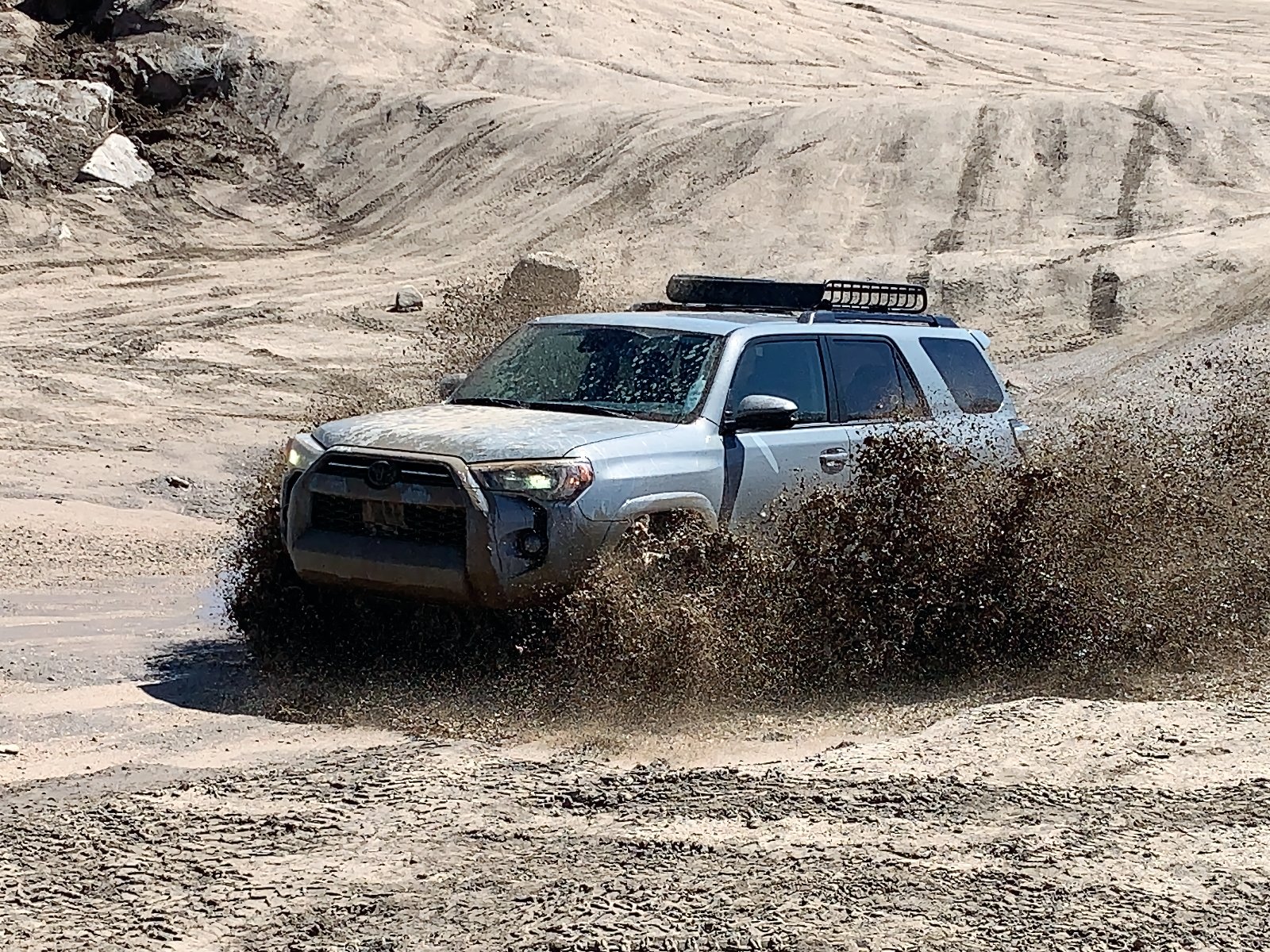
The 2021 Toyota 4Runner, despite its age, retained a rugged charm that appealed to those seeking a durable and straightforward SUV. Its design, unchanged for over a decade, still managed to convey a sense of timeless utility with its two-box body, flared fenders, and trapezoidal wheel arches. While not conventionally attractive, the 4Runner's appearance was functional, with the Limited trim being an exception with its chrome accents. The interior was basic, featuring hard plastics and an old-school dashboard with large knobs and buttons, emphasizing practicality over luxury. The 4Runner's appeal lay in its simplicity and durability, making it a reliable choice for those who valued function over form.
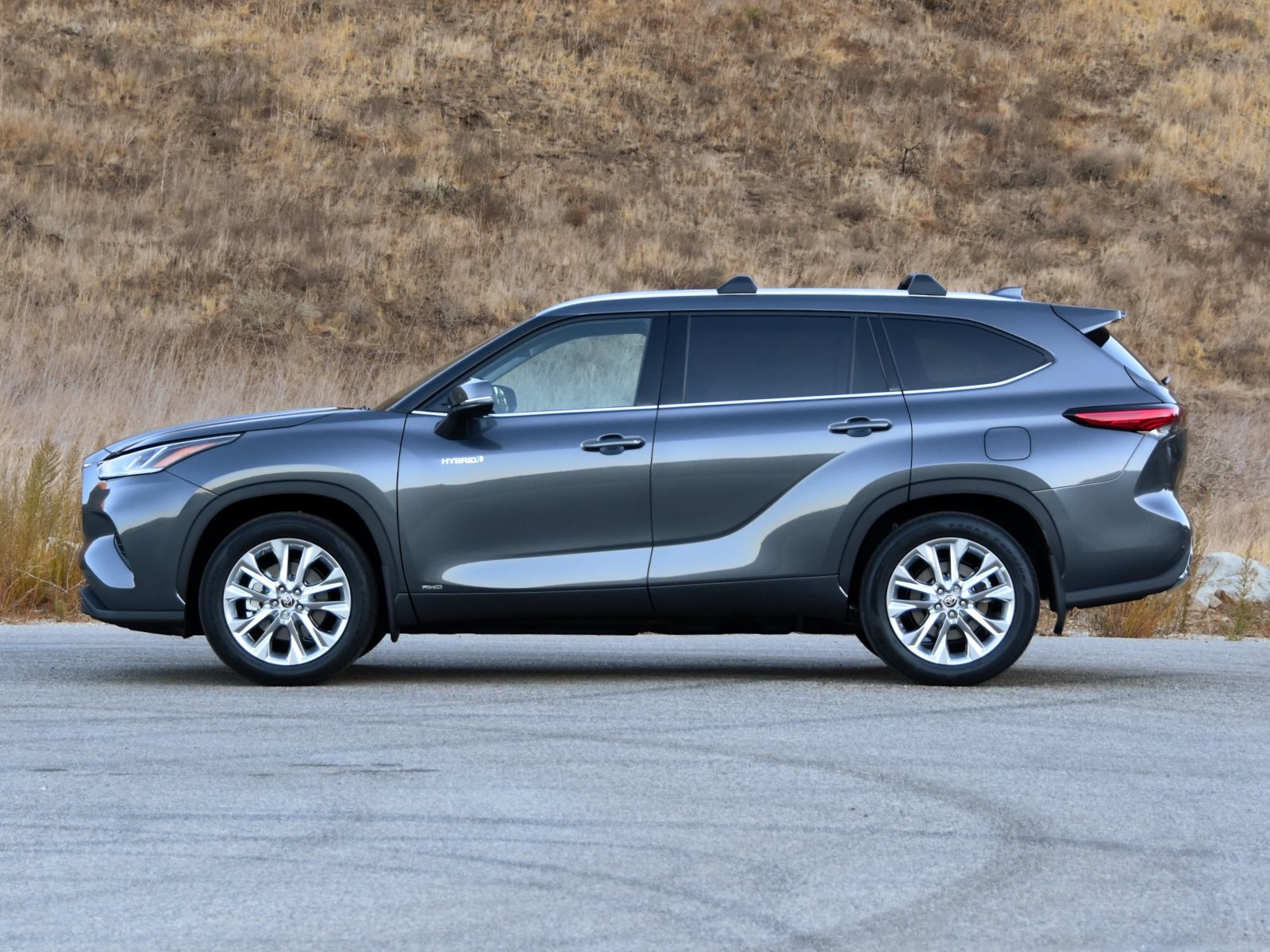
In contrast, the 2021 Toyota Highlander Hybrid presented a more modern and distinctive design, though it required an acclimation period for some. Its blunt and bulbous nose, along with black windshield pillars, gave it a unique look that stood out on the road. The Highlander's styling was balanced by swollen haunches and 20-inch alloy wheels, though some found the design overwhelming. Inside, the Highlander Hybrid Platinum offered upscale features like a 12.3-inch touchscreen, leather upholstery, and a heated steering wheel. However, some details, like the instrument-panel shroud, felt cheap. The cabin's two-tone look and asymmetrical dashboard added a touch of sophistication, but reflections on the screen and busy gauge illumination were noted drawbacks.


The 2021 Toyota 4Runner was built for off-road adventures, equipped with a 4.0-litre V6 engine producing 270 horsepower and 278 pound-feet of torque. Its off-road capabilities were enhanced by features like A-Trac, a locking rear differential, Multi-Terrain Select, and Crawl Control, making it adept at tackling challenging terrains. However, on paved roads, the 4Runner felt slow, heavy, and clunky, with steering and braking requiring effort. Its body-on-frame construction contributed to its truck-like driving characteristics, which some found charming but others might find cumbersome for daily use. Fuel efficiency was a concern, with an average consumption of 14.0 L/100 km, resulting in frequent stops at the gas station.
The 2021 Toyota Highlander Hybrid, on the other hand, prioritized fuel efficiency with its 2.5-litre four-cylinder engine and hybrid system, delivering a combined output of 243 horsepower. It achieved an average consumption of 7.4 L/100 km, a significant improvement over its predecessor. While efficient, the Highlander Hybrid's performance was less thrilling, with adequate power for climbing hills and reaching freeway speeds, but the engine sounded strained under load. The steering was lifeless, and the ride exhibited unwanted body movement, though it handled well on smooth roads. The Highlander Hybrid excelled in urban environments, offering a quiet and comfortable ride, but lacked the engaging driving dynamics of its predecessor.
The 2021 Toyota 4Runner offered a spacious and comfortable interior, with ample legroom and supportive seats in both the front and rear. Its high ground clearance could pose a challenge for shorter passengers, but once inside, the 4Runner provided a pleasant experience. The rear seats offered good visibility, air conditioning vents, and USB charging ports. Cargo space was generous, with up to 2,540 litres available with the rear seats folded down, making it suitable for various adventures. The 4Runner's interior storage was decent, and its back bumper served as a convenient seating area for outdoor activities.
In comparison, the 2021 Toyota Highlander Hybrid Platinum provided roomy and supportive accommodations for the driver and front passenger, with features like a 10-way power-adjustable driver's seat and heated and ventilated front seats. The second-row bench seat increased seating capacity to eight, but the Highlander felt narrow, and the overhead air vents were a source of irritation. The third-row seat was uncomfortable, with limited legroom and headroom, making it unsuitable for adults. Cargo space was ample, with up to 2,387 litres available with the third-row seat folded down. However, storage was not as generous as the previous-generation Highlander, and the placement of the wireless smartphone charger blocked access to the storage area below.
The 2021 Toyota 4Runner's technology offerings were basic, with the entry-level Trail grade lacking advanced features. It included a windshield wiper de-icer system and a 120-volt AC power outlet in the cargo area. The standard 8-inch touchscreen infotainment system featured Bluetooth, Apple CarPlay, Android Auto, and SiriusXM satellite radio, along with five USB ports. While the system's software was sophisticated, the screen size was small, but physical shortcut buttons and knobs made it easy to use, even with gloves.
The 2021 Toyota Highlander Hybrid, in contrast, offered a more advanced technology suite. Every Highlander came with Bluetooth, Apple CarPlay, Android Auto, and SiriusXM satellite radio, along with a year-long trial of Safety Connect. The Platinum trim featured a 12.3-inch touchscreen display, an 11-speaker JBL premium audio system, and a navigation system. The infotainment system was user-friendly, with large knobs and shortcut buttons for easy access. The JBL sound system, however, had mixed audio quality, and the Driver Easy Speak technology projected the driver's voice through the speakers for easier communication with rear passengers. A video rearview mirror provided an unobstructed view of the rear, enhancing safety.
The 2021 Toyota 4Runner came equipped with Toyota Safety Sense P (TSS-P), which included adaptive cruise control, forward-collision warning, automatic emergency braking, lane departure warning, and automatic high-beam headlights. However, it lacked a blind-spot warning system and rear cross-traffic warning, which were notable omissions. The 4Runner received a three-star rollover resistance rating from the NHTSA and a "Good" roof crush strength rating from the IIHS. However, its protection for the driver in a small overlap frontal-impact collision was rated as Marginal by the IIHS, reflecting its age.
The 2021 Toyota Highlander Hybrid featured Toyota Safety Sense 2.5+ (TSS 2.5+), which included automatic high beams, dynamic radar cruise control, automatic emergency braking with pedestrian detection, and lane departure with steering assist. It also added intersection support and emergency steering assistance. The Highlander Hybrid's TSS 2.5+ was effective, though the adaptive cruise control could feel uneven, and the lane-centring assistance system was overly sensitive. The Highlander received a "Top Safety Pick+" rating from the IIHS and a five-star overall rating from the NHTSA, with four-star ratings for frontal-impact crash tests.
CarGurus highlights
According to CarGurus experts, the overall rating for the 2021 Toyota 4Runner is 6.2 out of 10, while the 2021 Toyota Highlander Hybrid scores 6.7 out of 10. Based on these ratings, the Highlander Hybrid is the recommended choice for those seeking a more modern, fuel-efficient, and technologically advanced SUV.
Choose the 2021 Toyota 4Runner if:
- You prioritize off-road capability and rugged durability.
- You value a simple, functional design with a timeless appeal.
- You need ample cargo space for outdoor adventures.


Choose the 2021 Toyota Highlander Hybrid if:
- You seek a fuel-efficient SUV with modern technology and safety features.
- You prefer a comfortable and quiet ride for urban and highway driving.
- You need a three-row SUV with advanced driver-assist systems.


CarGurus highlights
According to CarGurus experts, the overall rating for the 2021 Toyota 4Runner is 6.2 out of 10, while the 2021 Toyota Highlander Hybrid scores 6.7 out of 10. Based on these ratings, the Highlander Hybrid is the recommended choice for those seeking a more modern, fuel-efficient, and technologically advanced SUV.
Choose the 2021 Toyota 4Runner if:
Shop Now- You prioritize off-road capability and rugged durability.
- You value a simple, functional design with a timeless appeal.
- You need ample cargo space for outdoor adventures.
Choose the 2021 Toyota Highlander Hybrid if:
Shop Now- You seek a fuel-efficient SUV with modern technology and safety features.
- You prefer a comfortable and quiet ride for urban and highway driving.
- You need a three-row SUV with advanced driver-assist systems.

By: CarGurus + AI
At CarGurus, our team of experienced automotive writers remain at the heart of our content operation, conducting hands-on car tests and writing insightful guides that are backed by years of industry experience. To complement this, we are harnessing AI to make our content offering more diverse and more helpful to shoppers than ever. To achieve this, our AI systems are based exclusively on CarGurus content, ratings and data, so that what we produce is both unique to CarGurus, and uniquely helpful to car shoppers.
